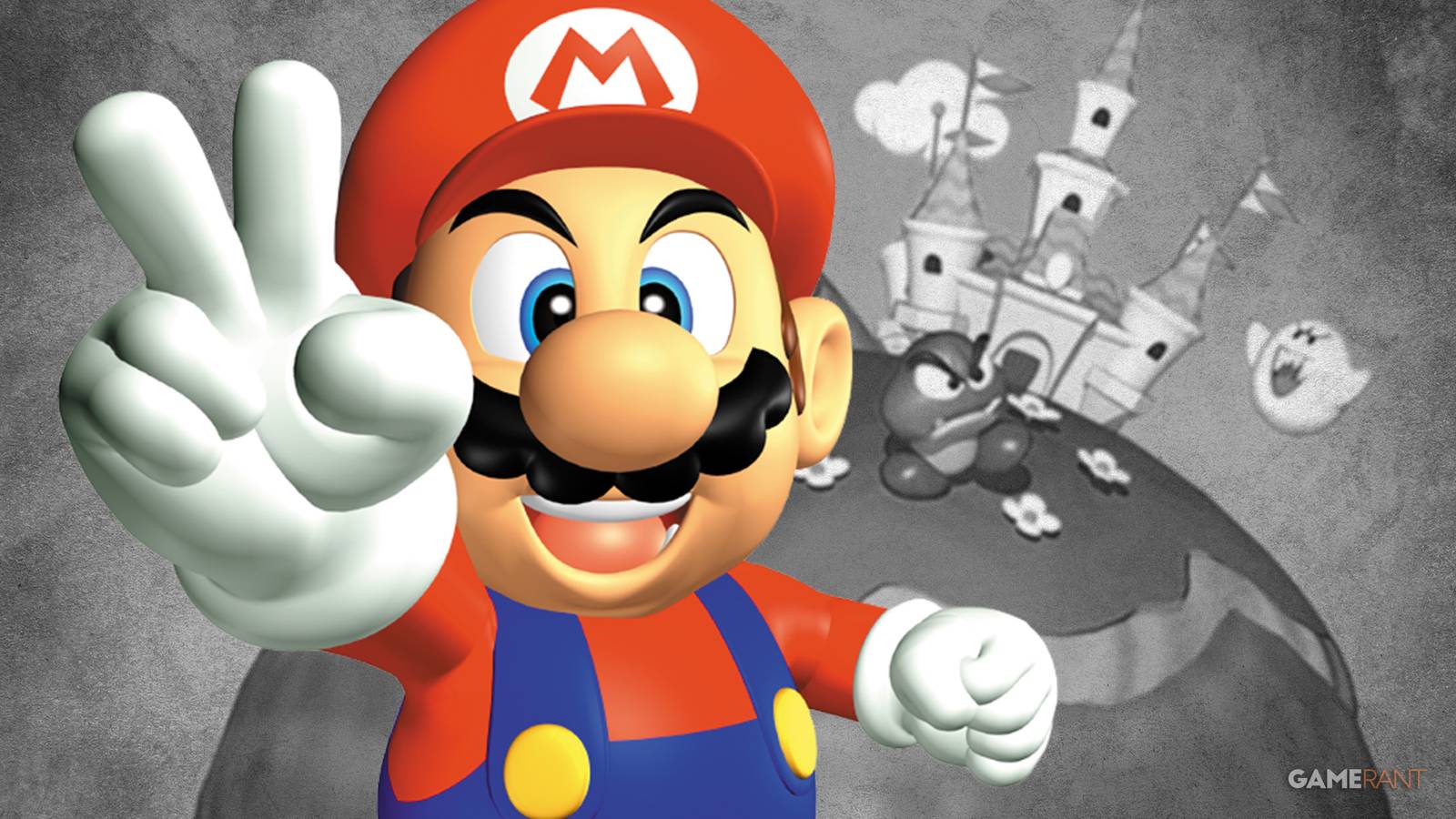




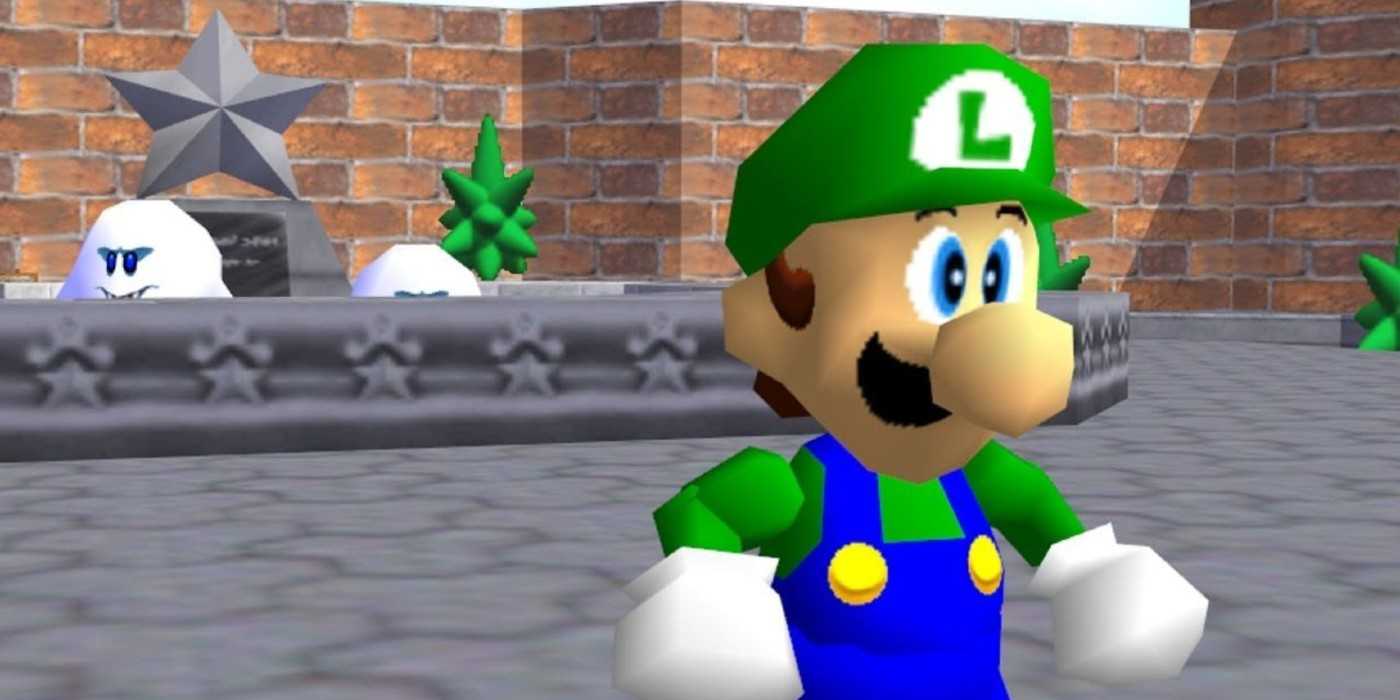
For decades, one Super Mario 64 mystery has haunted fans with endless theories and speculation. Since its launch, many Super Mario 64 fans have been convinced that Luigi was playable in the game alongside his brother Mario; there was just a secret method for unlocking him. Unfortunately, the driving mystery behind this classic rumor has finally been solved, and Luigi fans will likely be disappointed.
Super Mario 64 is a pillar of gaming history as the first fully 3D Mario game that paved the way for modern gaming to make the jump from 2D gameplay into the third dimension. As iconic as Super Mario 64‘s impact on the gaming industry was, it’s nearly as memorable for the rumors and creepypastas it has spawned. From theories of a playable Luigi to the lore behind the piano jumpscare in Big Boo’s Haunt, Super Mario 64 has been an endless source of online discussion for decades.
Super Mario 64’s Most Famous Mystery Has Been Decoded
The mystery behind the garbled text on Super Mario 64‘s star statue in the Castle Courtyard has finally been decoded. Reddit user SpeekSecure claims to have deciphered the text using Claude (Opus 5.5) to recreate the canvas of the plaque’s texture and shrink it down to a 32×32 canvas, similar to what the original artist would have done for the game. Doing so revealed that the text says “Eternal Star, We Hope So.”
-
super mario 64 luigi gigaleak mod -
-


Super Mario 64 fans have debated for decades over the true inscription on this statue, with the most famous interpretation being “L is Real 2401.” The rumor that spawned from this interpretation was that if players collected every coin in the game (supposedly 2401 coins in total), they could unlock Luigi as a playable character. While this rumor was never proven to be accurate, some fans held onto the belief that Luigi was originally intended to be playable, and that this statue was a nod to the cut feature.
Eventually, old VHS footage of Nintendo’s 1995 Japanese Space World Show surfaced online showing a version of Super Mario 64 with Luigi included. Source code from a prototype build of the game was also discovered to contain files for Luigi as well. However, there hasn’t been anything to suggest a playable Luigi ever made it into the final build of Super Mario 64, and this newly deciphered text all but confirms that the “L is Real” myth is false.
“Eternal Star” was another common interpretation of the statue’s plaque, even before this AI decoding effort. However, the second line of text was much harder to interpret, so the “We Hope So” portion of the plaque is a new discovery. While the text may not point towards a playable Luigi as some fans had hoped, the real message is much more charming. The Eternal Star seems to be a reference to the enduring legacy of Super Mario 64 and Mario in general, with the second line of text expressing hope that the game would live on as an icon of the industry long after release. The fact that fans are still discussing Super Mario 64 and its mysteries 30 years later proves that the developers have gotten their wish.




- Released
-
September 26, 1996
- ESRB
-
E for Everyone
- Developer(s)
-
Nintendo
- Publisher(s)
-
Nintendo
- Engine
-
Nintendo 64 SDK