





Nothing beats a truly fantastic first-person shooter, at least in my book. While far from batting a perfect hundred, the genre has consistently produced masterpieces since its inception, with every new year delivering a couple of excellent FPS games. However, just because a release is deservingly rated among the GOATs doesn’t mean it is a flawless 10; even top shooters tend to miss the mark in one area or another.
Let’s celebrate the past by honoring some of the all-time greats by highlighting their many positives and their one or two minor negatives. To be clear, I think each one of these FPS games represents the genre at its near-unbeatable best, and I wouldn’t really change anything about them; however, objectively, they have weak spots that could be slightly better.
I’m going to avoid games that have simply aged poorly. Even when they were released, these slight flaws were present.
5
The Chronicles Of Riddick: Escape from Butcher Bay Is Amazing In Every Way Except The Gunplay
Sometimes, A Blade Is More Satisfying Than A Gun
- Tactile first-person melee that was ahead of the curve in the early 2000s.
- Immersive sim elements are well-implemented
- Vin Diesel is Vin Dieseling all over the place.
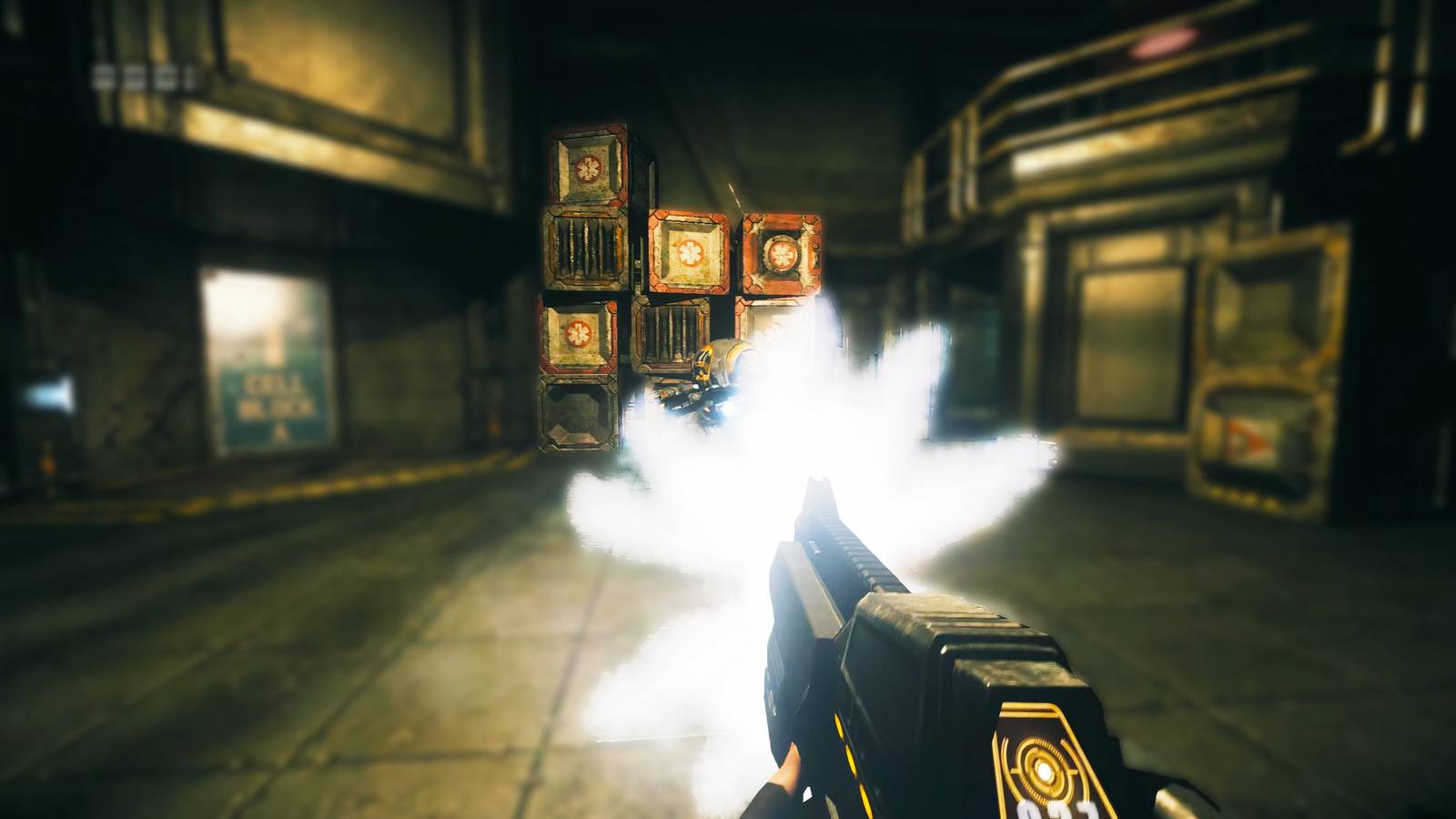
- Why isn’t Butcher Bay a 10/10? Honestly? The gunplay doesn’t feel great (although it sounds great). The sewer section is also far weaker than the prison bits. The 2009 remaster improves the gunplay, though; however, the sewer section still isn’t that fun.
- The above images are from the remaster, not the 2004 original. It’s just the one I have access to nowadays.
I can talk about The Chronicles of Riddick: Escape from Butcher Bay until the end of time, as it’s truly one of the most puzzling FPS masterpieces ever released. A movie tie-in game that does its own thing rather than replicate the plot of 2004’s The Chronicles of Riddick, Butcher Bay defies all the stereotypes of these types of releases: it’s ambitious, forward-looking, fully cooked, and way better than the source material.
Starbreeze drops Riddick (and you) in a space prison and challenges you to get along (or kill) the inmates and guards. While containing stretches with extensive gunplay, Butcher Bay shines the brightest when it simply lets you exist within this world, interacting with the prisoners, pulling off favors, and moving up the pecking order. The gameplay is actually at its best when you don’t have a gun, as the first-person melee combat is visceral, satisfying, and lets you stab people with a shiv.
2004’s Butcher Bay‘s gunplay wasn’t on the same level as other FPS greats of its era, like Painkiller or Halo 2, with floaty weapons that weren’t accurate. While the sound design packs quite a punch, the shotgun and rifles feel weaker than they should, making them a chore to use. The campaign starts very strong and ends on a relatively decent note, but it loses a bit of steam during a subterranean sewer section that features brain-dead mutants as enemies.
I will say, the 2009 remaster included with Assault on Dark Athena improves the gunplay quite a bit, which also makes the combat-heavy sewer section a bit less underwhelming. It still isn’t amazing, but it isn’t a drag.
4
BioShock Is A Perfect 10-Hour Game That Lasts For 12 Hours
An FPS Masterpiece That Doesn’t Leave On A High
- Fascinating philosophical implementation.
- Great villain in Andrew Ryan, along with an equally brilliant setting in Rapture.
- The gameplay is better than its reputation.
- Why isn’t BioShock a 10/10? The final act is considerably worse than everything that came before.
What needs to be said about BioShock that hasn’t been repeated to death? Often cited as a prime example of “video game as art,” the 2007 classic excels in environmental storytelling, world-building, world dressing, philosophical musings, and power fantasy elements courtesy of the Plasmids. I know the gunplay isn’t generally regarded as brilliant in the original BioShock, but it’s mostly fine, rewards tactical planning, and doesn’t take anything away from the overall experience. I doubt many folks stopped playing the campaign because they couldn’t stand the combat.
As beloved as BioShock is, its “flaw” is equally famous, and I use the word “flaw” lightly. Basically, the game peaks about two hours before the credits roll, when Jack confronts Andrew Ryan, leading to the “Would You Kindly” twist. This moment represents the narrative’s philosophical peak, and everything that comes after just feels a little bit hollow in comparison. You are forced to assemble a Big Daddy diving suit and are rewarded with an escort mission that is genuinely terrible.
A misstep isn’t the end of the world, but BioShock never comes close to hitting its peak again. The final boss fight is, for lack of a more suitable term, too video gamey, demanding very little tactical effort. Even the final morality question doesn’t really land, as there is very clearly one pick that is better than the other.
3
Halo: Combat Evolved Is A Perfect 10/10 For 50% Of Its Campaign
Still, A Brilliant And Influential FPS Masterpiece

- A landmark release that changed FPS gaming forever.
- The open-ended levels, gameplay loop, and presentation hold up well.
- Why isn’t Halo: Combat Evolved a 10/10? The game’s rushed development can be felt throughout the second half of the campaign.
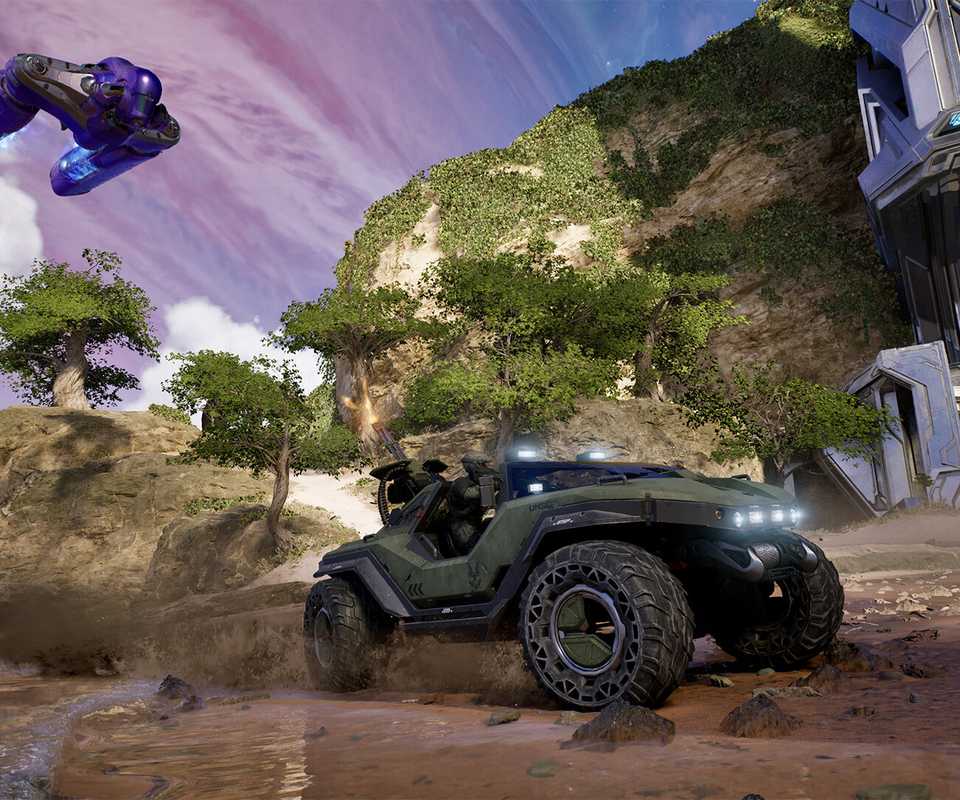
On consoles, Halo: Combat Evolved is the most important FPS game of all time, even more so than GoldenEye 007. Bungie codified gamepad controls, finally putting an end to the chaotic Wild West that forced developers to try all sorts of configurations in hopes of striking gold. Halo proved console FPS games were viable and wrote the playbook for every other modern shooter, launching an exciting decade that produced a bunch of creative and absurd projects that mostly controlled well.
Bungie and Jason Jones centered Halo‘s gameplay loop around 30 seconds of fun, built upon the Golden Triangle: guns, grenades, and melee. Essentially, the campaign repeats the same 30 seconds over and over again, naturally introducing different environments, weapons, and enemies along the way. Thanks to the two-weapon limit and regenerating shields, Halo ensured that encounters could be enjoyed as isolated battles, rather than the endless war of attrition that used to define older FPS games. It works.
Combat Evolved‘s campaign is undeniably great, but the second half recycles so much content. Bungie was on a strict schedule and had to crunch hard to meet deadlines, which involved cutting out quite a bit of stuff. Unfortunately, you cannot help but notice the rushed development in missions like “Two Betrayals” and “Keyes,” which directly copy “Assault on the Control Room” and “The Truth and Reconciliation,” respectively. “The Library” is also regarded as a low point in the series’ early days, as it’s just a wave onslaught that overstays its welcome.
2
Half-Life Should Have Stayed In Black Mesa
A Weak Final Act Doesn’t Stop Valve’s FPS Game From Being A Masterpiece
- Gordon is the man, and Black Mesa is the place.
- 14 chapters of perfect pacing, combat, and everything.
- Why isn’t Half-Life a 10/10? Gordon heads to Xen, and things stop being perfect.
Half-Life 2 is one of the few truly 10/10 masterpieces that has no flaws. Its predecessor, Half-Life, came pretty close to also achieving the impossible, and the campaign is arguably perfect while Gordon is in the Black Mesa Research Facility. However, the final few chapters teleport the physicist to the alien world of Xen, marking a pretty notable step down in execution.
Although far from unplayable, this section falls considerably short of everything that came before, and Half-Life wouldn’t be considered a masterpiece if the entire game took place on Xen. Due to introducing low gravity, the game’s grounded navigation gives way to first-person platforming and puzzles, which rely on finicky mechanics while demanding precision. The combat also takes a notable hit, as enemies take way too long to defeat and don’t require any tactics beyond “strafe and pray.”
Ultimately, Xen only takes up a couple of hours of the campaign, almost to the point of serving as an extended epilogue. While in Black Mesa, Half-Life doesn’t set a single foot wrong in its cinematic storytelling, smart AI (for the era), physics puzzles, and set pieces.
1
Metroid Prime Is About As Brilliant As A FPS Adventure Game Gets
You Grow Intimately Familiar With Tallon IV’s Layout
- Brilliant atmosphere, fun combat, and just an all-around impressive achievement.
- First-person Metroid works!
- Why isn’t Metroid Prime a 10/10? The backtracking grates after a while, and the Chozo Artifact hunt kills the campaign’s momentum.
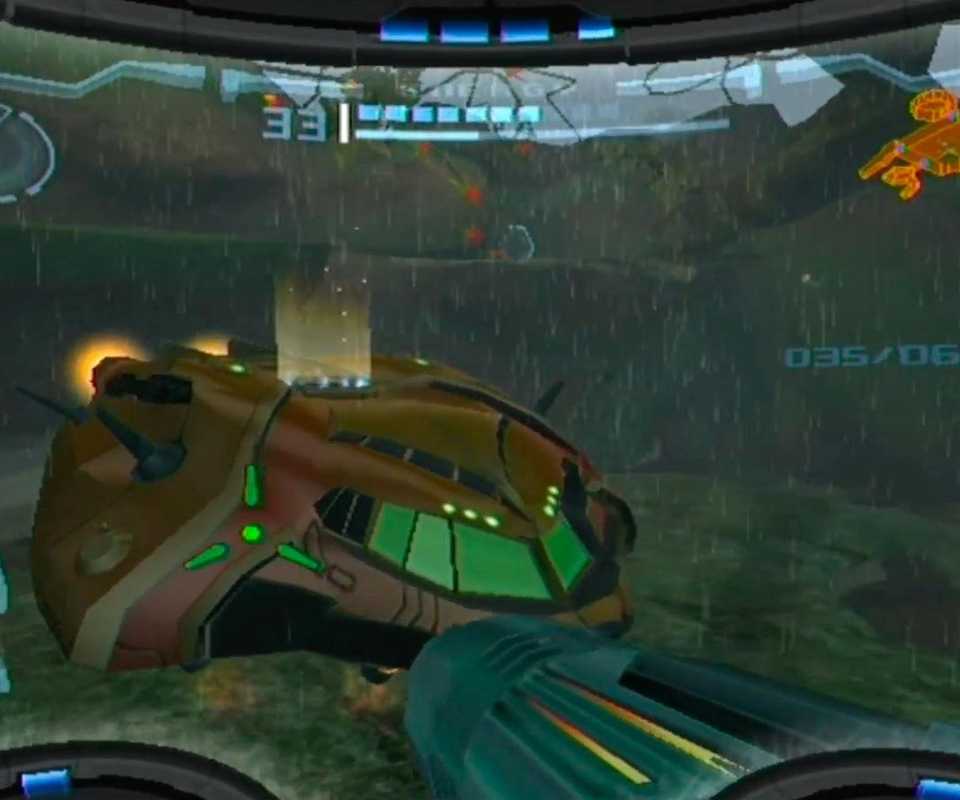
Metroid Prime is, technically, billed as a first-person adventure game, but its gameplay is pure FPS goodness. Whether playing the original or the remaster, you have to appreciate Retro Studios’ capacity to transfer the franchise’s tone, isolation, and progression from side-scrolling to first-person, something that many doubted could be accomplished back in the day.
Compared to other FPS games from any era, Metroid Prime feels unique due to its lock-on targeting system, shifting your focus to movement rather than the actual shooting. The Scan Visor was also pretty innovative for the early 2000s, as it allowed for environmental storytelling while eliminating the need for traditional exposition. Then you have Kanji Yamamoto’s incredible score that enhances the already top-notch atmosphere.
I wouldn’t really describe Metroid Prime‘s shortcomings as deep flaws, but rather design decisions that can be divisive. The game doesn’t include fast travel, clearly aping classic Metroid; however, Tallon IV takes far longer to traverse than 2D maps, resulting in Samus spending a lot of time backtracking. As the campaign progresses, harder enemies respawn in cleared areas, making revisiting this section potentially tedious if you are just trying to get somewhere.
Also, the Chozo Artifact scavenger hunt isn’t all that fun.