







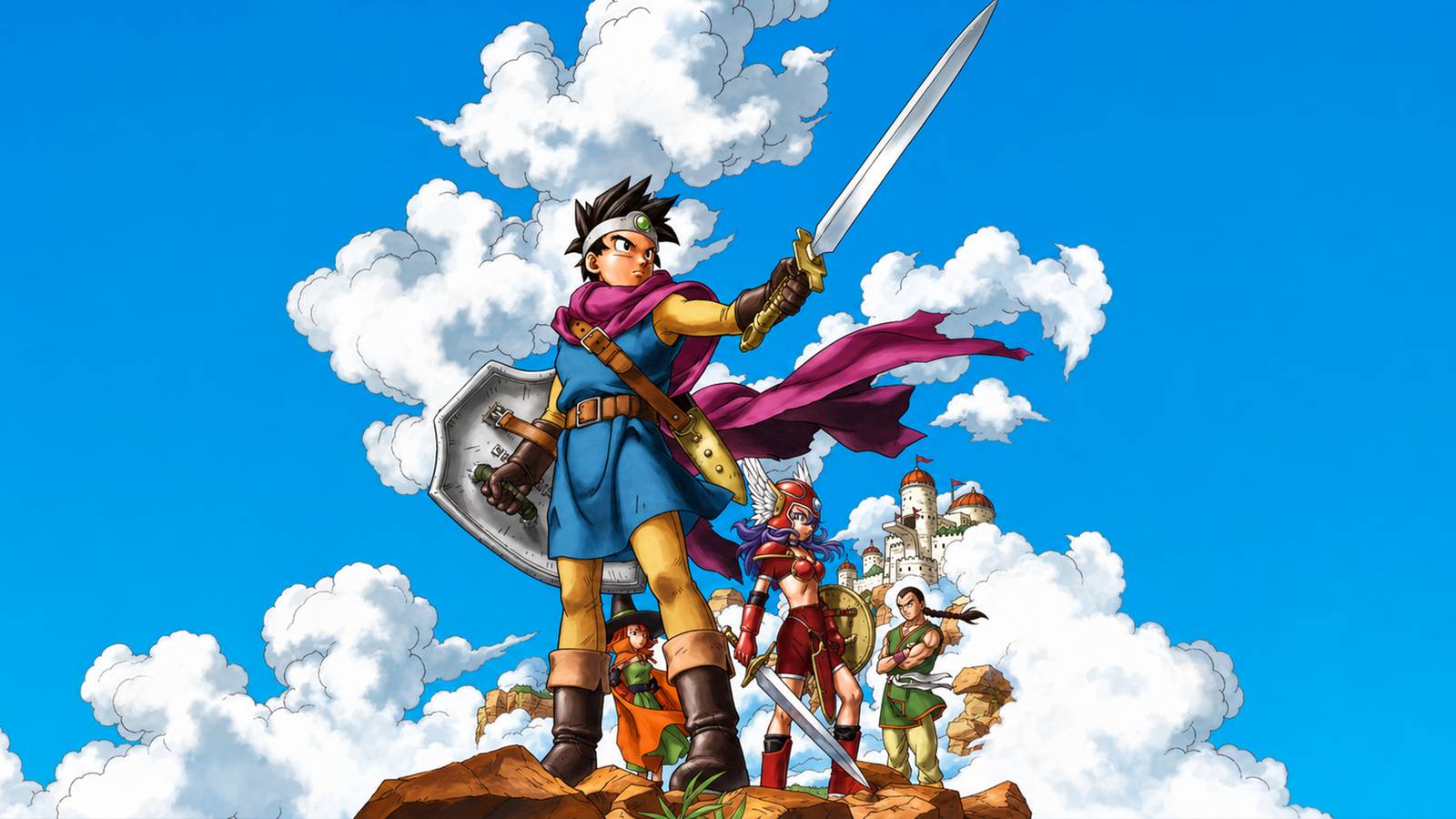
I think it’s easy to look back at RPGs from the NES era and assume their progression systems probably amount to little more than fighting enough enemies to gain a level, buying the next strongest weapon in town, and then doing the whole thing over again until the credits roll. To be fair, there are plenty of games from the era where that isn’t too far from the truth. However, there are also some NES RPGs that were already doing things with character progression that games are still doing today, whether that meant letting players decide where their next upgrade went or giving them an entirely different way to develop a character after they’d already spent hours building them up.
Of course, I’m not saying every part of these games has aged particularly well, because anyone who has gone back to an NES RPG after becoming accustomed to modern conveniences knows exactly how rough some of them can be. I’m specifically talking about their progression systems here, and whether getting stronger still feels satisfying rather than simply necessary. Some of these games give the player considerably more control over that process than others, but all six found a way to make character growth feel like something worth thinking about instead of something that just happens while you’re grinding.
These rankings are based specifically on how well each game’s progression systems hold up today, rather than the overall quality of the game. This list also sticks to RPGs that received an official NES release in North America.
6
Crystalis
Its Elemental Swords Keep Progression From Being All About Levels
- Developer: SNK
- Released: 1990
I actually think Crystalis is a great place to start because, on the surface, its progression is about as familiar as it gets. You defeat enemies, earn experience, gain levels, and gradually become stronger, so anyone who has played an action RPG before is going to understand what it’s doing almost immediately. But the part that has aged better for me is how much of the hero’s growth is also tied to his four elemental swords, with Wind, Fire, Water, and Thunder eventually becoming much more than four different ways to hit something.
Put the consoles in the correct order.
Each sword can be powered up further with its corresponding Ball and Bracelet, giving its charged attacks additional functionality and eventually allowing the player to interact with parts of the world that weren’t accessible before. Magic is layered on top of all of that as well, so there is this constant sense that the hero isn’t merely becoming better at killing whatever is in front of him. He’s gradually gaining more ways to deal with the world around him, and while Crystalis certainly shows its age elsewhere, I don’t think that particular style of progression has ever really stopped being satisfying.
5
Dragon Warrior 4
Dragon Warrior 4 Makes Developing a Large Party Feel Worth the Trouble
- Developer: Chunsoft
- Released: 1992
I’ve played plenty of party-based RPGs where I find four characters I like and then immediately forget everyone else exists, and that’s part of what makes Dragon Warrior 4‘s approach so interesting even now. Rather than dumping a huge cast on the player and expecting them to care about everyone equally, its first four chapters focus on different characters before the entire group comes together around the Hero in Chapter 5. By then, these aren’t random party members sitting on a menu somewhere. You’ve already spent time playing as them, leveling them up, and learning what each one actually brings to the table.
And once everyone does finally come together, Dragon Warrior 4 has the Wagon to help keep those characters involved. Party members traveling in it can still receive experience after battles in places where the Wagon is available, which means swapping someone into the active group doesn’t always come with the immediate realization that they’re ten levels behind everyone else. I’ll admit this isn’t the flashiest progression system on the list, but I think the way the game introduces and develops its cast is a huge reason it works. It gives you plenty of characters to manage without making half of them feel disposable the moment you settle on your favorites.
4
River City Ransom
River City Ransom Somehow Made Shopping Part of the Build
- Developer: Technos Japan
- Released: 1990
I know River City Ransom looks much more like a beat ’em up than an RPG, and obviously, that’s a massive part of what it is. However, start digging into how Alex and Ryan actually get stronger and there is a surprisingly involved progression system underneath all the punching, kicking, and weapon throwing. Enemies drop money when they’re defeated, which can then be taken into the various shops around River City and spent on food that permanently improves different stats. So, rather than every bit of character growth being handed out automatically through experience points, the player is actually deciding what to buy and where some of that growth is going.
Even better, books can be purchased to learn new fighting techniques, which means the money you’re earning can eventually change what your character is capable of doing in combat as well. I especially like what this does to the beat ’em up loop, because suddenly fighting another group of enemies isn’t only about clearing the screen and moving to the next area. Those enemies are basically funding your next upgrade. Plenty of games have tied progression to an economy since then, but River City Ransom was already making buying a hamburger somehow feel like character building in 1990.
3
Zelda 2: The Adventure of Link
Every Level Asks What Link Actually Needs Next
- Developer: Nintendo R&D4
- Released: 1988
Anyone who has spent much time with The Legend of Zelda knows Zelda 2: The Adventure of Link is the odd one out, and its progression system is a pretty big reason why. Unlike the rest of the series, defeating enemies awards Link experience points, and reaching certain thresholds gives the player the opportunity to improve his Attack, Magic, or Life. Attack increases the damage Link deals, Magic reduces the amount of magic his spells consume, and Life reduces how much damage he takes. It’s a very small system compared to what most RPGs give us now, but I honestly think its simplicity is part of what has helped it age so well.


Guess the games from the emojis.
Guess the games from the emojis.
Easy (120s)Medium (90s)Hard (60s)
The reason is that every upgrade still asks the player a question, even if it’s a simple one. If enemies are taking too long to kill, maybe Attack gets the next increase. If Link is getting absolutely demolished every time something touches him, Life suddenly starts looking much more attractive. Magic becomes increasingly valuable as more spells enter the picture too, so the answer isn’t always going to be the same throughout the game. Zelda 2 obviously isn’t going to give anyone hours of buildcrafting, but I don’t really need it to. It gives players three obvious ways to improve Link and then lets them decide which problem they want to solve first.
2
Final Fantasy
Final Fantasy Starts Building the Party Before the Game Even Begins
- Developer: Square
- Released: 1990
The original Final Fantasy doesn’t even wait until the first battle to start asking the player to make decisions about character progression, because choosing the party is quite literally one of the first things you do. There are four Warriors of Light to fill and six classes to choose from, including the Fighter, Thief, Black Belt, Red Mage, White Mage, and Black Mage. You can obviously build something fairly balanced, but you don’t have to, and whatever you decide there is going to follow you for the rest of the game. Even before gaining a single level, you’ve already decided what kind of party you’re going to be developing.
Magic adds another interesting wrinkle because each magic level has four spells available while a character can only learn three, so even spell progression eventually asks the player to leave something behind. Then there is Bahamut’s class promotion later in the game, which upgrades every member of the party into a stronger version of their original class. Fighters become Knights, Thieves become Ninjas, Black Belts become Masters, and the three Mage classes become their respective Wizards, with some of those promotions even opening up additional magic use. For an RPG this old, there is still a surprising amount of ownership over how that party comes together, and I think that’s what keeps its progression from feeling nearly as old as the game itself.
1
Dragon Warrior 3
Changing Classes Lets an Old Character Become Something Completely New
- Developer: Chunsoft
- Released: 1992
Dragon Warrior 3 could have probably made this list on party creation alone, seeing as how the Hero can recruit companions from several different classes and build a group around whatever approach the player prefers. But the reason I think it belongs at the top is what happens much later, once those characters have already had plenty of time to grow. After reaching Dharma, party members who have reached Level 20 can change classes, which sends them all the way back to Level 1 and effectively asks the player to start developing them again. I know that probably sounds like the opposite of progress, but this is where the whole system gets good.
Changing classes cuts a character’s stats down, but it also lets them keep spells they already learned, so the new Level 1 character isn’t really starting over at all. Instead, you’re taking everything you already put into them and using it as the foundation for something else. A character who spent their first life learning magic can eventually move into a different class while keeping those spells, and suddenly the hours you already invested in them have opened another route rather than reaching a dead end. Plenty of RPGs have gone much deeper with job systems since then, but I still love the basic idea Dragon Warrior 3 was working with here. Sometimes the most satisfying way to keep progressing isn’t to keep climbing upward. Sometimes it’s going back to Level 1 and seeing what you can build the second time around.