






First-person shooters are awesome in many ways, but progression rarely seems to be one of them. If we remove RPGs with shooter gameplay like Borderlands and multiplayer modes, we aren’t left with all that many single-player FPS games that actually feature progression in a way that warrants a mention. Typically, progression amounts to “I have bigger guns now,” which is satisfying but not particularly interesting.
Still, a few FPS games absolutely nail their progression systems, and they do it in quite a few different ways. They make you feel like you are growing stronger and becoming better, rather than just your arsenal growing wider and deadlier. Some give you deep control over your build, while others focus primarily on expanding the way you interact with the world (and shoot things in the face). Let’s go over them.
- Single-player FPS games are the focus, and I’m avoiding games like Borderlands, Darktide, and Deep Rock Galactic that are primarily designed for co-op.
- Progression doesn’t have to mean RPG stats.
- Roguelikes and extraction shooters are going to be ignored.
- The progression must directly tie into the gunplay.
- “Perfect” is a vague term, but I’m just going to try to pick games that have nearly no obvious flaws.
6
Cyberpunk 2077 Is The FPS RPG
A (Nearly) Perfect Progression System
OK, I actually went back and forth on whether to include Cyberpunk 2077, as I didn’t want to rely on RPGs; however, CD Projekt Red’s game can certainly be recommended solely to folks looking for a first-person shooter, so I decided to include it.
Also, yes, the enemy scaling is certainly a knock against C2077.
At launch, Cyberpunk 2077‘s progression wasn’t actually all that interesting, as it mostly revolved around passive skill nodes and clothing items, creating a fairly traditional stats-based system. Not terrible by any means, but it didn’t particularly enhance the gunplay, which is 100% a requirement for this topic. Fortunately, the 2.0 update and Phantom Liberty re-engineered the game into the definitive open-world FPS RPG.
Find the odd one out before the timer hits zero.
The whole system hinges on cyberware, and you need to take full advantage of it. Controversially, Cyberpunk 2077 scales enemies to match your level, so they end up requiring the same number of bullets to take down across the campaign. To actually feel like you’re becoming more powerful, you need to regularly visit a ripperdoc to upgrade your cyberware, and a balanced build is vital since you cannot just staple on new parts indefinitely. With the right cybernetic frame, players turn into god-like deities capable of completely wrecking supposedly hard enemies.
Rather than just giving a percentage increase, C2077 lets you work your way through multiple Perk Trees, all of which focus on a different gameplay style while still presenting opportunities for peculiar combos. These progression systems are the highlight, but C2077 also has weapon tiers for regular gear, along with upgrade paths for Iconic guns.
5
Turbo Overkill Lets You Become A Broken Cyberware Monster
Buy, Upgrade, And Splice
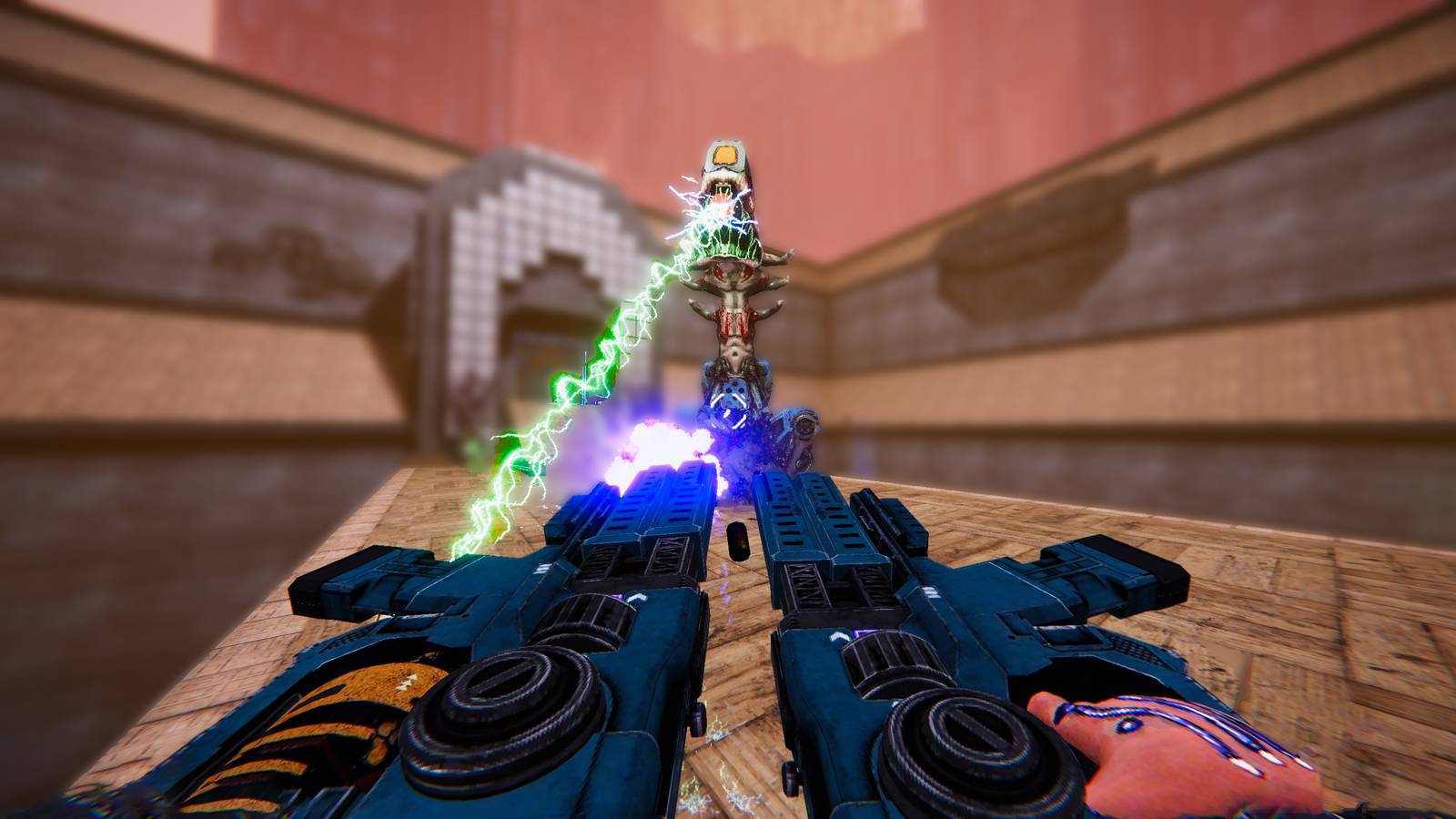
Forget about perfectly tuned progression that gradually ramps up your strength while maintaining a consistent level of challenge; no, let’s indulge in excess. Turbo Overkill is the ultimate FPS power fantasy. Johnny starts the game with a chainsaw leg that wipes out weak enemies and dual pistols with a brilliant alternate fire mode, and then things really get silly.
Similar to Cyberpunk 2077, Turbo Overkill centers its progression around cyberware. Along with compulsory upgrades that greatly expand your movement and attack options, players can buy and install two more chips of their choosing to 5 body parts. These aren’t stat boosts either, as you can add a wall jump, health drops per chainsaw kill, extra bombs, and plenty of other options. By the end of the game, you will be a walking death machine.What puts Turbo Overkill above Cyberpunk 2077 is that its weapon upgrades are also fantastic, as they center around alt-fire modes that completely change a gun’s usage.
4
Ultrakill’s Progression Gives You So Many Viable Ways To Kill
A New Gun Doesn’t Mean You Shouldn’t Use The Old One
While Turbo Overkill uses its progression to craft an unapologetic power fantasy, Ultrakill instead wants to turn you into a machine. In some ways, this game delivers the most “perfect” FPS progression possible, as it is built entirely on the actual guns and the player’s mastery of them. You don’t unlock any stat boosts or even necessarily better weapons that render the original revolver obsolete; no, everything new builds on what came before to ensure you become an unstoppable killing machine that exists solely to drink blood.
Ultrakill has 5 base weapon types, each of which comes with 3 variants that have unique alternate-fire. Some weapons also have alternate versions that change how they handle, without any of them being designed to be stronger or weaker. That’s the beautiful thing about Ultrakill: Every weapon is viable until the end. Progression centers on expanding your options rather than upgrading them; instead, it’s what you can do that constantly expands.
Obviously, everyone has their favorites, and some weapons are more universally beloved than others; however, that’s not because Ultrakill wants you to prioritize a specific one.
Ultrakill‘s Style Meter degrades quickly if you just continue to use the same weapon, encouraging you to constantly change your chosen death machine, forcing you to become a true master rather than just somebody who is good with one or two weapons.
3
BioShock Has Plasmids, ADAM, Gene Tonics, And Little Sisters
You Constantly Need To Make Choices
Say what you want about BioShock‘s gunplay, but it is sustained by a straight-up perfect progression system. Throughout his jolly trip through Rapture, Jack gradually unlocks 12 Plasmids (including Little Sister Antidote), each of which has combat and exploration value; however, most of them aren’t mandatory, and players must decide what to purchase using their finite supply of ADAM. As the same resource also buys health upgrades and Plasmid slots, you constantly need to think long and hard about what to prioritize, making each step in the progression ladder significant.
You also get ADAM by harvesting or rescuing Little Sisters, directly tying progression into BioShock‘s biggest moral dilemma. Both routes are viable, but harvesting them rewards you with ADAM and, consequently, upgrades immediately rather than delaying that gratification. Gene Tonics are arguably more important than Plasmids, as they can transform your starting wrench into an endgame death machine and help significantly in other parts of the game, like hacking.
I will say, BioShock‘s progression loses some steam in the final act, mostly because resources become so plentiful that it eliminates any of the earlier survival elements. However, the game is spot on for like 80% of its run.
2
Doom Eternal Forces You To Get Better
Progression Revolving On The Player And Not Their Weapons
Doom Eternal took more risks than it needed to, and I know that its changes weren’t to everyone’s liking. I love 2016 Doom, but I generally prefer the sequel, and its evolved progression system is a main reason why. Unlike its predecessor, Doom Eternal is considerably more rigid in design, demanding discipline instead of allowing for anarchy and broken builds. With the significant reduction in ammo, the game forces you to manage your arsenal, constantly swapping weapons to make sure you aren’t wasting bullets.
Throughout the game, you find Runes, Praetor Suit, and Sentinel Crystals, most of which upgrade your potential in battle rather than boosting the power of your guns. That’s the philosophy behind Doom Eternal’s progression: you become better, not your guns. This extends to weapon mods, which add new ways to use a gun that allow you to counter specific situations or enemies. The progression is paced pretty much perfectly, so you never feel overwhelmed or like you are stuck in place.
1
Half-Life 2 Turns You Into A True Physicist

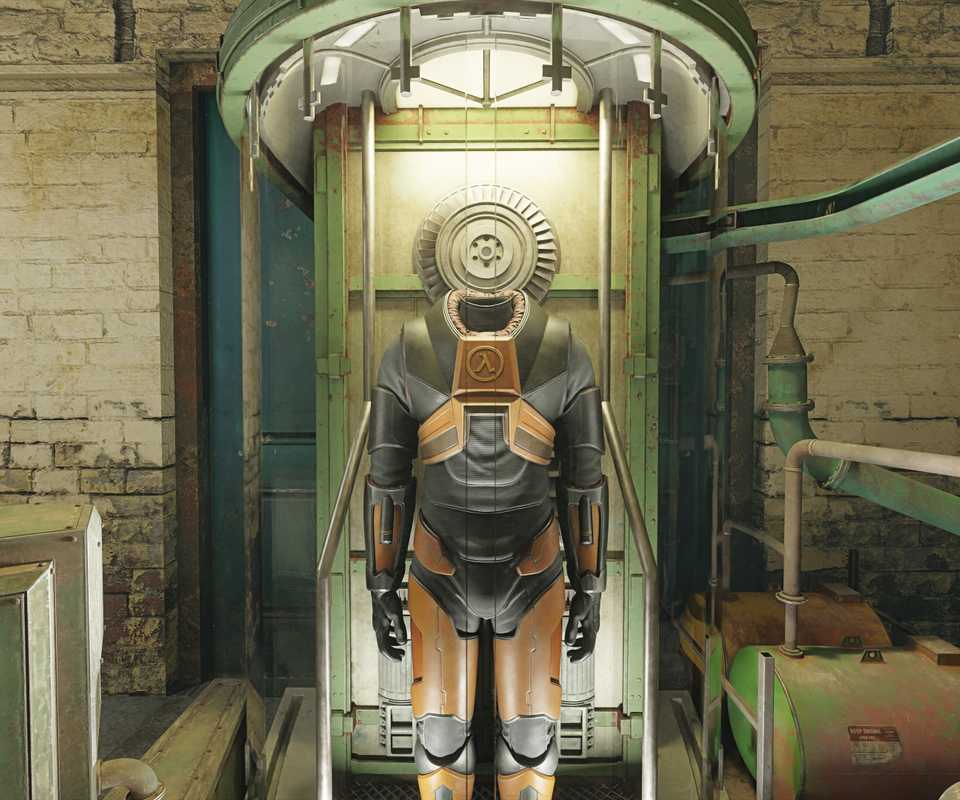
Half-Life 2 is cut from a widely different cloth than modern shooters, and I don’t mean it has aged poorly or anything of the sort. Valve mastered progression without incorporating skill trees, inventory management, or even menus. You don’t even really unlock all that many weapons, but every one you get matters, as it changes how you interact with the environment, the engine’s physics, or enemies.
The Gravity Gun is a perfect example that essentially goes on its own progression arc throughout the campaign. Starting as a hazard-clearing tool, Gordon gradually turns this glorified toy into a killing machine with seemingly endless possibilities. Every chapter introduces new mechanics, ideas, and items; for instance, chapter 8 introduces Pheropods, which allow you to turn one of Half-Life 2‘s most frustrating enemies, Antlions, into your personal army. That type of progression is practiced throughout the campaign.