




Regardless of their size, it’s pretty common for open-world RPGs to stick to their familiar formula introduced in the initial hours for their entire hundred-hour-long playtime. These games are often built around major regions you gradually explore and clear, doing mostly the same things over and over. Sure, the quests, locations, and characters could vary notably, but it’s not like you are doing completely different things in The Witcher 3 across Velen, Skellige, or Toussaint. While there’s nothing inherently wrong with that, there’s also another category of open-world RPGs that keep finding new ways to shake up the routine.
The open-world RPGs below represent some of the most varied titles in the genre, whose quests, possibilities, and gameplay keep evolving wildly over the course of the game, letting you discover new things constantly and do activities you never expected to do when starting the journey. From countless minigames and side activities to more meaningful layers that add management or strategy mechanics into the mix later on, these games stay fresh even after dozens of hours.
6
Wartales
Pirates of Belerion Adds a Whole New Layer
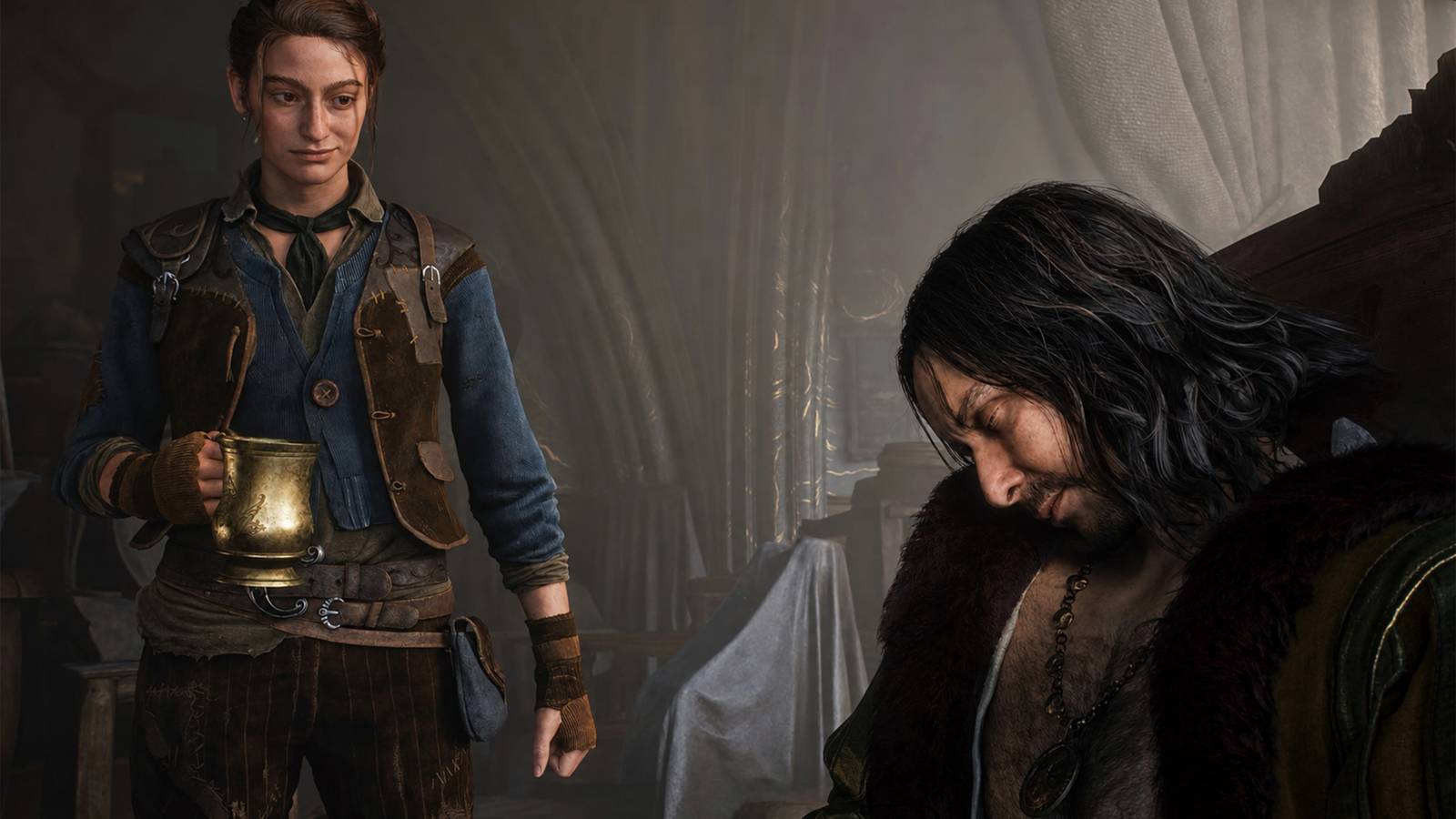
Wartales is the not-so-obvious pick, and to make the most out of its potential, you’ll need some of the game’s DLC, especially Pirates of Belerion. Even the base game offers a pretty complex gameplay evolution, as you lead a group of mercenaries across a massive low-fantasy medieval world. From exploration, recruiting and customizing new companions with their own skills, weapons and personalities, to bounty hunting, crafting, camp mechanics, and at times simple survival amid harsh odds, Wartales is unpredictable in all the good ways.
GameRant Quiz
Easy (15s)Medium (10s)Hard (5s)
That’s just the start, though, as Pirates of Belerion takes your business to sea. Such a drastic change to traversal already shakes things up significantly, while completely new battle situations and tactics, including even a new duel feature, further enrich the existing company-management loop. Sailing between islands, upgrading a ship, boarding enemy vessels, and challenging rival pirate captains unlock whole new facets of Wartales. Coupled with a new focus on exploration and previously unseen dangers, this brings far more changes to the core formula than arriving in Skellige in The Witcher 3.
Aside from the base game and Pirates of Belerion, Wartales has received the Fires in the Capital DLC just recently, set in a city on the brink of rebellion, with lasting consequences and new urban combat scenarios. Judging by the fan reception, though, this might not live up to the standards of the game’s more essential expansions.
5
Sands of Salzaar
Mount & Blade Younger Brother
Sands of Salzaar is a lesser-known open-world RPG/strategy hybrid, so the best point of comparison for its structure would probably be the Mount & Blade series. While not a purely open-world RPG romp you might expect, Sands of Salzaar combines adventuring, faction warfare, and kingdom management in one alluring package, where your role can expand from wandering adventurer to army commander and territorial ruler.
Sands of Salzaar creates a very distinct loop in late game when compared to its early hours. You start by building your customizable character, mastering professions and skill trees, venturing on a personal adventure across a giant map, searching dungeons for boss fights and loot, and finding procedurally generated characters with their backstories. Pretty soon, you’ll find yourself on a much grander landscape. Prepare to hold territories, capture towns, establish your own faction and compete with rivals, and go into full-fledged wars.
It’s a pure player-driven transformation rather than a scripted world switch, so you can pursue goals you find more interesting and scale however you feel like. Sands of Salzaar’s changes in responsibilities go far beyond simply finding more quests or stronger equipment as you progress, as you can change and reshape your relationships across the political map far more deeply than, say, in AC Valhalla.
4
Final Fantasy 7 Rebirth
An Ode to Ambition
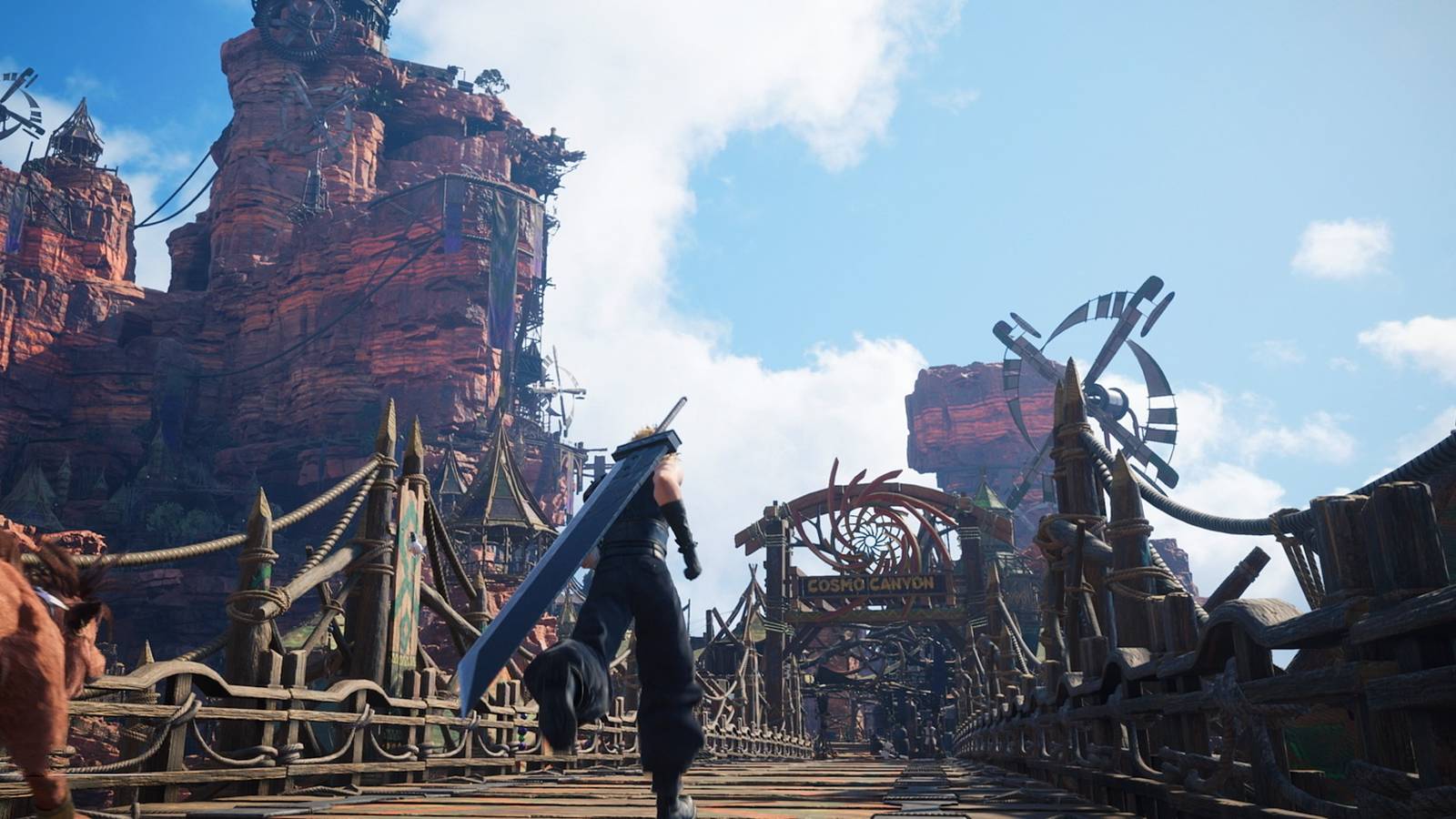
Final Fantasy 7 Rebirth’s biggest sin is how vast, diverse, and ambitious this open-world RPG chapter ended up being. Its enormous variety of sprawling locations, traversal options, including mounts and vehicles, combat possibilities, and mind-boggling number of minigames is truly unmatched this generation. That’s without mentioning FF7 Rebirth’s constant stream of personal side quests, several playable characters with their unique combat feel, and sudden perspective shifts for things like story flashbacks where you can even play as Sephiroth.
Trading a linear urban environment in FF7 Remake for a multi-biome open world required packing it with diverse activities, and it really seems like the devs punched well above expectations. There’s a full-fledged card game, Queen’s Blood, that makes Gwent seem basic, numerous Gold Saucer arcade games, optional stuff like Chocobo racing, 3D brawler, piano-playing, rounding up Moogles, and so on to the point that you’re still discovering new activities some 30 hours into the adventure. Even though some repetition is pretty much unavoidable for something this big, even World Intel tasks don’t detract from the endless charm offered by Rebirth almost non-stop.
One of the biggest fears fans now have for the upcoming FF7 Revelation is that the game will be even more sprawling than its predecessor, making replaying the whole trilogy back to back a colossal endeavor that could require 400 hours for completionists, something unthinkable compared with the original game’s 60 to 80 hours for the full playthrough.
3
Like a Dragon: Infinite Wealth
More Like Infinite Activities and Mechanics
Okay, maybe FF7 Rebirth isn’t quite unmatched this generation in the open-world RPG genre, as Like a Dragon: Infinite Wealth can probably challenge it and even come out on top. The game’s cities of Japan and Hawaii are brimming with things to do, allowing you to enjoy the city vacation life like few other video game cities out there. From countless quests, substories, and jobs to master to Sujimon battles, a resort management layer, and an array of arcade games, Infinite Wealth (of content) seems like a pretty suitable name for this package.
Naturally, Like a Dragon: Infinite Wealth isn’t too much of a departure from the Yakuza series’ usual array and density of gameplay possibilities, but in many respects, it’s still the series’ peak, and a rare RPG that can give you something new to do after dozens of hours. Contrasting protagonists Ichiban and Kiryu, as well as multiple playable characters in the party, add variety in relationships, perspectives, and approaches, with some recruits joining especially late.
Aside from activities, companions, and quest design that just keep surprising you for hours on end, Infinite Wealth’s combat also develops throughout to sustain those long hours of turn-based brawling. From a small party with straightforward roles and basic moves, you eventually progress to alternating teams with hybrid builds from different jobs, stronger teamwork and coordinated attacks, transforming the battlefield into the never-ending rampage of special effects and spectacular finishers.
2
Kenshi
Long-Term Plans Can Go Sideways in an Instant
Where do I even start with this one? A one-of-a-kind RTS-RPG hybrid, Kenshi gives you almost too much freedom, so it’s up to you to decide who you want to be and what you want to do in this world that truly doesn’t care for you. As such, during a single “campaign” your priorities can grow from keeping one vulnerable survivor alive to managing an entire squad of followers, establishing a settlement and keeping it growing, and dealing with larger threats that this post-apocalyptic world offers aplenty.
The variety and possibilities of Kenshi’s gameplay are truly on another level. No binary choices of being good or evil, thief or trader, like in most other RPGs, and no static NPCs. In this world, only your hard work can keep you thriving amid a population where you’re no more important than anyone else. You can devote yourself to research and crafting, building and upgrading, trading and traveling in the vastness of this deeply simulated world. There’s even a micromanagement layer where you can literally delegate some of your tasks and responsibilities to other characters to do them for you.
With all that freedom, that’s not to say that Kenshi can’t be repetitive. Training and resource gathering can feel pretty much like a grind, but fortunately, you can always get distracted or encounter non-scripted events capable of ruining your long-term plans. It’s hard to even think of open-world RPGs that can challenge Kenshi at its own game, but there’s one title that comes particularly close.
1
Caves of Qud
Four Game Modes With Endless Possibilities in Each
-
Caves of Qud Elder Irudad -
Caves of Qud World Map -
Caves of Qud Praetorian Snapjaw fight


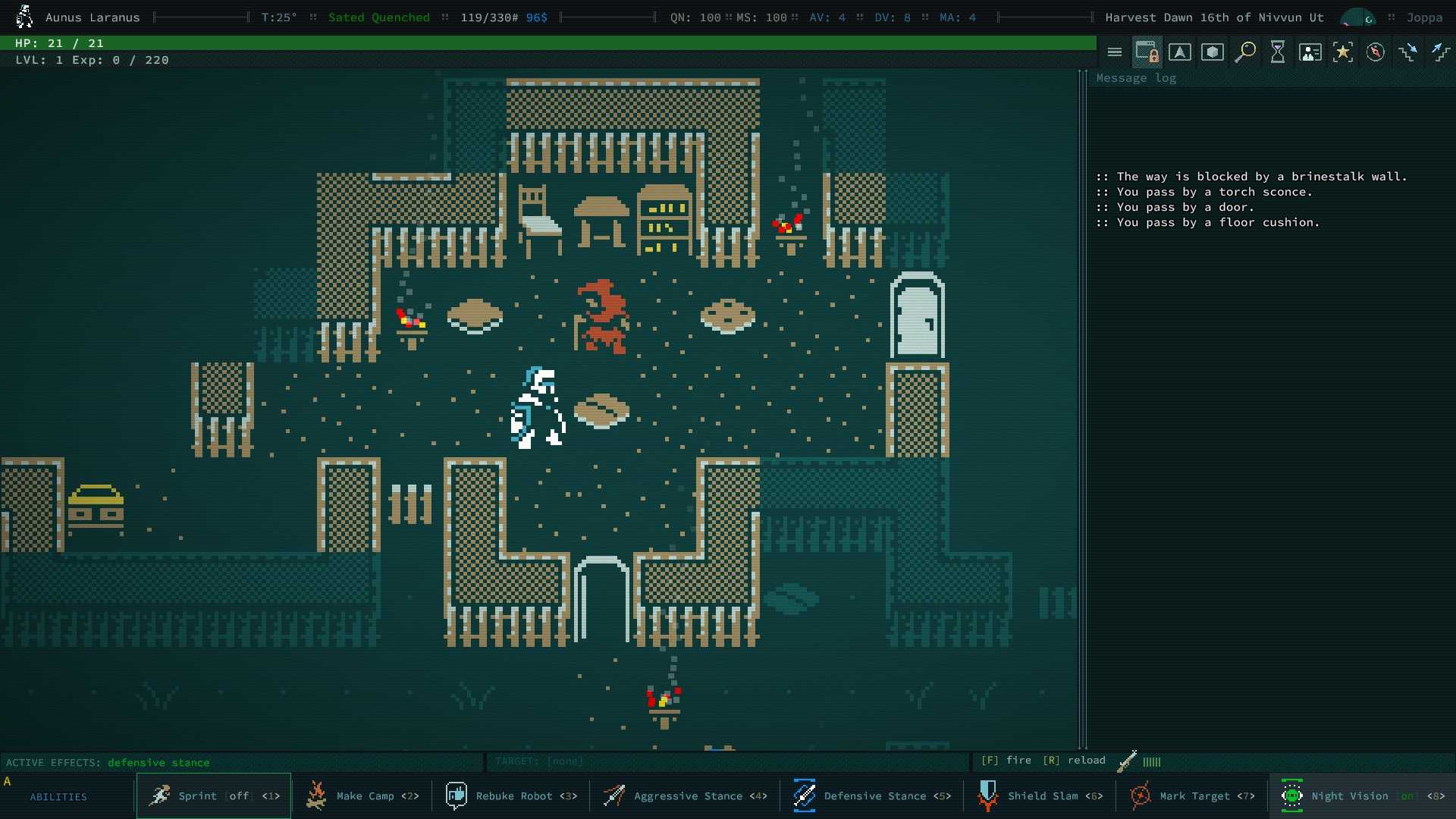
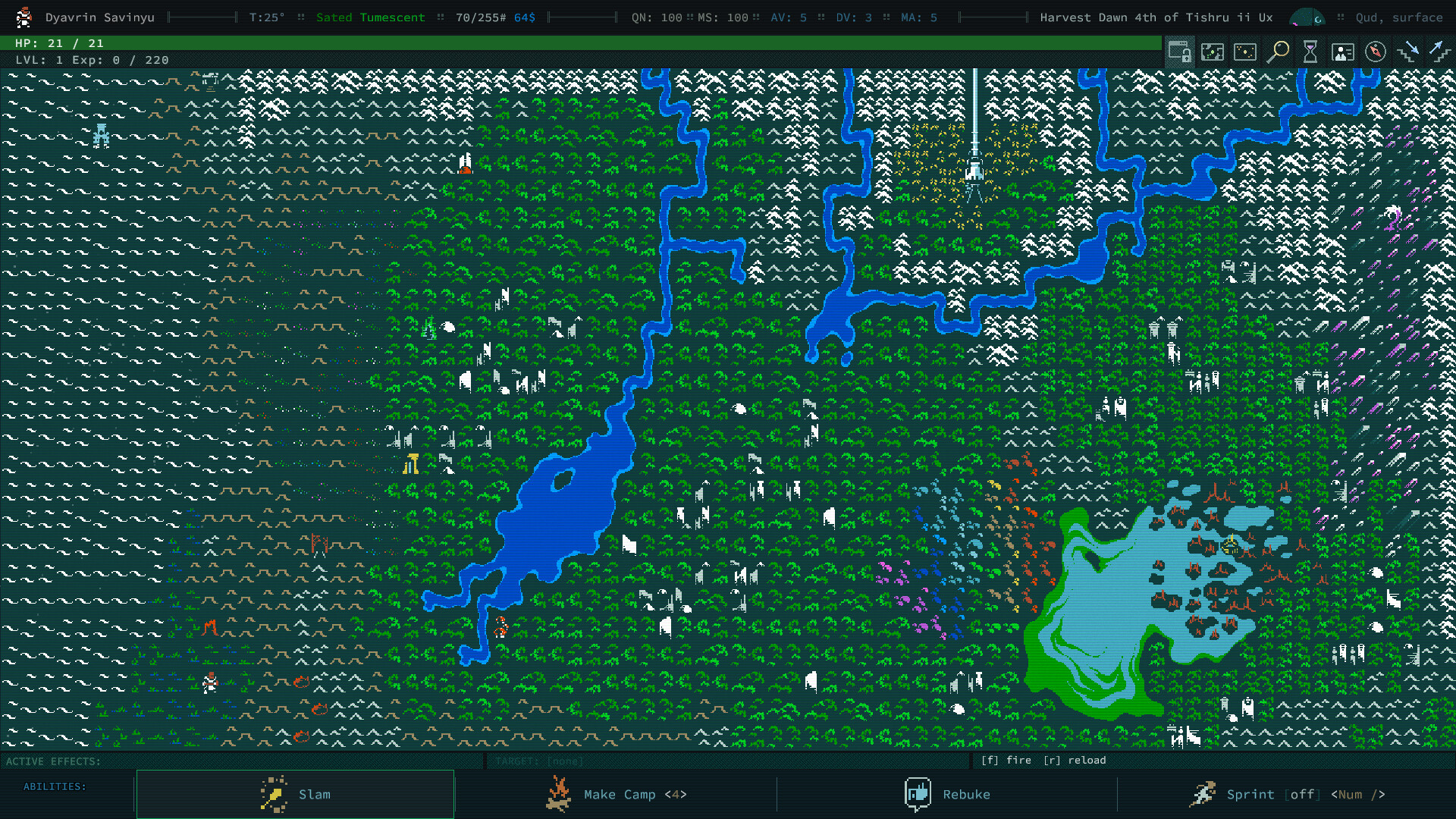
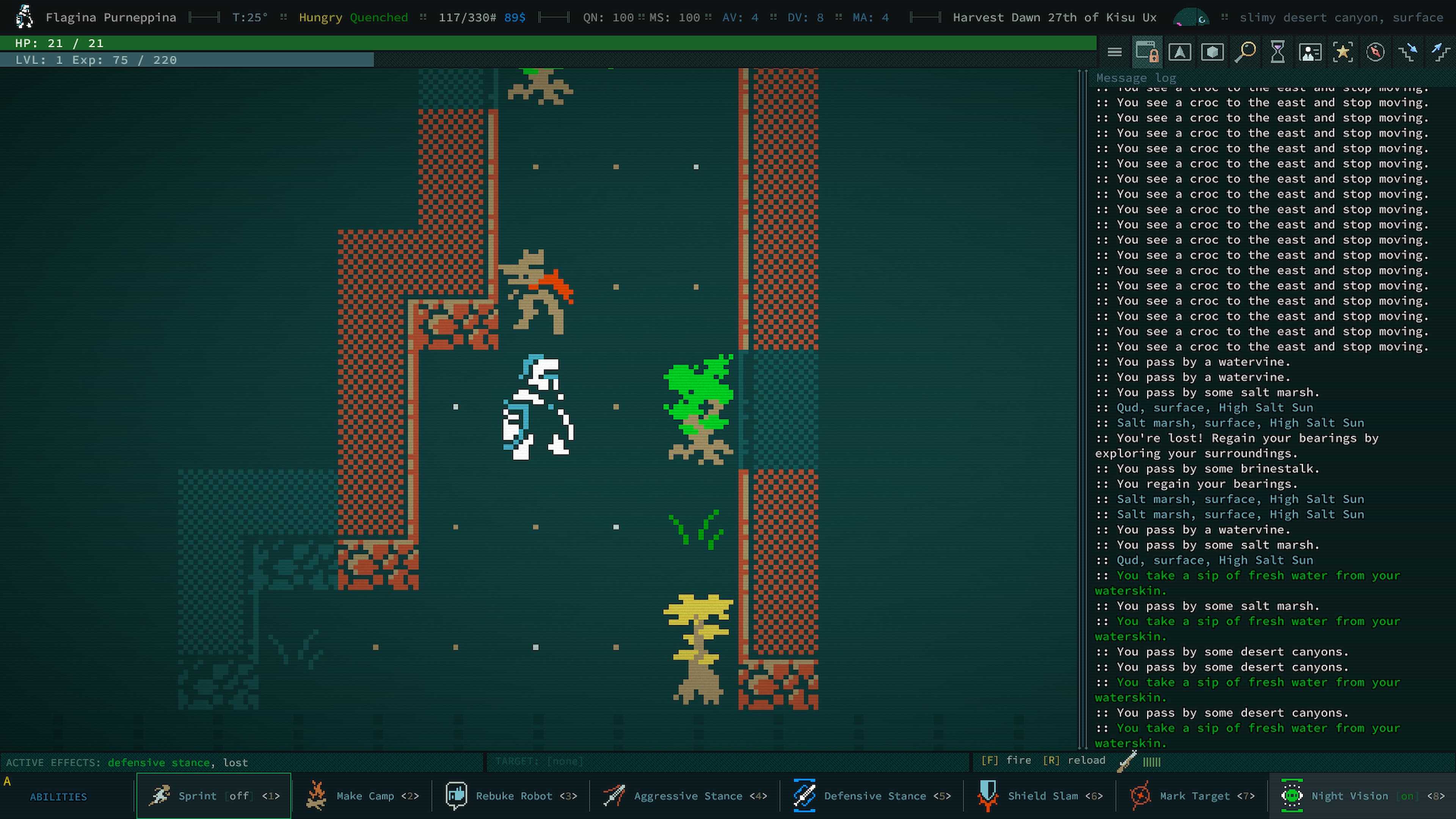
Perhaps the closest to Kenshi in terms of freedom, unscripted possibilities, and dynamic world, Caves of Qud trades 3D visuals in favor of procedural generation, resulting in even deeper and more unpredictable systems-driven gameplay. Like in Kenshi, monsters and NPCs use many of the same systems as the player, so you are not the main character: you’re just one inhabitant of this richly realized world that features *checks notes* over 70 factions rather than just two or four elsewhere.
In Caves of Qud, so many things can change what your character actually does over the course of the adventure: from new mutations or cybernetics and unusual equipment to increasingly strange environments, new characters and encounters. Sure, there’s combat, quests, and exploration, but each of the game’s pillars offers as many solutions as your character’s skills and your own creativity allow. To top things off, Caves of Qud offers four distinct game modes to lean into features you appreciate the most: you can play it like a full-fledged RPG with saves, focus on exploration over combat, or simply embrace its classic permadeath roguelike nature.
Undoubtedly, Caves of Qud has a pretty hefty learning curve, as its rules are so different from most of the other open-world games that it can leave you overwhelmed at times. Nevertheless, it’s a simulation king, combining hand-crafted and procedural elements in an alluring blend that just keeps producing unexpected situations deep into the same playthrough without requiring you to restart, even though it’s always a possibility.