









Sadly, it doesn’t exactly come as a surprise that The Elder Scrolls Online developer ZeniMax Online Studios has suffered as a result of Microsoft’s recent job cuts, but recent developments reveal just how bad things are for the Maryland outfit. ZeniMax Online’s staff has been reduced by over 200 as part of Microsoft’s latest culling, a number that includes several senior roles, including that of Studio Head Joseph Burba, a 14-year company veteran.
Other notable affected roles include Studio Operations Director, Studio Game Director, Studio Art Manager, and VP of Global Sales and Business Development. It’s a shocking turn of events, doubly so when viewed in the context of The Elder Scrolls Online as an MMO, a genre that needs much more ongoing support than others. With so many eliminations, there’s a strong chance that The Elder Scrolls Online could meet the same fate as Destiny 2 before too long, despite still having a healthy player base. This is obviously a shame on multiple levels, but such a mass exodus of talent could have even more considerable consequences for ZeniMax Online down the road.
A lot of information about the ZeniMax layoffs comes from a mandatory WARN notice that the company filed with the Maryland Department of Labor (obtained by Game File). This includes a particularly callous note conveying that only 9 of the 379 employees eliminated were notified of the layoffs prior to July 6, 2026, which is the date that Microsoft publicly announced its restructuring.
As previously mentioned, The Elder Scrolls Online needs extra attention as an online game, and such a massive reduction in head count is almost certainly going to have knock-on effects for the game’s content moving forward. More interesting, however, is what this might mean for ZeniMax Online Studios—a developer that quite literally has the word “online” in its name. It’s highly improbable that this particular branch of ZeniMax is going to downscale by making smaller, single-player games, or even small-scope multiplayer games, moving forward. It’s hard to guess what ZeniMax, and Microsoft by extension, have planned for the studio, but closure looks a little more likely than a comeback at this point.
Naturally, ZeniMax’s public-facing statements about its future are more optimistic. In a letter obtained by Game File, ESO producer Susan Kath and studio game director Rich Lambert wrote that they have great confidence in “the continued growth of ESO” under the new leadership of Josh Henderson and Nick Giacomini; Henderson was previously head of business operations, while Giacomini was promoted from Director of Product Management to Game Director for Elder Scrolls Online just last year. It appears that the pair will co-lead the studio.
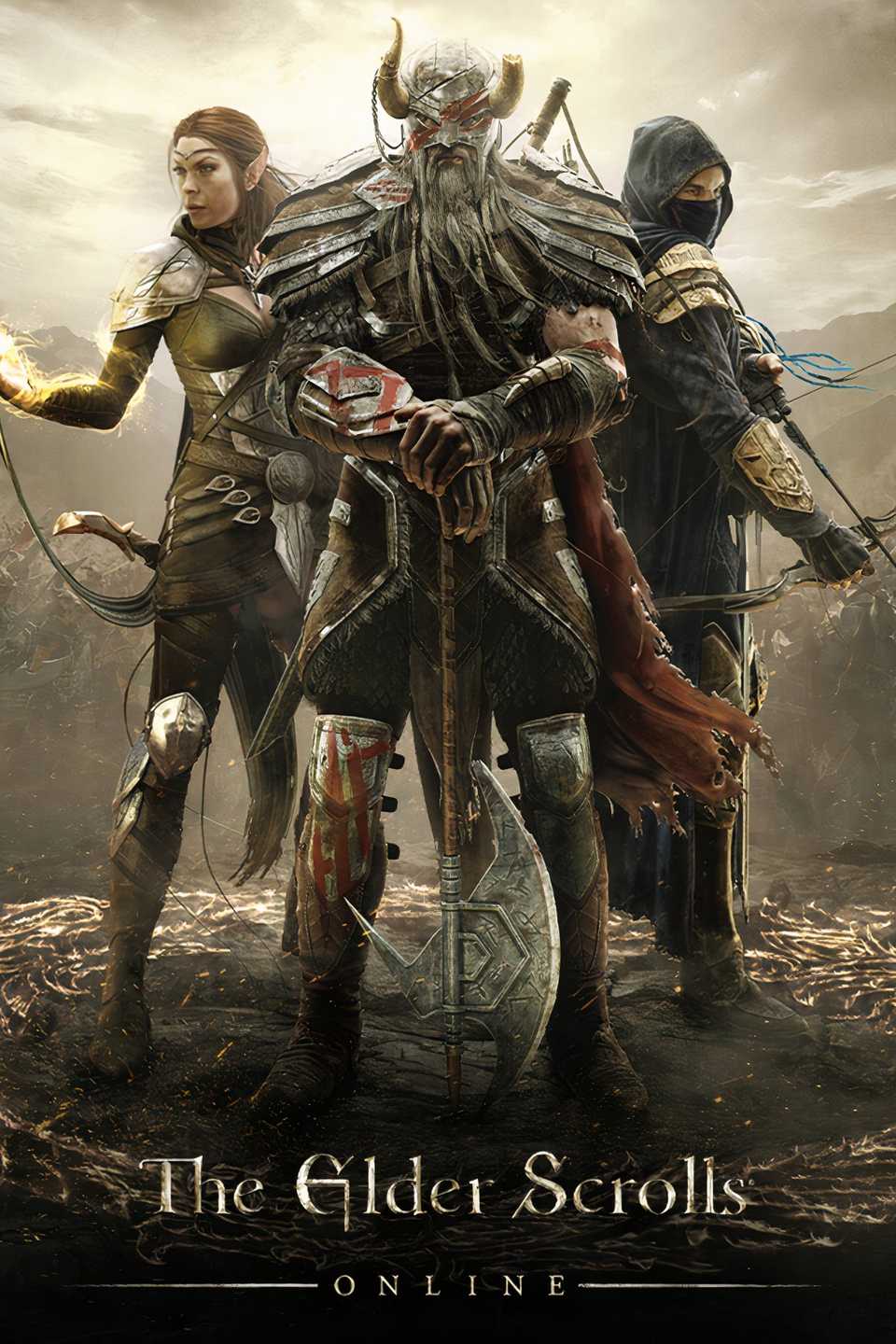
The Elder Scrolls Online needs extra attention as an online game, and such a massive reduction in head count is almost certainly going to have knock-on effects for the game’s content moving forward.
These statements are hard to make sense of, and even harder to take at face value. There hasn’t been much of a status quo at Xbox lately—the brand bought up billions of dollars’ worth of studios just a few years ago, and now so many of them have been shut down or downsized, so promises of “continued growth” in a game like ESO can feel disingenuous. If ZeniMax online is genuinely planning on growing Elder Scrolls Online, it will probably be in for a rather difficult time, considering this talent exodus. With over half a dozen senior roles eliminated, the leadership structure that saw ESO make it past the ten-year mark (an increasingly rare milestone in the live-service space) has now been upended. Like Id Software before it, consistently strong performance wasn’t enough to save ZeniMax from the dreaded “Xbox reset.”
ZeniMax Online Studios’ Future Suddenly Seems In Jeopardy
-
-

-

Elder Scrolls Online Change Difficulty Image via GameRant; Source: Bethesda

Again, more than 200 roles at ZeniMax Online were terminated this summer, and while I’m sure at least some of these roles will be refilled in the coming months and years, the loss of talent and experience is not so easy to replace. This is especially true for the affected leadership and managerial positions: there’s really no telling how a team will respond to so many sudden changes in leadership and chain-of-command, and during a hectic time for the industry to boot. Even if ZeniMax decides to heavily invest in its new talent (something that seems incredibly unlikely, given the reasons behind Xbox’s mass layoffs), this new talent might not be the best fit for ESO. It would be one thing if ESO were floundering and in dire need of fresh leadership, but that doesn’t seem to be the case.
One of the reasons why a story like this is so frustrating is because, from a consumer’s perspective, these decisions seem so counterintuitive. You can improve your earnings and perceived growth by aggressively cutting roles, and maybe some companies’ staff can be trimmed, but talented, dedicated people are the ones who make games at the end of the day. If a gaming company fires thousands of people, it’s going to miss out on all the ideas, support, and expertise these people would have offered in the future. The mingling of these ideas and experiences is what leads to amazing games, and you can’t put a price on that.
The ZeniMax Online Situation Is a Microcosm of Gaming’s Greater Issues
I don’t mean to pick on anyone, but situations like these are how companies like BioWare and Konami fall from grace. We have seen how badly even one person’s departure (e.g. Casey Hudson, Hideo Kojima) can affect a studio’s output and public perception for years on end. Laid-off ESO staff like Joseph Burba and Susan Kath may not be Hudson-or Kojima-level developers, but they still have decades of industry experience between them, and that will be tremendously difficult to replicate, especially in the midst of a company-wide restructuring deliberately designed to cut costs.
-

-
-
I always hope that those affected by layoffs will land on their feet, contributing their talents elsewhere and further enriching the industry, and this case is no different. But with tens of thousands of games industry workers laid off in just a handful of years, I have to wonder how many employees will simply pivot to another field, and how many starry-eyed, young developers will abandon their dreams in light of such an unappealing industry landscape. One can only hope that studios like ZeniMax Online can weather this storm, and that the industry will move toward more sustainable practices in the future.

- Released
-
April 4, 2014
- ESRB
-
M for Mature: Blood and Gore, Sexual Themes, Use of Alcohol, Violence