







Ignore the haters: American teens absolutely listened to The Jesus and Mary Chain in the ’90s. That the music somehow isn’t accurate is the most off-base criticism lobbed at Mixtape, Beethoven + Dinosaur’s new game about a music-loving teen’s “perfect” mixtape. Sure, the Scottish noise-mongers were far from the most popular band at the time, but they weren’t that obscure; they were on major labels, their records were easily found at chain stores, they played the mainstage of Lollapalooza in 1992 (Pearl Jam actually had an earlier slot than them), and their 1994 song “Sometimes Always” hit the Billboard Hot 100 and got regular airplay on MTV. Hell, I spent the summer of 1993 listening to their Honey’s Dead tape on repeat while playing Might and Magic II on the Genesis. Almost all of the bands in Mixtape are entirely believable playing on the stereo of a ’90s high schooler, especially in the first half of the decade, when “alternative” was ascendant and before teen pop and nu metal took over the airwaves.
Of course, Mixtape rarely goes with those bands’ biggest songs or most recent hits. And that tells you a lot about the game’s main character, Stacey Rockford. She’s the kind of passionate, restless music fan who would know her favorite bands’ deepest cuts. By the time we meet her, at the end of her senior year of high school, she probably would’ve long since moved away from reading Spin or Rolling Stone in favor of zines, Magnet, and the then-nascent web. She absolutely bought a whole bunch of tapes based on Sassy’s Cute Band Alerts. She’s a true searcher, not content to just listen to whatever the radio plays, and the result is a soundtrack that feels like a personally curated mixtape. And, well, that’s what it is, although it wasn’t curated by an entirely fictional American teenager in the ’90s, but by the Australian musician and game developer Johnny Galvatron.
Galvatron happily acknowledges that Mixtape’s music is a direct reflection of his own personal tastes, both today and when he was a teenager. He makes no bones about what he calls its “undeniable rock ‘n’ roll core,” and credits the game’s first song as the key to the whole soundtrack, and the inspiration for Mixtape as a whole.
“We started with ‘That’s Good,’ by Devo,” Galvatron told GameSpot via email. As his favorite band of all time, he started brainstorming the game with one simple question: “How can we build a game around Devo?” After realizing a game like that would be less feasible than one with a more diverse soundtrack, Galvatron widened the scope. “Basically, I lay out my greatest hits. All my favorite tracks ending around 1996, but we didn’t overly fuss/limit ourselves too strictly by year. We would then arrange them in different mixtapes, in different combinations, to see what story that particular arrangement told, where it crested, where it fell. Sometimes we would replace a song if it wasn’t hitting right with the gameplay. Sometimes we’d find a gap we hadn’t accounted for narratively and then find a song for that moment. Usually, if you have the right set of ears, the game will tell you what it needs.”
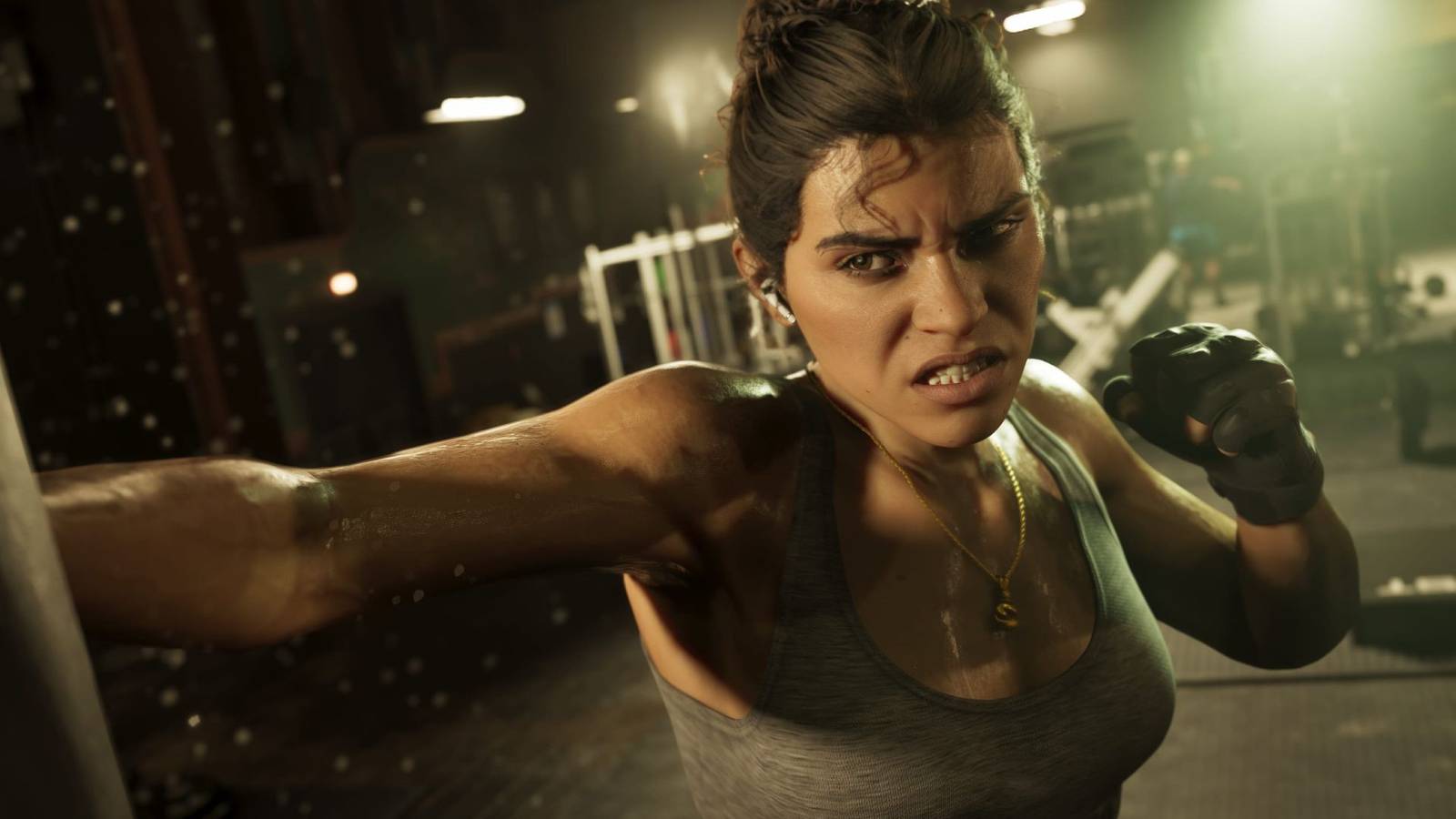
He didn’t turn his back on the Brothers Mothersbaugh and Casale entirely, though. “That’s Good” kicks off Mixtape as a kind of statement-of-purpose–a weekend blast-off of pulsing synth and clapping hands–as Rockford and her friends Slater and Cassandra skateboard down a steep and busy road. You control Rockford down the slope, dodging cars and doing tricks, but you’re not being scored and there’s no “game over” screen; it’s just about living in the moment, enjoying the music, and feeling that unique bit of magic that happens when what you’re doing and what you’re listening to perfectly align.
When asked which of Mixtape’s songs means the most to him, Galvatron goes straight to Akron’s finest. “All hail Devo. There’s just some broken shard in my heart and it’s shaped like ‘That’s Good’ by Devo. And when I hear it I feel whole and all is well in the world and there’s a kind of energy like something really amazing is suddenly unfolding.”
“That’s Good” is followed a few minutes later by The Jesus and Mary Chain’s “Just Like Honey.” The echo-y moodpiece soundtracks a scene set in Rockford’s bedroom as her friends hang out, just killing time before that night’s big party. The song is nostalgic on several levels: Like much of the band’s music, it invokes pre-British Invasion pop songs of the early ’60s; it sounded like the cutting edge of rock ‘n’ roll when it was released in the ’80s; and it became recognized as a key indie-rock classic when the soundtrack to Sofia Coppola’s Lost in Translation repopularized it in the early ’00s.


Galvatron admits that soundtracks were a major influence on Mixtape. He names Dazed and Confused, Ferris Bueller’s Day Off, Donnie Darko, and The Breakfast Club as inspirations not just to the game’s end-of-high school story, but also for how their soundtracks captured the eras they were set in as well as the characters’ moods and personalities. There’s one specific 1980s soundtrack that clearly made a great impression on him that he doesn’t mention, probably because its influence is obvious and unmistakable: the soundtrack to 1986’s The Transformers: The Movie.
Two different songs from that soundtrack, which is legendary to pretty much anybody who was a boy in elementary school when the movie came out, pop up in Mixtape. One comes during a major setpiece, when Cassandra, a former standout softball player, rips homer after homer to the tune of Stan Bush’s “The Touch.” Later on a minor triumph is emphasized with a blink-and-you’ll-miss-it sting from “Dare,” Stan Bush’s other song from The Transformers. If you’ve seen the song list and wondered why there are two different songs from that movie here, all you need to know is that the movie’s bad guy is named Galvatron; it’s where Johnny got his pseudonym. “It happened five days before certification,” Galvatron says of the idea to double up on Stan Bush. “I was like OMG THIS NEEDS MORE BUSH.”
Mixtape is full of other songs that mean a lot to Galvatron. “Silverchair were my life from 13,” he says of the Australian grunge acolytes, who had a brief burst of popularity in America in the mid ’90s. “Love” by Smashing Pumpkins comes from the 1995 album Mellon Collie and the Infinite Sadness, which Galvatron was given by a cousin when he was 15. “More Than This,” which graces a stirring scene of fireworks exploding above a coastal road (before your car takes off into the sky, in shades of 1984’s Repo Man), is a signature hit from Roxy Music, a band Galvatron grew up hearing because they were one of his dad’s favorites.
Two things you won’t hear in Mixtape, in what is easily the biggest drawback with the game, are hip-hop and R&B. Even though the ’90s is when hip-hop fully conquered pop culture, you won’t hear any Dr. Dre or Snoop Dogg. R&B groups like Boyz II Men, TLC, and En Vogue dominated the pop charts in the ’90s, but they don’t make it onto Rockford’s mixtape. That’s the most glaring issue with a cursory glance of the soundtrack, but it does make sense that somebody like Rockford probably wouldn’t be a big fan of those chart-toppers. She probably would be listening to A Tribe Called Quest or De La Soul, though, and Beastie Boys were the rare band that were beloved by almost every social group and demographic at the time.

Still: Rockford isn’t a real person. Galvatron is. And Mixtape’s music is a direct reflection of who he is and what he listened to while growing up in Australia in the 1990s. As he puts it, rock music “was my scene. They say ‘write what you know’ and I know heaps about Oh No It’s Devo and Mellon Collie and the Infinite Sadness. The game is bent to my tastes, for better or worse. Blue Moon Lagoon and the characters who live there exist in the heightened reality of a classic rock radio station. The place, the year, the era of each character, even the time of day are all unclear in Mixtape, because those things drift with memory and distance. It’s our feelings, and our soundtrack that stay with us forever.”
This particular soundtrack is likely to stay with Galvatron forever. Despite hearing these songs endlessly during production, he hasn’t tired of them. “Making a game like this, you wonder if it will destroy the music for you. If anything, I love these songs even more,” Galvatron says. And maybe, after playing Mixtape, you will, too.
