








Nintendo loves to build on what it has already created. Donkey Kong Bananza, a game that mixes 3D platforming with freeform destruction, began as a prototype that built on ideas featured in Super Mario Odyssey, and the prototype featured a Goomba with giant fists.
Super Mario Odyssey’s Luncheon Kingdom, among other areas, featured breakable structures scattered throughout the environment. These objects could be smashed into pieces using many of the special abilities Cappy gave Mario. Nintendo producer Kenta Motokura and programmer Tatsuya Kurihara explained how that mechanic eventually helped inspire the creation of Donkey Kong Bananza during a talk at the Game Developers Conference in San Francisco this week.
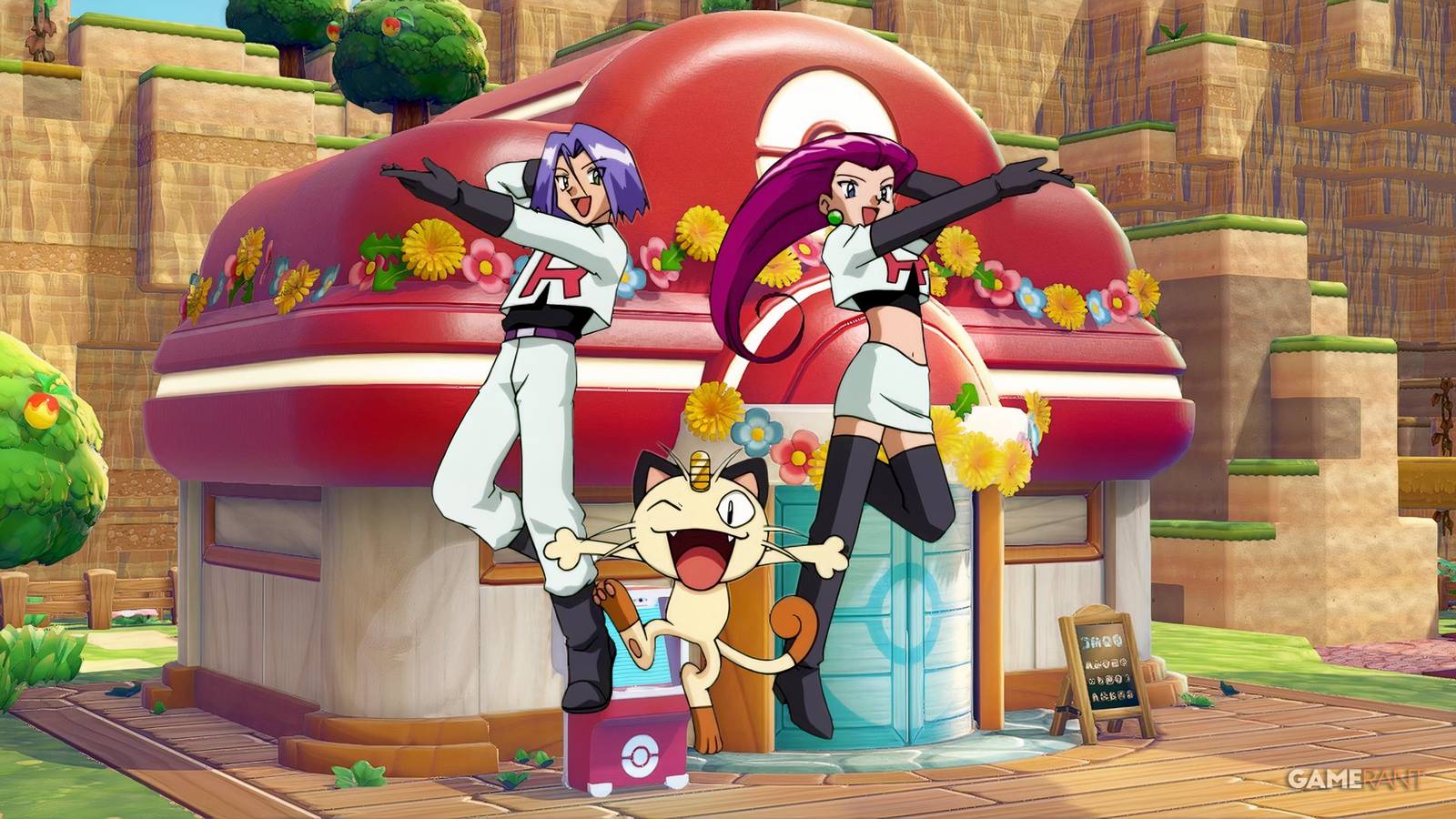
After Odyssey was complete, Kurihara put together a simple prototype using assets from the game. He strapped two giant fists onto a Goomba to test how it would feel to smash through walls and even grab debris from those walls to throw. You can see our rendition of what that may have looked like above.
“After making the prototype I found that the ability to destroy any type of terrain was a satisfying interaction,” he said. “I especially liked the idea of being able to rip off chunks of terrain. I felt we could build a game off this core idea.”
The talk also explored the voxel technology Nintendo used to create Bananza. A voxel is a 3D, cube-shaped unit of data representing a single point in a three-dimensional grid, essentially functioning as a 3D version of a 2D pixel. Nintendo filled Bananza’s levels with millions of these voxels, turning the environments into vast destructible punching bags for players.
Nearly everything in Bananza is destructible, outside of a handful of environmental elements. Enemies, NPCs, and almost every inch of each level can be punched through. The Canyon Layer, for example, contained more than 300 million voxels to achieve this level of destruction. That freedom, Motokura said, is a major part of the game’s appeal.
“It’s more fun to destroy that which is beautiful,” he joked near the end of the talk.
For more from GDC 2026, you can read about the cut content that could have been included in Ghost of Yotei.

