




Ahead of its launch, plenty of people managed to get their hands on Fire Emblem: Fortune’s Weave early, and just about every preview came back carrying the same sentiment: it’s enormous. Indeed, those who’ve already logged several hours with the title came away saying they had barely scratched it well before the game’s second half even entered the conversation. The thing is, when it comes to Fire Emblem: Fortune’s Weave, that scale could be the title’s biggest blessing or its biggest curse; in fact, it very well could be both.
That may seem like a confusing sentiment, considering the Fire Emblem series has fans who often measure affection by way of triple-digit playtimes. But with an even larger scale than Three Houses, the pure content saturation here might also be the riskiest structural decision Intelligent Systems has made to date, short of splitting Fates into three separately sold versions. Four parallel campaigns handed to players all at once is just as daunting a prospect as it seems, which makes Fortune’s Weave a tricky proposition: players have to trust that its enormous scale is eventually going to feel purposeful rather than merely excessive.
Fortune’s Weave and Three Houses’ Long Shadow
-
-

-


Fire Emblem: Three Houses is the best reference point to Fortune’s Weave for several reasons, even beyond the return of Crests, Hero’s Relics, Sothis, and Three Houses character artist Chinatsu Kurahana. The big connection is actually more of an evolution: Three Houses saw players become teachers at a military academy, choose a house, and then spend dozens of hours training students, building relationships, and preparing for battles before the time jump. From there, four routes branched out of a single choice, and that branching became both the game’s defining strength and its defining chore as completion times ran north of 100 hours.


Guess the games from the emojis.
Guess the games from the emojis.
Easy (120s)Medium (90s)Hard (60s)
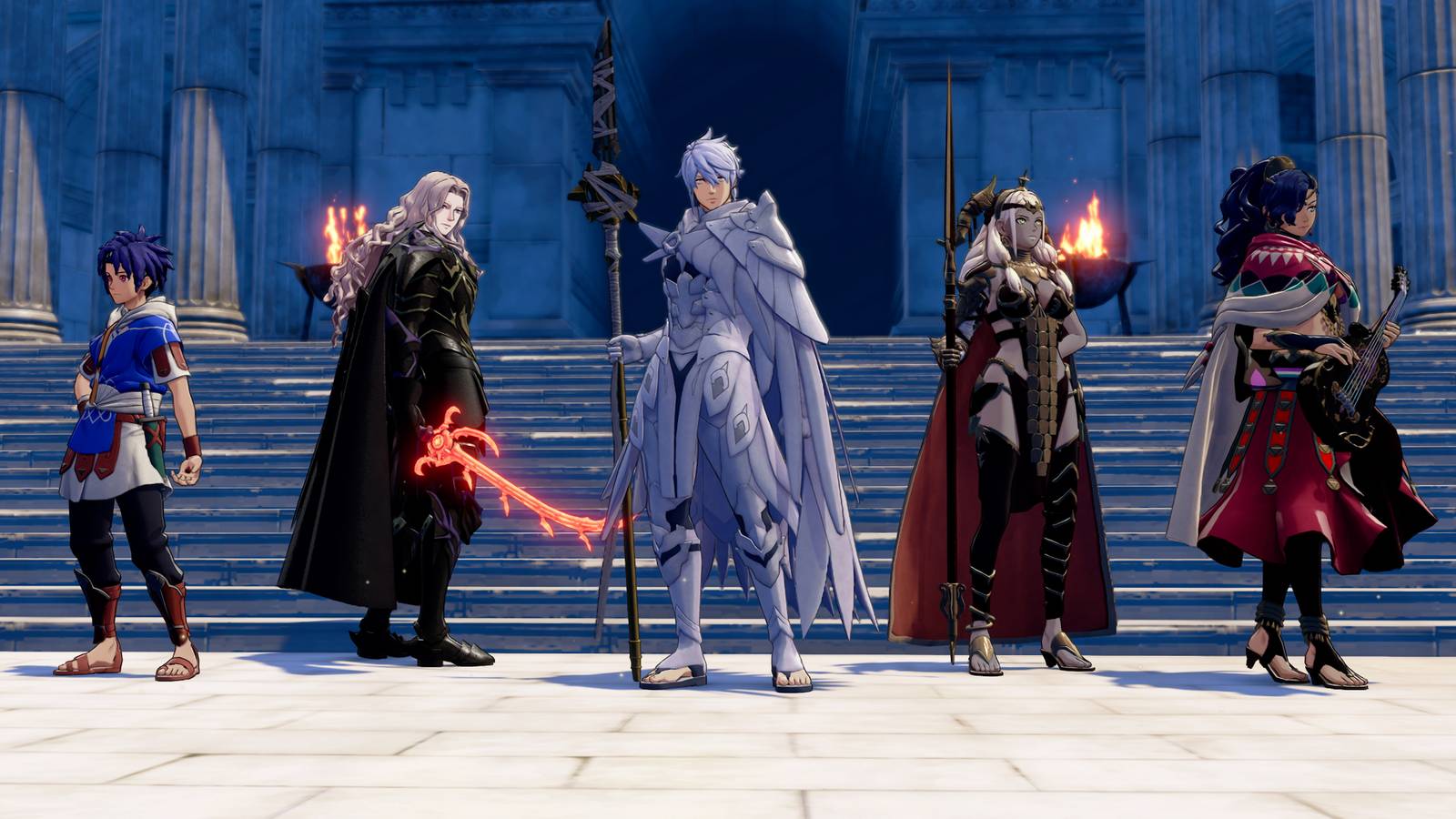
Fortune’s Weave looks at that structure and declines to make you choose at all. You play a created avatar named Eshmel, a soul summoned by Sothis into a Dagda already ruined by the demon god Balor and then sent back five years by the goddess Fortuna to guide the four Flame Lords toward the future. Previews indicate you can march on Balor early if you like, though the structure makes it fairly obvious players should have all four heroes beforehand — Cai, Dietrich, Theodora and Leda, each competing in the Heroic Games for a wish granted by the Dagdan Empire’s Divine Sovereign, and each wanting something very different from it.
Fortune’s Weave In Game Scale Terms

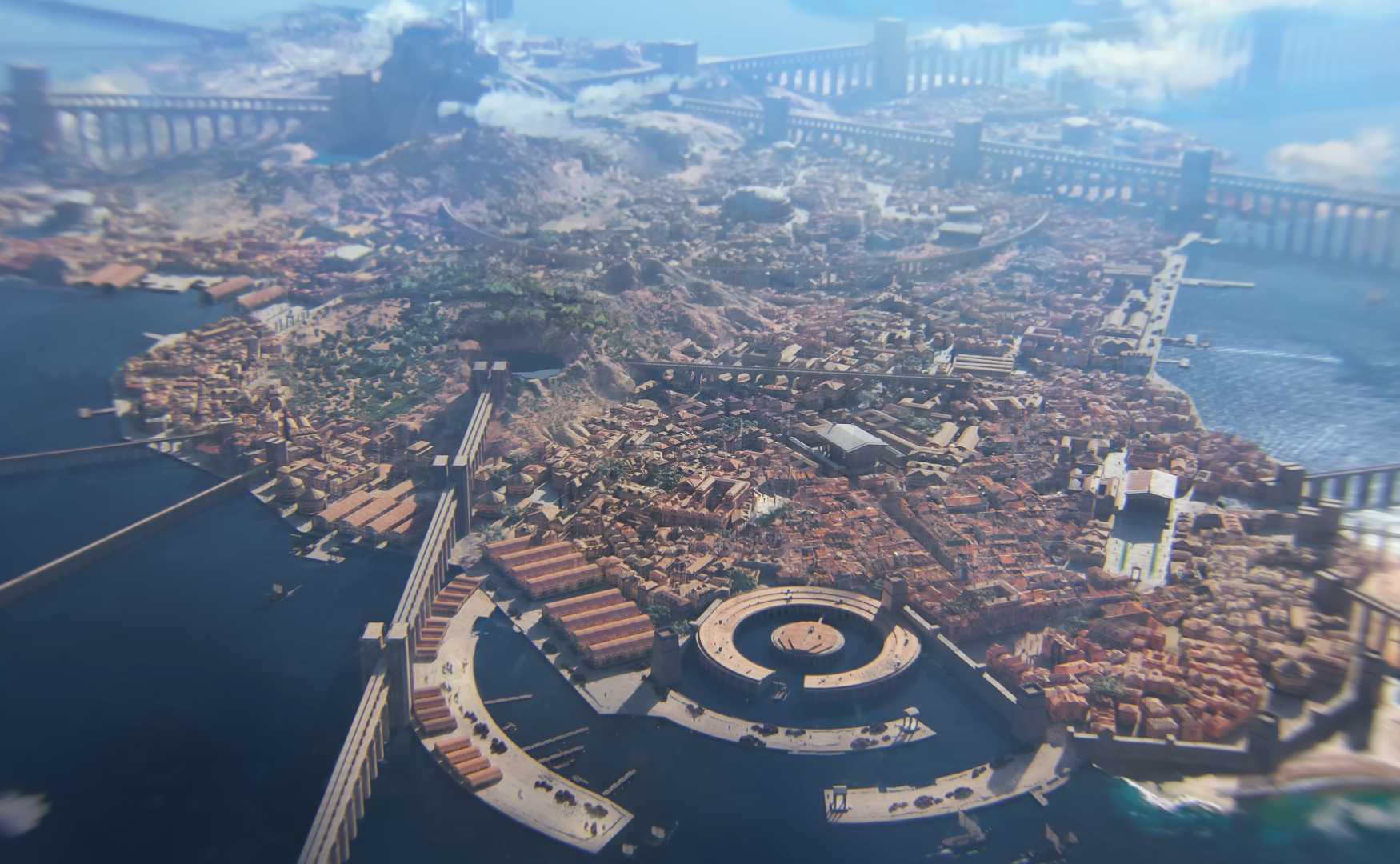
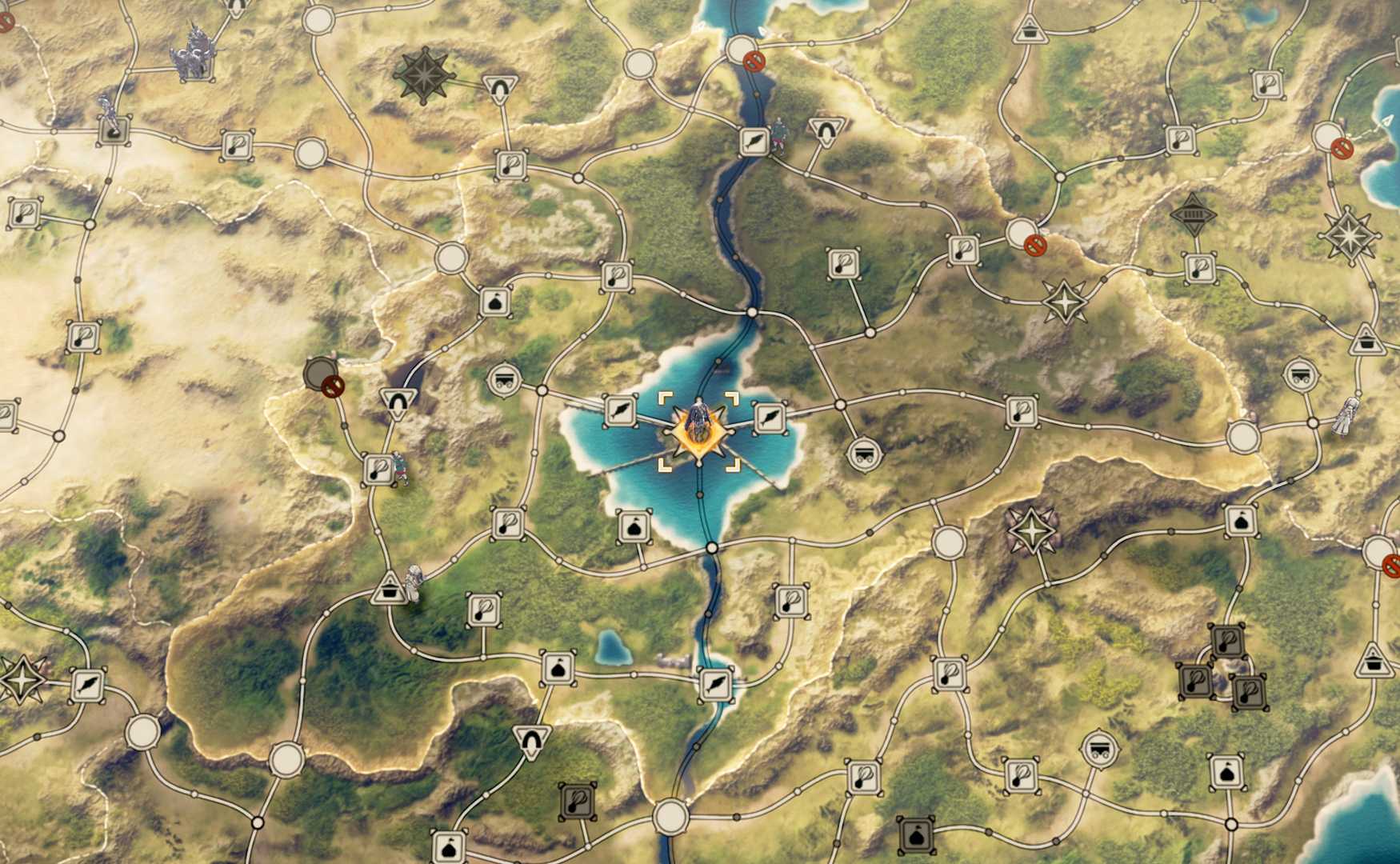
So the main difference with Fortune’s Weave is the ability to progress all four narratives in a playthrough rather than choose an individual one, but that difference has led to some wild numbers coming out of the previews. VGC’s Dave Aubrey reports that each of the four paths can run close to two dozen hours through the first part of the story alone, before Part 2 begins. Eurogamer, going further, floats a completion figure in the hundreds of hours.
Rough arithmetic puts the opening stretch of Fortune’s Weave at around 80 hours, and that math ignores side content, exploration, and character work entirely. Nobody has finished the game, of course, so treat those figures as gestures at an order of magnitude. The useful distinction comes from Aubrey, who separates this scale of game into two kinds of big:
While most games are long, Fortune’s Weave feels wide.
As he explains it, long is intimidating but legible; wide means four substantial ways of experiencing one world, each with its own cast, abilities, events, and perspective. Naturally, that changes what the risk actually is. My worry, in this case, is less about burnout and more about something harder to predict — whether players will invest in all of that or barrel through it, only to end up dissatisfied.
Where the Fortune’s Weave Previews Differ
-

-

-

That worry is founded in the several previews that identified, firsthand, where some cracks in this formula might appear. GameSpot’s Steve Watts played the opening chapters of two campaigns back to back and found himself repeating optional introductory quests, like tracking down the same shop vendors twice. He argued that in his case, the repetition helped clarify what the campaigns shared and what they didn’t, but he admitted that might not hold up across two more campaigns, and that “It altogether feels a little overwhelming.”
So if some repetition is inevitable, the question, then, is whether that repetition feels like padding or context. The Verge’s Jay Peters went further, and, having reached chapter five across all four stories, he describes the underlying structure as a slog, with the same quests, dungeons, and cutscenes recurring across paths. He acknowledges the narrative logic — any given path might be someone’s only path — but his resulting impression is pretty blunt:
But overall, the repetition really bogs things down.
Of course, Peters also says he’s engrossed enough in the RPG and strategy layers to tolerate the repetition, but that tension is the whole story in miniature. And what’s more, it has a historical rhyme: Ryan Thompson-Bamsey at TheGamer mentions finishing three of Three Houses‘ four routes and being unable to remember which one he abandoned, because they blurred into one long term at school. Confronted with Fortune’s Weave, he wrote, “I cannot decide whether that is thrilling or exhausting.”
Intelligent Systems Might Have Seen This Coming


Intelligent Systems appears to have anticipated these problems, too, as countermeasures seem to be everywhere: completing Milestones unlocks karma shards that buy Boons of Salvation, which apply across all four paths, so progress in one campaign smooths the runway for the next. Thompson-Bamsey found that Fortuna’s Blessing, the game’s rewind, appears to have no charge meter or per-chapter limit on Normal difficulty, which is a substantial shift for a series built on permanent mistakes. And with an auto-advance for skipping exploration days, a support system deliberately pared back from recent entries, and dungeons that track where you have already walked, it seems like Intelligent Systems isn’t unaware of the burden created by this new structure.
Only (a Lot) of Time Will Tell
-

-

-

Ultimately, these worries about scale are very much an open question—one that is also, at the end of the day, totally subjective. Folks have made the optimistic case that this new structure in Fortune’s Weave is a fix for replay padding, which it may well turn out to be. What separates that from a reading like Peters’ comes down to how far the four paths diverge past chapter five, and nobody outside Intelligent Systems knows the answer to that.
The question worth sitting with is whether a game can be too generous for its own good, and it isn’t as crazy as it sounds, even these days. The modern RPG instinct runs either toward width as padding or toward streamlining, and Fortune’s Weave is refusing the second option outright. Whatever else it deserves, it deserves credit for not being frivolous about it—this is not radio towers and outposts to clear, like it might’ve been in another game or another genre; it’s other protagonists, another story, new sets of people to know, and the excess is as exciting as it is worrying.


- Released
-
September 17, 2026
- ESRB
-
Teen / Fantasy Violence, Mild Language, Suggestive Themes, Use of Alcohol, In-Game Purchases
- Publisher(s)
-
Nintendo