







Borderlands 4’s C4SH is the latest addition to a long line of DLC Vault Hunters. By and large, the more experimental play styles seen in DLC Vault Hunters have worked out for everyone, too. Characters like Gaige in Borderlands 2 traded accuracy for Anarchy damage to hilariously devastating effect, and even Aurelia’s cold, calculated co-op dependency in Borderlands: The Pre-Sequel had its moments. But C4SH in Borderlands 4 might be Gearbox’s most impressive character yet, primarily because he’s the culmination of everything experimental DLC design has been building toward.
Where past DLC characters bent the rules of a specific playstyle, C4SH plays with higher stakes, as his entire kit is built around probability as a resource. On the surface, that random chance element might seem familiar to those who played Claptrap in The Pre-Sequel: chaotic, unpredictable, best enjoyed by players who enjoy watching the world burn. But dig into how his mechanics actually function, and a more sophisticated legacy emerges, running straight through Gaige, Krieg, Jack, and even Aurelia.
How Borderlands 4’s C4SH DLC Connects to FL4K and Zer0
C4SH’s robotic frame already invites comparisons to the franchise’s past powerful robots, but the narrative connections could run surprisingly deep.
C4SH’s Probability-Minded Playstyle
In terms of the greater Borderlands universe, C4SH is a character experiencing true unpredictability for the first time—a former house dealer who’s now on the other side of the table, watching the chips fall where they may. That lore detail is baked into how his kit feels to play, as randomness is exciting, but players still need relatively predictable power spikes. His keystone mechanic, Windfall, is precisely how Gearbox threads that needle, and it’s what makes C4SH not only a top contender in the endgame and one of the most mechanically interesting Vault Hunters ever.
Windfall accumulates Fortune stacks through kills, and with every full reload or Action Skill activation, there’s a chance of those stacks transforming into a window of higher gun and Action Skill damage. What gives the system depth is that, during Windfall, C4SH’s Action Skills can also gain dramatically enhanced effects. This gives players a reliable ceiling even when the floor shifts beneath them.
C4SH’s Three Skill Trees Each Represent a Different Type of Chance
C4SH’s three skill trees differ in how they ask the player to engage with probability. C4SH’s Chaos Walking tree is the most straightforward expression, as the randomness affects bullet behavior rather than decision-making. His Action Skill here is Cross-Fire, which has C4SH holster his main weapon and draw dual revolvers in a third-person blaze of gunfire. Secondary effects like melee knockback and targeted lock-on add tactical texture, and during Windfall, those revolver shots gain a chance to ricochet, which already brings to mind Gaige’s signature bullet-hell-esque builds from Borderlands 2.
Luck of the Draw introduces premeditated randomness, which makes the tree most reminiscent of Aurelia’s contract system from The Pre-Sequel—both systems create pre-combat decisions that shape gameplay. The Action Skill, Sleight of Hand, asks players to build a deck before they play a hand of throwable ability cards like Fireball or Magic Missile, and the cards that come up are random. Players can expand the deck via augments to further increase draw randomness with other powerful cards, and the payoff during Windfall can be enormous, as every card’s effect is dramatically amplified.
Roll the Bones is technically the most volatile of the three, but one of the most overtly influenceable, too. The Action Skill, Cleromancy, rolls supernatural Bone Dice that summon a Bone Totem with effects determined by the result: some buff allies, some deal damage like a turret, some are stationary, while others actively seek out targets. During Windfall, every roll guarantees a unique result, trading pure randomness for structured variety. It’s the tree with the most Krieg DNA: high-volatility outcomes that reward players willing to operate in uncertainty.
Gaige Established the Appeal of Controlled Chaos
Now, when it comes to comparing C4SH to previous DLC Vault Hunters, Gaige from Borderlands 2 is the godmother of this design space, and C4SH clearly studied her homework. Anarchy taught players to tolerate volatility in exchange for scaling damage and ricochets. It was the first skill to feel inherently unstable yet still be deeply rewarding.
The structural echo in C4SH’s kit is hard to miss: Windfall’s ricochet chance for Cross-Fire cements the tree’s bullet bounce focus, but skills like Ace in the Hole also increase gun damage per Fortune stack, directly mirroring Anarchy’s per-stack damage ramp, albeit to a much subtler effect. Meanwhile, Trick Shot—which causes bullets to ricochet and spawn additional damaging projectiles—sits comfortably alongside Nth Degree and Close Enough in the Gaige tradition of incredibly powerful multi-hit scaling. All of these skills share a focus on improving mobbing efficiency and proc frequency with every bounce.
Krieg Also Utilizes Risk As A Resource
While certain elements of Kreig’s kit relied on chance, his central design insight was that survivability and output don’t always move in the same direction. C4SH inherits that ethos, but redirects it, as Krieg risks survival, but C4SH risks consistency. Unshaken, which increases damage when Fortune stacks are lost, mirrors the logic of Krieg’s Salt the Wound skill, as both convert a disadvantage state into an offensive scaling opportunity and reward players for Vault Hunter builds that keep the “downtime” state in mind.
The Doppelgänger Shares Systems That Feed Themselves
Handsome Jack’s clone in The Pre-Sequel, Timothy, was defined by feedback loops, like kill skills that enabled more kills, or Digi-Jack clones that could respawn and keep up pressure. C4SH taps into that same self-sustaining logic with his Roll the Bones tree, as the skill Restless Remains allows Bone Totems to respawn after being destroyed. That maps almost perfectly onto You’re Hired, Timothy’s Digi-Jack respawn skill. The architecture is the same, with a key difference: Timothy scales predictably, C4SH scales probabilistically.
Aurelia’s Threads Are Thinner
Borderlands: The Pre-Sequel‘s Aurelia Hammerlock is the hardest comparison to make, as her co-op dependency doesn’t have a clean analogue in a character built around solo probability systems, but connections exist, especially given that C4SH does have some companion-oriented skill nodes. C4SH’s Potent Posse skill gives companions a damage bonus, which mirrors the personal half of Aurelia’s Contractual Obligations skill. Beyond that, Nothing Beats Lead converts a portion of C4SH’s elemental damage into larger kinetic damage, mirroring Aurelia’s Wintertide skill logic, in which one damage type feeds another.
C4SH Is a Pitch Perfect DLC Vault Hunter

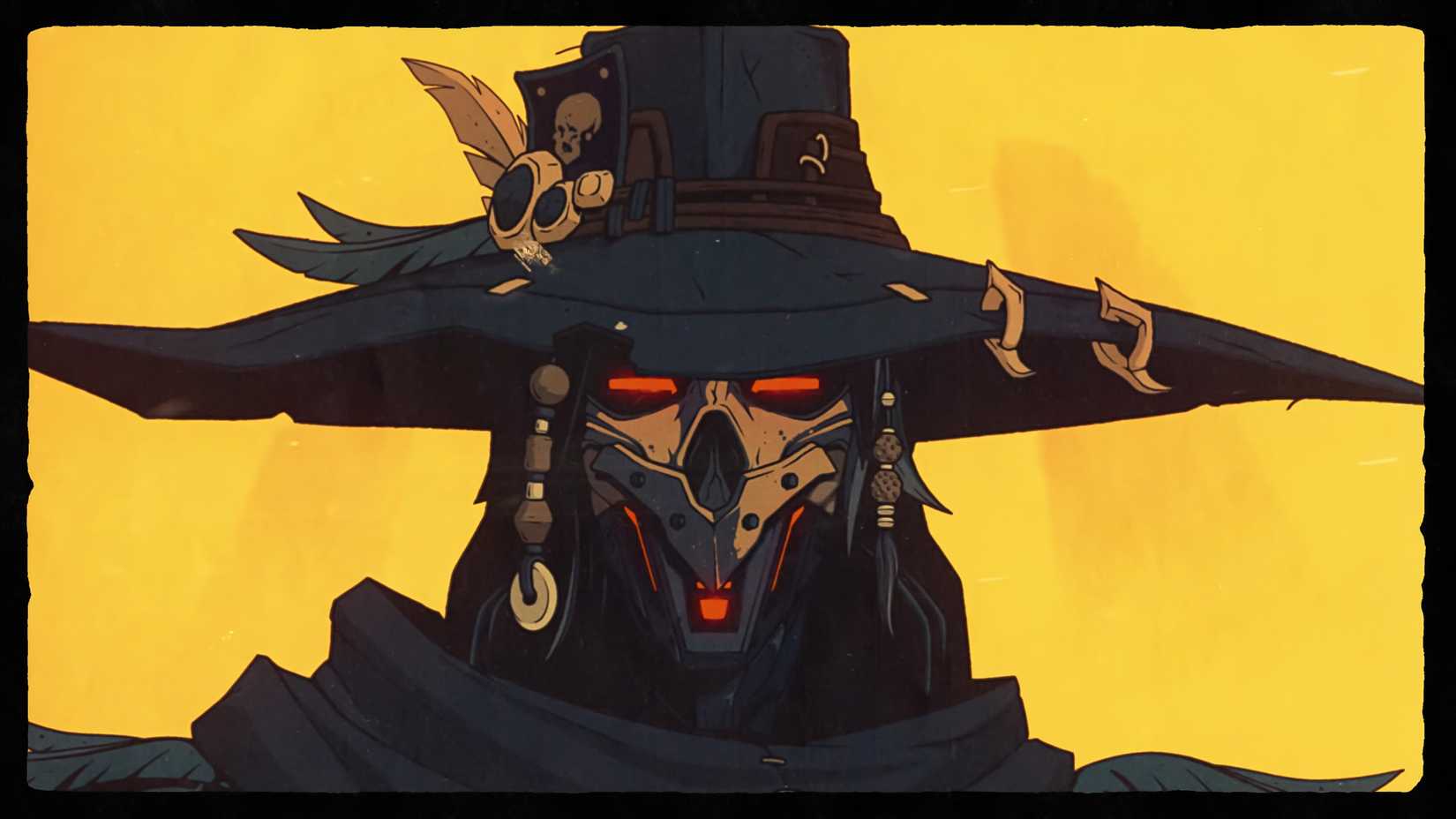
Every DLC Vault Hunter has pushed the design envelope in some way, but C4SH has synthesized that on a small scale. The result is a character that drives the game forward from a variety of angles, one that feels genuinely new while being unmistakably Borderlands. More than any of his predecessors, C4SH represents Gearbox’s growing comfort with designing Vault Hunters around abstract systems rather than traditional combat roles. Ultimately, though, the best thing about Borderlands 4‘s C4SH (and the DLC he came with) is far simpler—he’s just a ton of fun to play.


- Released
-
September 12, 2025
- ESRB
-
Mature 17+ / Blood and Gore, Intense Violence, Sexual Themes, Strong Language, In-Game Purchases, Users Interact