




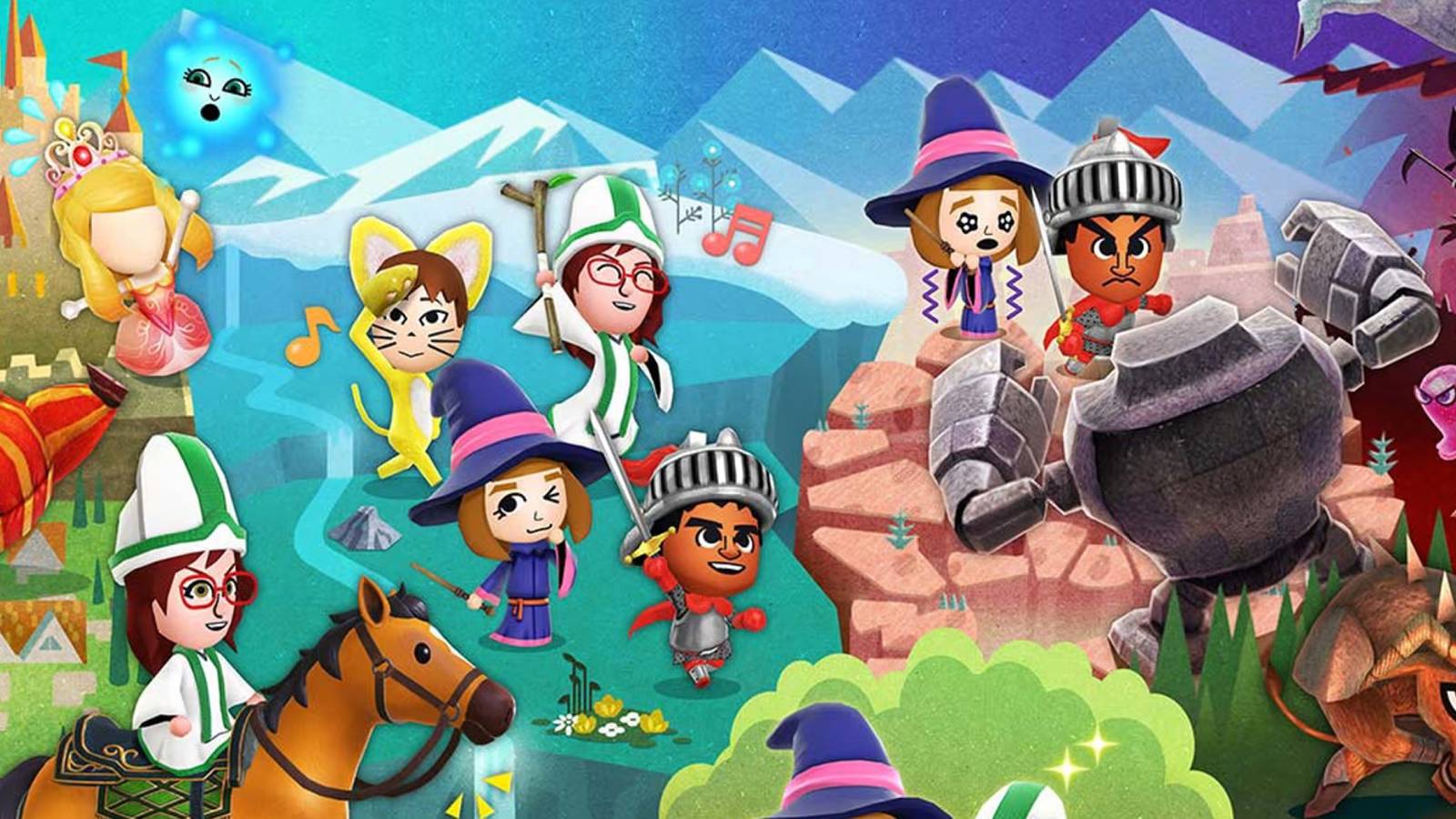
The tiny taste that the recently released Tomodachi Life: Living the Dream demo gave its players was very welcome, but those still struggling with the wait can look to fellow Mii game Miitopia to hold them over. Nintendo’s all-purpose avatars have had a rough go of it on both the Nintendo Switch and Switch 2, so those who grew up with them welcomed the Living the Dream announcement with open arms. Living the Dream’s demo implies that the new entry will dial up the absurdity and customization of the first two Tomodachi games to a new level — which ironically sent many demo players into Mii withdrawal until the game finally comes out on April 16th. For anyone who needs a dose of quirky, cozy Mii adventures to fill that hole until then, though, there’s another Switch Mii game with crazy customization, relationship drama, and hilariously insane writing: Miitopia.
While the original Miitopia was a Nintendo 3DS RPG that came out a few years after Tomodachi Life, it very much takes after its older brother in terms of atmosphere and character customization. After Miitopia got a Switch port in 2021 that added more content like a “makeup” system that made Mii customization deeper than ever, it’s dutifully done its job of keeping Miis relevant for the past 5 years. It’s also cheaper than the average first-party Switch game, so it’s a great option for those impatiently waiting on Living the Dream or players who want something a little cheaper.
No, Tomodachi Life: Living the Dream Isn’t Just “Animal Crossing With Miis”
Tomodachi Life: Living the Dream is Nintendo’s next big life simulator, but what distinguishes it from its older brother Animal Crossing?
The Literal Faces of Miitopia
In the land of Miitopia, Miiis lived together in harmony…until the Dark Lord attacked. He stole the faces right off Miis’ heads and used them to make members of his monster army. One day, a lone adventurer stumbles into the town of Greenhorne, where they witness the Dark Lord in action. After gathering the courage, that adventurer — your Mii — sets out to get the lost faces back, building a party of your own choice along the way.
Who’s That Character?

Identify the silhouettes before time runs out.
Identify the silhouettes before time runs out.
Easy (7.5s)Medium (5.0s)Hard (2.5s)Permadeath (2.5s)
Miitopia doesn’t have a complex story, but it’s serviceable enough to make you want to keep going. Your own Mii gets a little character development if you squint, and the various NPCs — who you also get to individually pick Miis for — are a lot of fun. Despite being an RPG, the core appeal of the game isn’t its story, and it doesn’t try to trick you into thinking that’s the case. The two big hooks of the title are Miitopia‘s character customization and the quality of its dialogue.
Mii-Making in Miitopia
Being a game about Miis, Miitopia encourages you to put anyone you want in any role. You can be the hero, you can fill your party with your friends and loved ones, and you can transform that one character from that one show that you always found annoying into the Dark Lord. Plus, the Switch version of Miitopia has a surprisingly deep “makeup” system to make players’ Miis more accurate to their intended vision.
Before Living the Dream’s face paint feature, Miitopia had wigs and makeup that could be messed with to create some crazy characters. I was personally proud of how well I managed to recreate my own crusty white dog as the Dark Lord, but I’ll always be impressed with the person who somehow made a $19.99 Fortnite V-Buck card into a MIi.
As deep as Mii-making can be, it can be a little overwhelming at first. The game gives you an extremely wide array of features to choose from and lets you resize the characters, rotate them, recolor them, overlay them, and whatever else you might expect to see in Photoshop rather than a Nintendo game. Thankfully, Miis are shareable online, unlike Living the Dream.
Banter and Relationships Drive the Gameplay


Like Tomodachi Life, Miitopia has a relationship mechanic. All the Miis in your party can bond with each other. The closer two Miis are, the more battle skills they’ll be able to use with that specific Mii. While there isn’t romance in Miitopia (though there are some suspicious heart-eyes between party members at higher relationship levels), it’s worth raising everyone’s relationships for gameplay reasons.
The relationship system is also where most of the game’s humor comes from. With the Switch version’s addition of “hangouts” where you watch a cutscene of two Miis (or a Mii and the party’s…horse) bonding over an activity as their relationship meter increases. These are always low-stakes scenes that sometimes don’t have a lot going on, but are always adorable even if they aren’t necessarily that funny.
But no relationship is without strife, and your party will definitely butt heads every once in a while. Whether it’s a random event or because a Mii used a skill that made another Mii mad, party members can get into arguments, which will also affect their battle performance. These are pretty easy to resolve, though, as it’ll usually only take a few in-game days of sharing a room to make up — and often, the game will have the characters make up even sooner.
Comedy and Combat in Miitopia


The biggest difference between Miitopia and the Tomodachi series is that they’re simply different genres. The former is an RPG while the latter are life simulators. And as funny as Miitopia can be, it would be a bad RPG if the combat wasn’t any fun. And that’s where things can get a little more divisive.
Miitopia fights are highly automated. The only character you can actually choose moves for is your starting Mii; the rest of the party members are controlled by AI. The good news is that the party AI is actually pretty smart, knowing when to heal and usually setting up buffs when a battle begins. The bad news is simply that not everyone will have fun with a party you can’t control, and that the party AI isn’t perfect. Some might view it as adding character to your party’s Miis since it gives the illusion of them having their own ideas of how to fight, but when tackling the decently tough postgame, one might find themselves wishing they could strategize more.


Choose cover art to complete the equations.
Choose cover art to complete the equations.
Easy (15s)Medium (10s)Hard (5s)
If you can look past the autonomous party, though, the combat is well-thought-out and still engaging. The job system has a lot of variety and some really fun takes on common classes (the bard becomes the Pop Star, the monk becomes the Cat, and so on). The quality of each Miitopia class can be unbalanced, though – you’ll hardly see anyone choosing the Tank class on purpose since even its basic attack costs MP. The main story isn’t hard enough to really disqualify any classes from being useful, though, so there’s nothing stopping you from putting Vegeta in the Flower class if you really want to. If you want to tackle the postgame, though, you might want to do some job hunting since there’s a sizable difficulty spike.
Miitopia also uses its silly setting to make standard combat tropes as quirky as possible. Instead of a “blind” status, Miis can be inflicted with sadness so that their tears will cloud their vision and lower their accuracy. Instead of being paralyzed, Miis might be laughing so hard that they can’t focus. And then there’s the man-eating Hamburger enemy…


Avoid This to Get the Most Out of the Tomodachi Life: Living the Dream Demo
The new demo for Tomodachi Life: Living the Dream on the Nintendo Switch has players avoiding a major mechanic just to play as long as possible.
Miitopia Can Be a Fun Diversion or a Dedicated Time Investment


Miitopia’s gameplay is good, but not great. Still, minmaxing your party isn’t the point of the game; the point is casting whoever you want in whatever role, resulting in things like Prince Harry Potter fighting with the fallen noble Squidward over the heart of the lovely Princess Piranha Plant. Even after the story is finished, there are enough mini-scenes between your party to keep the drama going for a long time.
Another good trait of Miitopia is that you get what you put into it. It’s a light enough game that if you just want to casually play a few fights before going to bed, you can. But if you do want to minmax your Miis, you absolutely can do that too, and you’ll want to once Miitopia‘s postgame comes around. Likewise, you don’t need to make masterpieces out of your Miis with the makeup system — you can ignore it entirely and make an entire army of default Mii clones if you’d like. But if you DO get a handle on the makeup, it can be addicting to recreate your favorite characters by creatively overlaying different facial features.
Whether you’re a fan of fighting or not, Miitopia has a cozy atmosphere worth seeing for oneself thanks to its simple yet silly storytelling and focus on character customization. And if you’re going mad waiting on Tomodachi Life: Living the Dream, Miitopia might be just what you need to fill that niche until April 16th (and maybe even beyond).



- Released
-
July 28, 2017
- ESRB
-
E For Everyone due to Crude Humor, Mild Cartoon Violence
- Developer(s)
-
Nintendo EPD
- Publisher(s)
-
Nintendo