








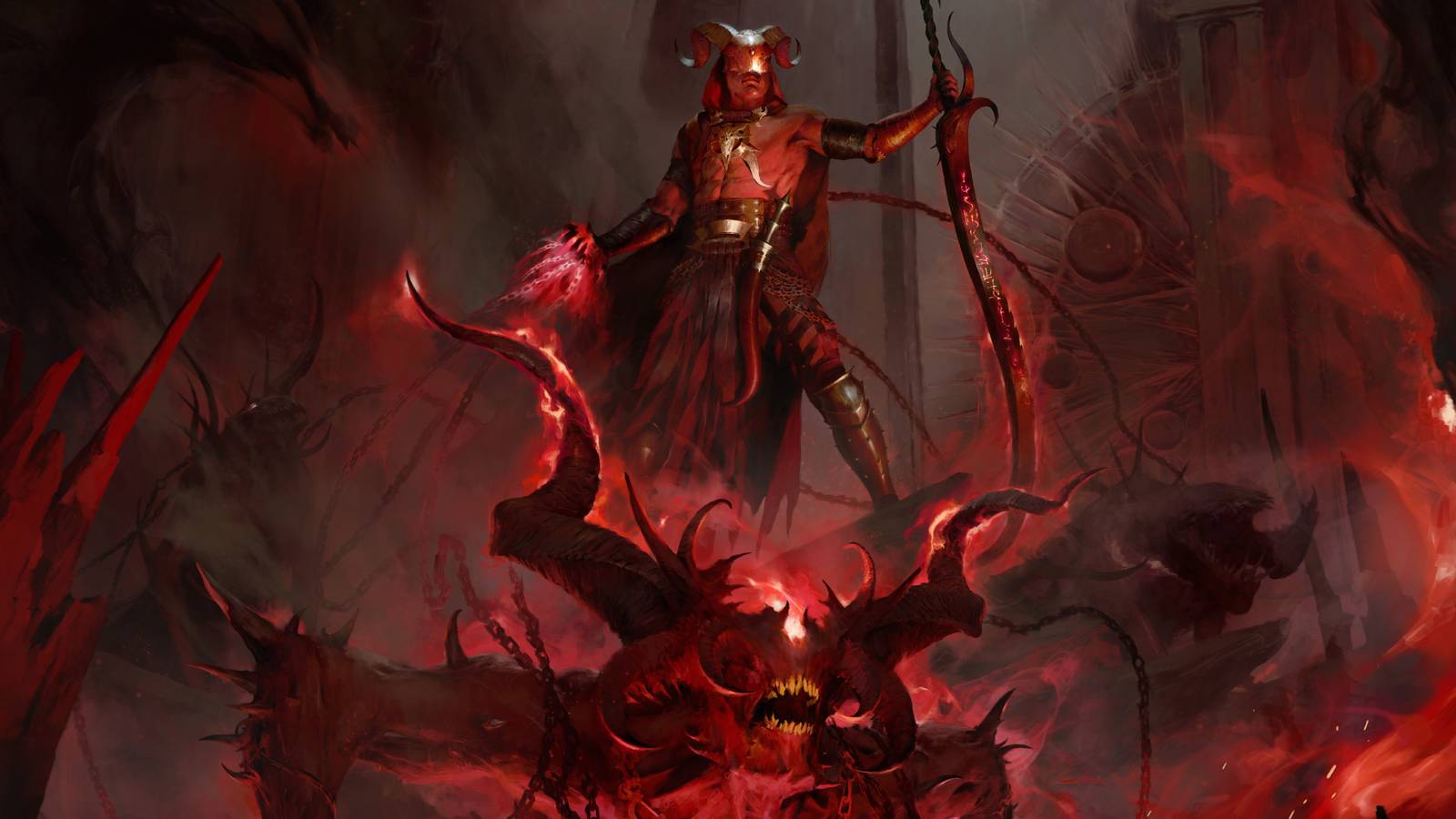
The climactic showdown with Mephisto is nearly upon Diablo 4 players, with the Lord of Hatred expansion finally releasing next month. A cornerstone of this expansion is the two new classes it introduces, one being the Paladin, which is already available for players who pre-purchase the expansion. Diablo 4 recently revealed that the Warlock will be the second class coming with the launch of the Lord of Hatred expansion, having already debuted in the series with the release of Diablo 2: Resurrected‘s Reign of the Warlock DLC.
GameRant was recently invited to go hands-on with Diablo 4‘s Warlock class in an event that took place at Blizzard’s Irvine campus. Here, I had the chance to experience the class during a demo period, where I was able to test out several different builds and get a feel for how the class plays in the context of Lord of Hatred’s updated Skill Tree system. Walking away from my time with Diablo 4: Lord of Hatred‘s Warlock had me more excited about the expansion than ever before, and as a lover of the Necromancer throughout the Diablo series, the Warlock felt like the perfect iteration on the summoner archetype that Diablo 4‘s Necromancer has struggled to fulfill.
The Unwritten Rules of Playing a Warlock in Diablo 2: Resurrected Explained
Diablo 2: Resurrected players looking to get the most out of their Warlock build should follow the community’s unwritten rules for success.
Diablo 4: Lord of Hatred’s Warlock is Everything I’ve Wanted from a Summoner Class

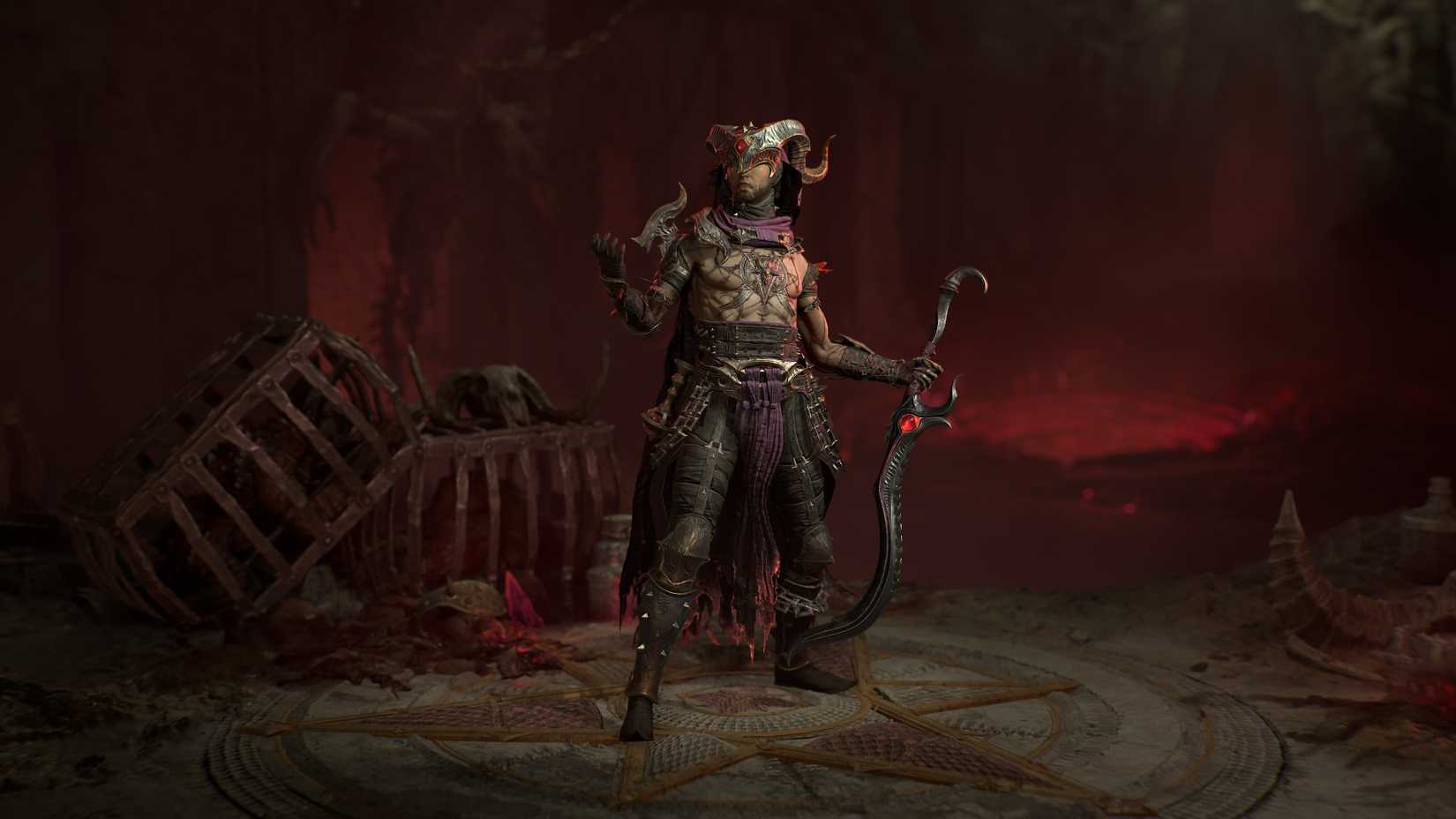
Despite my best efforts, I could never make a pure summoner build for the Necromancer work in Diablo 4‘s endgame. While I think the Minion Necromancer build is a perfect way to level the class, it isn’t really sustainable for much of the endgame content like Uber Lilith or the Pit, where you really need more direct oversight than the AI-controlled Skeletal Warriors, Mages, and Golems provide. The Warlock essentially fixes all of these issues, allowing players to summon demons from the Burning Hells to use more as tools than companions, which created a play style where I felt like I truly had the power over my minions.
Who’s That Character?


Identify the silhouettes before time runs out.
Identify the silhouettes before time runs out.
Easy (7.5s)Medium (5.0s)Hard (2.5s)Permadeath (2.5s)
Every Demon I Got to Summon as a Warlock
- Fallen Lunatic
- Ae’grom
- Rampaging Brute
- Fiend of Abaddon
- Demon Skull
- Abodian
- Taz’rauth
- Vollach
- Profane Sentinel, Demonic Eye
Much like the Warlock class of Diablo 2: Resurrected, Diablo 4‘s Warlock centers its builds around the different demons it can summon through various skills. However, unlike Diablo 2: Resurrected, this Warlock has far more options for minions that it can pull from the Burning Hells. Each of the Warlock’s four Soul Shards gives them access to one of four Greater Demons that can be summoned as a minion. Additionally, many of the skills on the Warlock’s Skill Tree allow them to summon demons through the use of Basic, Core, or Ultimate abilities, separate from the Soul Shards mechanic.
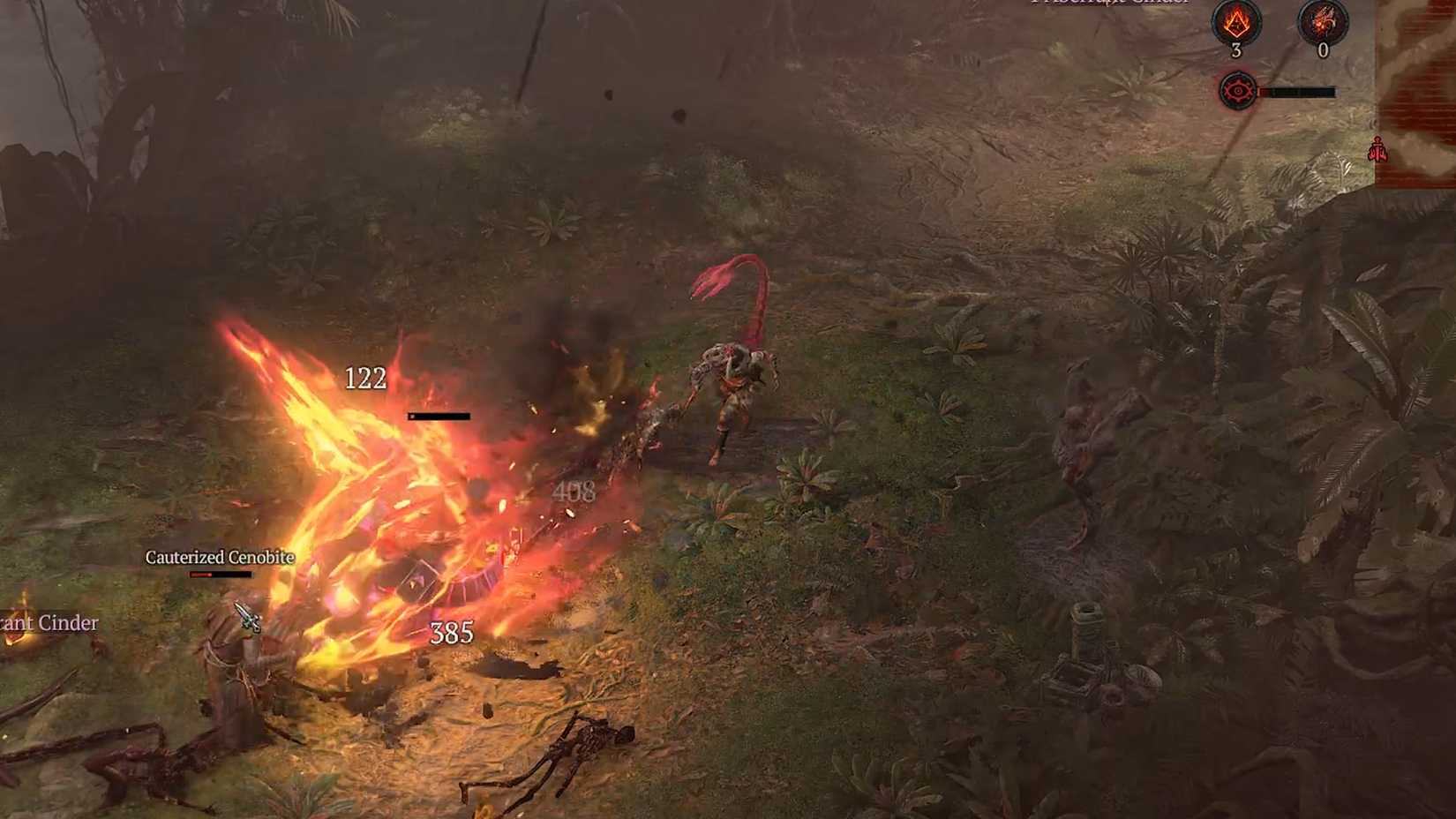
For example, I enjoyed spamming Fallen Lunatics with the Command Fallen Basic skill, which summons a Lunatic that charges an enemy and explodes on impact. This skill is a good representation of the Warlock’s design philosophy: treating demons as expendable weapons rather than companions. Another great example of how this philosophy comes through in Diablo 4: Lord of Hated is in the Wall of Agony skill, which summons and fuses 5 frenzied demons into a wall for 8 seconds, dealing damage to enemies in front of them. The Warlock isn’t afraid of abusing their summoned demons, ultimately aligning against the forces of Hell and simply turning its minions back against their masters.
The 4 Different Soul Shards Give The Warlock Plenty of Build Diversity
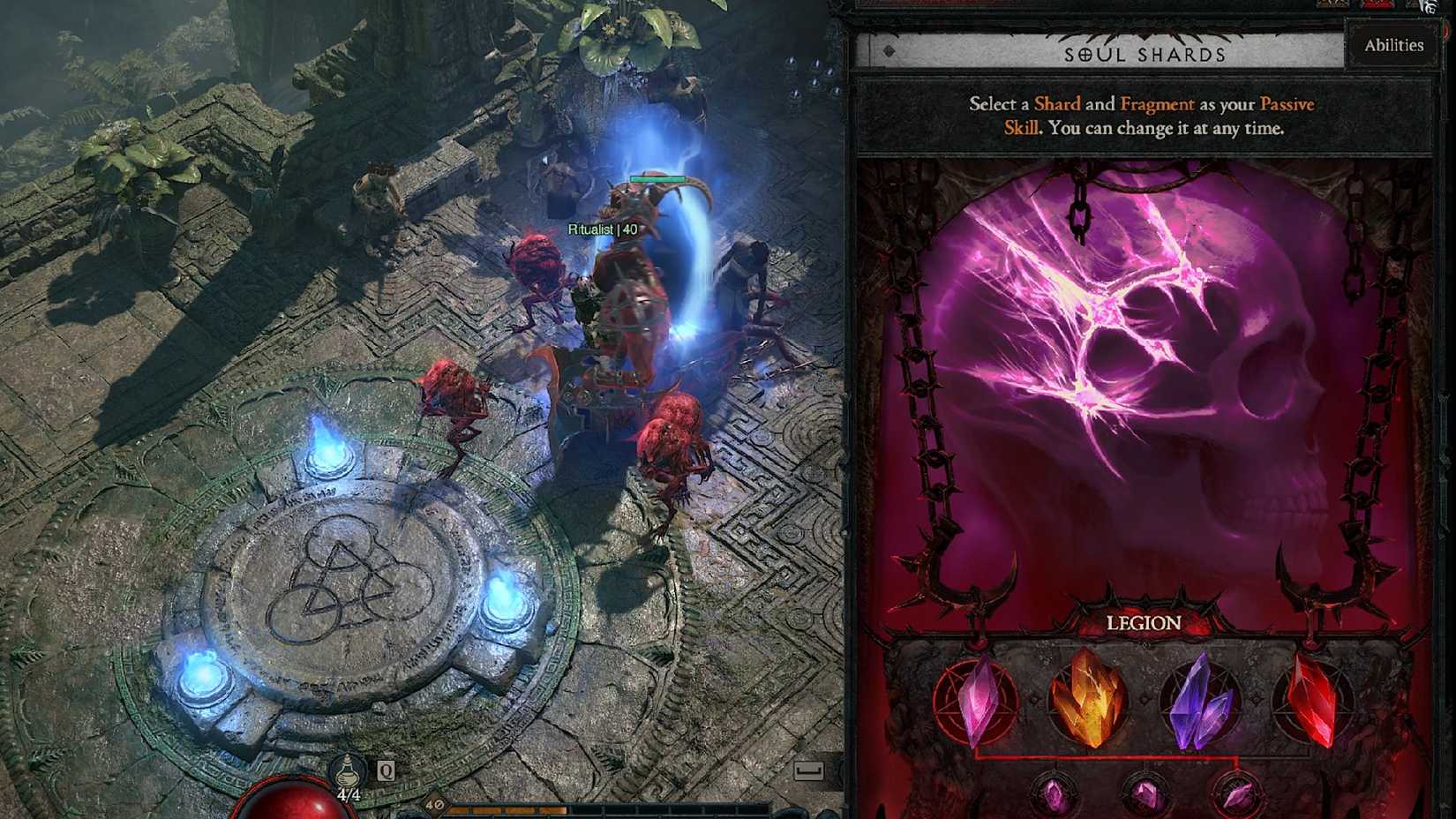
- Legion — Summon Ae’grom
- Vanguard — Summon Abodian
- Mastermind — Summon Taz’rauth
- Ritualist — Summon Vollach
Soul Shards are a mechanic unique to the Warlock in Diablo 4: Lord of Hatred, allowing the class to tap into the power of the demons held within the shards for build-defining abilities. While there will likely be Warlock builds that use a cross-section of skills, these four Soul Shards largely define the different playstyles that the Warlock can take on. Legion focuses on summoning, bringing demons temporarily over from another plane to do the Warlock’s dirty work. This was possibly my favorite type of Warlock to play, since it felt so satisfying summoning a massive demon like Fiend of Abaddon to temporarily slaughter enemies in a large area.
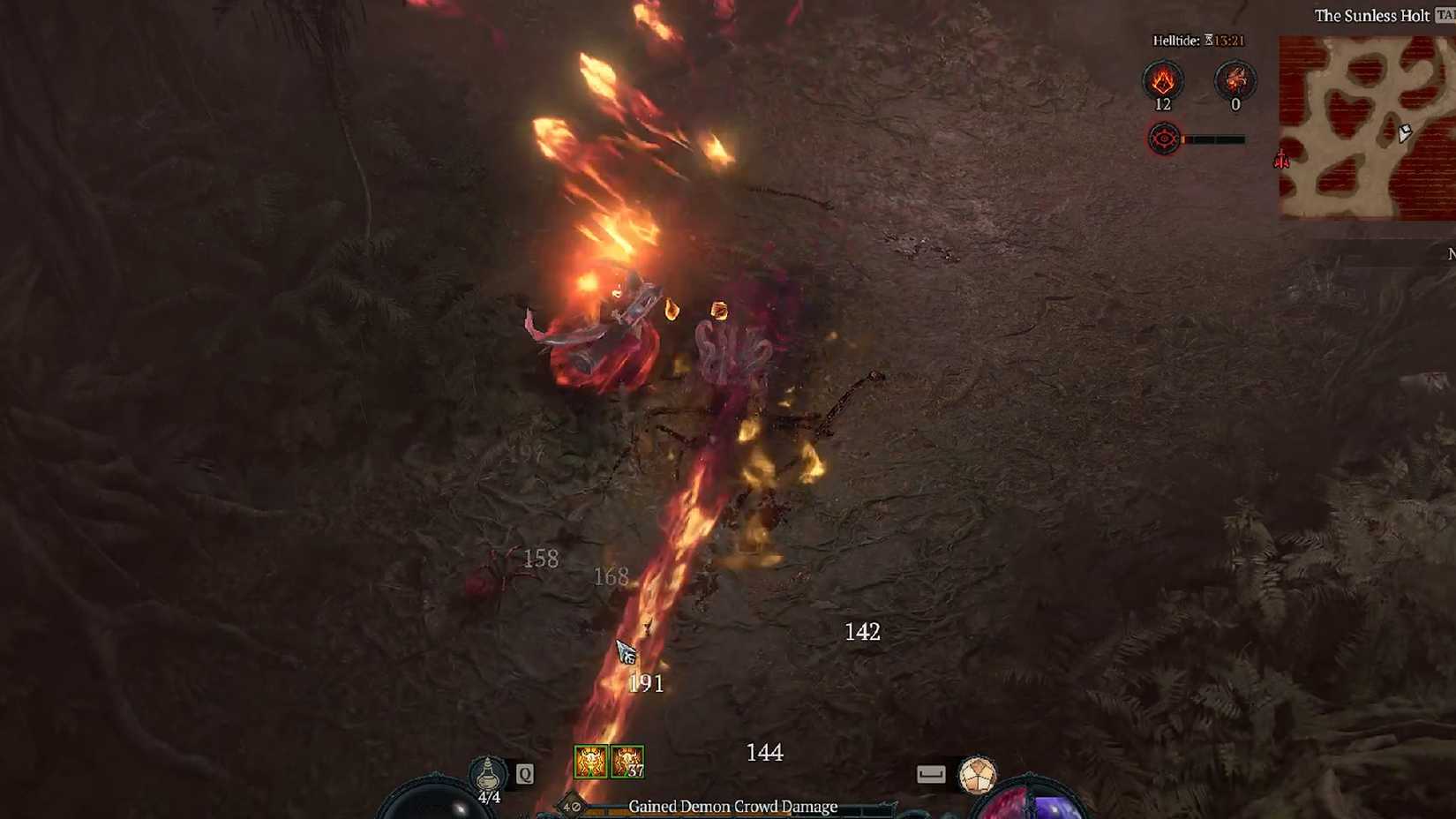
Vanguard functions similarly to the Paladin’s Disciple Oath and its ability to transform the class into its Arbiter Form. The Vanguard playstyle allows the Warlock to transform into a demon themselves, with the Metamorphosis skill putting the Warlock into Demonform and giving them a unique new set of skills while in this form. The Greater Demon associated with this Soul Shard is Abodian, a massive hellhound that players can summon and will attack on its own, or players can ride it into battle.
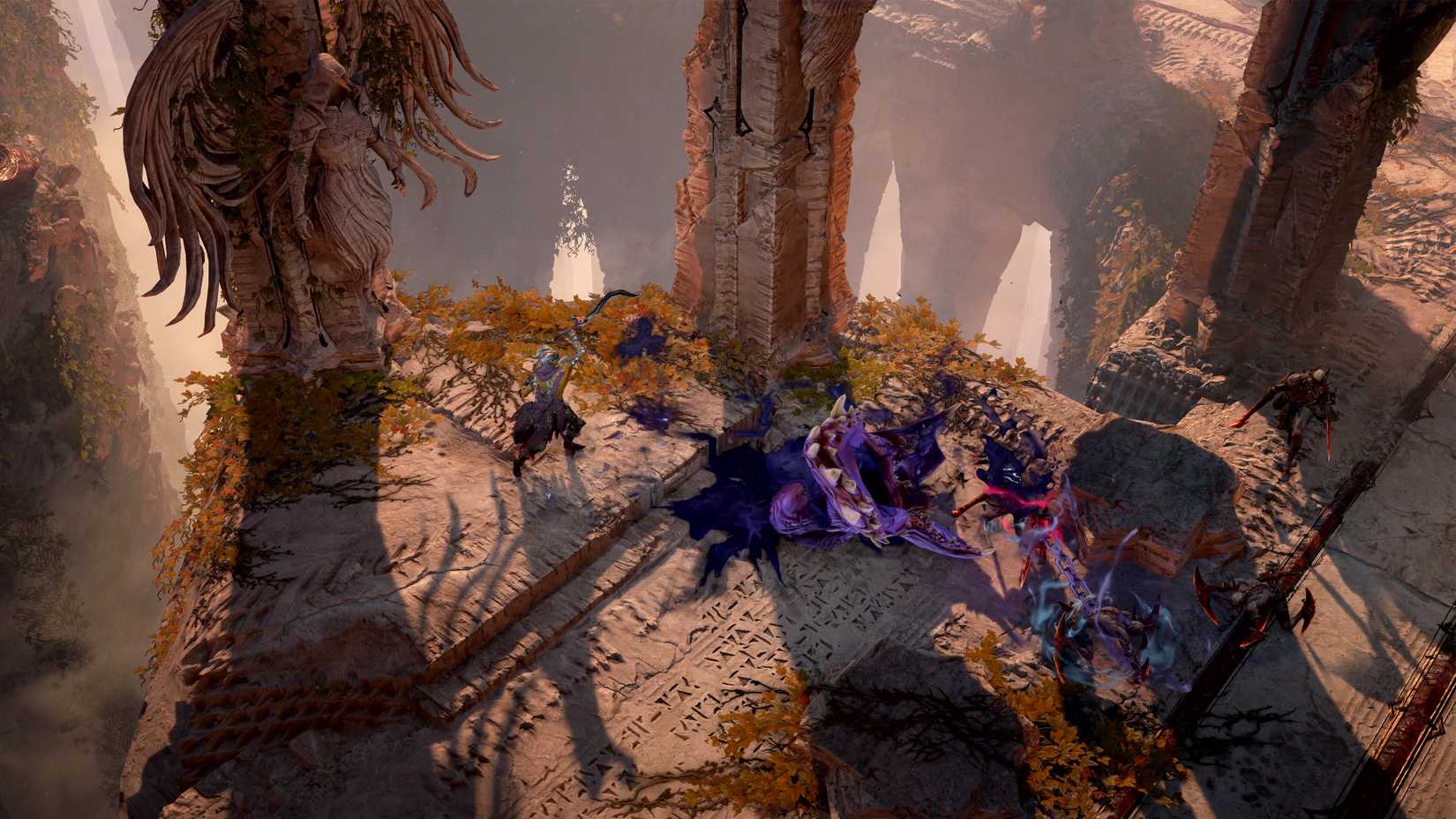
The Mastermind Soul Shard emphasizes Abyssal skills within the Warlock’s toolkit, and the skills associated with this Soul Shard support this playstyle. Mastermind Warlocks can adopt Shadowform to gain Stealth and attack enemies from the shadows. Other skills like Profane Sentinel summon Demonic Eyes to cast Vulnerable upon enemies, and Terror Swarm to summon a swarm that deals AoE damage over time. The Mastermind’s Greater Demon, Taz’rauth, lurks below in the abyss and will emerge to attack enemies it encounters.
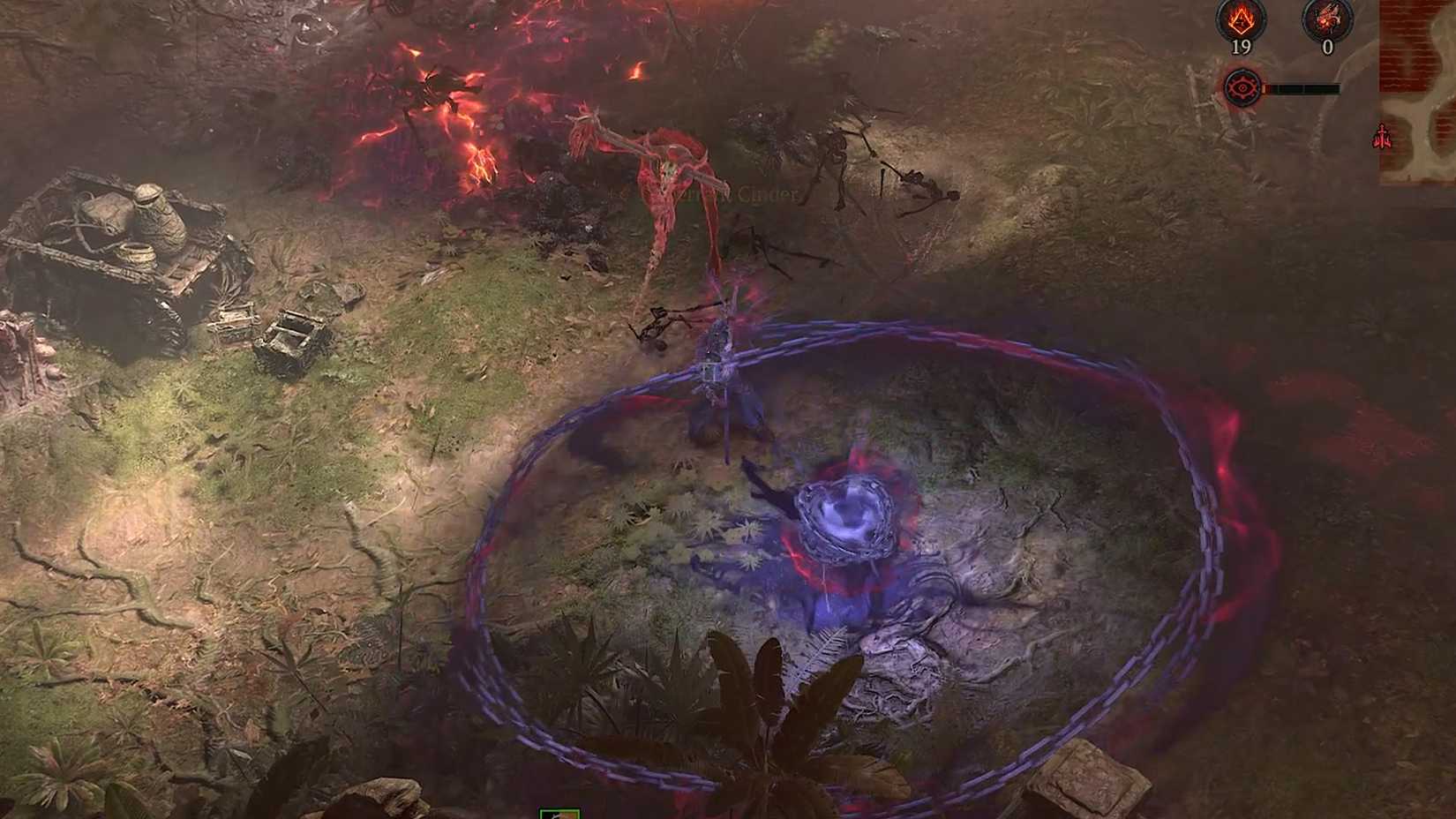
Ritualist is a playstyle that will likely appeal to fans of Diablo 2: Resurrected‘s version of the Warlock. Many of the skills associated with this Soul Shard revolve around the use of Hellfire, like Apocalypse as an Ultimate skill, which will be familiar to D2R Warlocks. This Soul Shard also benefits from Crowd Controlling enemies with skills like Dark Prison, which tethers nearby enemies to a totem, preventing them from escaping while the Warlock immolates them with their other abilities. The Ritualist is also adept at dealing Overpower damage, using the power of the Greater Demon Vollach to overfill their Overpower stacks.
For the First Time in Diablo 4, The Warlock Class Boasts a Dual Resource System
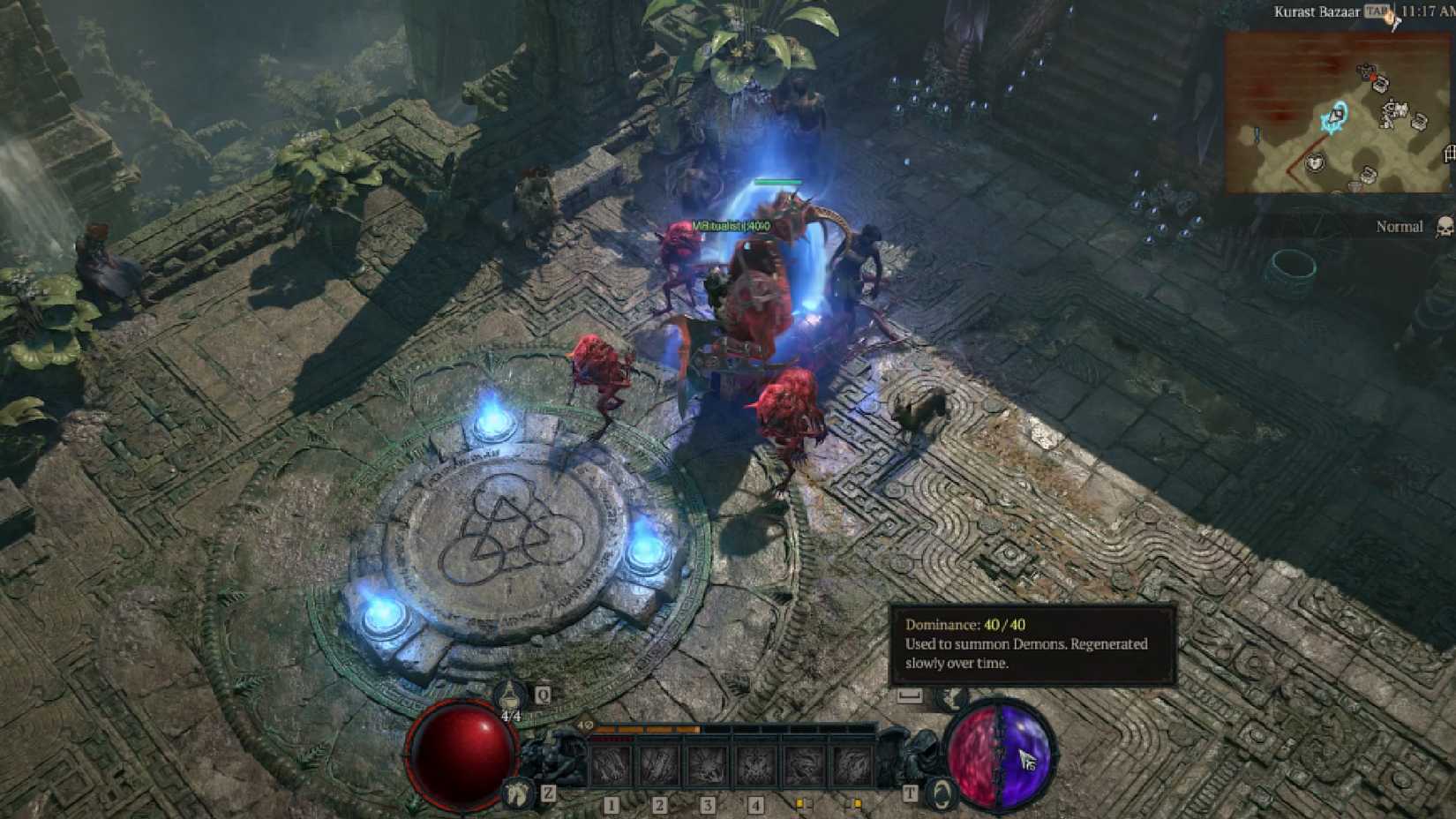
One of the most unique parts of my time with the Warlock was getting used to its new Dual Resource system. Diablo 4’s Warlock is a Willpower-based class and utilizes two resources to unleash its skills: Wrath and Dominance. Wrath is associated with Hellfire and Abyss skills like Hell Fracture or Doom, which lean more into the Warlock’s mastery of the arcane arts. Meanwhile, Dominance governs more of the class’s summoner skills, such as Profane Sentinel or Wall of Agony. What makes this system so special is the fact that I could essentially cast two types of skills without depleting all of my resources, allowing me to chain together a combination of demonic and arcane skills that other classes can’t really achieve.

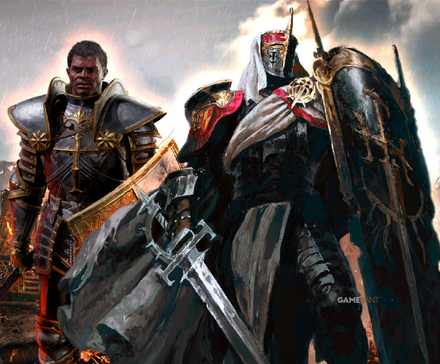
‘The Aura Sandwich’ Diablo 4 Devs Explain the Process of Modernizing Diablo 2’s Paladin
Diablo 4’s Paladin has come a long way from its Diablo 2 incarnation, and the development team had to strike a balance between the old and the new.
The Warlock’s Legendaries and Uniques Bring Some Exciting New Gameplay Opportunities to the Table
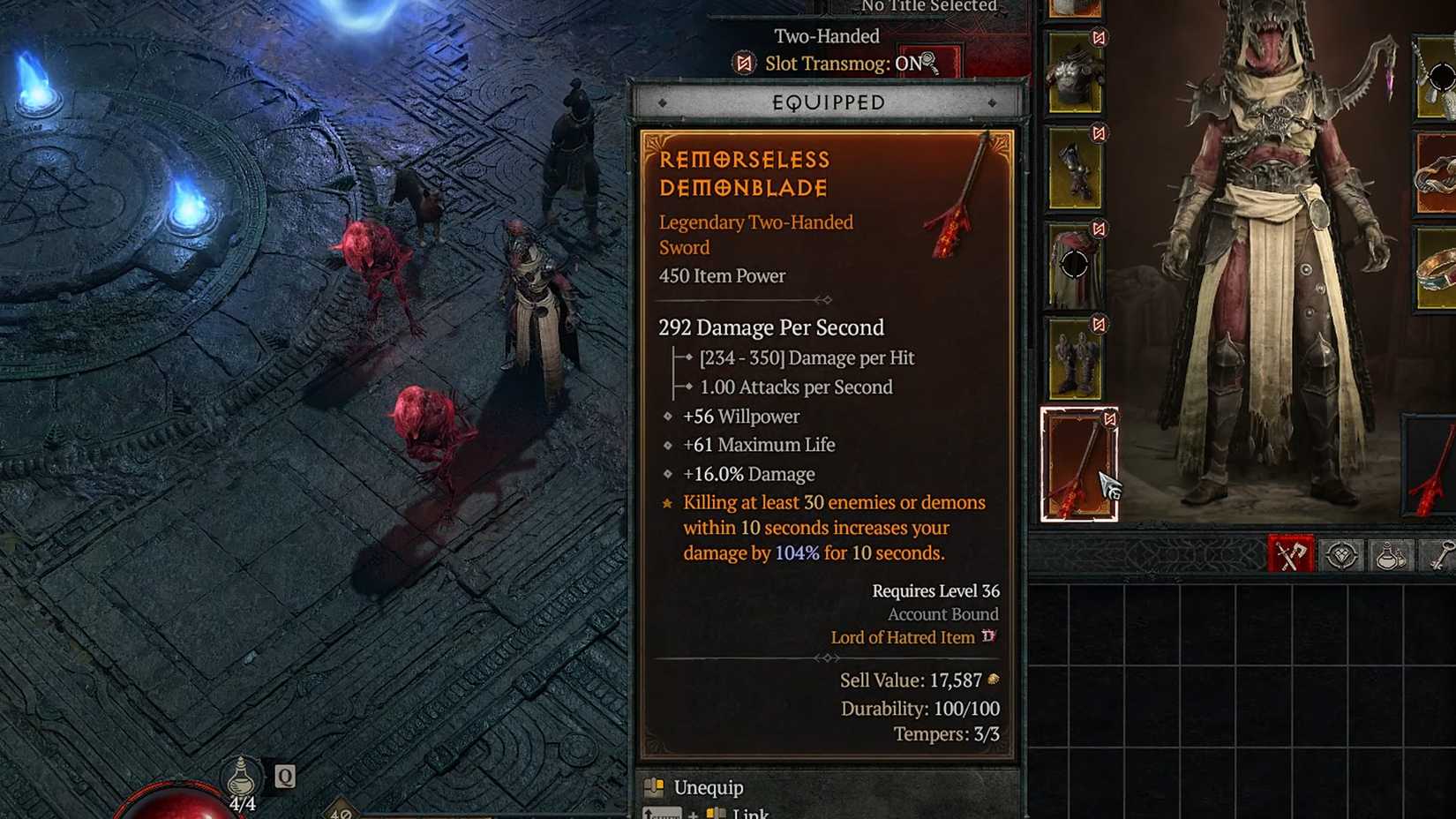
While I didn’t get a chance to see too many of the Uniques and Legendaries for Diablo 4‘s Warlock, the ones I did see piqued my interest quite a bit. The Legendary Aspect that stood out the most to me was the Remorseless Aspect, which grants a pretty significant damage buff for 10 seconds, and is triggered by killing at least 30 enemies or demons within 10 seconds. Having a buff that is triggered by the number of enemies killed within a certain time limit feels like it has the potential to be an incredibly valuable Legendary, as long as players can find a way to constantly keep the buff active.
Diablo 4’s Warlock Has One Potentially Crazy Build Option that is Essentially a Meat Grinder for Demons
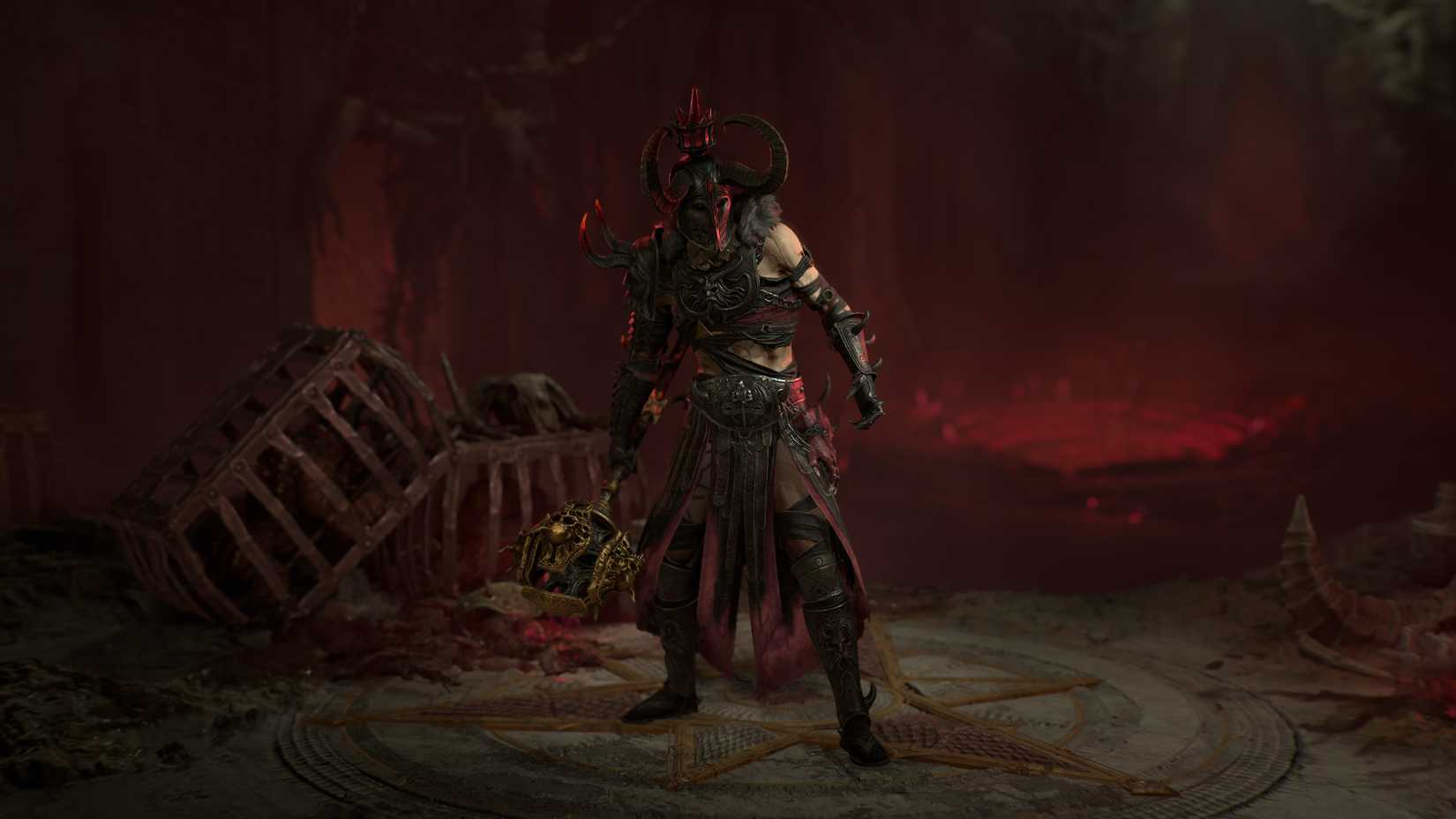
Interestingly, the wording on this Legendary Aspect notes that killing at least 30 enemies or demons within the time limit triggers the buff. I confirmed it with the developers during our Q&A session afterward that this effect does count the Warlock’s own demons as part of that number. With this Legendary Aspect, I can imagine a playstyle that keeps recycling the Warlock’s demons, almost like a meat grinder, by sending summons to die to empower their master. For example, I think a build that utilizes Command Fallen to constantly barrage foes with Lunatics while simultaneously building toward this damage buff would be very powerful, especially for no cost using a Basic Skill like Command Fallen. Throw in a few of the other Legion skills to the Warlock’s rotation, and I think you could feasibly keep this buff active at all times.
I’m incredibly excited by the buildcrafting opportunities that the Warlock presents when it debuts in Diablo 4: Lord of Hatred. As someone who loves the summoner archetype, there is a lot of meat to dig into when it comes to skill synergies and the Dual Resources systems. I’m looking forward to seeing what other Uniques and Legendaries are available at launch so that I can tailor my perfect Legion Warlock build to satisfy the summoner in me.

- Released
-
June 5, 2023
- ESRB
-
Mature 17+ / Blood and Gore, Intense Violence, Language, In-Game Purchases, Users Interact