



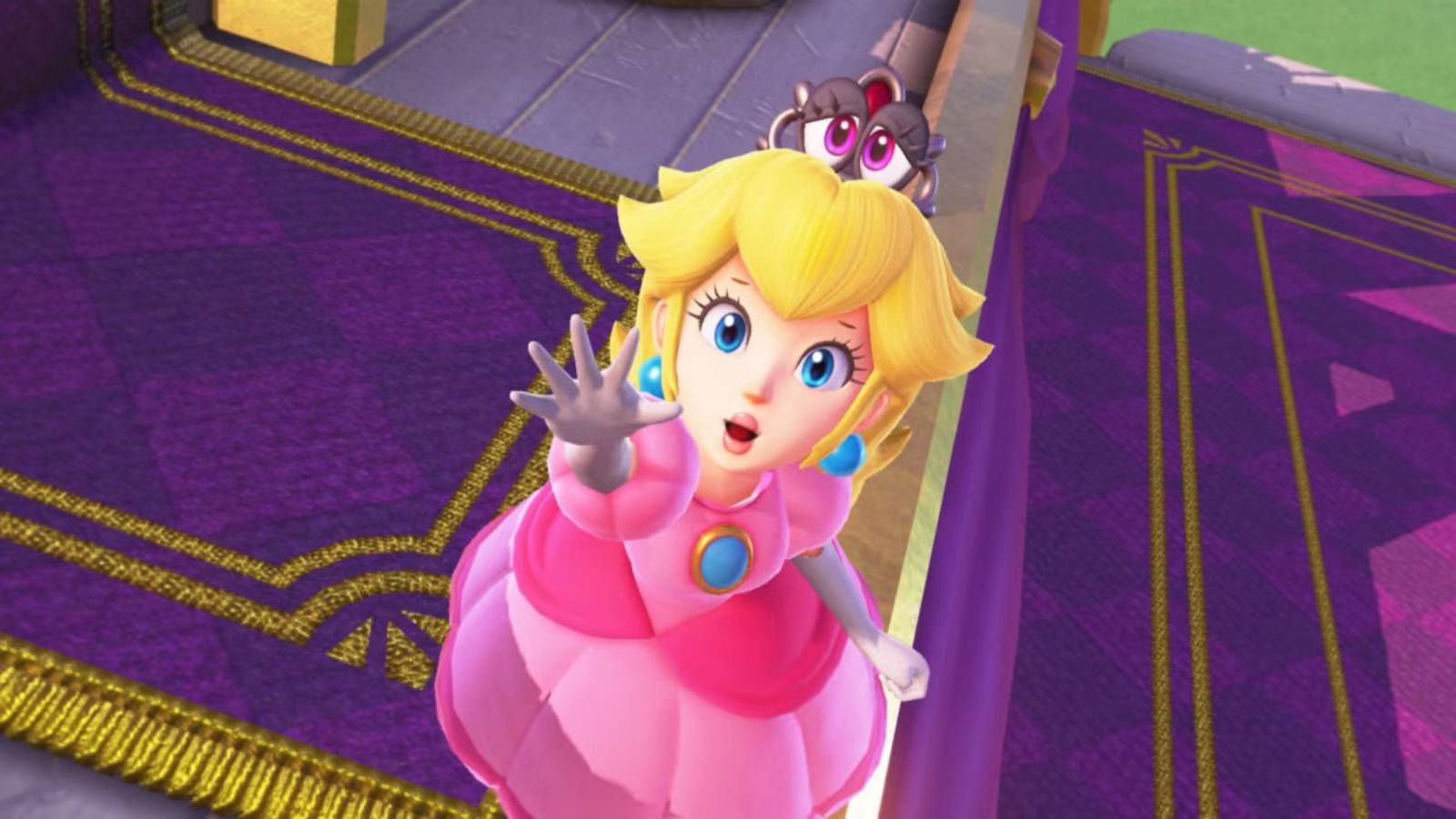
It’s been nearly a decade since the last full 3D Super Mario game, and while the wait has been agonizing, it’s unlikely that it will last much longer. 3D Mario entries are generally among Nintendo’s most successful games, often viewed as pillars, or even progenitors, of the modern 3D platformer genre, so the company is no doubt already at work on the follow-up to Odyssey.
Nintendo has remained tight-lipped about the next 3D Super Mario adventure, not unveiling so much as a title. Given the success of Odyssey, one might imagine that the next game could be a direct sequel akin to Super Mario Galaxy 2, but I think Nintendo might go a different route. It’s already made an unusual sequel in the recent past with Tears of the Kingdom, so the next 3D Mario may be more exciting if it’s wholly original. Assuming this is the case, several elements would be wonderful to see implemented into this next-generation platforming playground.
15 Years Later, Super Mario Galaxy 2 Stands Out for a Painfully Obvious Reason
15 years ago, Super Mario Odyssey made franchise history, and Nintendo has yet to recreate a key aspect of its success and legacy.
The Next 3D Mario Should Have a Great Hub World
Perhaps the most disappointing part of Super Mario Odyssey is its omission of a hub world like the ones seen in Super Mario 64, Super Mario Sunshine, and Super Mario Galaxy. Say what you will about any of these previous games’ hub worlds—I personally think the series peaked with Super Mario 64 in this respect—but they are at least more interesting than a simple loading screen, which is essentially what Odyssey offers.
Super Mario Galaxy 2 also omits a hub world in favor of more streamlined level selection, meaning that the next 3D Mario could break a two-game streak by including one.


Rearrange the covers into the correct US release order.
Rearrange the covers into the correct US release order.
Easy (5)Medium (7)Hard (10)
A good hub world injects a sense of whimsy and mystery that can be enough to make a good platformer great. It’s one of the reasons why Super Mario 64 is such a revelation. Princess Peach’s Castle is a fascinating level in and of itself, one that you can explore at your own pace and form a unique connection with. Subsequent 3D Mario hubs have been a little less impactful, but by prioritizing level design, atmosphere, and secrets, I think Mario’s next hub world has a lot of potential.
Mario Should Have More Things to Spend Coins On
Similar to the hub world idea in that it’s outside the core gameplay loop is the in-game economy of the next 3D Mario. One of Odyssey’s most undervalued design additions is the shop feature, allowing players to purchase new outfits and keepsakes with coins collected during gameplay. Coins have always been part of the Mario formula, but they are usually just used for points or health, rather than as actual in-game currency.
Through shops, Super Mario Odyssey makes collecting coins more rewarding and worthwhile, whereas they can usually be ignored in other Mario games, outside of specific circumstances. Whether the next 3D Mario is a direct sequel to Odyssey or not, it would make sense to double down on this design choice, making coins usable or rewarding in some way. Maybe the next game could incorporate more detailed customization, allowing you to buy pants, shirts, shoes, gloves, and so on, rather than complete outfit sets. Perhaps it could even lock certain end-game areas or challenges behind coin totals, further rewarding players for collecting the resource.
More Challenging Linear Challenges Would Make the Next 3D Mario More Satisfying
Odyssey is reminiscent of Mario 64 and Sunshine in several ways, not the least of which being its open, sandbox-style level design. Each world in Super Mario Odyssey is akin to a sprawling jungle gym, wherein the player can essentially create their own meta game built around efficient or stylish movement. It’s like cartoonish, virtual parkour.
But perhaps the game adheres to this design philosophy a bit too stringently, to the detriment of more structured platforming challenges. Relative to the Galaxy games and Super Mario Sunshine, Super Mario Odyssey has fewer linear challenges designed around skill and mastery, instead tending to opt for more puzzle-box style challenges, where creativity is rewarded more than skill or reaction time. Of course, these challenges are great in their own way, and should still feature in the next Mario, but a better balance of open-ended sandbox platforming and more traditional, challenge-based platforming might make for a more varied gameplay experience.
A Better Endgame Than Super Mario Odyssey
Finally, we arrive at perhaps the greatest pain point in Super Mario Odyssey: its endgame. Odyssey boasts a whopping 999 Power Moons for the player to collect, but the overwhelming majority of these are obtained through uninteresting or contrived ways. For instance, 119 of these Moons can only be obtained through shops, while others may just be sitting in obvious or easy-to-reach locations.
With basically 1,000 Moons to collect, it’s perhaps unrealistic to think that Odyssey’s developers would have been able to make every one of them a jaw-dropper. But this is a prime example of quantity versus quality. I would rather have, for example, 500 Moons to collect, and all of them at least reasonably interesting or fun to obtain, as opposed to 1,000 Moons, half of which are underwhelming. If Odyssey’s successor can better walk the line between volume and intrigue, it could be all the better for it.