



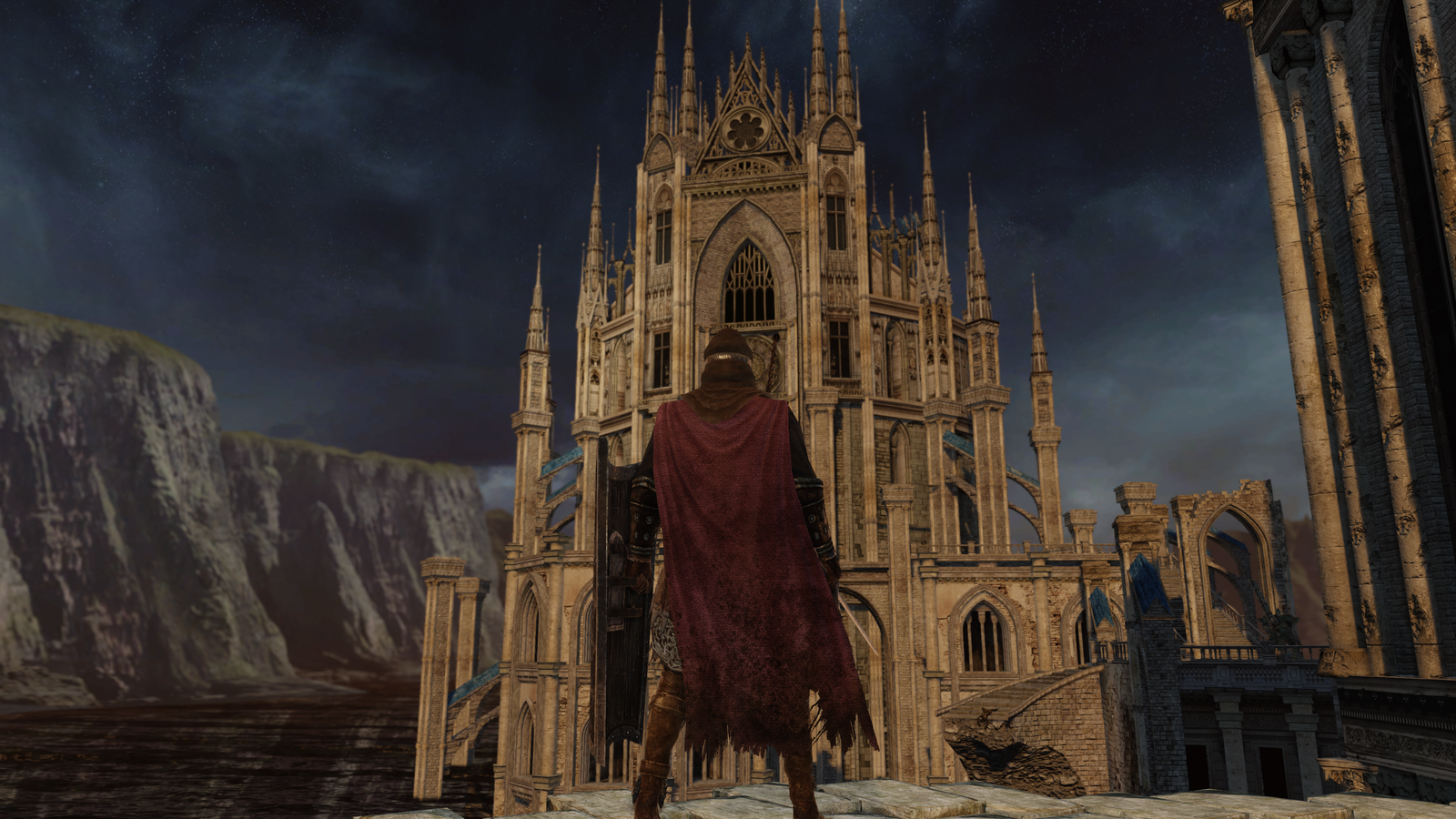



A recent video by dataminer Doneda showcases some of Dark Souls 2‘s cut content, reintegrated for exploration in Elden Ring Nightreign. As one might expect, this cut content doesn’t constitute entirely new, playable areas or anything of that sort, but they do highlight Dark Souls 2‘s incredible potential.
Regularly viewed as the black sheep of FromSoftware’s well-received contemporary ouvre, Dark Souls 2 is an entry that a lot of souls fans like to ignore. Clunky level design, strange progression systems, and miscellaneous mechanical oddities are usually the key pieces of evidence in favor of this game’s mediocrity. The fact that it’s the only entry in the Dark Souls trilogy not directed by Hidetaka Miyazaki makes it even easier to cast aside as inessential. But buried within Dark Souls 2 is a wealth of unexpected ambition and value which dataminers like Doneda have unconvered.
Dark Souls 2 Almost Had a Colosseum, Underground Mines, and More
In an October 2026 YouTube video, Doneda details some new discoveries from the Dark Souls 2 asset files. These assets are essentially “leftovers” from cut content. An asset can be anything from an in-game texture or character model to an audio file or animation, and the assets Doneda covers are simply not “linked” or compiled for any sort of final in-game purpose. That said, Doneda’s research has led them to believe that they’ve uncovered at least four loosely connected, cut areas from Dark Souls 2, which they call:
- The Colosseum
- The Crypt
- The Ruins
- The Mines
As presented by Doneda, who imported these assets into Elden Ring Nightreign, these four areas seem to come together to form one massive “colosseum” map, which dwarfs the various colosseums scattered throughout The Lands Between. It should be noted that this colosseum area, even after being unearthed by Doneda, is clearly unfinished: placeholder textures and assets litter the environment, key architectural details are missing, and there appears to be no coherent, intentional progression route.
Even so, it’s clear that these assets were supposed to be a big part of Dark Souls 2—literally. The space, though incomplete, is sprawling, and context clues indicate spots for elevators, one-way passages, and all manner of other level design tropes fans have come to expect from FromSoftware. Watching Doneda explore this space (assisted by a great deal of no-clipping), its size becomes quite astonishing, and all the more so because of its absence in the finished product. Perhaps FromSoft realized that this mammoth level was simply too complex to be worth the effort, or that resources were better spent elsewhere.

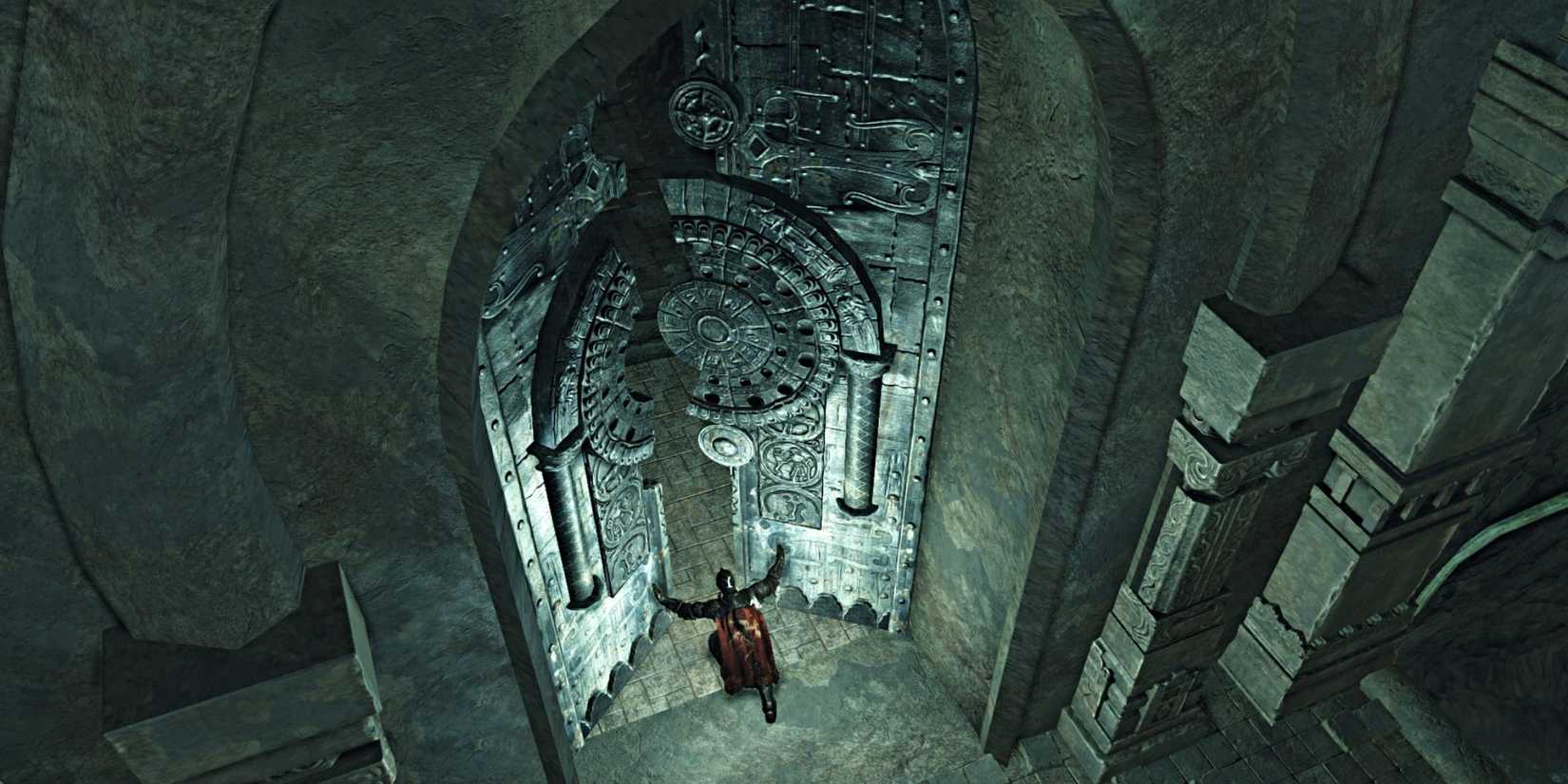
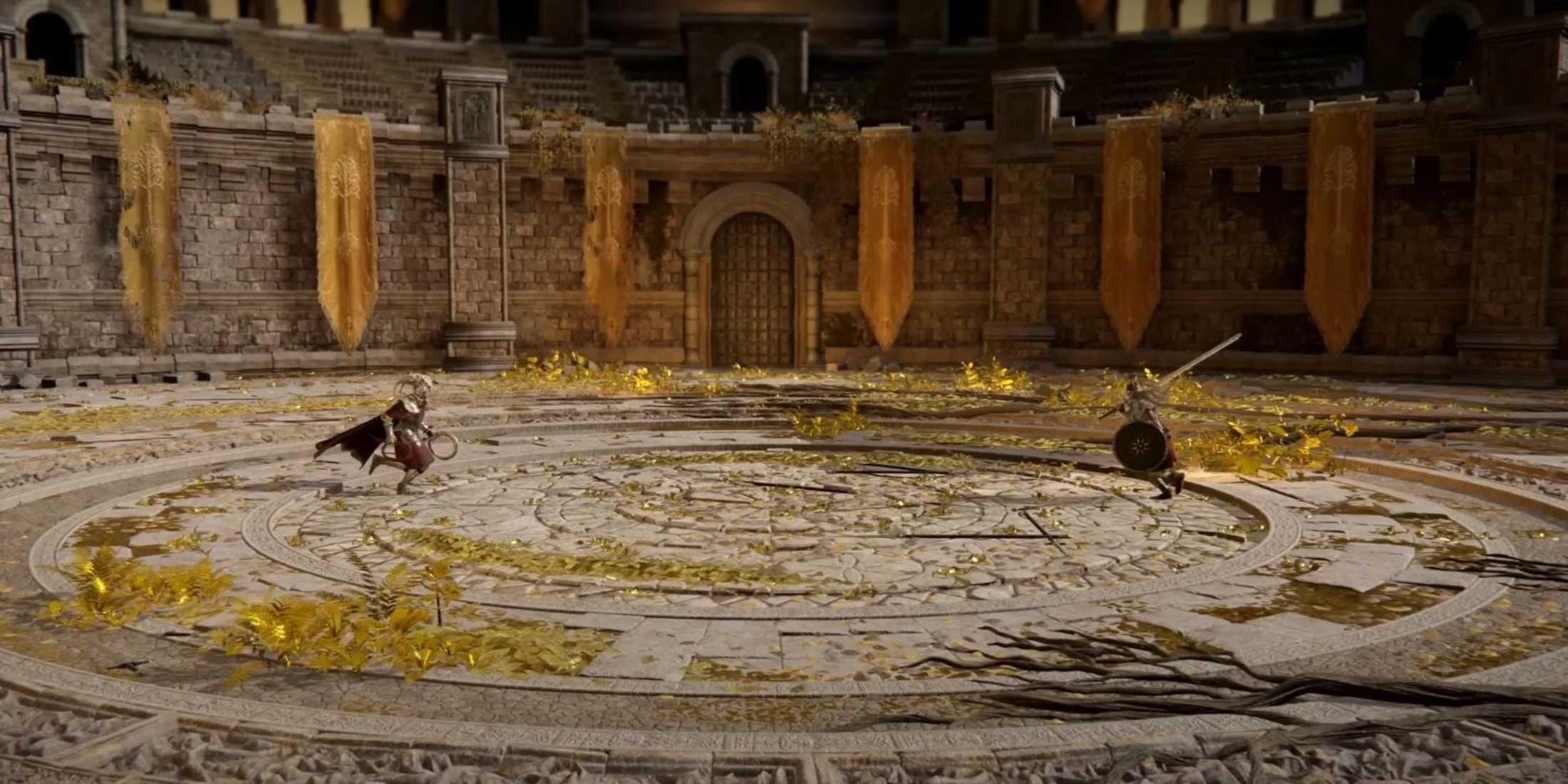
Of course, it’s funny to think of such restraint post-Elden Ring, which is dizzyingly large, vertical, and dense enough to warrant an area of this complexity. We didn’t quite get a colosseum of this scope in Elden Ring, but it’s clear that FromSoft’s fixation on the Roman-defined arena didn’t end with Dark Souls 2. Indeed, Elden Ring managed to serve as a genuine second chance for a number of FromSoftware ideas and ambitions, not the least of which being huge, multifaceted levels. Eventually, Elden Ring would see the return of colosseums themselves.
Elden Ring’s Colosseums Are Further Proof That Old Ideas Can Enjoy New Life
-
-
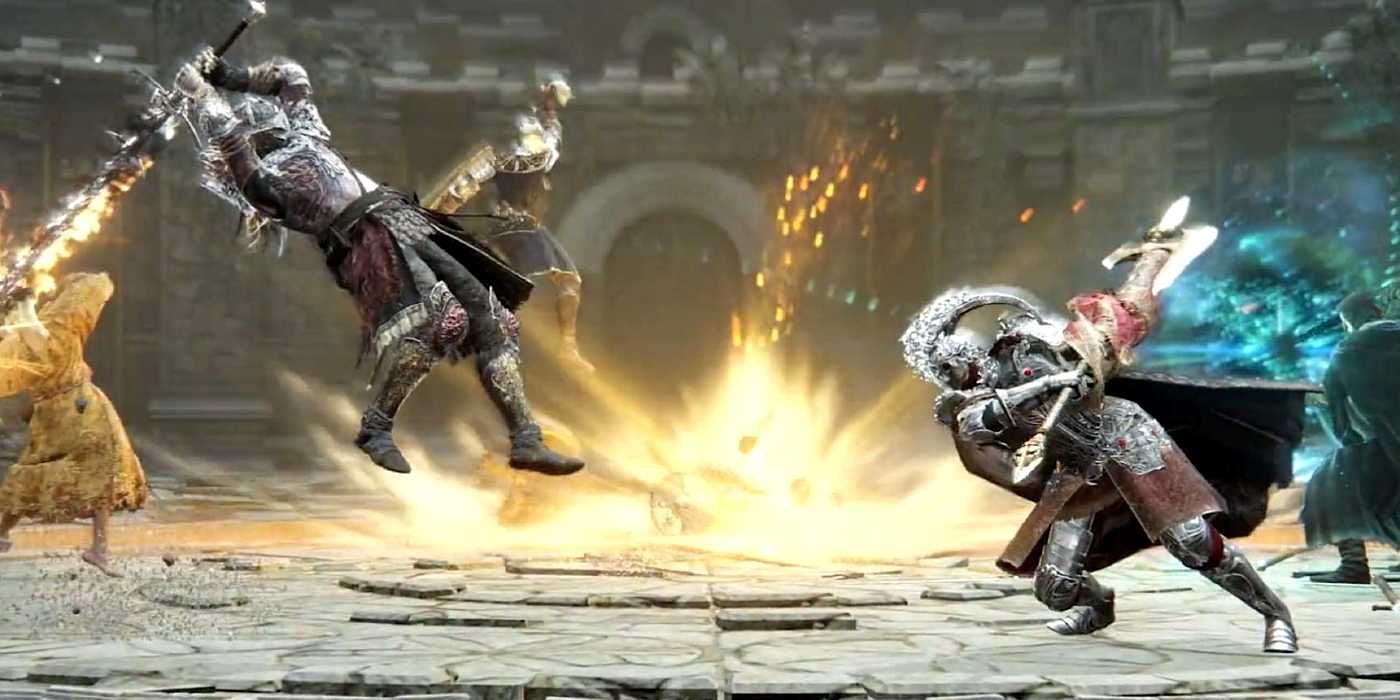
A shot from Elden Ring that shows players fighting. -
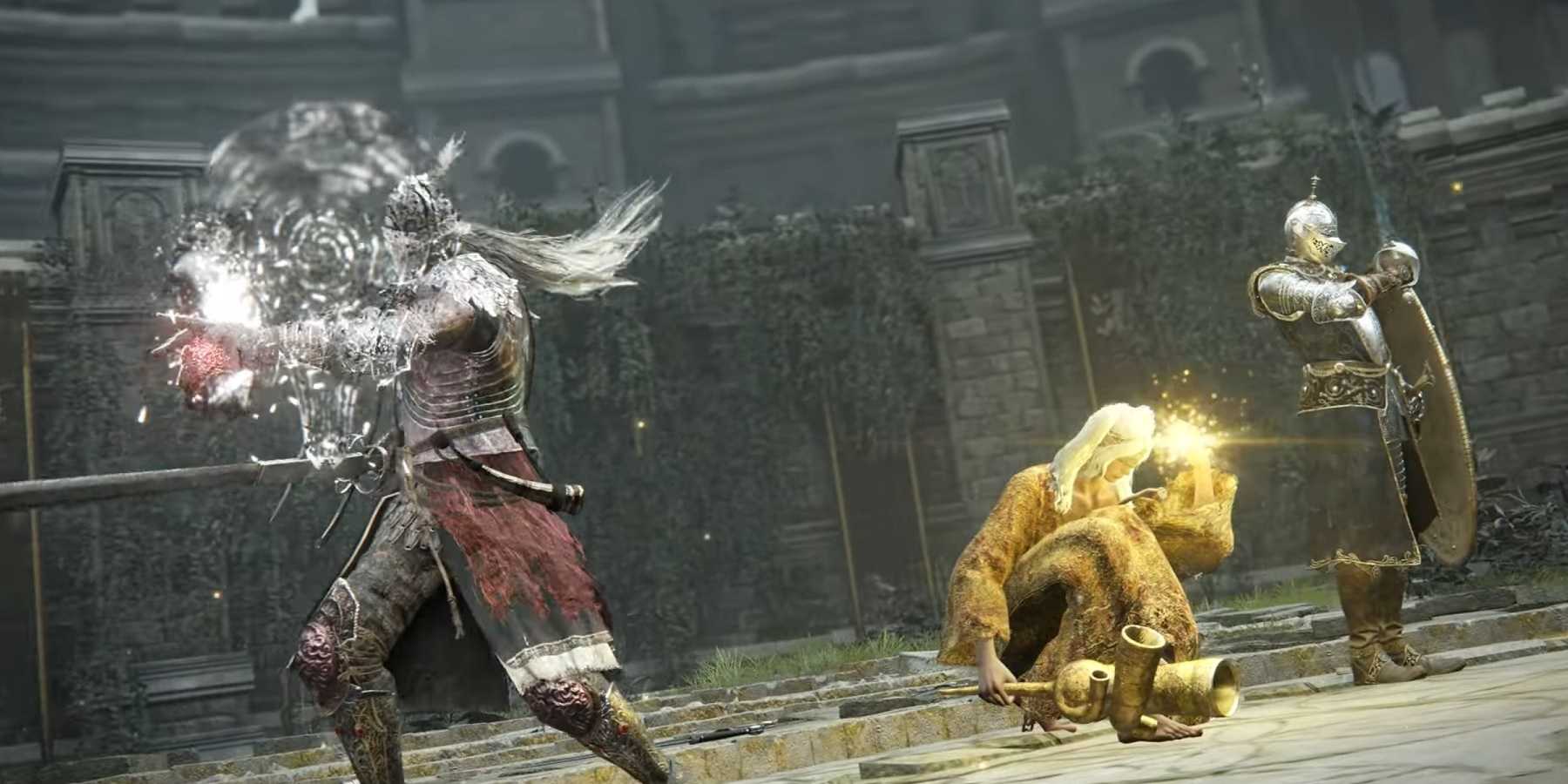


It’s hard to know if Dark Souls 2‘s colosseum would have intentionally served the same PvP function as its counterparts in Elden Ring, but it’s certainly not hard to imagine. At least, FromSoftware may have anticipated that players would choose this as an invasion site, given the building’s implications. How interesting it would have been, were we able to compare the colosseums of Dark Souls 2 to the colosseums of Elden Ring, drawing a clear path between the two.
Because that’s what you can do with a lot of FromSoftware staples: the Miyazaki-led era of FromSoft has been characterized by an exceptional degree of self-inspiration. Dark Souls is fundamentally a reinterpretation of Demon’s Souls; Bloodborne reworks the core formula of its Souls predecessors but with the addition of fluid, dodge-centric combat; Dark Souls 3 takes the fluidity of Bloodborne and puts it in the Souls fantasy backdrop; Elden Ring takes elements from basically every previous FromSoftware souls game, including Sekiro (e.g. jumping, crouching, stealth). There are even instances of hyper-specific repetition bordering on self-plagiarization—the connection between Demon’s Souls‘ Vanguard and Dark Souls‘ Asylum Demon is a famous example of this.
What’s remarkable about FromSoftware games is that, despite all this recycling, they still manage to surprise their playerbase. Perhaps it’s actually by virtue of such recycling that FromSoftware games are so great. Each game builds upon the foundation laid by all those before it, even when there’s no literal connection between the IP. This helps FromSoft games maintain a consistent identity, sure, but it also means that even underperforming entries like Dark Souls 2 are worth it in the end, as they provide invaluable experience and fodder for future games, if nothing else.


- Released
-
March 11, 2014
- ESRB
-
T for Teen: Blood and Gore, Mild Language, Partial Nudity, Violence