









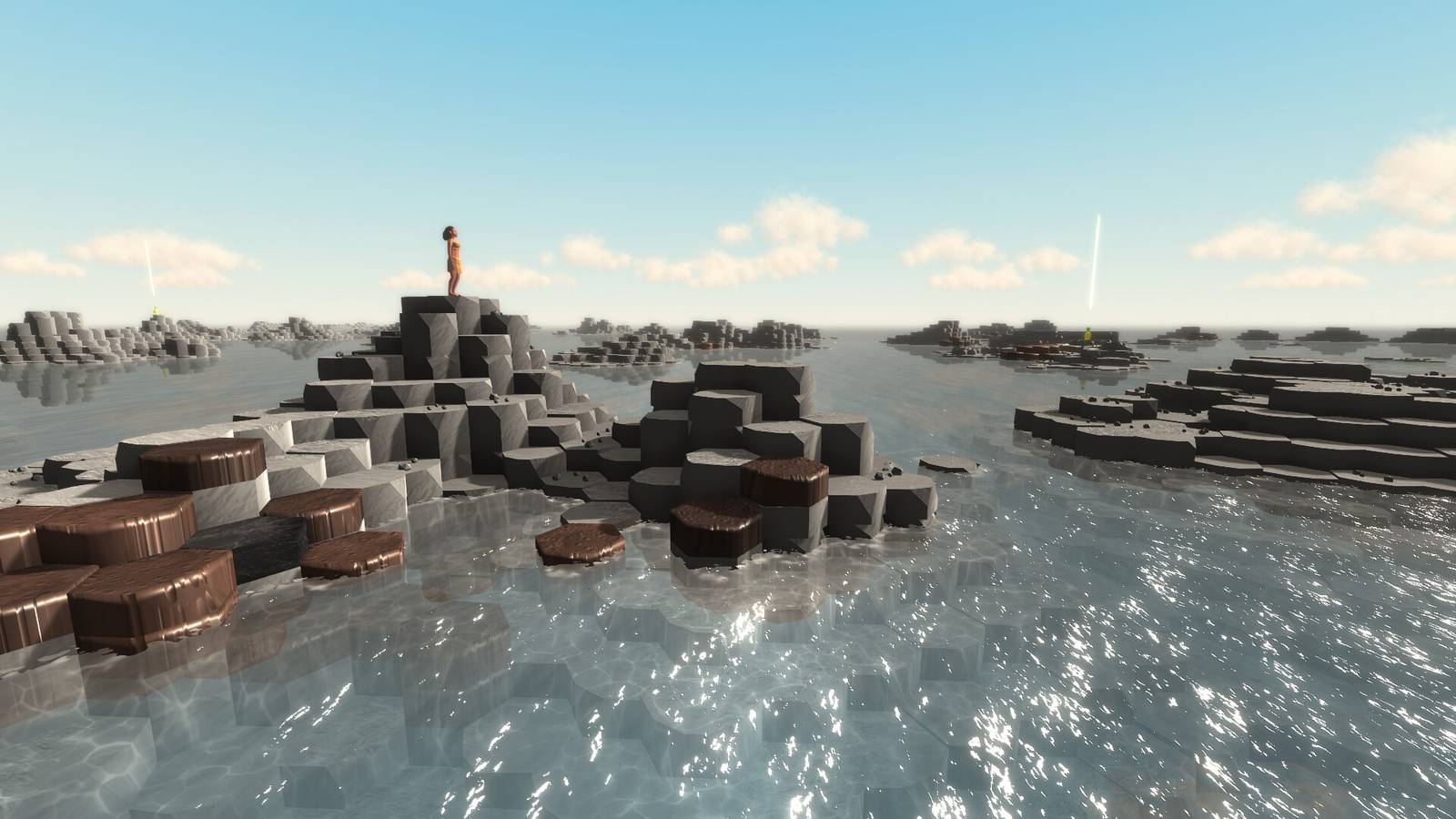
There are all sorts of sandbox games—that is, games that give players a lot of tools with minimal to no firm goals—but one new genre entry on Steam looks especially worthwhile. The game’s called Plentiful, and it’s shaping up to be a balm for the myriad dark, industrial, or otherwise artificial backdrops of so many other modern games on Steam and elsewhere. If you’re coming hot off of, let’s say, the dark and dour Saros, then Plentiful might just be the perfect palette cleanser.
Similar to games like Minecraft, wherein players are encouraged to gather resources, spend them on building, and develop methods for greater resource gathering, Plentiful is about growth and development. It gives players complete, birds-eye-view power over an expanse of uncultivated land, allowing them to terraform with surprisingly robust and intuitive block-building mechanics; Plentiful’s graphical style is similar to Minecraft’s, except its rudimentary units are hexagons instead of cubes. Further setting this game apart from the likes of Minecraft or even Subnautica and Valheim is the perspective of the player, who is much more like a benevolent deity than a single, (implausibly) resourceful individual looking to make lemonade from lemons.
The 31 Weirdest Minecraft Seeds
Minecraft features countless maps that players can start in, but for those looking for some weird seeds, these are the best to check out.
Plentiful Is a Satisfying Nature Sandbox
One of Plentiful’s trailers describes its gameplay as creating the conditions for “your people to thrive,” which is a strong encapsulation of its core premise. The player is not corporeally manifested in Plentiful’s sandbox world, but rather fills the role of a god-like being, presiding over a growing population of humans. The game is split into over 20 levels, each of which presents the player with a new objective, such as reaching a certain point of population growth.
GameRant Quiz
Easy (15s)Medium (10s)Hard (5s)
Water plays a significant, transformative role in Plentiful’s nature-based gameplay loop. By removing and placing blocks correctly, players can redirect water from natural sources like lakes, creating rivers, ponds, and so on. This is important, since water is used to grow produce for the virtual humans to eat, leading to population growth and yielding extra resources for the player. Elevation and block placement are rather important in a broader sense as well, since the player needs to create shelters, bridges, and other practical implements with repurposed terrain.
A Good Mix of Chill Gameplay and Strategy Makes Plentiful Extremely Promising

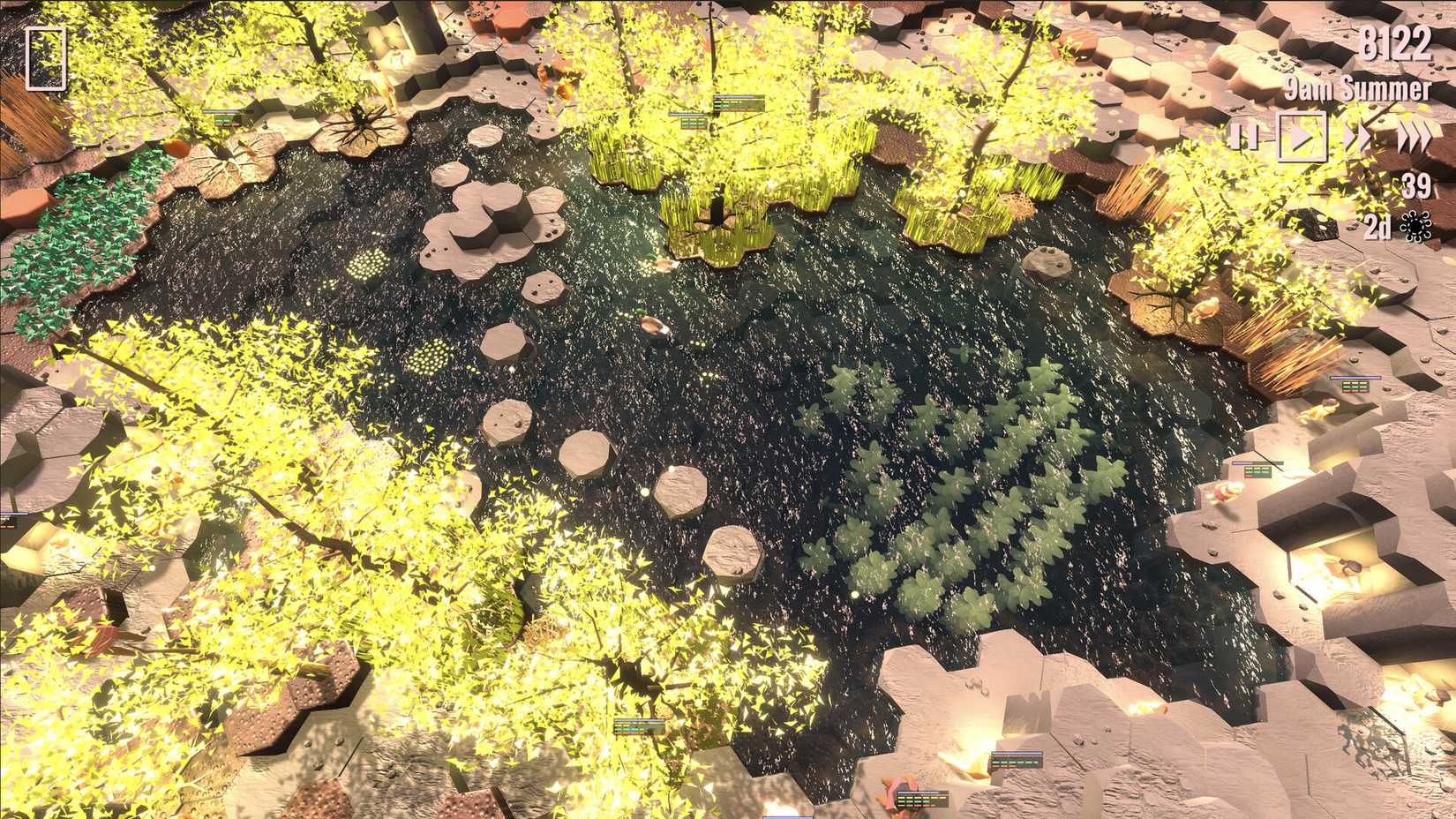
Although it’s definitely more relaxed than Frostpunk, Civilization, and other “sweatier” city-builders, Plentiful isn’t an aimless game by any means. Indeed, it surprised me with just how much it asks you to consider at points, as the different flora and fauna you can introduce have different properties, like the amount of water they require and how they spread. Resources are also finite: the water necessary to produce food will eventually dry up, hence the need to create channels and connect other bodies of water. It’s not hard to imagine how these factors can combine for an engaging, long-term game as much as a soothing, creatively fulfilling one.
As previously mentioned, Plentiful has a degree of structure, built around levels instead of one massive sandbox or a procedurally generated world, such as those seen in Minecraft. You also can’t just freely construct whatever you like: a resource called “moves” is generated whenever an NPC consumes food, and this is used to both move blocks and purchase new seeds and wildlife. These mechanics, coupled with factors like predator species, natural disasters, and seasonal changes, all of which require flexibility and quick thinking, might just make Plentiful one of 2026’s best city-builders. Hopefully, its systems will continue to be honed through a fruitful early access period.


