







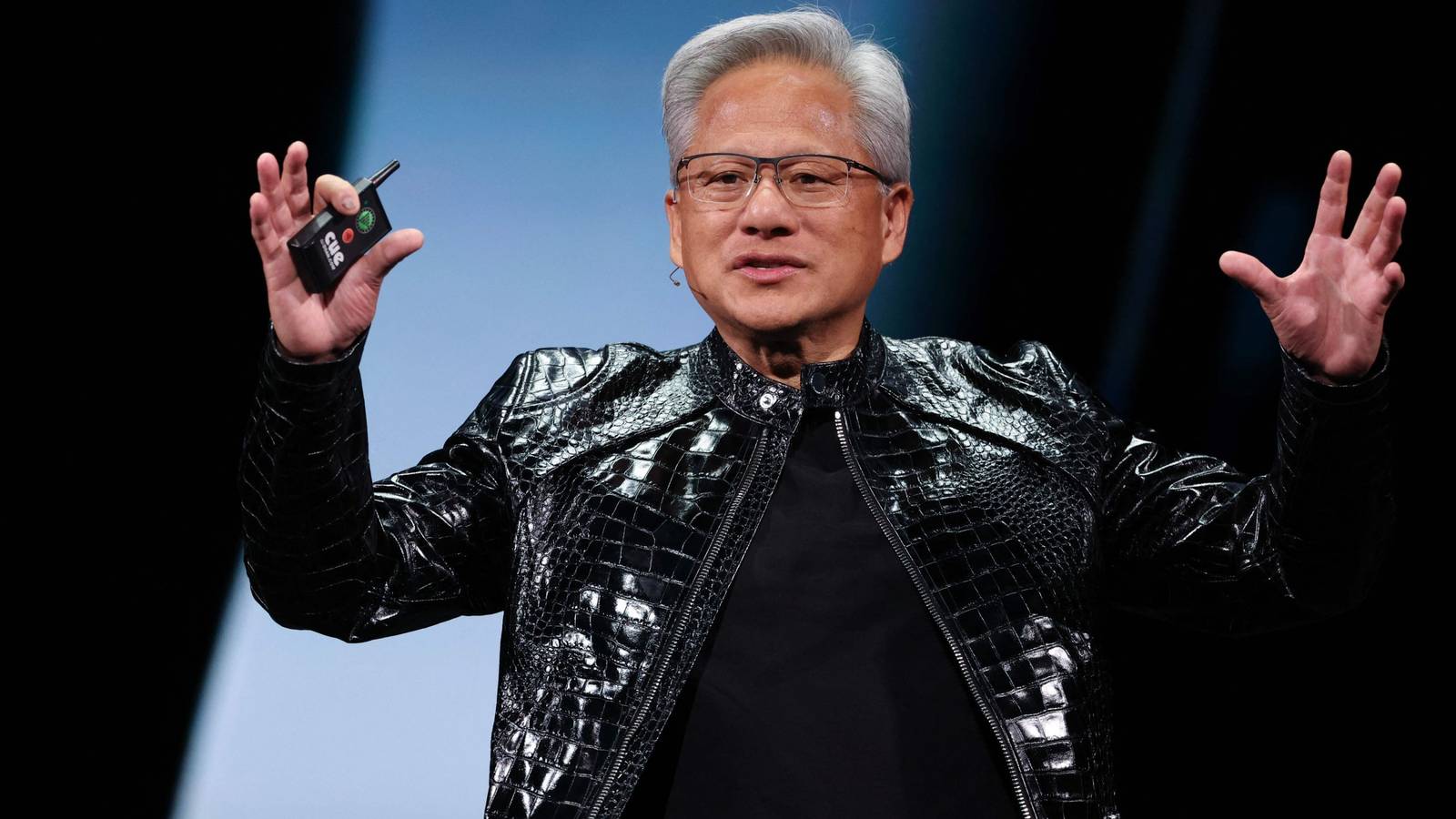
Nvidia finds itself in a free fall this week, after several controversies have resulted in Jensen Huang stepping down as CEO. Huang’s departure was seen as a shocking move and has now sent ripples throughout both the company and, frankly, the US economy. To better understand how we got here, there are three key events that everyone should know about.
What Led to Jensen Huang’s Resignation from Nvidia
When it was first reported that Huang had a relationship outside his marriage, the former CEO did not reveal the full extent of that relationship. But eventually, he did come clean and revealed that he had an affair with a former executive at a Singapore-based company called Megaspeed. At the time, there were other rumors involving Chinese intelligence and potential spying, and while those investigations are not fully closed, there is no strong evidence to support the concerns.
That being said, there were also claims made about Nvidia’s business relationships, with at least $7.5 billion of the company’s chips being sold to Chinese firms. Reports suggest this sale circumvented US export restrictions, and an investigation has been launched as a result.
Then, on November 10, a second affair was reported, this time with Kimberly Powell, Nvidia’s Vice President of Healthcare. As one of Jensen Huang’s direct reports, Powell was seen as a subordinate, further complicating the matter. Even amidst the controversies, it was unclear what the fallout might be, but then the Wall Street Journal reported that Nvidia was looking to force Huang out of his position as CEO.
NVIDIA has been in Chaos Since the Huang News
It has been somewhat of a perfect storm for Nvidia, with these three controversies coming to light relatively around the same time. Not long after the second affair news broke, Huang announced that he had resigned from Nvidia, a company that he had founded over 30 years ago. Now, a cataclysmic shift has occurred within the tech industry, the stock market, and beyond.


Find the odd one out before the timer hits zero.
As of writing, Nvidia’s share price has fallen over 25% in the last month and is continually trending downward. Moreover, Nvidia is such a large part of the stock market (around 7% of the S&P 500) that its decline is pulling many portfolios down. Shareholders are selling with the sentiment that they have lost faith in the company with Huang gone, and that’s outside of those investigations into the chip sale. Shareholders and former shareholders are expressing their frustration over Huang’s departure, with some even equating the move to Apple firing Steve Jobs.
Indeed, Jensen Huang was not a CEO installed into a massive company on an upswing, but he was instrumental in its rise from the very beginning. With a company that has been seen at the forefront of tech for so long, and that has seen the benefit of the AI boom in both sales and stock price, there are a lot of concerns about what Nvidia might look like in the future.
The larger ripples of Huang’s departure are unlikely to be felt for a while, but it does seem like this is just the beginning. Nvidia has been at the center of the AI boom, and Huang was one of the strongest proponents of its utility. Gaming and AI, like it or not, have now become interconnected in a way that things like GPU costs are inflated as a result of AI’s popularity.
It’s not worth speculating the severity, but if any significant findings are made when it comes to the chip sale to the Chinese, then Nvidia could face more turmoil than it is already in.
Nvidia is also such a core company in the world of gaming that uncertainty with its future could have a significant impact on the entire industry. Obviously, AMD and other Nvidia competitors will have the opportunity to pick up any slack (and they have a little bit so far), but some are seeing this as a cataclysmic shift. Without Huang leading the charge at Nvidia, who is to say what changes might be on the horizon?