


As soon as it was revealed, Phantom Blade Zero‘s flashy, spectacle-driven third-person combat captured the imaginations of action game fans the world over, but it was hard to tell how it would actually play. Speaking personally, I was expecting the game to be a satisfying mix of soulslike and character-action tropes, hopefully wrapped up in a decently compelling fantasy world.
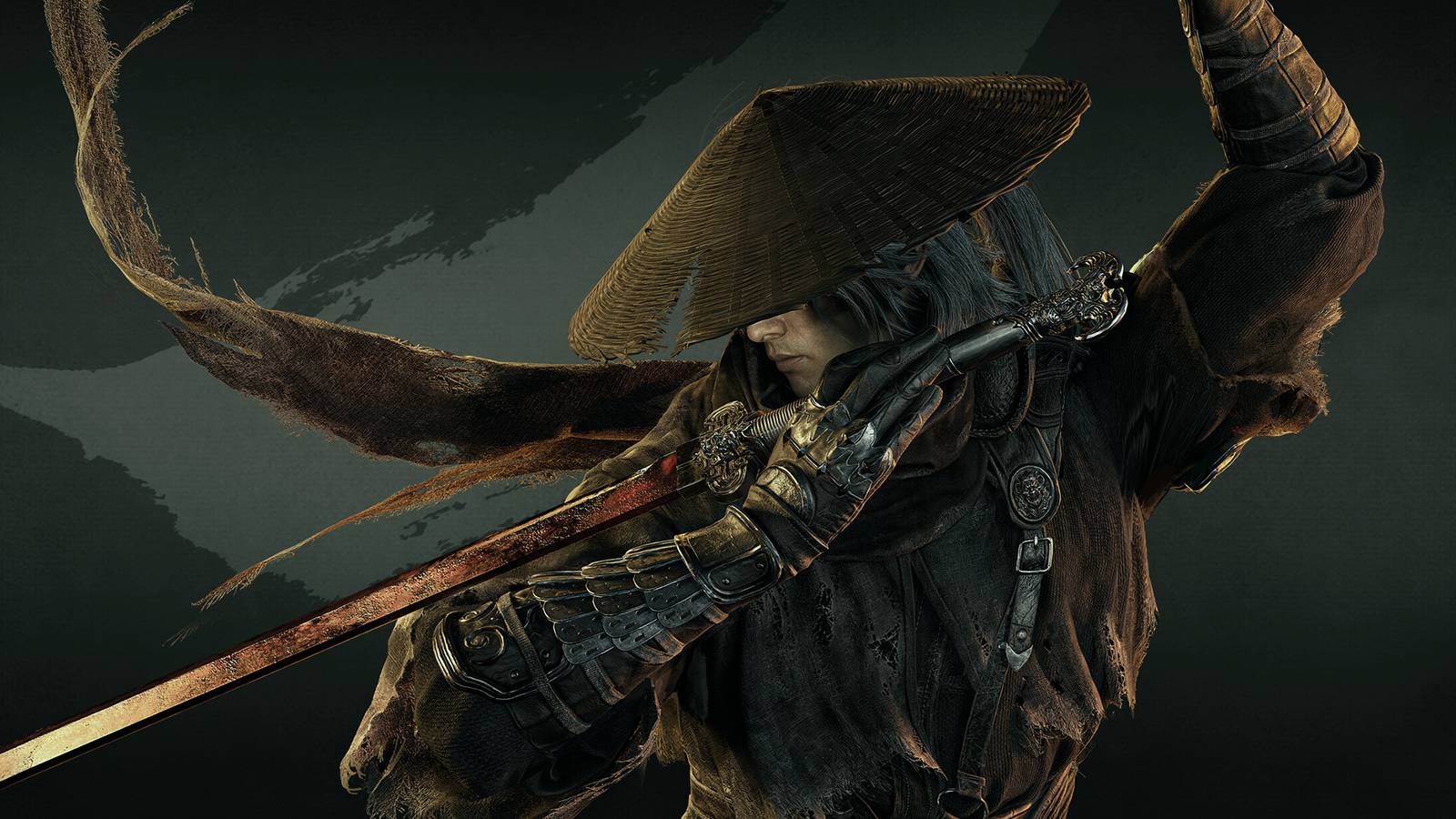
What I wasn’t expecting was for Phantom Blade Zero to be one of the best games of the year, and a strong contender for the best Chinese action game ever. It is a loose blend of the aforementioned genres, with a healthy dose of metroidvania staples for good measure, but it’s also a quasi-steampunk (developer S-GAME calls its aesthetic “Kungfupunk”), semi-open-world, cinematic blockbuster; it’s a tough game to pin down, which is part of its charm. Indeed, while it doesn’t reinvent the wheel, Phantom Blade Zero will almost certainly surprise action game fans, especially those anticipating something along the lines of Black Myth Wukong or Wuchang: Fallen Feathers.
Phantom Blade Zero is also an unexpectedly beefy game, with my final playtime clocking in at just under 43 hours—an in-game number which I’m fairly certain excludes time spent in menus. Since I spent a good bit of time examining Phantom Blade‘s maps and lore documents, as well as upgrading weapons and tweaking my build via some rock-solid RPG systems, I would estimate that my final playtime is well north of 45 hours. And there are still some side quests I have yet to complete, not to mention new game plus and an exclusive permadeath mode to try out, so I’m sure I’ll be hopping back into the world of Phantom Blade Zero before too long—and what a world it is.
Phantom Blade Zero’s Kungfupunk World
Phantom Blade Zero follows Soul, a warrior serving a group called The Order, who only has 66 days to live for reasons I won’t spoil here. Unable to return home and without allies, Soul must work to find the truth behind the world’s ongoing power struggles, and perhaps even find a way to prolong his life. It’s a rather complicated, lore-first narrative, with a lot of proper nouns, expository monologs, and easy-to-miss allusions.
Phantom Blade‘s presentation, while fantastic for the most part, may also alienate some players. Much of its story, including essential plot context, can only be gleaned through collectible text logs. There are flashbacks within flashbacks, and the game generally isn’t afraid to keep its audience in the dark. It’s safe to say that if you struggle with the storytelling methods of studios like FromSoftware, you may find Phantom Blade Zero‘s narrative quirks cumbersome and awkward.
Phantom Blade Zero is a sequel to Rainblood: Town of Death and Rainblood 2: City of Flame, so a familiarity with those games could very well make Phantom Blade‘s story easier to understand.
But those who feel compelled to study Phantom Blade Zero‘s world will find a unique and engaging science-fantasy tale worth sinking their teeth into. The story revolves around something called Sha-Chi, a life essence that affects the world in practical, observable ways, and which humans try to harness for something called Transcension, a process that artificially increases Sha-Chi, making for more capable fighters. The downside is that the subjects essentially always turn feral.
This rather basic premise is deepened by several other lore elements, including some rather effective bits of cosmic and body horror, which makes Phantom Blade Zero stand out among a sea of increasingly generic action-adventure stories. As always, the devil’s in the details, and Phantom Blade Zero‘s visually stunning, bleak world is rife with alluring, funny, bizarre, and thought-provoking details that make it consistently enrapturing.
There’s an argument to be made that this stylish and sophisticated Kungfupunk world comes at the expense of an emotionally captivating plot. I’m not sure that I would agree with such an argument, but I can see why one would make it. Again, I’ll invoke the FromSoftware comparison: similar to a game like Elden Ring, Phantom Blade Zero‘s narrative heft comes mostly from its interesting world, not its character-driven story. At least, that’s how I feel after my first run; there could certainly be more heart to discover in my second go-around.
Phantom Blade Zero’s Gameplay Delivers
While I haven’t played S-GAME’s Rainblood games, they are clearly relatively rudimentary from a technical and mechanical perspective. S-GAME didn’t have any obvious experience with 3D melee combat, which can be incredibly hard to get right. But the studio pulled it off: Phantom Blade Zero‘s combat is exhilarating, expressive, and feels every bit as cool as it looks.
Taking clear cues from the likes of Sekiro: Shadows Die Twice, Phantom Blade Zero is built around constant forward momentum, rewarding aggression and quick response times. There’s no stamina, per se, but rather a Sha-Chi meter, which is kind of like a mix between Sekiro‘s Posture meter and a more basic MP or AP bar, as it’s depleted not only by blocking or taking damage, but also by using special attacks, which come in myriad forms depending on what weapons you have equipped. Switching between your primary and secondary weapons refills the Sha-Chi meter, and you can deplete enemies’ Sha-Chi meters through special attacks and parries, eventually breaking their guard entirely.
Upon this foundation, Phantom Blade Zero‘s combat flourishes, with some help from a truly fantastic, sprawling catalog of weapons, each one offering a distinct moveset, special abilities, and unique progression paths. These weapons will often catch you off guard with their ingenuity. For instance, one of my early favorites was a two-handed sword whose basic attacks restore player health while special attacks drain player health in exchange for extra damage. This is the only weapon in the game that does this, making it a viable high-risk, high-reward playstyle tool, even late in the game. That’s just scratching the surface: just about every last one of Phantom Blade Zero‘s weapons is expressive, creative, or useful in some way.
Great weapons and impactful gear gel nicely with Phantom Blade‘s other major combat strengths, namely enemy variety. Worth special attention is the game’s boss roster, which is shockingly large and diverse. I can’t really think of a single boss battle that wasn’t enjoyable, or at least memorable, and Phantom Blade Zero has a lot of these battles. Like my 40-plus-hour playtime, I am pleasantly surprised by just how many bosses S-GAME was able to pack into this project, all without sacrificing quality.
Phantom Blade Zero has many strengths, from its rewarding exploration or incredible soundtrack. But the main takeaway should be this: Phantom Blade Zero has enough X-factor to make it a must-play for any action-RPG fan, and a definitive leap forward for S-GAME.



- Released
-
October 29, 2026
- Developer(s)
-
S-Game
- Publisher(s)
-
S-Game
- Engine
-
Unreal Engine 5
- Fantastic art design
- Exciting, deep combat and build-crafting
- Consistently terrific needle-drops
- Strong world-building
- Rewarding exploration
- An emotionally impenetrable main plot
- Occasionally confusing narrative presentation