




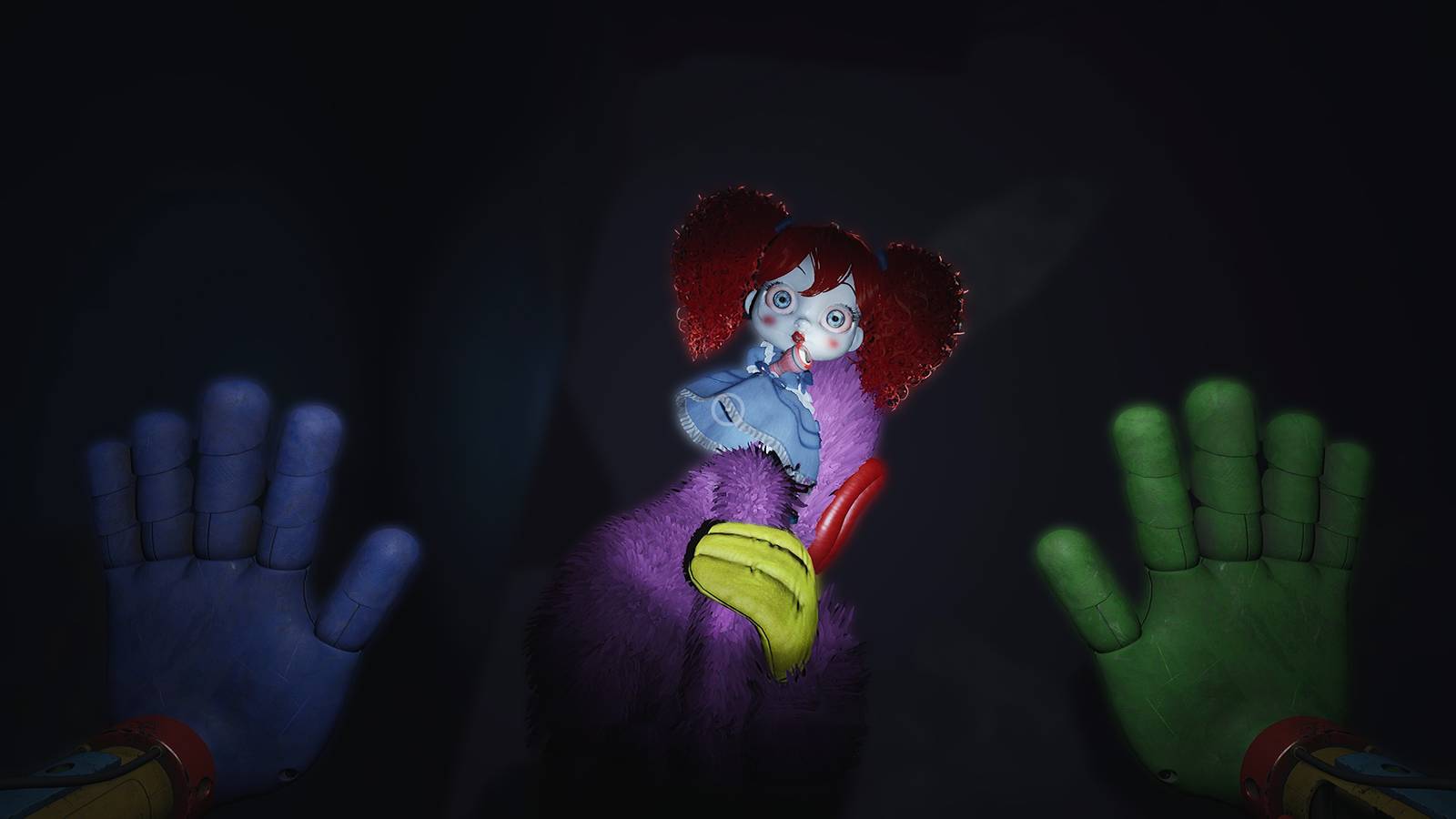
With Escape from Playtime entering Steam Early Access, Poppy Playtime fans return to the nightmare factory for another dose of scares, surprises, and secrets. The co-op prequel does its own thing separate from the main chapters, but it’s still part of the larger universe and, by extension, lore. As anybody who’s watched the tapes, listened to the recordings, and read the notes knows, Poppy Playtime‘s lore runs deep and dark, tracing back more than 70 years of in-universe time.
Although you can enjoy these games as pure in-the-moment horror roller-coasters without worrying too much about Playtime’s history, the lore isn’t just set dressing that adds color to the universe; no, the current hell stems from decades of decisions, and knowing the story behind characters like Mommy Long Legs turns them from monsters into tragedies. Therefore, let’s take a trip through the decades, starting from when Elliot Ludwig first opened Playtime Co. and ending with the day that you, the player, step into the factory.
Spoiler Warning for all the Poppy Playtime chapters. If you don’t want to know anything about Chapter 5 (like the Prototype’s design), don’t read any further.
While I’m not covering the events of the actual games, the article touches upon spoilers since the lore is drip-fed throughout the campaigns, and I include images of characters who appear throughout the game.
Poppy Playtime features plenty of secondary figures and minor details, but my goal is to chronicle the timeline’s main points and players rather than cover everything. Therefore, I’m not going to mention characters like Miss Delight.
The Long And Winding Road To Joy (1930s–1990s): Elliot Ludwig
Playtime’s story must begin with Elliot Ludwig. Despite never appearing and seldom speaking in the chapters, Ludwig’s shadow looms over Poppy Playtime in its entirety. Through recordings of himself or other people talking about him, we learn that he was a visionary who dedicated his life to children, at least initially. However, a family tragedy changed Ludwig forever, causing him to go down a road that would eventually turn Playtime Co. from a factory of dreams into one of nightmares.
The Dream, The Doll, And The Child (1930s–60s)
-
-

-


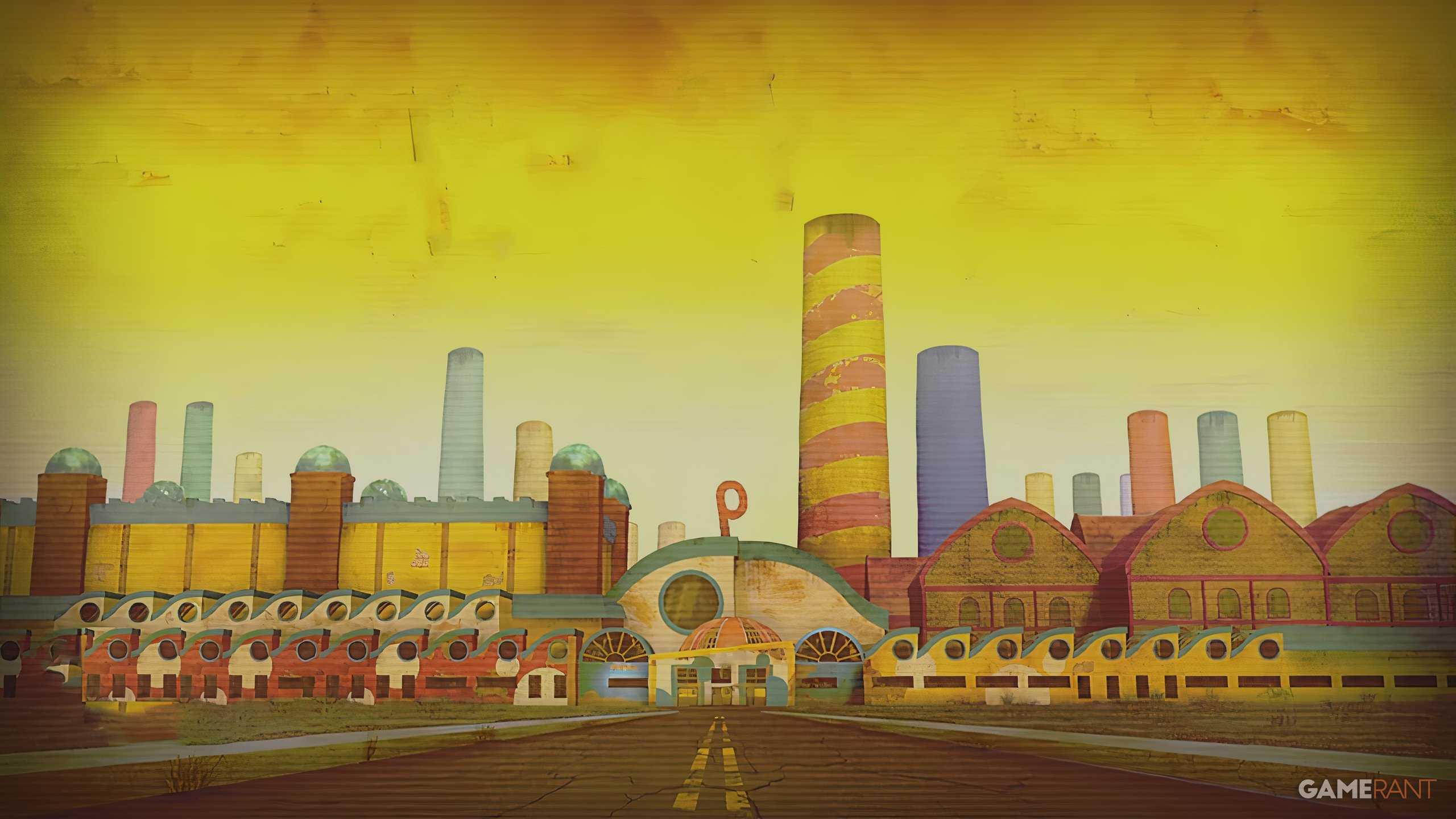
In the early 1930s, Elliot Ludwig established Playtime Co., a toy-manufacturing company with lofty ambitions to bring joy to every child. Naturally, a factory soon followed, with Playtime appointing Michigan as its home. As he tried to ride out the company’s fairly rough launch years, Ludwig became entirely consumed by his job, turning his wife into his ex in the process.
In the late 1940s, Ludwig welcomed a girl named Poppy into his family, regarding her as a daughter. Inspired by her, Ludwig designed the Poppy Playtime pull-string talking doll in 1950, which proved to be the company’s first true groundbreaking product. With just this one toy, Playtime went from a no-name organization to an industry leader, a status it maintained for its entire existence.
You are about to see the most incredible doll ever invented. Her name is Poppy, and she is the first truly intelligent doll in the world. A little girl can talk to her; Poppy gives her answers. – Commercial narrator, Poppy Playtime Chapter 1: A Tight Squeeze
Playtime’s 1950s were defined by rapid expansion, with the company even opening up its factory to children and parents. Other successful toys soon followed, and everything seemed to be going very well. Unfortunately, in the following decade, Ludwig’s life, outlook, and obsession would change forever due to a horrible tragedy: Poppy’s death.
Technically, we are never told specifically that Poppy died. Early on in Chapter 2, we find the “Elliot Ludwig Biography” VHS in his office, which simply states that “an unfortunate family death pushed Ludwig down to his lowest.” However, the last known record of Poppy is a 1960 diary entry, and everything that happens later only makes sense with her death acting as the inciting incident.
We have no idea how she died, though.
Ludwig’s Necromancy, Playcare, & The Test Subject (1960s-1979)
Everyone grieves in their own way. Some people dive into their work, while others rely on denial to get through the pain. Ludwig did both. At this point, Playtime Co.’s public perception and internal reality deviated significantly from each other, never to really meet again.
From the public’s point of view, Playtime Co. continued moving forward as normal, achieving greater heights through the release of new toys and under the guidance of the universally adored founder. In reality, things took a gothic horror turn, as Ludwig turned to science to cure his bleeding heart.
While we don’t have the exact year of when he started, we know that Ludwig began to experiment with necromancy in the 1960s, using dead animals as test subjects (the Experiment 814 log details Ludwig’s attempts to revive a dead rat, which ended in failure). He created Poppy Gel, which could regenerate cells and, well, bring the dead back to life (in theory). This was all done in the hope of reviving Poppy, although years had passed since her death.
That is why it is with enormous pleasure that, as the founder of Playtime Co., I announce Playcare! Our very own on-site orphanage. But it’s not only that. It’s a school, a playhouse, a place to belong. Our very own ecosystem beneath the surface, dedicated in every inch and detail to ensuring a child’s smile. – Elliot Ludwig, Poppy Playtime Chapter 3: Deep Sleep
In the mid 1970s, Ludwig opened Playcare, an altruistic endeavor conceived to provide orphans with a home that feels safe enough that they can find the courage to smile and love again. The kids were surrounded by teachers and counselors, and Ludwig even started a program that encouraged members of Playtime Co. to adopt orphans. Heck, he even adopted a child, Oliver, himself. From the public’s perspective, Ludwig was pure goodness, and this project represented his greatest effort to bring joy to children.
As always, reality was more complicated. While his desire to create a safe haven for children was genuine, Ludwig’s priority was still to revive Poppy, and Playcare presented an opportunity to take his experimentation to the next level. His adopted son became the ideal test subject, especially since he was willing to accommodate his father’s wishes. We don’t know too much about Ollie’s state at this point in the story, but he was likely a victim of child abuse who might have been beaten badly by his biological father. Ludwig promised to take Ollie to a better place.
Experiment 1006 & Experiment 1007

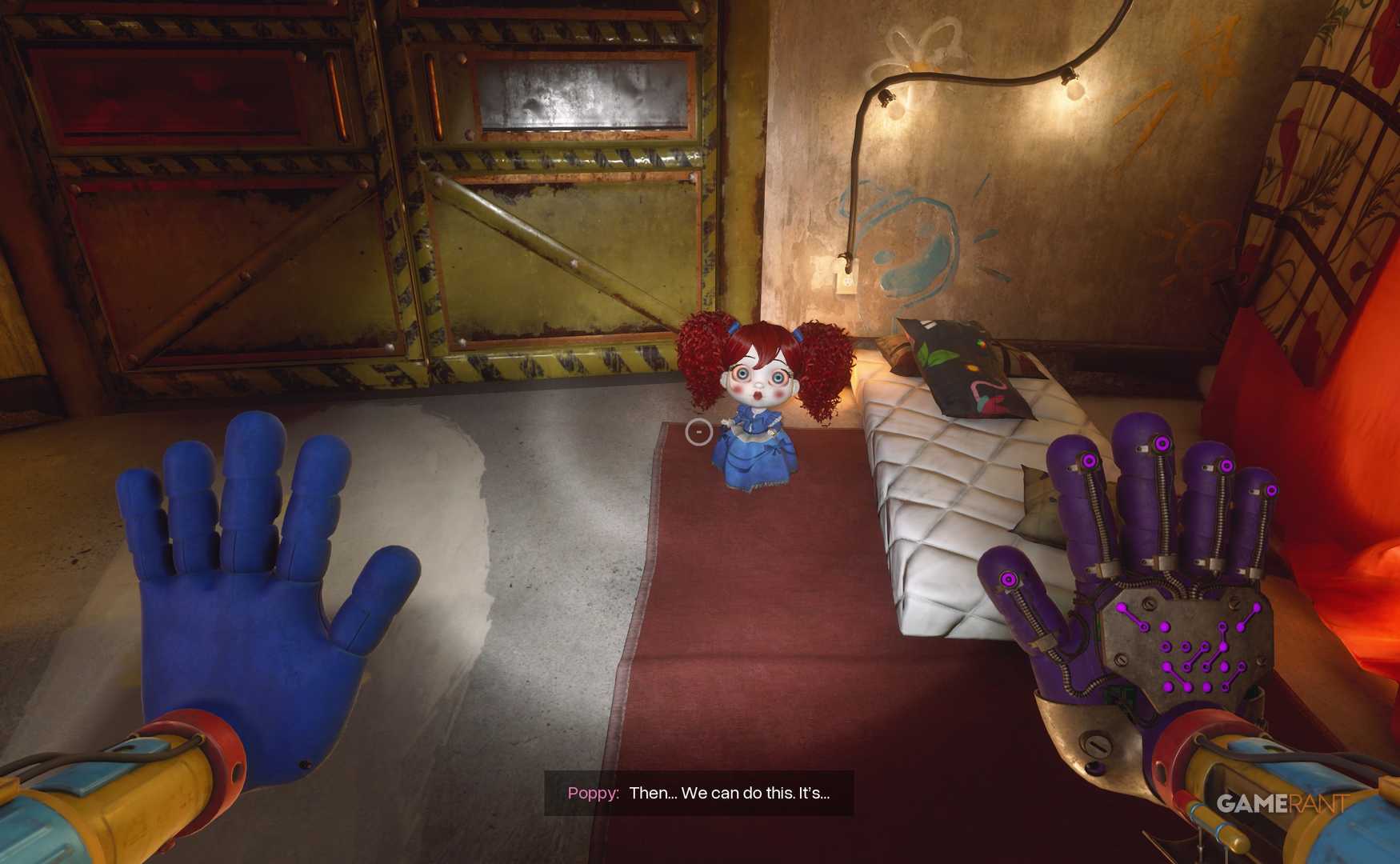
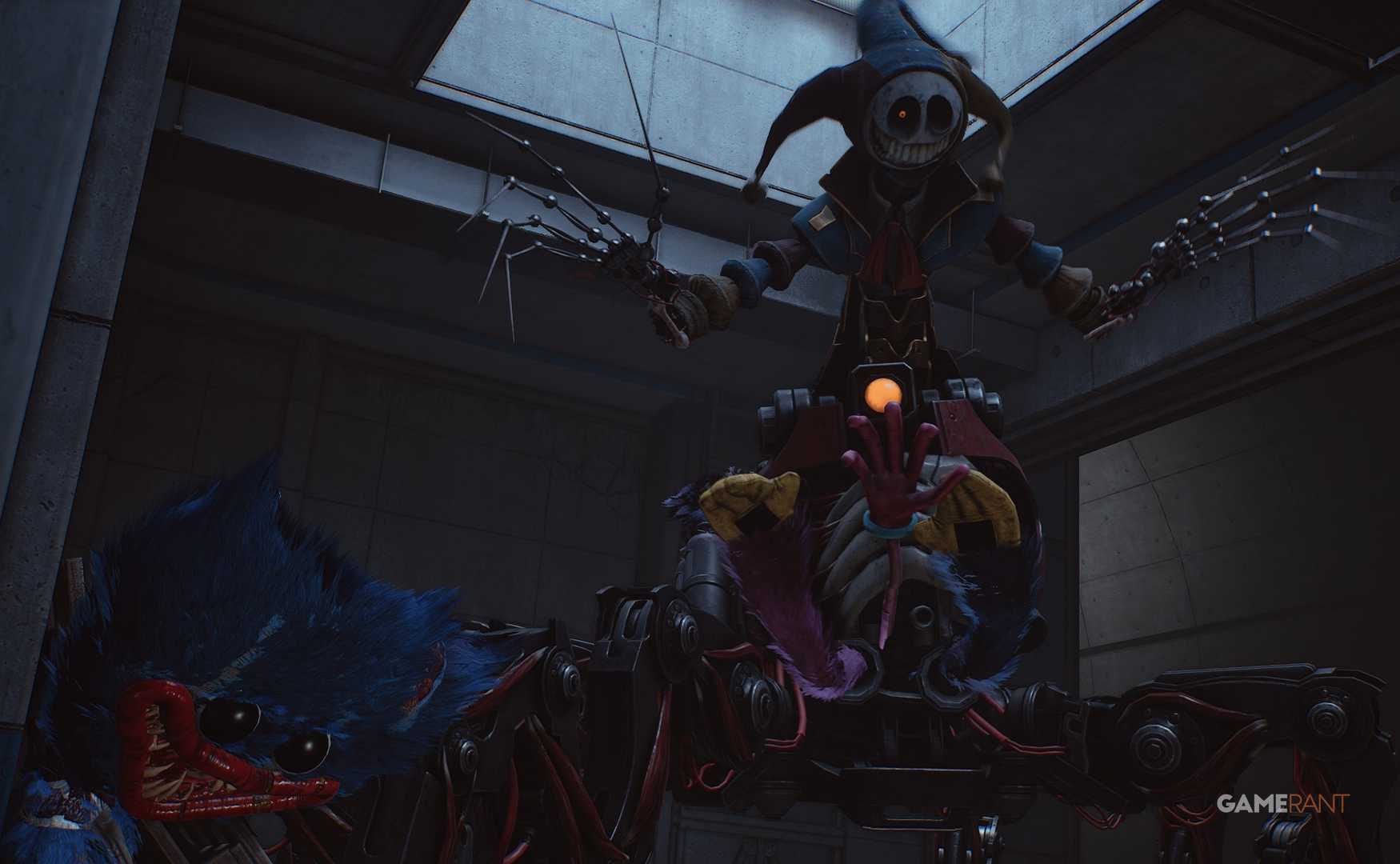
In the late 1970s, Ludwig transferred Ollie’s consciousness into a mechanical body, giving birth to Experiment 1006 (The Prototype). While Ludwig promised Ollie that he would one day meet Poppy so they could be a family, he essentially left Experiment 1006 locked away while he tried to bring his daughter back. At the very least, that’s what Ollie believed, going by his recorded conversation with Ludwig in Chapter 5.
It was never about me, never about my better place. It was for her. She’s all you talk about! – The Prototype, Poppy Playtime Chapter 5: Broken Things
Soon after The Prototype’s creation, Ludwig finally accomplished his goal and revived his daughter by embedding parts of her into a Poppy Playtime doll, dubbing her Experiment 1007. This is the Poppy we know and some of us love. Despite being everything he sought to create, Ludwig didn’t keep any major recordings discussing Poppy’s creation, and we don’t actually know all that much about her experiment.
She introduced herself as Poppy. Not just the doll but the girl the dolls were made after: Poppy Ludwig. She remembered me, how we met. She had the same voice and everything. It was made only more unnerving by the fact that she seemed downright traumatized by the whole ordeal. – Leith Pierre, Poppy Playtime Chapter 5: Broken Things
Ludwig’s Final Years, The Reveal, And The Aftermath (1980s–Early ’90s)
-

-

-

After achieving the impossible, Ludwig spent his final few years expanding Playcare, introducing new toys like Huggy Wuggy and Kissy Missy, and inventing the GrabPack, the tool that players use throughout Poppy Playtime. Playtime launched The Smiling Critters plushies toward the end of the 1980s, which would prove to be one of Ludwig’s final creations before his death. We play as the Smiling Critters in Escape from Playtime.
The Smiling Critters were a hit initially, even getting a cartoon; however, one critter called CatNap caused issues. In the cartoon, he releases a red smoke that causes the other Smiling Critters to fall asleep, an act parents found unsettling. His plushy was meant to cast a lavender scent, but a manufacturing error led to some of them releasing red smoke that caused nightmares. Playtime pulled the toys from the shelves.
Reports began making the rounds of an orphan, Theodore, pulling off stunts for an imaginary friend, who proved to be the Prototype. Their united goal was to escape Playcare and the factory, which they nearly achieved. However, right at the end, Theodore was electrocuted and on the verge of death; rather than escaping, Experiment 1006 took the boy to a Playtime doctor, sealing his fate in the process.
This moment not only exposed The Prototype’s existence to other Playtime members, but it also revealed Ludwig’s experimentation to Leith Pierre, the financially ambitious Head of Innovation who would become the top dog following the founder’s death. Ludwig’s body was found in the late 1980s, alongside the remnants of a child’s long-rotting corpse. We don’t know the exact cause of death, and the child is presumed to be Oliver by the fanbase, but we never got confirmation. Currently, that’s the only answer that makes sense.
Tragic news this morning. As of 9:45 AM, local authorities report that the body of a young boy has been found on the estate of the late Elliot Ludwig, an esteemed toy maker and originator of the Playtime Company. At this time, an identity for the child awaits official confirmation. Found in an upstairs bedroom in a large duffle bag, officers on scene report that the remains appeared to have been disturbed. Organs as well as key bones from the skeletal structure were reported missing from the body. – News broadcast, Poppy Playtime Chapter 3: Deep Sleep
Without his presence, there was nothing to stop Playtime Co.’s new chair, Pierre, from turning the already horrific experiments into something far more sinister. His most consequential decision was hiring Harley Sawyer, a genius scientist without ethics who had studied under Ludwig decades earlier. Together, they founded the Bigger Bodies initiative.
The Bigger Bodies Initiative: Harley Sawyer


1990 was a turning point for Playtime, in more ways than one. Elliot Ludwig’s death was always going to come with repercussions, but the fact that he was found with the corpse of a child certainly amplified matters. Playtime’s reputation was on the decline due to the CatNap incident, and toys like The Wrongside Outimals and the Nightmare Critters did not achieve the massive success of the company’s previous releases.
Internally, things were also spiraling under the threat of whistleblowers. With so many researchers and people working in the factory, many were exposed to confidential acts that were anything but humane, largely perpetuated by Sawyer. The good doctor’s goal was to create a living toy, with emphasis on the “living” part.
My name is Harley Sawyer. I’m called “The Doctor.” When I look at this company we’ve built, I do not feel proud. Declining profits, failed experiments, people are constantly seeing things they shouldn’t. How is that anything less than complete failure on our part? It’s pathetic.
I’m here now with a solution… ‘The Bigger Bodies Initiative.’ Giant Toys. We can increase our workforce and simultaneously decrease the number of lawsuits and people on our payroll. If the people we have working aren’t people. – Dr. Harley Sawyer, Project: Playtime
Sawyer’s Pitch: Immortal Toys, Cheap Workers (Early 1990s)
Pitched as an idea to expand or replace the workforce without incurring further cost, Sawyer proposed the Bigger Bodies Initiative, the most infamous project in Playtime’s history. Basically, Sawyer conducted human experiments in an attempt to turn people into, well, toys. Playcare’s orphan population proved to be a valuable farm for these experiments, although Sawyer and Pierre weren’t against using staff members instead of children.
He conducted quite a few early failed experiments that didn’t result in stable creations, but things changed when he discovered Ludwig’s history with the Poppy Gel and gained access to the Prototype. Sawyer mass-produced the former to, naturally, more dangerous results; meanwhile, the latter proved to be a valuable asset.
While Sawyer pitched the concept as a financial solution to the business-minded Pierre, he saw this endeavor as a way to defeat death and achieve immortality, and most of the other scientists justified their actions by clinging to this goal. The doctor built his initiative on Ludwig’s necromancy experiments, with the biggest change being the switch from corpses to living subjects. Ludwig had already done this with Ollie, but Sawyer and Pierre turned that horror show into a corporate staple.
Around this time, Playtime created a prison to hold any dangerous toys.
How It Actually Worked
Unsurprisingly, Poppy Playtime keeps things relatively vague when it comes to the scientific method behind the Bigger Bodies Initiative, but we learn about a couple of crucial steps.
- Before conducting any biological experiments, scientists pick a child and assign a toy to them.
- They have the child complete a series of games built specifically for this purpose. These are the exercises Mommy Long Legs forces us to play in Chapter 2‘s Game Station. These tests allow data to be collected regarding the child’s cognitive and physical abilities
- Once all the necessary data is collected, the child is returned to Playcare, where they are routinely gassed with red smoke that causes them to fall asleep. They would then be transported to deep, underground labs.
- At this point, the transformation begins. Make no mistake about it; this procedure wasn’t magical or painless. Sawyer and his scientists ripped children apart, transferring their organs, nervous system, and brain into a mechanical toy with organic elements.
- Shockingly, this invasive procedure traumatized the subjects, who often woke up not feeling all that great. Most of them retained memories of their lives as humans, and they were prone to violent outbursts.
- To turn them into, basically, obedient slaves, scientists used brainwashing, deprivation, and torture. Gracie Green was the main force behind this step, a manipulative woman who specialized in forcing the children to accept their new lives as toys. They forced the subjects to refer to themselves as their toy, in an attempt to eradicate any remnant of their personality.
- If everything went as planned, the toy would be implemented as a mainstream factory worker.
Toys don’t feel pain. Toys don’t need answers. Toys are here to be joy. – Ms. Gracie, Poppy Playtime Chapter 5: Broken Things
The Case Studies
Naturally, Sawyer didn’t get the results he wanted immediately, and the BBI’s “successful” subjects didn’t all end up in the same state. A way to chronicle the experiment’s development is to pick out a few subjects, highlighting their histories and outcomes.
- Boxy Boo (Experiment 1160) – Regarded as the initiative’s first success, in the sense that his consciousness was transferred into his new body. He was also the first subject to end up in a far bigger and different body than his original form. However, he didn’t retain any significant cognitive or communication abilities, making them unsuitable for public exposure. Consequently, he was employed as an enforcer who would hunt down rogue staff members, like Rowan Stoll, who knew more than they should or questioned the BBI’s ethics. We don’t know Boxy Boo’s human identity.
- Yarnaby (Experiment 1166) – While not a huge leap forward, Yarnaby was the first BBI toy to show total submission. Yarnaby was an orphan named Quinn, who was manipulated by Sawyer to try extra hard in the cognitive games.
- Huggy Wuggy (Experiment 1170) – While not the next successful experiment, Huggy Wuggy was the BBI’s next milestone achievement and arguably the first true successful transfer. Unlike his predecessors, Huggy Wuggy was intelligent and, more importantly for corporate, obedient. He was trained and cast as the factory’s main security guard and mascot, which players experience firsthand during Chapter 1. We don’t know Huggy Wuggy’s human identity. Fan theories suggest he might be a Playcare child, mainly Jeremy or Samuel Lee, but this is ultimately speculation.
- Kissy Missy (Experiment 1172) – Created specifically to help calm down Huggy Wuggy during his aggressive episodes, Kissy Missy stood out as she held her human empathy, making her the “kind” experiment. She doesn’t demonstrate the bloodlust shown by other BBI victims, and she spends most of the games as Poppy and the player’s ally. We don’t know Kissy Missy’s human identity, but she likely was a Playcare child.
- CatNap (Experiment 1188) – CatNap was Theodore, the boy who tried to escape with the Prototype. When the latter handed the former’s electrocuted body to Playtime’s scientists, they seized the opportunity to conduct another BBI experiment, creating CatNap in the process. Biologically, he was a horrifying work of art, a being capable of morphing his body to enter places that shouldn’t have been accessible by his large frame. Sawyer and company also infused CatNap with the Red Smoke, allowing him to nearly instantly knock out anybody. Theodore fought the conditioning process with everything he had, but Playtime relentlessly psychologically tortured him for roughly 50 days, led by Gracie Green (Ms. Gracie from those creepy ASMR tapes), Jessica Newman, and Preston Willard. By the end, Theodore was completely gone, leaving behind only CatNap. However, he remembered that the Prototype saved him.
- Mommy Long Legs (Experiment 1222) – Although intellectual, Huggy Wuggy and Kissy Missy were mute and mostly acted like well-trained animals, while CatNap was only a step above them. They couldn’t communicate naturally. Mommy Long Legs changed everything. She was highly intelligent and regained her human speech, all the while showing clear personality traits. She was so smart that she was put in charge of the factory’s Game Station, and she had a maternal instinct that caused her to act “warm” towards children. However, she absolutely hated Playtime’s staff, something she retained from his human persona. Mommy Long Legs used to be Marie Payne, a rebellious Playcare child who fought back against her captors. Sawyer corrupted her independence and protective nature, turning her into a horrifying mother figure. Mommy Long Legs hates you, the player, because you are a former staff member.
- Doey the Doughman (Experiment 1322) – Arguably the most horrific milestone was Doey, Chapter 4‘s tragic ally. Rather than a single victim, Doey consists of three children fused together: Matthew Hallard, Jack Ayers, and Kevin Barnes. All three children have wildly different temperaments, and their psyches were basically always in conflict with each other (which is represented by the hands on Doey’s stomach). Doey can reason and carry out conversations, and he tries extremely hard to be good, even setting up a Safe Haven for non-violent toys after the Hour of Joy (which we will get to in a moment).
- The Doctor (Experiment 1354) – What better way to end this section than with Harley Sawyer, himself? Yes, the BBI’s creator eventually became one of its victims, as Leith Pierre punished the doctor for his repeated failures by turning him into, basically, a computer. It couldn’t have happened to a nicer guy.
Let me tell you how this is gonna go, Sawyer. From now on, you’re here to give the lab boys answers when they need them, and carry out procedures when and how we tell you to. That’s it. – Leith Pierre, Poppy Playtime Chapter 4: Safe Haven
The Illusion of Control And The Start Of The End

During all this time, Sawyer and Playtime’s scientists thought they had relative authority over their creations, turning them into puppets that they could use for free labor and twisted attempts to achieve immortality. In truth, they weren’t quite as in control as they believed.
After going missing, the Prototype spent years mobilizing the toys from the underground, forging a connection with pretty much all the BBI creations, along with other earlier experiments. CatNap instantly supported the Prototype, and the likes of Mommy Long Legs, Huggy Wuggy, the Smiling Critters, and others. Poppy also joined the Prototype’s side, although she believed that his goal was to free the toys. That said, she knew what was coming.


Find the odd one out before the timer hits zero.
The Hour Of Joy & The Aftermath: The Prototype

By the mid-90s, the “successful” Bigger Body toys were installed around the factory, giving them easy access to not only researchers but also visitors who were simply on tours. Playtime was about to reap what it sowed.
The Theater Incident: Precursor To Joy
In 1993, an incident occurred in the factory’s theater, an area open to visitors. Several Bigger Body Toys escaped and seemingly killed more than 60 visitors, along with a bunch of specialists. This tragedy was ultimately blamed on Sawyer, which led to Pierre’s decision to transform him into an experiment. While not directly related to the Hour of Joy, this incident basically acted as an appetizer to the main course.
August 8, 1995
On this seemingly ordinary day at 11 AM, hell broke loose. Cutting the factory’s power and locking the exit gates, the Prototype ordered the toys to rebel, slaughtering every human trapped inside with them. With the doors shut tight, nobody was allowed to escape, regardless of whether they were scientists with blood on their hands or guests who knew absolutely nothing.
The massacre began in the lobby with Playtime’s mascot. Presented as a statue, Huggy Wuggy came to life, shocking and then quickly killing everybody in sight. Tour groups became the subjects of the toys’ anger, with Boxy Boo and the Smiling Critters specifically focusing on them. The mayhem spread across the factory and into the underground, reaching low-level scientists who might or might not have been involved with the experiments. They all died, regardless.
Leith Pierre might have outlived this ordeal, as corporate villains tend to do, but we don’t have confirmation on his fate. While we don’t know if he survived, the toys definitely got their hands on Gracie Green, who suffered a fitting fate for the part she played, along with other notable figures who contributed to everything that transpired. A few scientists survived for a couple of days, but they were eventually caught and killed.
The Prototype turned Gracie Green into Lily Lovebraids, putting her through the hell that she helped inflict on the children. He would eventually confine her to Sweet Street’s Dollhouse, where she would further go insane from her isolation and transformation.
She wasn’t the only researcher turned into a toy, as Preston Willard also ended up as one.
The Immediate Aftermath And Starving In The Dark

After the Hour of Joy, the toys dragged the corpses into the underground, hiding the massacre from the public. The main Playtime Co. factory closed down, and the Prototype forbade the toys from leaving the premises, reasoning that the outside world would merely continue the experiments started by Sawyer and company.
The Prototype seemingly spared Playcare’s orphans, taking them to a safe location.
Within the depths, the organic BBI toys grew hungry, as they needed to eat. Therefore, under orders from the Prototype, they turned to the human corpses, using them as nourishment. Ultimately, this supply only lasted for a limited time, and the toys quickly found themselves starving and without any hope for survival. By the time the player enters the factory in 2005, they are absolutely famished.
The Prototype’s Fear, The War, & Escape From Playtime
The Prototype quickly proved himself to be anything but a noble leader, as he started to conduct his own experiments in the hope of creating immortal beings that could live with him forever. That’s one of the reasons he was so obsessed with Poppy, as she could keep him company in the darkness until the end of time. He also kept The Doctor plugged in, using him as a guide for the experiments.
Escape from Playtime takes place around this time in the lore, as it happens a few years after the Hour of Joy.
Players control Smiling Critters who are trying to survive the abandoned factory while picking up items to create “A Better Place,” a location that would eventually be used by the Prototype to house the orphans. They are guided by a mysterious voice, whose identity has not been revealed up to this point.
They must also avoid roaming threats that players will be familiar with. Miss Delight is confirmed to be in Escape from Playtime‘s early access version, although minor figures like Boogie Bot, Bunzo Bunny, Cat-Bee, Candy Cat, and Boogie Bot also feature as antagonists.
As time passed, the surviving toys split into two groups: The Prototype’s army and the rebels. The latter were led by Doey and Poppy, supported by Giblet, Kissy Missy, Smiling Critters, and other toys. Unfortunately, the Prototype captured Poppy, locking her in a glass cabinet that would be her prison until the player released her in 2005. The good toys found a place they could temporarily call home, which they dubbed Safe Haven.
In Poppy’s absence, Doey stepped up as Safe Haven’s leader, and he dedicated himself to protecting the smaller plushies that couldn’t really defend themselves. He had an opportunity to escape, but he decided against it.
The Years Before The Player’s Arrival

The Hour of Joy took place in 1995, and the player wouldn’t arrive in the Playtime factory until 2005. For the most part, we don’t know a lot about what happened during the early 2000s, except for a couple of fascinating developments.
- The Doctor began running the Playtime Co. servers, which he used to respond to emails received from an unknown group. This group questioned whether Sawyer killed Ludwig, with the former opting to reply with a threat rather than a definitive answer.
- The toys started publishing a newsletter, which included some wild claims, like the Safe Haven toys eating each other.
- A mysterious toy, who went by the username SeeingReason, started leaving messages online, suggesting that she was trapped within the factory.
- Safe Haven’s residents started to die out as they grew desperate.
Finally, in 2005, the player received a mysterious letter asking them to come back to the factory. We don’t know the author of the letter, although we do know that it wasn’t Poppy and likely not Sawyer. The Prototype also seems unlikely, since he clearly isn’t fond of the player’s presence.


Poppy Playtime
- Released
-
October 12, 2021
- ESRB
-
T For Teen // Blood, Mild Language, Violence
- Developer(s)
-
MOB Games
- Publisher(s)
-
MOB Games