







Capcom has been on a hot streak in recent years, releasing new entries in beloved franchises like Resident Evil and Monster Hunter to widespread critical acclaim. The Japanese game developer and publisher has mostly stuck to playing the hits instead of trying something new, which is what has made Pragmata such an exciting prospect. A brand-new, completely original IP from Capcom, Pragmata is a sci-fi action-adventure with bold ambitions that doesn’t always stick the landing.
In Pragmata, players take on the role of Hugh, an astronaut who travels to the moon with his team to fix the communications for the lunar base stationed there after contact is lost. Upon arrival, it doesn’t take long for Hugh to realize that the base has much bigger problems, as he finds himself facing off against a hostile AI named IDUS and its army of deadly robots.
While the vast majority of robots Hugh encounters on the moon are actively trying to kill him, one exception is Diana, an android that resembles a small child. Diana and Hugh team up to fight back against IDUS and solve the mystery of exactly what happened to the lunar base. Hugh and Diana quickly develop a father-daughter dynamic, but their relationship doesn’t provide the kind of strong emotional core one might expect.
Diana is bursting with personality, but Hugh is pretty bland and generic. Pragmata‘s plot beats are also fairly generic and predictable, resulting in an inoffensive story that is entertaining enough to get by but doesn’t add much to the proceedings. Most players are going to be able to see all the major plot twists coming from a mile away, which keeps the story from ever getting too exciting.
Pragmata is All About the Action
Pragmata‘s plot is serviceable but unremarkable, so luckily it’s not a huge focus of the game. Pragmata‘s mostly concerned with exploration and combat, two areas it excels in. Going into Pragmata, I was skeptical about its mix of maze puzzles and third-person shooter combat, but it works much better than expected.
The robots Hugh and Diana fight have to be hacked to expose their weak points. This is accomplished through a simple maze mini-game where players are tasked with moving across a grid through blue boxes that deal damage and nodes that can provide bonus effects like confusing enemies into attacking their friends or giving Hugh a healing boost. When done correctly, a Pragmata hack leaves enemies vulnerable, giving Hugh the chance to lay into them with satisfying critical hits.
Enemies don’t stop pursuing Hugh and Diana when a hack is going on, so players have to complete them as fast as possible. Between hacking, shooting, and dodging, Pragmata combat can become pretty hectic and intense, especially as the puzzles become more complex later in the game.
The increasingly more challenging hacks and the healthy enemy variety ensure that Pragmata‘s combat remains solidly entertaining from start to finish. Hugh’s varied arsenal also goes a long way, with players able to utilize a standard pistol, a machinegun, an explosive shotgun-like weapon, a decoy gun to distract enemies, and more. Besides Hugh’s primary gun, every weapon has a cooldown timer and limited ammo to consider, and so players have to think strategically in every encounter.
Pragmata‘s combat really shines in its intense boss fights, with players squaring off against hulking robots with attacks that can wipe Hugh out in only a few hits. Pragmata players will be sweating bullets when the boss battles get down to the wire and Hugh is out of healing items, as one wrong move can mean starting the lengthy fights all the way back from the beginning. Pragmata‘s boss battles are a highlight, even if they can sometimes feel a little bullet spongey before players properly upgrade their gear.
A downside to Pragmata‘s boss fights are the repeats. There are a couple of notable encounters that effectively happen multiple times, which is disappointing as the boss designs are great, and it would have been nice to see more of them. The same problem arises with Pragmata‘s environments, which start off quite varied but lose steam at around the halfway point.
In Pragmata, the scientists on the lunar base have built a gigantic 3D printer that can create pretty much anything. It goes out of whack and creates a bunch of topsy-turvy areas that look pulled straight out of something like Inception, but it opens the door for the game to include more varied places to explore beyond sterile rooms. At first, Pragmata takes great advantage of this by letting players explore a version of New York City and a couple of other unique environments I won’t spoil, but this ambition is given up on fairly quickly and most of the game is spent going through samey-looking areas.
Pragmata is not a horror game by any means, but it definitely shares some DNA with Resident Evil, with players finding files that slowly reveal more about the story and an upgrade/progression system not too far from games like Resident Evil 4.
While I was let down by the lack of variety in some parts of the game, there’s no denying that exploring these areas is fun, and they all look great. Pragmata consistently delivers awe-inspiring sights, and the level of detail in each area is impressive, especially considering how well the game runs.
Take Shelter

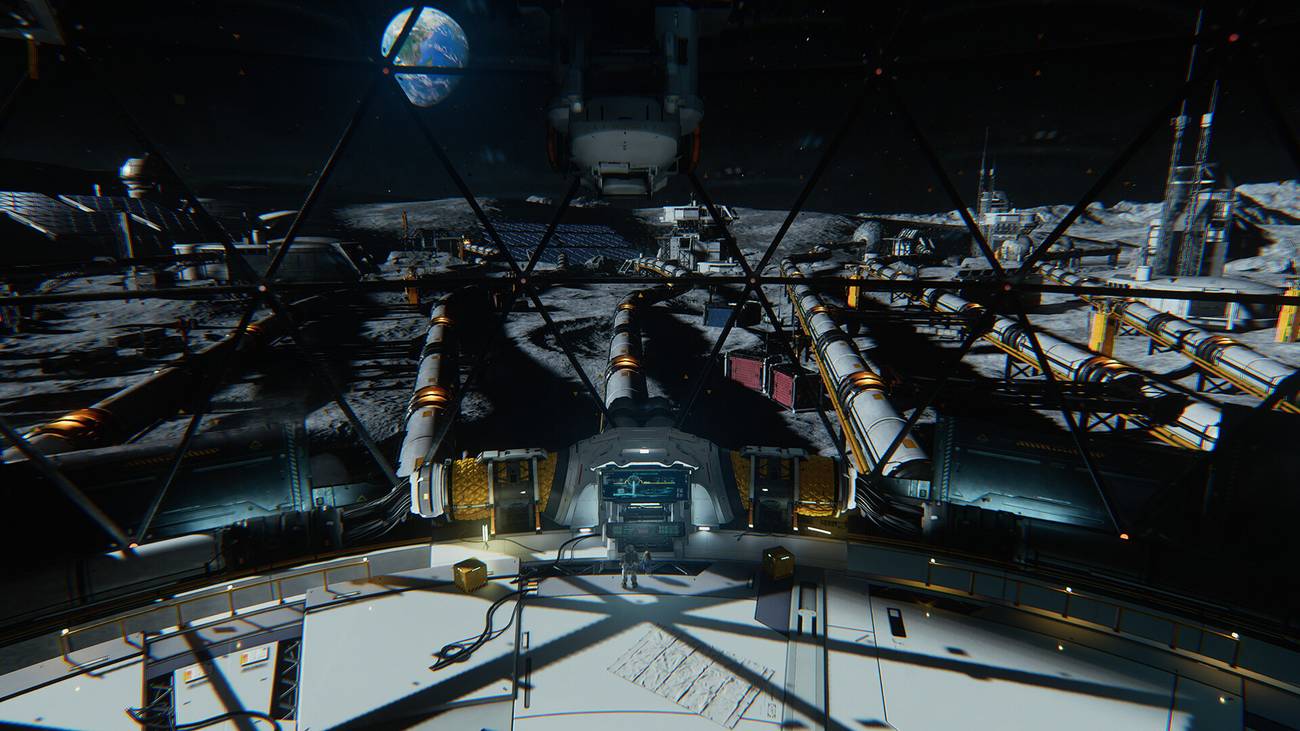
Hugh’s astronaut suit comes equipped with thrusters that let him reach high areas and boost across gaps, perfect for making his way through the haphazard layout of the lunar base. Players can utilize Hugh’s thrusters to make a straight shot to their goal, but each area is filled with useful collectibles off the beaten path that are definitely worth taking the time to hunt down.
Pragmata‘s collectibles, along with the currency that drops from defeated enemies, allow players to upgrade Hugh’s thrusters, suit integrity, weapons, and more. These upgrades are purchased at the shelter, which is accessible via hatches that work like checkpoints. The shelter is primarily used for upgrades and healing, but it comes equipped with a lot more functionality.
While visiting the shelter, Pragmata players can also chat with Diana, check out special Earth objects that they’ve found hidden in the game world, and challenge themselves to complete simulation scenarios in exchange for rewards. There are even collectible bingo coins that players can use at the shelter to complete bingo cards and get even more stuff in return.

Some of the bingo cards can’t be fully completed until Pragmata players clear out their associated Red Zones, which are extra-tough areas that require a special key to access. Pragmata Red Zones are entirely optional, but completing them is often worthwhile for the bingo cards and other rewards that players earn for overcoming their challenges.
Pragmata is Short, But There’s More to Do After the Credits Roll
Red Zones, collectibles, and post-game unlocks give Pragmata some more replay value, but some may be a little disappointed to learn that the game is fairly short. It took about six hours and 35 minutes to complete my initial playthrough, and that was with thoroughly exploring many of the stages and completing a handful of Red Zones and training simulations along the way. 100% completion will likely take somewhere in the 15 to 20 hour range, depending on skill level. That being said, I personally felt like the game didn’t need to be any longer. While I was initially hooked by the combat and exploration, Pragmata started to lose steam in the last hour.
Pragmata certainly starts strong, but it doesn’t have quite enough to stay completely engaging all the way to the end credits. It’s a highly-polished sci-fi game with fun combat and exploration, but its lackluster story and characters keep it from reaching its full potential. Still, it’s exciting to have a completely original IP from Capcom, and while Pragmata doesn’t live up to the high bar set by some of the studio’s other efforts, it’s a mostly worthwhile adventure.
Pragmata launches April 17 for PC, PS5, Switch 2, and Xbox Series X/S. Game Rant was provided with a PS5 code for review.