





Amani just wants to cook with somebody. Anybody. At least, that’s what I gathered over the course of Dosa Divas, the latest RPG from Outerloop Games, the team that most recently developed Thirsty Suitors. In Dosa Divas, sisters Amani and Samara, as well as their mech Goddess, embark on a road trip back home, and whether they stop in the village of Buroth or the resort that has sprung up in Port Zest, there are always people to feed and an intense desire on Amani’s part to be the one to cook for and nourish them. As a former restaurant chef, it’s just what makes her tick, though the further you wade into Dosa Divas, the more it becomes apparent that this—as opposed to standard forms of communication—is how Amani connects to people. Or at least tries. I get that.
I’m pretty shit in the kitchen, so whenever I try something new, I tend to call my mom. Growing up with her cooking, and believing her to be the very best at it, she’s my North Star in that department. But these calls, wherein my mom tries to help but ultimately gives me really nondescript directions on what to do, don’t have much to actually do with cooking or instruction. For me at least, they’re an excuse to talk and catch up. To touch base with my first and oldest friend in this life, learn from her, and maybe even get to know her better. And while part of me is learning to cook for the sake of survival—lord knows I can’t subsist on pricey takeout all the time—I also really want to learn so that I can be able to cook for the people I love now and down the line. To be able to succinctly impart how much I care for them, in the same way that the people who have cooked for me have done. Sometimes we stumble though and it is the effort, more than the result, that counts for something.
While it is frustratingly scarce across Dosa Divas’ 10-hour runtime, this kind of clear-eyed reflection on how we relate to and communicate with one another, especially through food, is the kind of excellent storytelling I’ve learned Outerloop Games is well qualified to deliver. It’s all the more exasperating, then, that this quality—Dosa Divas’ ability to successfully cut deep and provide some form of emotional reckoning or catharsis—is so frequently undercut by competing narratives. It’s also propped up by a decent RPG that itself has the misfortune of being stapled to a rote gameplay loop which not only dilutes Dosa Divas‘ narrative ambitions but ties its themes to little more than a handful of repetitive minigames and fetch quests that sell the game up the river.
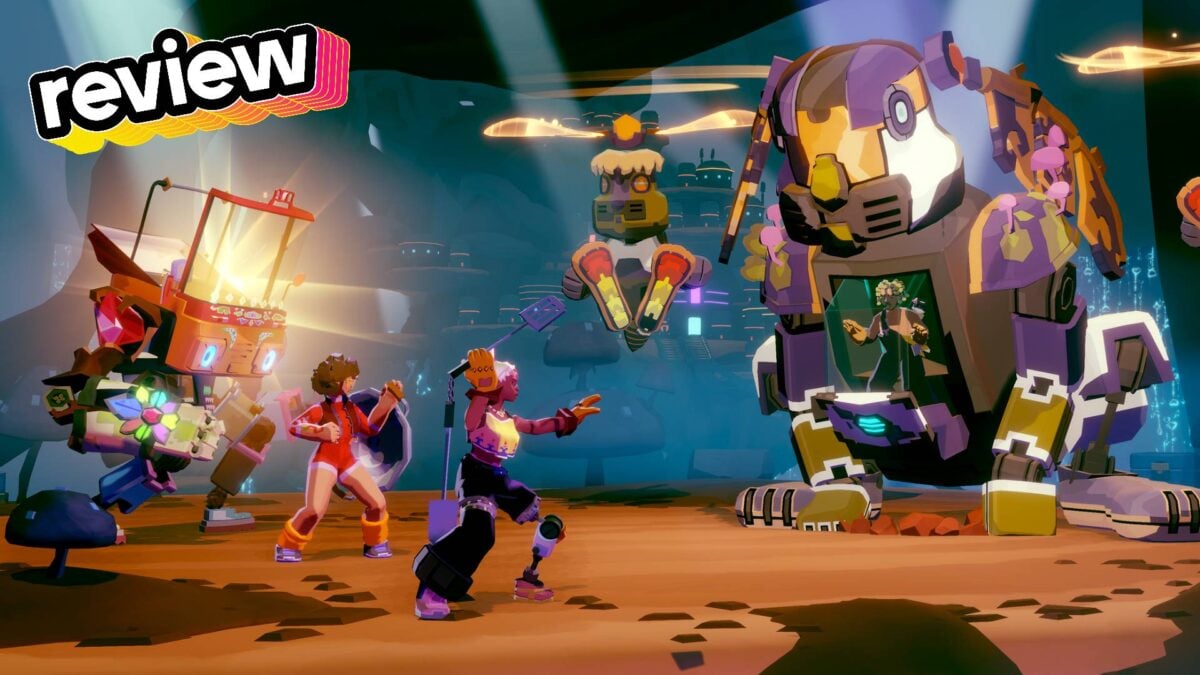
One half of Dosa Divas sees Outerloop take another crack at turn-based action after Thirsty Suitors. While that game adopted a flirty aesthetic to match its themes, this one sees the team adapting the world of cooking to the tried-and-true genre. This time around, it also borrows staples from the likes of Octopath Traveler and Super Mario RPG, adding boost mechanics that allow the player to assess elemental weaknesses—in Dosa Divas, these are sour, sweet, spicy, savory, and salty—and deliver onslaughts (not to mention timed button prompts) that can break, or in this game “stuff,” enemies.
Basically, a foe might start a battle with a number like 12 by their HP gauge and a weakness to savory moves, meaning I might want to unleash a similarly typed attack or skill to break and stuff them, opening them up to a lengthy damage window. I could whittle that number down by using a flurry skill and boost it to simultaneously do greater damage. Alternatively, I could apply it to a basic attack, which can be extended if I hit a precise prompt—and add attacks to the combo per boost level—and save myself the SP. Sometimes weaknesses are hidden, adding a degree of trial-and-error to Amani, Samara, and Goddess’ turns and making it so that players have to be precise about where they apply their resources.
Herein lies the most exciting part of Dosa Divas, where players must do the mental gymnastics of carefully deploying techniques against increasingly powerful enemies. I think the challenges posed by standard mobs—needing to test their weaknesses and try to survive to my next turn—gave me a harder time than any of the bosses, who come with their own unique gimmicks.

-
Back-of-the-box-quote:
“The Bear meets Super Mario RPG.”
-
Developer:
Outerloop Games
-
Type of game:
Turn-based RPG cook ’em up.
-
Liked:
Art direction and animation is top-notch, rock-solid RPG mechanics, and a diverse and layered cast help Dosa Divas come to life.
-
Disliked:
Cooking mechanics are underbaked and all over the game, while certain storylines struggle to breathe over the game’s short runtime.
-
Platforms:
PC, PS5, Xbox Series X/S, Switch, Switch 2 (Played).
-
Release Date:
April 14, 2025.
-
Played:
Completed most side tasks and beat the main game within 10 hours.
Surrounding this tense combat is a whole other system that regrettably causes Dosa Divas to sag quite a bit. It is also, unfortunately, the very heart of the game: the act of sourcing materials and cooking.
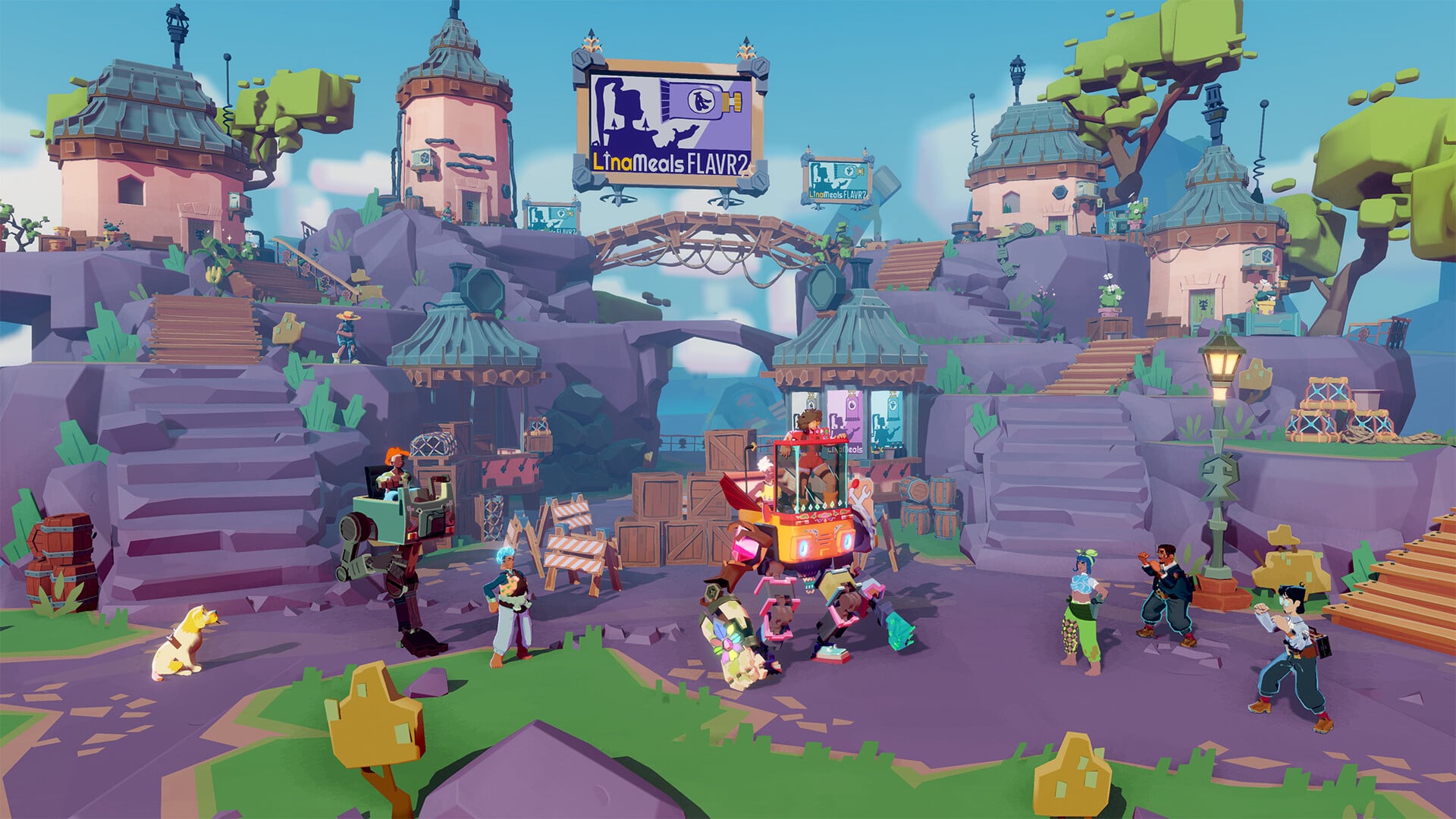
In the world of Dosa Divas, cooking has fallen out of fashion, largely due to the efforts of Amani and Samara’s sister Lina, who has gone corporate and taken over all but one remaining village. By taking them over, Lina forces her very own product—LinaMeals, which are crudely depicted as food-like paste in a tube—on the populace. LinaMeals are presented as an “efficient” alternative to cooking and underpin their creator’s own resentments toward the craft, the people, and the things that hurt her, including her sisters and the restaurant they once jointly ran aground when they were younger, dumber, and more egotistical.
So when Amani and Samara return to Meyndish and offer to cook for its often starved and broken people, most of them figures from their past, the act is framed as a spark of rebellion. Only it never truly grows into this all-consuming, awe-inspiring blaze.
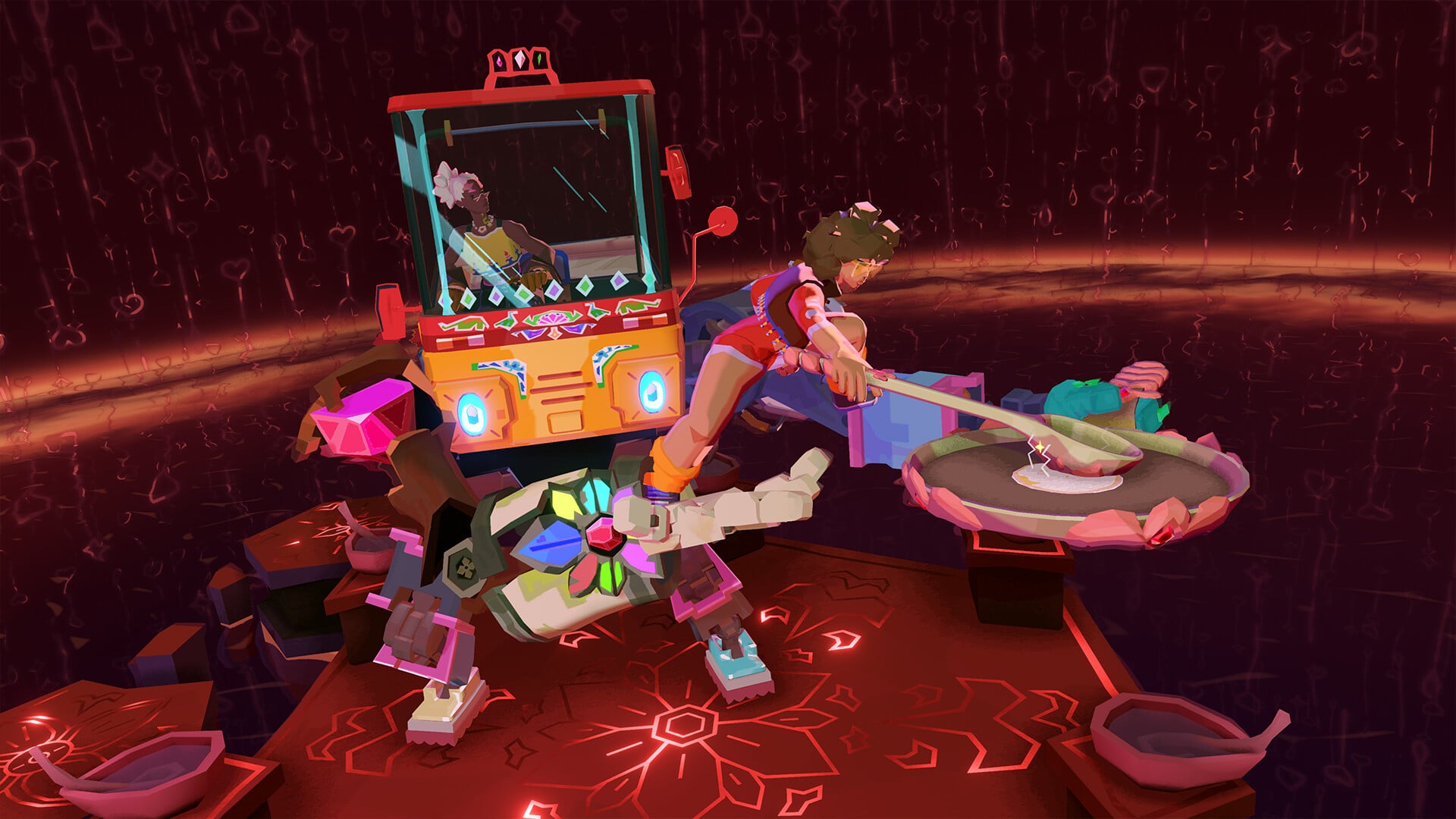
Cooking in Dosa Divas feels stiff. Mechanical. Bereft of the love that Amani suggests it is capable of communicating. Sourcing ingredients looks like running around in Dosa Divas‘ vibrant hub zones and automatically picking up anything you come into contact with, like tomatoes, onions, or coconuts. It can occasionally feel as if you’re running around like a chicken with its head lopped off. You may then take these to Kabi, a vendor who feels like a flirty and unwelcome holdover from Thirsty Suitors, and trade in some of these very ingredients for rarer materials, like oils. Once the ingredients are all arranged, you may enter an otherworldly prep zone, select a dish, and engage with some bog-standard minigames. Within perhaps 30-45 seconds, you’ll eventually have a certain quantity of the prepared meal, meaning you may keep some for yourself to be used as recovery items in battle, and have enough to give to the “quest givers” of Meyndish.
I use the scare quotes there because these people that you spend most of the game feeding are just kind of that: mouths to feed. Dosa Divas does little work to make them feel like real people you’re relating to or bonding with. Mechanically, it’s even more depersonalized; you travel in the overworld by riding Goddess, who is seemingly a mech rendered from the parts of an automobile. To collect orders from people, you must essentially drive by and honk her horn at them, rather than talking. When you deliver these meals, you do so by flinging them from Goddess’ cockpit. For a game whose moment-to-moment writing puts on airs of caring so deeply for the healing act of cooking for and nourishing one’s community, that value sure seems absent from this constant, exhaustive loop at its heart.
Occasionally, Outerloop’s writing salvages things. Thirsty Suitors not only gave us the wonderful Jala Jayaratne (I need her so bad, y’all) but also her marvelously difficult relationships with her exes, her parents, and her older sister. I’m happy to report that Dosa Divas‘ family dynamics are just as strained, if not even more so, and as a result, its leads stand to benefit from plenty of material. Dosa Divas’ narrative weaves in elements of family tragedy, child neglect, the ease with which the scourge of capitalism threatens traditions and cultures outside of the dominant mainstream and turns communities against one another, and more. All the while, two stories are playing in parallel, one about the central family and one about the mysterious past of their mechs, called Divas in the game’s fiction, and how their fates eerily align.
When it focuses on one or two of these threads, primarily the ones related to the game’s human leads and their frayed relationship to Meyndish, the people they wronged, and their family, it is refreshingly sharp. Often enough, though, Dosa Divas tries to juggle a number of these plotlines simultaneously as it strives to keep things moving and come in at around 10 hours of playtime, and they slam into one another sloppily.
It’s rare that a plot beat takes more than a minute or two to hang over these characters and let you draw something deeper from it than a gut reaction before it’s undercut by a joke, aside, or the introduction of a new conflict or goal. Though its short runtime feels like a breath of fresh air in an otherwise bloated genre, Dosa Divas could’ve used a bit more time honing its laudable themes or benefitted from cutting some bits to better flesh out others. Trying to do it all is ambitious of the team, but dulls Dosa Divas‘ heat, especially as one gets closer to its rushed conclusion.
Dosa Divas is, in the end, as blemished, bruised, and beautiful as its slickly animated characters and lavishly illustrated world. It feels like Outerloop threw the whole kitchen sink at this game, and while I admire its craft as well as the various spices and ingredients thrown in the mix here, it feels like the essence of what Dosa Divas is trying to communicate was lost in the concoction.