




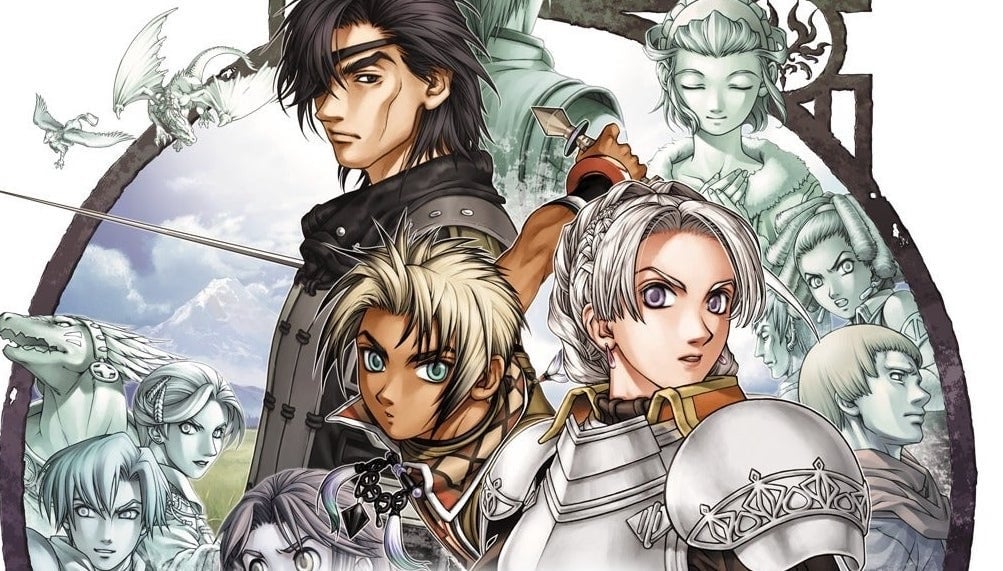
Suikoden 2 is arguably one of the best JRPGs for the PS1. While Suikoden 1 doesn’t reach the heights of 2, it’s well regarded and I personally enjoyed it. But I haven’t seen the third Suikoden get anywhere near as much love despite having one of the most interesting stories in the series. That’s a shame because I think it’s not just one of the best games in the series, but one of the best JRPGs on the PS2.
A Genealogy of War
I called the first game a “Leadership Simulator covered in JRPG armor.” Suikoden 3, which came out in 2002, is more or less similar, but showcases different approaches to leadership. The Trinity Sight System is a series of branching pathways through which players can follow the paths of three different protagonists (and a few optional ones) that eventually link up.
If this game had a thesis, it’d be that history isn’t just a linear track from A to B. There are multiple causes with unexpected effects, and the truth behind them all is murkily mixed up in the overlooked connections. As this was the first PS2 Suikoden, the game didn’t simply leave the upgrades to visual ones as it moved from sprites to 3D characters and environments. It also tried to evolve its approach to storytelling. It’s no longer that binary of good vs. evil, as in the plight of the first two Suikodens building an army to confront Luca Blight (and later Jowy) and Emperor Rugner. Instead, the battle is about ingrained systems and its various manifestations, a “fate” that forces the individuals into cycles of violence. Information or lack of it, leads to many of the misunderstandings, hence the need for triple sight. No single antagonist is outright evil like the previously mentioned Luca Blight, but rather, guided by their own slice of what they deem the truth. The player can see more of the picture than the characters, but even their scope is limited until they play through all paths.

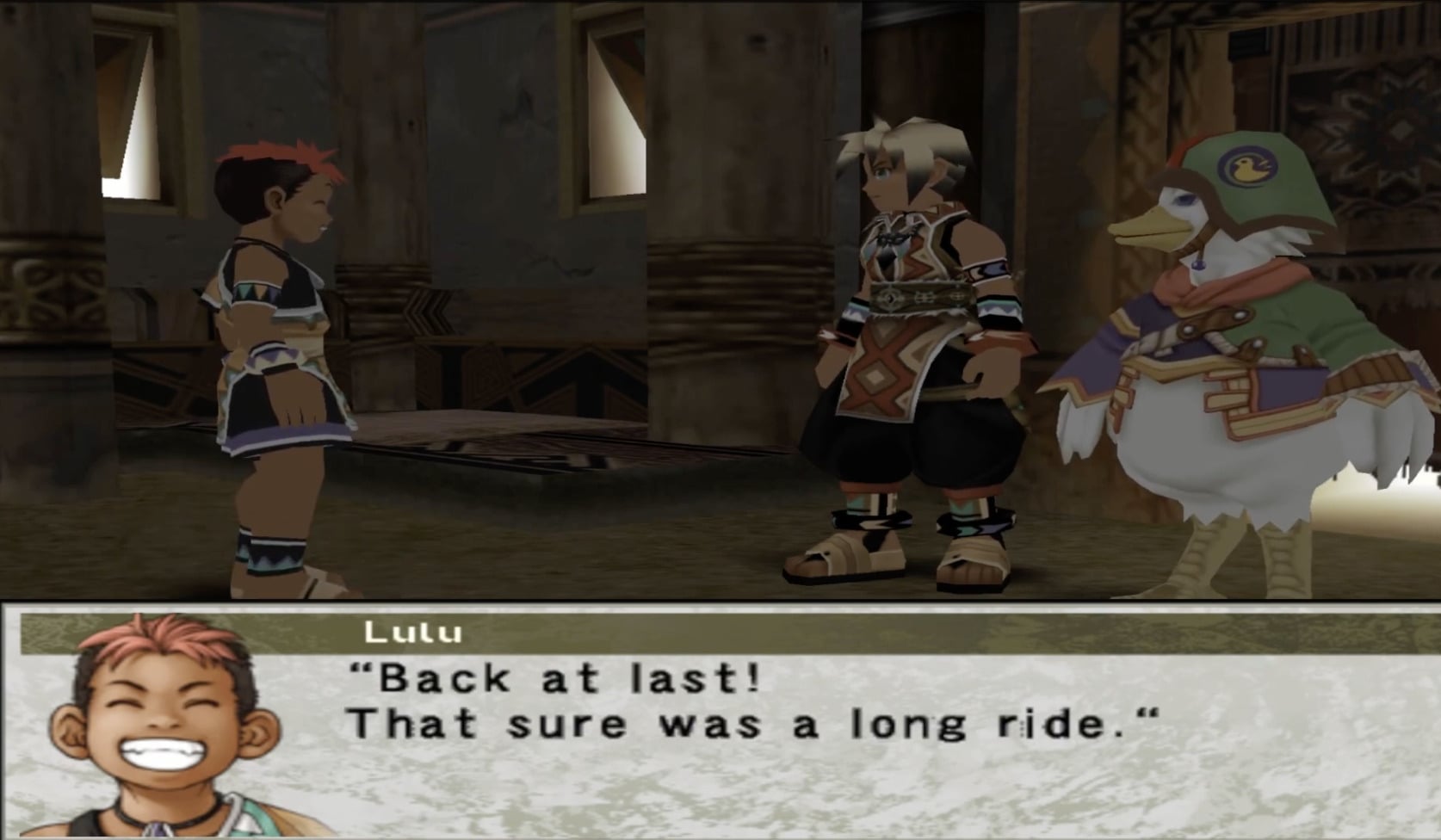
The backdrop to the game is that the Grasslanders, which are made up of six clans, have been at war with the Zexen Federation, a nation of wealthy traders. The first of the three protagonists, Hugo, has an idyllic opening. He’s the chief’s son and a young Grassland warrior who hangs out with his friends. These include the duck captain St. Joe, the griffin called Fubar, and a young villager named Lulu. Think of him basically as the classic JRPG trope of the wide-eyed lad setting out to save the world. The first stretch of his arc exemplifies what makes Suikoden III so compelling.
Those who’ve played the previous game might recognize Hugo’s mom, Lucia, who was one of the antagonists. I like how the series continually changes who’s considered friend and foe depending on which side you’re fighting for. She sends her son on a mission to deliver a message to the Zexen capital regarding peace negotiations. Hugo’s best friend, Lulu, begs to be allowed to come along. The mission is such a big step for the young Hugo, the village comes to see him off. Lulu, playing the role of comic relief, overpacks. There’s also a minor detail that seems trivial but becomes very important later on. One of the villagers, Jimba, mentions that he acquired a suit of Zexen armor from a former acquaintance. When he’s asked why he keeps the armor outdoors, he reveals, “Our mother can’t stand the smell of iron. It reminds her of a cruel past.” As Hugo get ready to leave, Jimba asks him to take a pentacle to the Lightfellow family in the Zexen capital and tell them that the person who wore the armor “died heroically.”

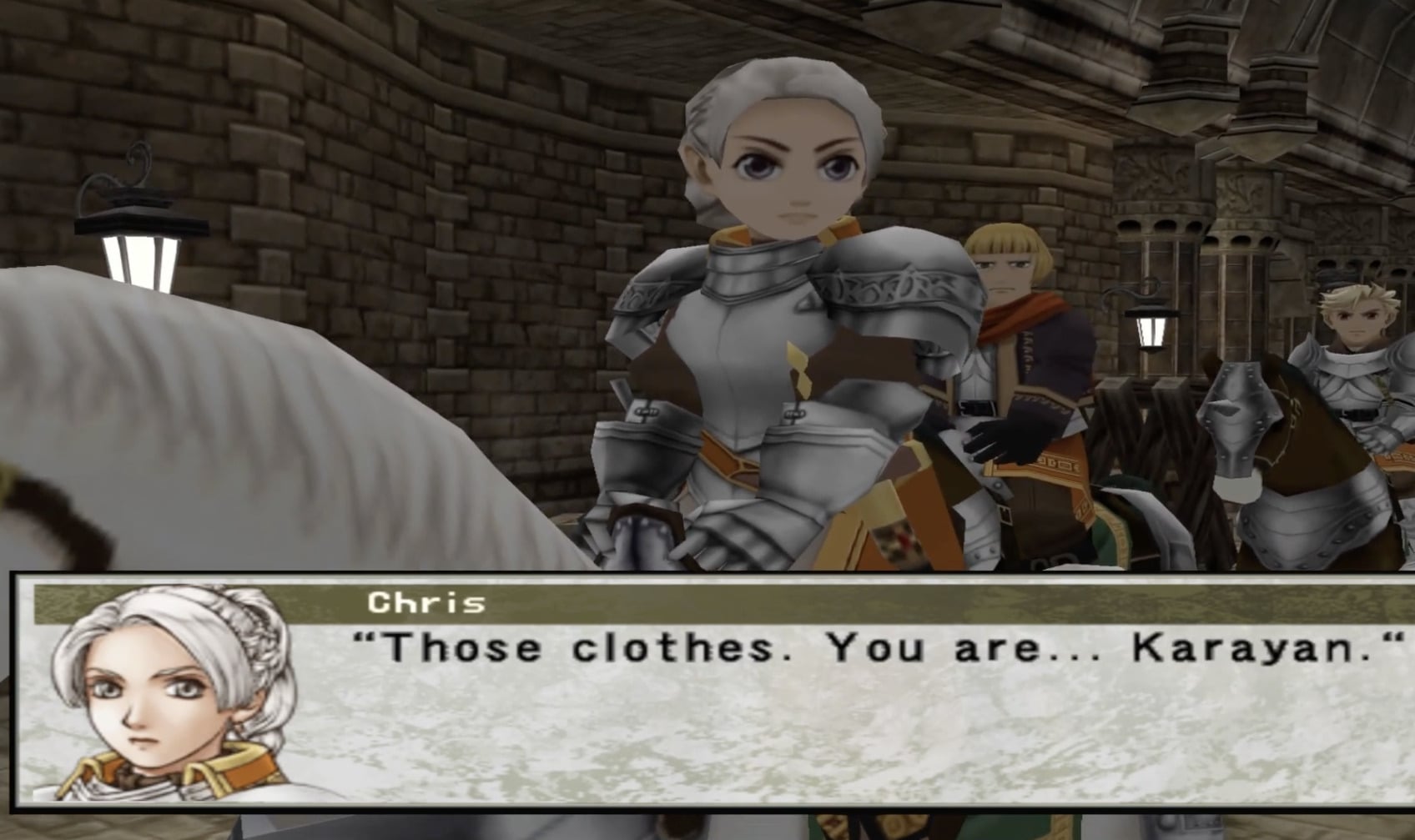
Along the way, Hugo and friends pass through Brass Castle and see Chris, one of the other two protagonists you can play as. The main protagonists often cross paths this way and showing specific events from different perspectives is one of the key narrative gimmicks. In this case, one of the Zexen knights accidentally knocks Lulu down. Chris apologizes for him. Lulu snaps back that they’re “ironheads,” a pejorative reference to their knighthood. Things get tense. That’s when Chris formally introduces herself and Hugo realizes she’s the “Lightfellow” Jimba wanted to give the pentacle to. When he tries to speak with her further, another of the knights, Roland, warns him, “Get back, young barbarian. Here, WE decide who lives, who dies AND who speaks.” Hugo doesn’t like his tone, the undercurrent of hostilities simmering. Later on, when we see this exact same scene from Chris’s perspective, she chides Roland after they part ways with Hugo, wondering if he was too harsh. Although Roland pushes back, explaining his reasoning, we still see Chris’s misgivings.
When Hugo’s party finally arrives at Vinay del Zexay, they try to deliver the message but are faced with the most challenging of adversaries. Bureaucracy. Try as they might, they can’t even meet the council members for several days. Throughout town, they’re treated with derision as Grasslanders. When they finally are summoned to see the council, it’s a representative that meets them, not the members themselves. When they return to the inn, they’re attacked by Zexen knights. Though Hugo is confused, the Grasslanders have apparently launched a surprise attack against the Zexens. These knights are here to prevent Hugo and company from causing any additional mayhem in the capital. They barely escape with their lives thanks to their giant griffin companion.
The team rushes back to their village and find that it’s been set on fire by the Zexens. Many of the villagers have been slaughtered. Lulu, furious with all that’s happened, sees Chris and charges her. He leaps into the air, about to attack. Chris instinctively slashes at him. Lulu falls backwards in slow motion. I thought maybe he would just be badly injured. But as Hugo holds Lulu’s corpse in his arms, I realized he was really gone.

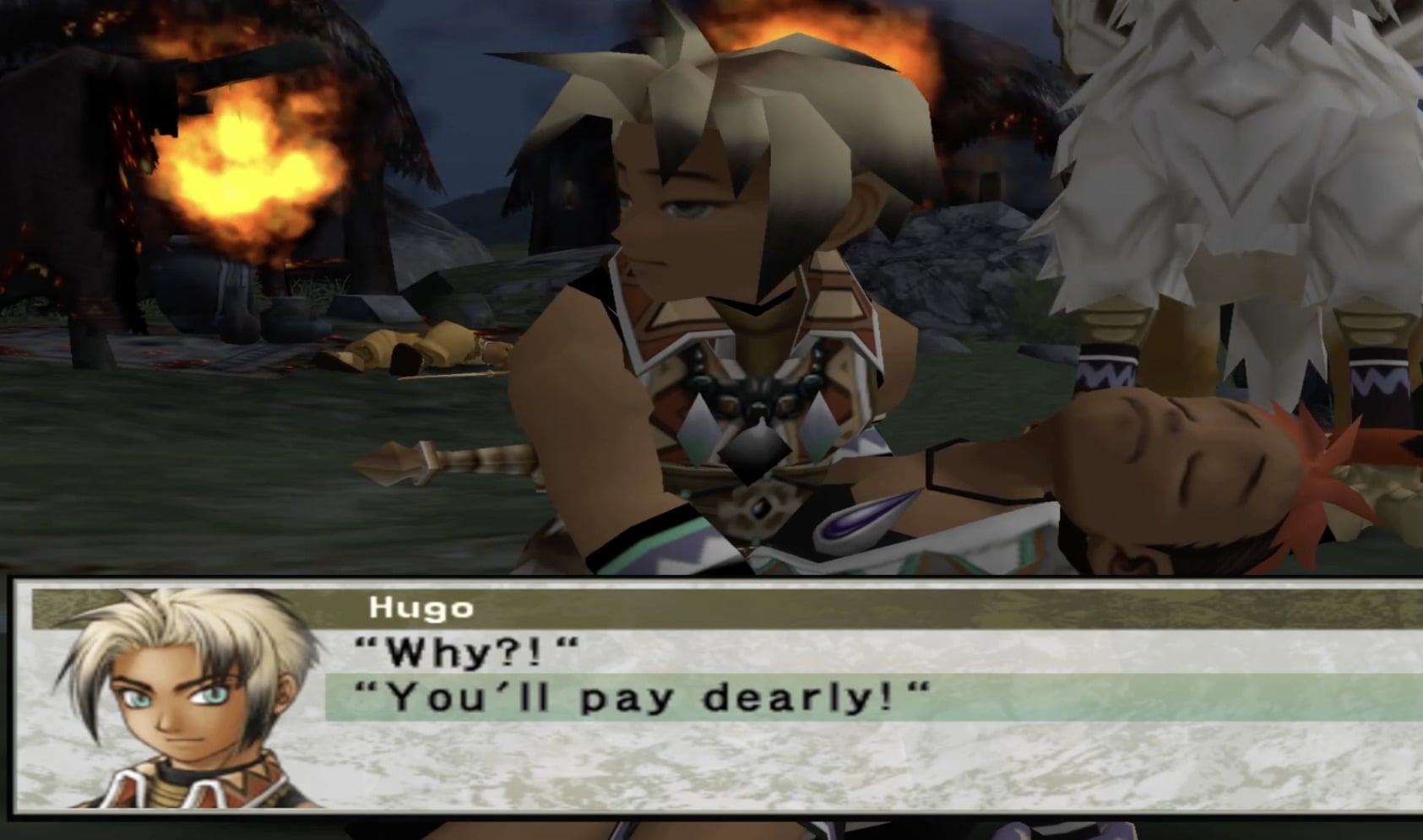
I was shocked. Even if she was just defending herself, I couldn’t believe Chris could kill Hugo’s best friend, especially since she wasn’t just some random villain. She’s supposed to be one of the three main protagonists you play as.
The day after the battle, Hugo and friends bury Lulu. Hugo is furious with himself, wracked with guilt. Sgt. Joe talks some sense into him, but it’s a depressing and somber conclusion to his first chapter. Later on, when Hugo meets Lulu’s mother, she asks where her son is. It’s a devastating moment as the party has to tell her about his passing.
But that’s just one perspective. We also get to experience the battle from Chris’s angle, and that’s the brilliance of Suikoden 3. Just to clarify, the different versions of the Grasslander-Zexen War that we see aren’t radically different in the way Rashomon’s branches diverge from each other, even if they preserve the underlying event. Suikoden’s historical relativism is more about filling in missing pieces than a total reinterpretation of a situation that has happened.

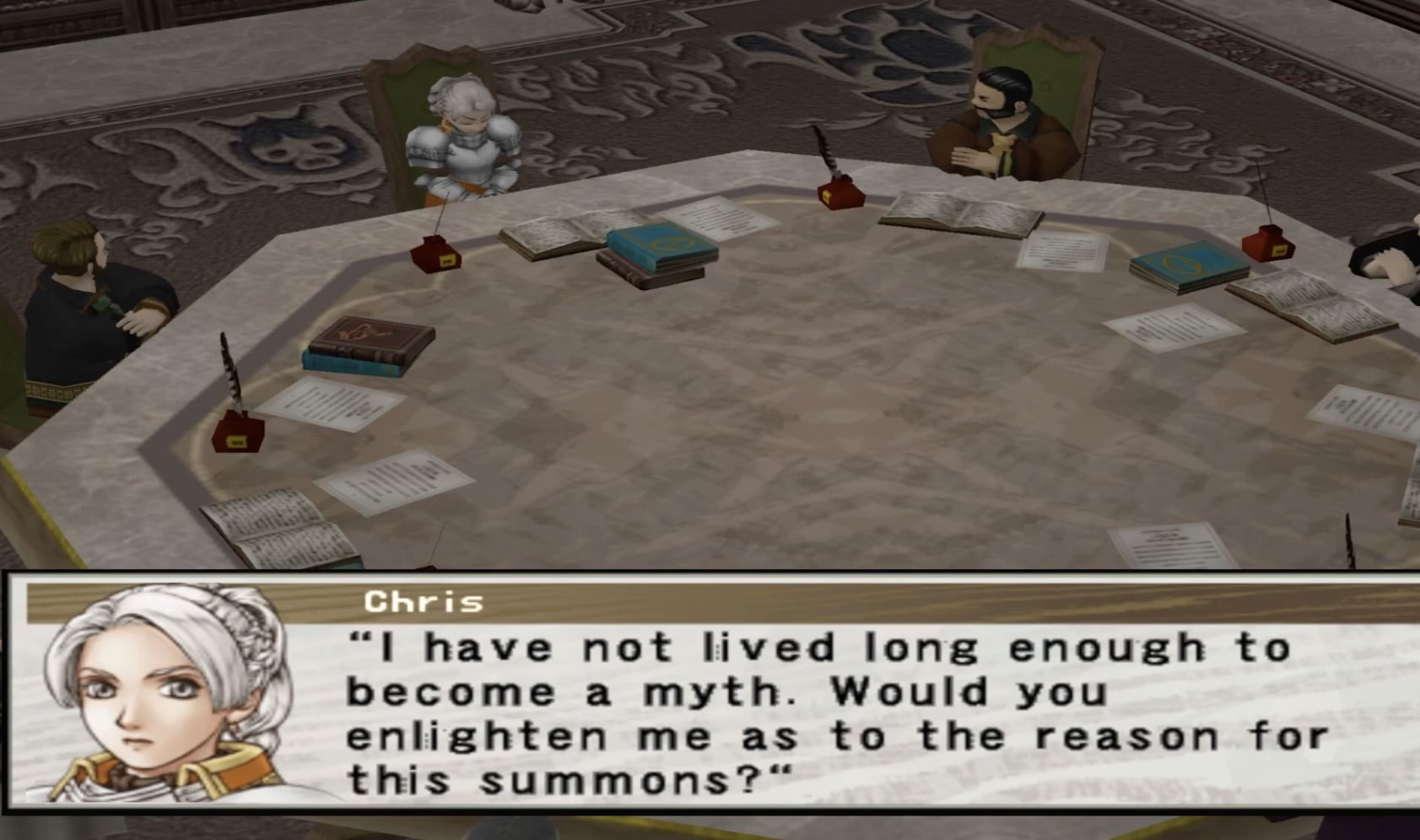
Chris’s chapter starts with her celebrating a great victory against the Grasslanders. At least it seems that way as the crowds cheer her. But privately, she finds the whole thing rubbish, mourning the loss of their former captain and not wanting to be a clown for the council. “I have not lived long enough to become a myth,” she states when the council members praise her.
They send her to negotiate terms with the Grasslanders, but after she exits the chamber, the members discuss how they can exploit her reputation to better control their own people. Chris is aware that they’re using her, but is reminded by her fellow knights that it comes with the territory. Even if she resents it, she accepts it so she can help her fellow knights.
A little detail I really like when you first walk through the capital as Chris is seeing how the NPCs act with respect and awe for her versus the disdain they showed Hugo as a Grasslander.
The knights, led by Chris, head for the peace talks at Brass Castle, which is where we saw that first interaction with Hugo and Lulu. Shortly afterwards, the messenger for the Grasslands arrives. It’s someone from the Lizard Clan. They agree to meet in the Amur Plains. But when the Zexen soldiers arrive, the Grasslanders launch a surprise attack, an event we never witnessed in Hugo’s chapter. Chris and the army barely escape with their lives as the first battle sequence of the game plays out.

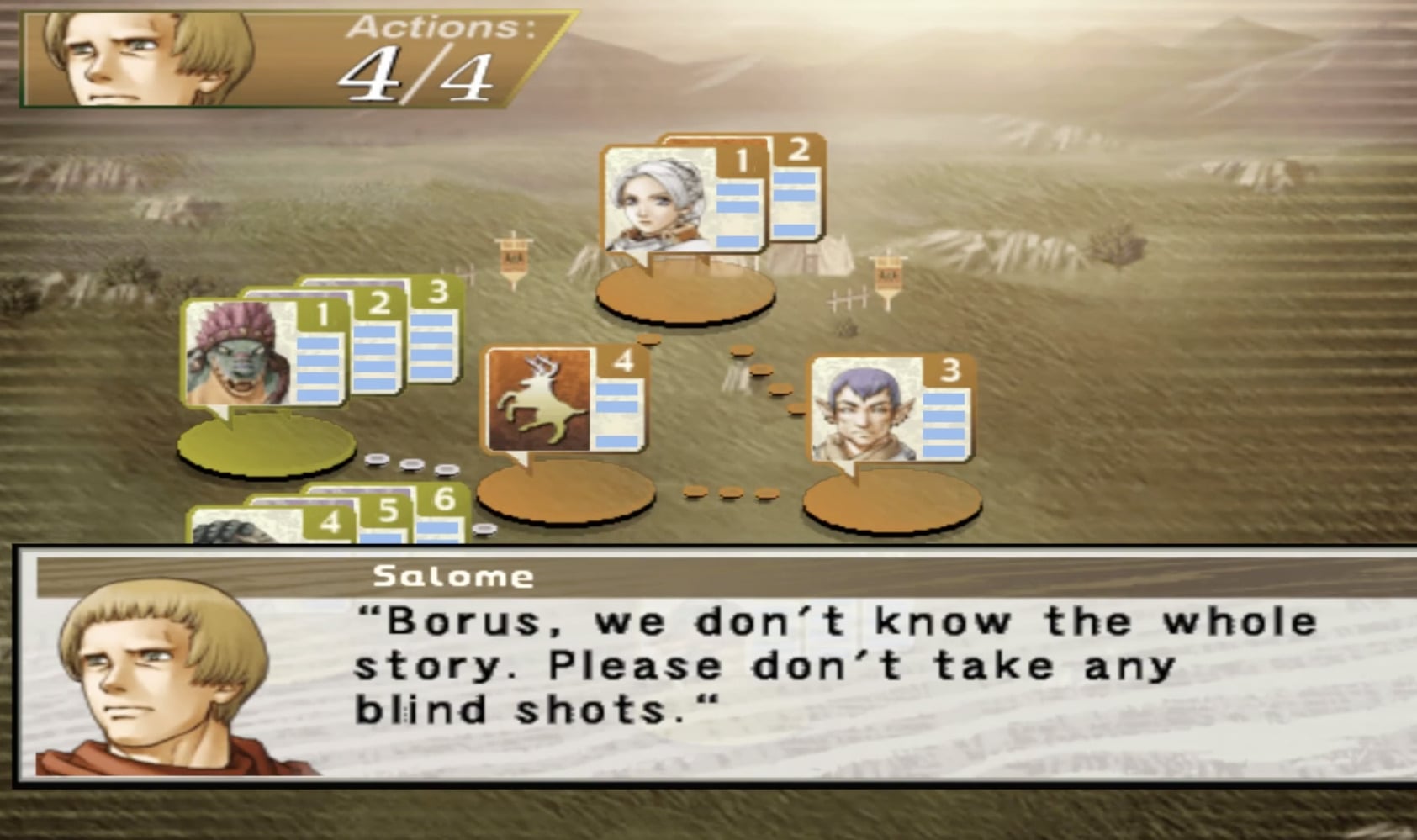
Even though Suikoden’s battles were never the most important element, the visual setup in 3 was a big step down from Suikoden II. At least the previous game made you feel like you were on a battlefield with lots of soldiers. In Suikoden III, the display is more simplistic with cards on a simplified map of nodes. When direct skirmishes break out, it changes to the normal battle screen instead of throngs of troops fighting each other like in the previous two games. It’s unfortunate because it could have easily been a fun way to showcase the PS2’s increased graphical powers and immerse players further into the conflict.
In the aftermath of the ambush, Chris isn’t sure what to do. Her advisor, Salome, suggests they attack a nearby Karayan village in order to force the Karayan troops to retreat. That would also have the effect of relieving the pressure on their own soldiers, of whom several key officers have been killed.
“Set the village on fire. But don’t harm the villagers,” Salome orders. “Our object is to upset the Karayan troops.” Whereas from Hugo’s perspective, Chris’s attack seemed senseless and cruel, seeing it from the reverse side makes it clear her tactics aren’t just sound, but restrained. Unfortunately, it’s war, and things never go according to plan.

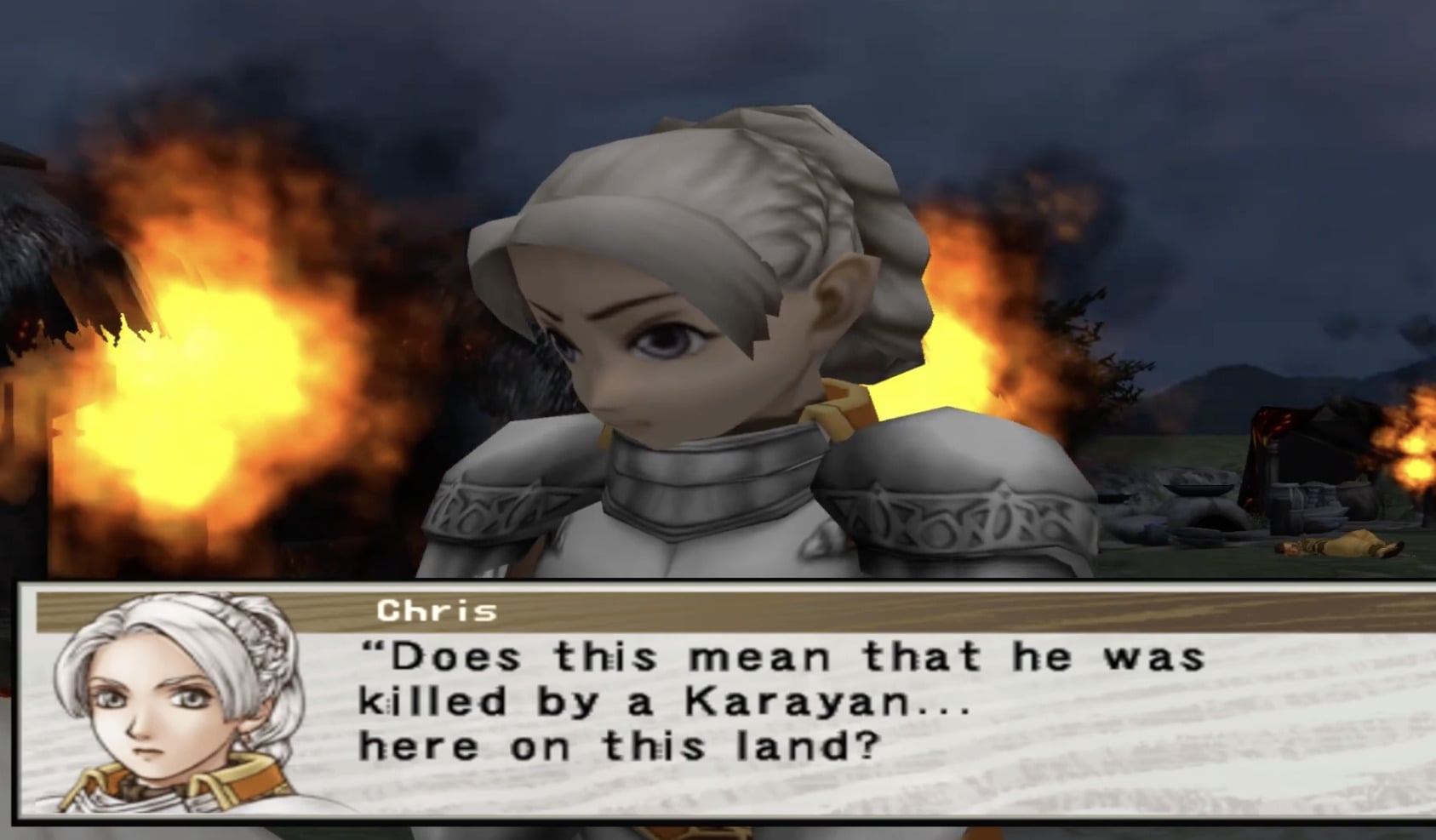
When Chris arrives at the village, she’s shocked to see the fire has spread everywhere. Earlier, one of the knights, Borus, became enraged and unleashed the troops on the villagers. What was only supposed to be a campaign to rattle the Karayans has become a massacre. Then Chris sees something that triggers her. It’s her dad’s suit of armor outside Jimba’s house. “Does that mean he was killed by a Karayan… here on this land?” she asks as he’d disappeared a long time ago.
The thought infuriates her. Poor Lulu chose that moment to attack. Chris instinctively defends herself and kills Lulu in the process. She feels guilty about the act, but there’s not much time to think as reinforcements arrive from the Karayans. She has to fight her way through, killing even more of them. When they finally are able to escape, she’s commended and even promoted for her “victory” by the council.
She’s in a state of shock and is repulsed at the idea of being praised as a hero, even though she staved off a disaster. For anyone who played the chapters in reverse, it’d be the Grasslanders who betrayed the Zexen knights and caused all the unnecessary suffering. Under the council’s orders, Chris is ordered to attack the Lizard clan to get revenge for their fallen compatriots.
In Hugo’s chapter, I really disliked Chris for what the knights had done. But by the end of her part, I empathized with her plight, understanding she was just defending herself.
Geddoe is the third protagonist and his perspective clarifies more of what happened. But his intro also reveals one of the central themes of the game. The Flame Champion is with Geddoe as they get ready to part ways. Geddoe states, “I can’t tell if we’re cursed or blessed, but I have faith in the world– as long as even the slightest trace of the truth remains in the world.”

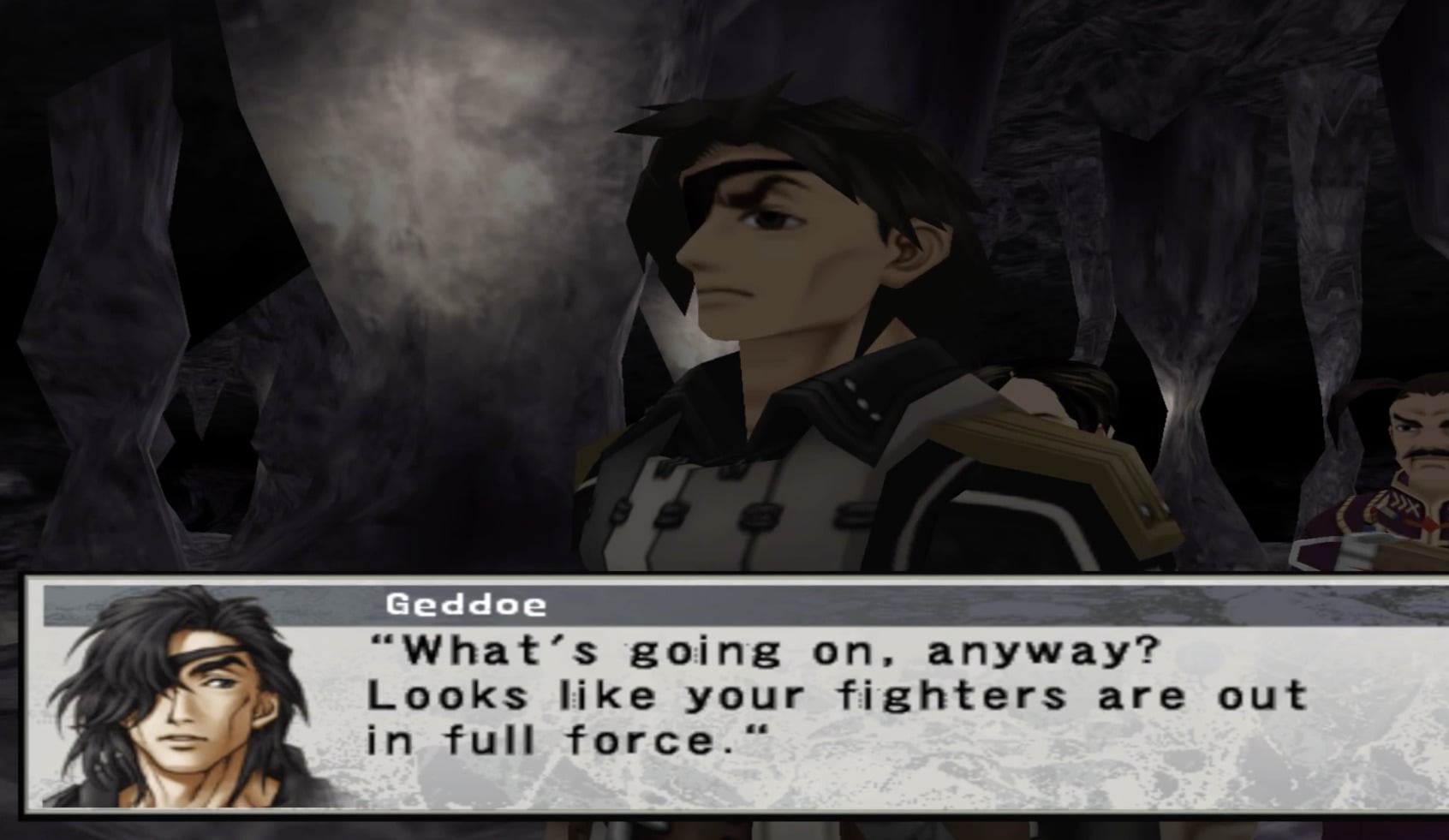
Finding the truth is one of the key themes in the game. But it remains elusive as the search for the Flame Champion takes central focus. Geddoe is hiding a major secret about his identity. He’s a true rune holder that fought alongside the old hero many decades ago. His team, the 12th branch of the Southern Frontier Defense Force, act like narrative putty for the other two branches, connecting with the Harmonians and revealing what they’re up to.
In his chapter, we learn why the Grasslanders ambushed the Zexen knights in the first place when Geddoe visits the Lizard clan just in time to witness Chris and the knights assassinate the chief of the Lizard clan. As I’d just played through Chris’s perspective, either the murder of the chief happened before her chapter, or something strange was going on involving a potential impostor. What was the “truth” here?
The Unexpected Hero
I will acknowledge that while I really enjoyed the narrative, certain gameplay choices make Suikoden 3 a slow burn in the early chapters. One of the biggest culprits is that there’s a lot of backtracking. Rather than an overworld, the map in Suikoden 3 is similar to Super Mario World with connecting nodes that you move to and enter. But after you beat an area, you can’t just skip over it like in SMW. You have to enter and walk through each section every single time you want to travel from one location to another. It gets tedious fast and easily doubles the playing time. You do eventually get fast travel with yet another Viki, a mainstay in the series. Though this time around, you also need to recruit a younger version of her to obtain the blinking mirror.

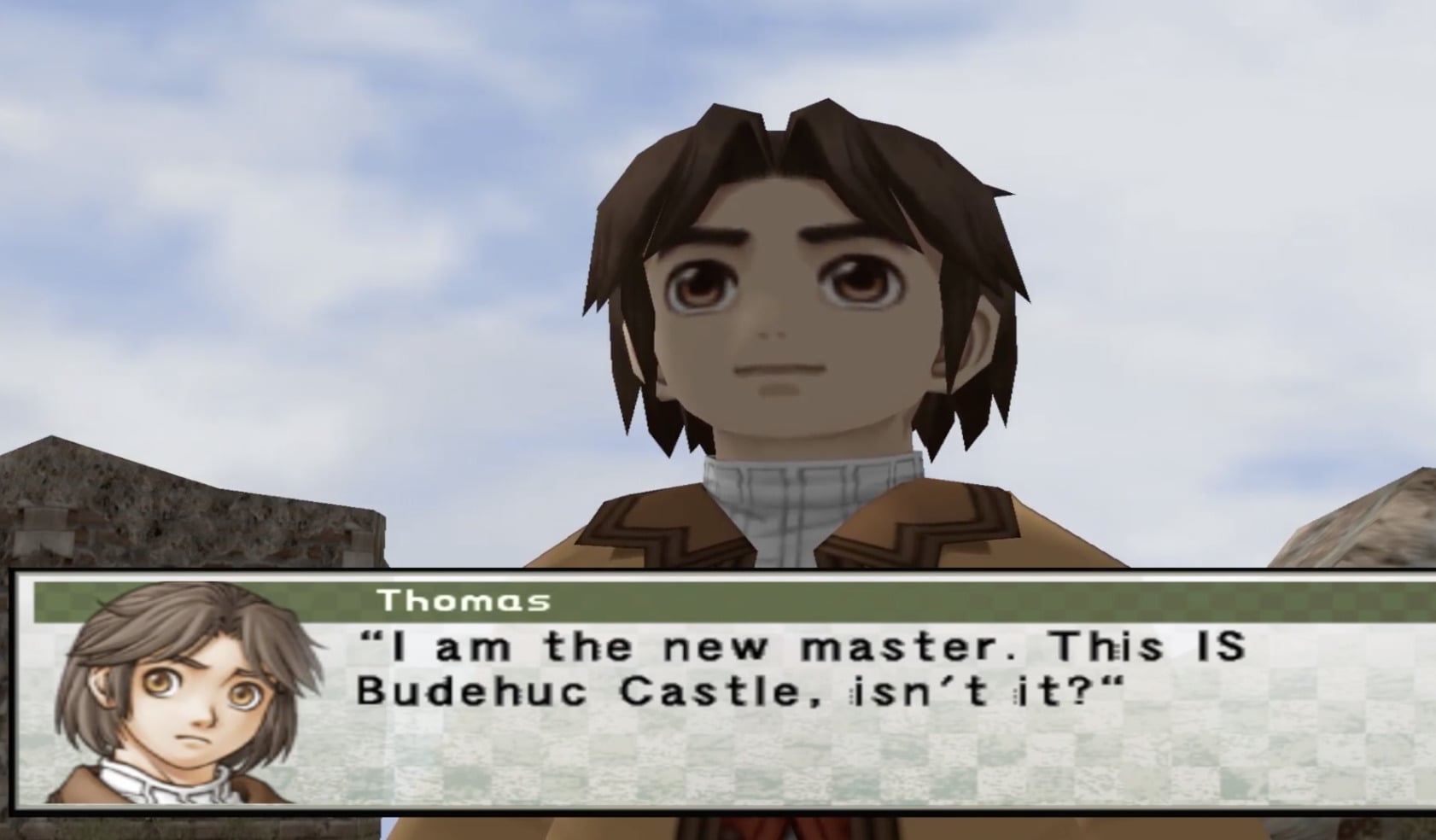
The main optional chapter might seem like a boring diversion, but it ends up being an important part of the narrative if you can stick it through. It centers on Thomas, the bastard son of a Zexen council member. After his mother, a Grasslander, passed away, she urged him to meet his father. But upon traveling to the Zexen capital, his dad wants nothing to do with him and sends him packing to Budehuc Castle. Thomas is the only Tenkai Star (which means Chief Star of Heaven) in the series who is not the main protagonist. He’s also not a good fighter or spellcaster, but is timid, shy, and an unlikely leader.
The castle is a mess and Thomas has to help them rebuild. His two chapters are a slow grind, revolving mainly around recruiting members, finding out legalese to wrangle control of the castle, and dealing with internal and external politics. One of the most “exciting moments” is when the elevator gets fixed and they get to see the other floors of the castle. Thomas also has to receive an official appointment, so we get to see a civilian’s perspective of the knights at Brass Castle. They’re in awe of Chris as she passes them by. But we also overhear one of the knights, Borus, express regret for his actions at the Karayan village. Even though Thomas has no idea why Borus is so remorseful, we as the player understand what he’s referring to.

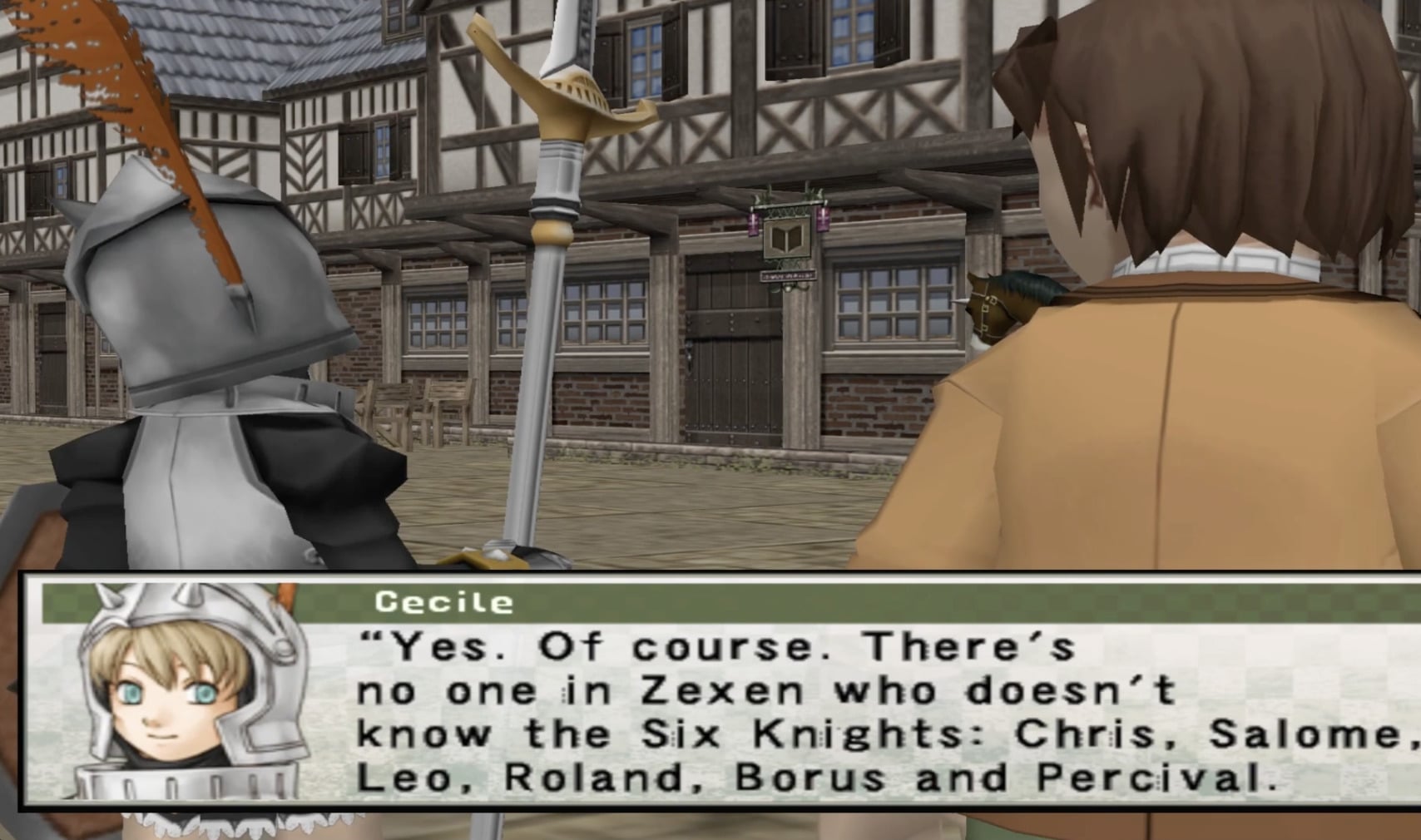
The remaining parts of his journey involve recruiting members and fighting battles along the way. Unfortunately, the gameplay of Suikoden 3 is a mixed bag. The battle system has been updated from the previous two. You still get six companions, but they partner up, so in practice, you only control three characters. I didn’t mind it, especially as it forces more planning and experimentation between the pairs. Some combinations can carry out unique attacks depending on who they’re teamed up with, like Chris with any of the Zexen knights. Also, there are mounted pairs, like Hugo being able to ride Fubar and Futch fighting on top of his dragon, Bright. I preferred the original setup with individual control over each of the six members, but 3’s setup didn’t bother me too much once I got used to it.
Due to the automation of the partner, skill upgrades at the training center are critical. Increasing attributes like Swing, Accuracy, and Heavy Damage help a lot, especially as I found this entry much more difficult than the two previous Suikoden games. I died more times in Suikoden 3 than any other Suikoden. There’s a Water Dragon in chapter 4 that was extremely difficult. I got decimated by this thing numerous times despite feeling like I’d leveled up my characters. I eventually figured out that the key to beating it was using a Pale Gate Rune. I tracked down which of my party members actually had the rune as I’d lost track (inventory management is more arduous than it should be).
The blacksmith can upgrade weapons and I’m glad Suikoden 3 lets you power up the equipment your character is armed with rather than handing players an array of weapons that would be confusing to manage over 108 recruits (or at least those who can be taken into battle).

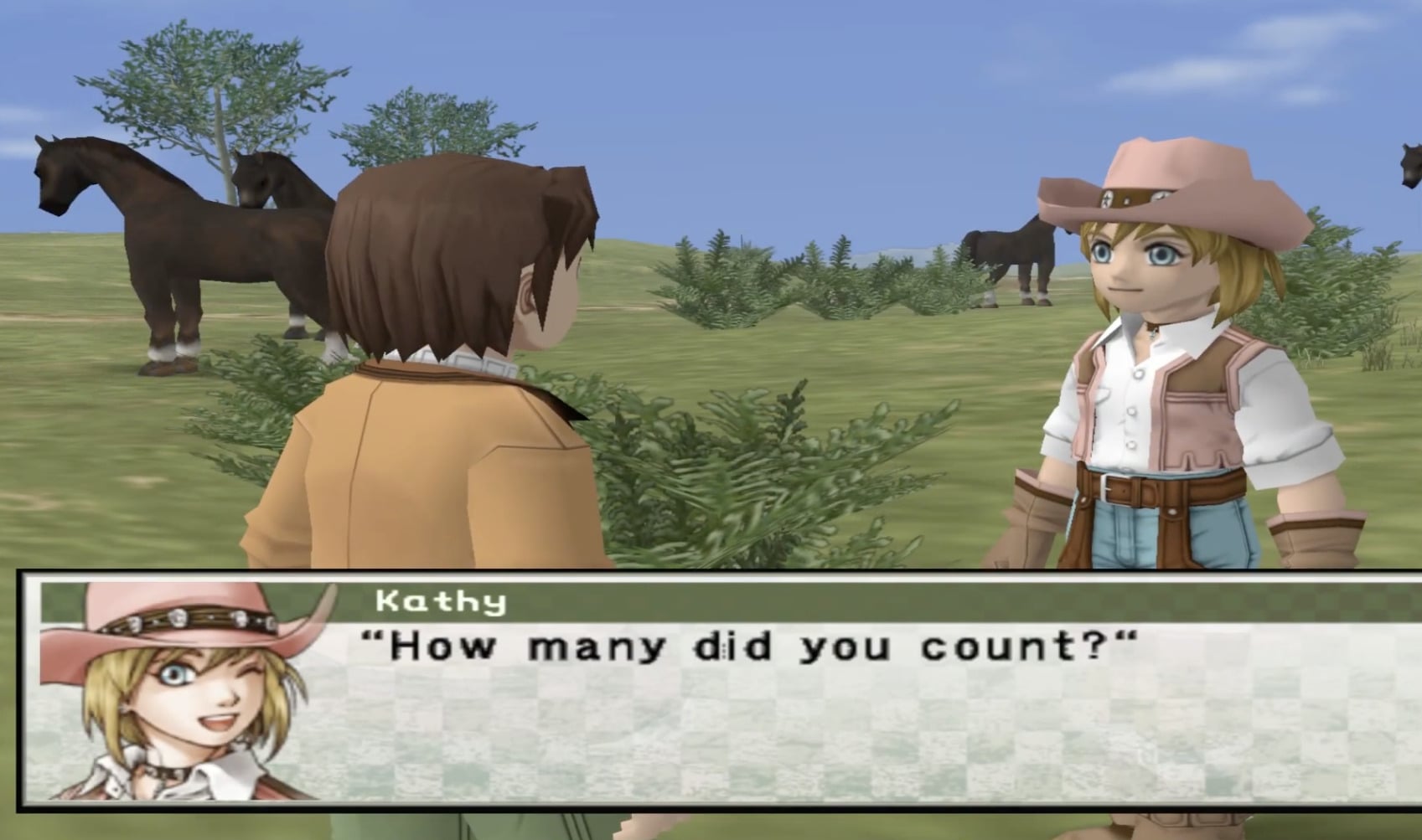
Recruiting that 108 is part of the fun of the series. Many join naturally via the story. But some require a little more convincing. Like Kathy, who you have to help guess the number of horses she has in the plains (recruiting her unlocks the horse racing mini-game). Is the optional character, Nei, a nod to Nei from Phantasy Star II? They both have physical similarities so it would be a cool tribute if so. Kidd, the kid detective, is an obvious nod to Conan from the mystery anime. Varying up the recruitment process, getting him to join involves solving a strange duck murder. There’s also Edge who wields the Celestial Sword aka Star Dragon Sword. The weapon has a connection with the last two games in that the talkative sword used to be in the possession of one of its main characters, Viktor.
Eventually, Thomas decides he’s going to make the castle a “free trading area” so that it’s open for business to both Zexens and the Grasslanders. But Thomas’s action garner unwanted attention. During Chris’s second chapter, if players choose to stop by the castle, Thomas and company are terrified she’s there to take over. To their surprise, Chris agrees to turn a blind eye to their “free trading area” as she doesn’t like the council either.
The “Free” angle of commerce attracts people throughout the land as more and more people arrive to set up shop. But the mercantile Zexen Confederacy doesn’t like business taking place without their official approval (and the money that entails). A confrontation occurs, nominally over Hugo’s arrival, who they deem hostile. Later, Thomas is removed from his position and disowned by his father. At first, he accepts the demotion submissively. But when his friends in the castle stand up for him, he gets encouraged and comes up with a plan to keep his position.

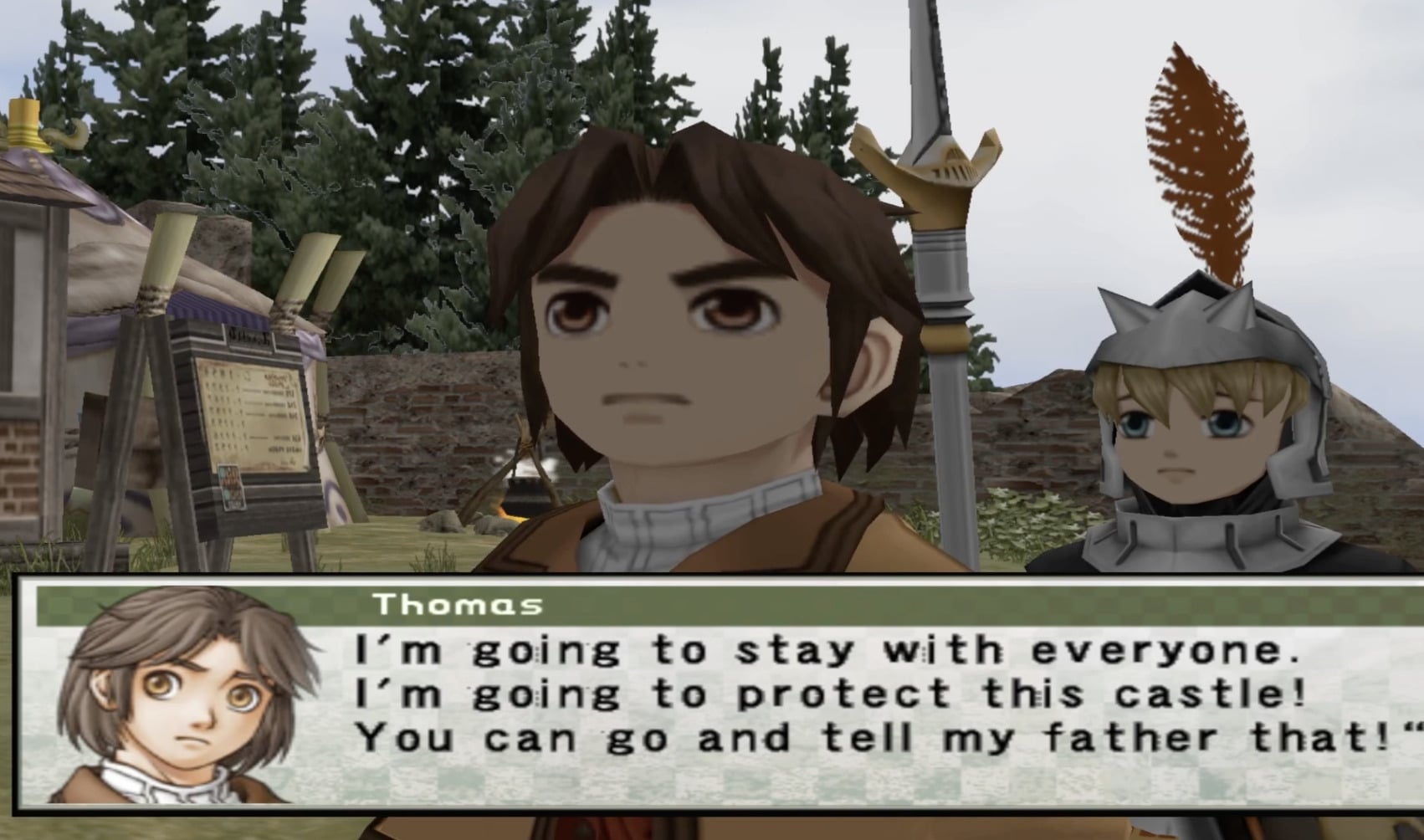
While in textbooks, history is about grand battles and larger than life personalities, these moments of quiet heroism often mark significant turning points. Thomas’s decision to stand against the Zexen Confederacy was the beginning of the corruption charges being brought against some of the councilmembers. The castle itself would become the foundation for the new army that the heroes would need to succeed. But it would never have gotten there if not for Thomas and his team’s resistance.
Thomas’s battle isn’t against a great evil. It’s against corrupt politicians. His leadership would hardly be called inspiring, especially because he was so close to relinquishing command. But his sincerity evokes loyalty so that even this small group burgeons into something bigger. The fact that both these chapters are optional also seems an acknowledgment that gamers looking for more action might not enjoy them as much. But for my part, these were some of the most memorable parts of the game.
Choosing the Flame Champion
Everyone is looking for the Flame Champion, hoping he can rescue them during this time of turmoil. He was a Grasslander who defeated the Harmonian Empire fifty years ago. But when they finally track him down, they learn that the original Flame Champion hung it all up and died a long time ago. It’s up to one of the three main protagonists to step up and become the new Flame Champion.
Players can choose from Hugo, Chris, and Geddoe. Hugo is the canonical choice, and the one I chose. Whoever players choose, they have to unify all the different forces to fight against a different kind of opponent. But they also have to overcome their own personal animosities. For example, Hugo is still furious with Chris. They meet again in the village of Chisa, which is under attack by the Harmonians. Hugo tries to attack her to avenge Lulu, but Sgt. Joe stops him. While later, Hugo learns that they were manipulated into conflict, the alliance they form is one of necessity. They do make peace eventually, but it’s a rough road there.

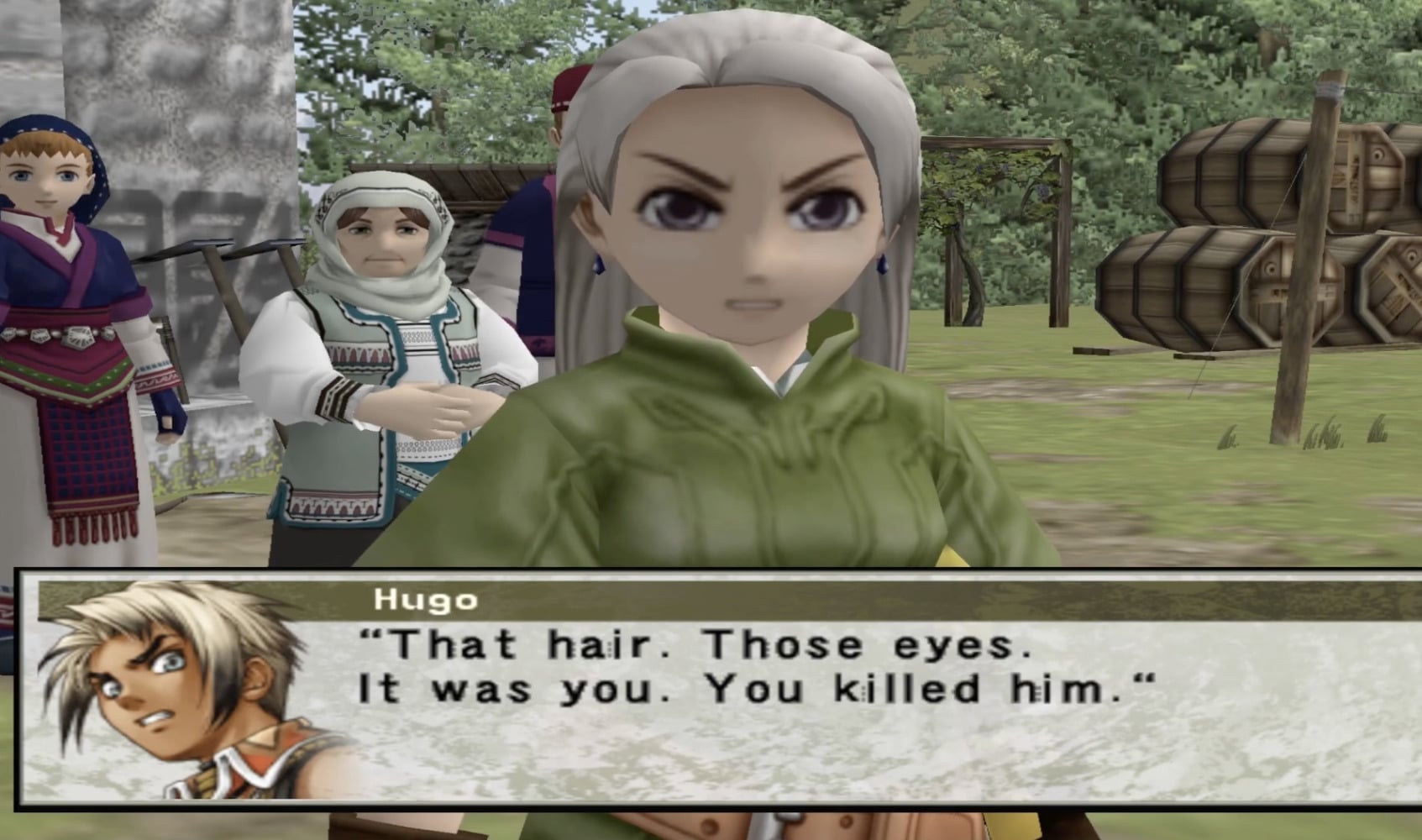
If players picked another character as Flame Champion, they’d get a different piece of the story. Like in Chris’s case, they’d learn the shocking truth about Jimba, the villager from Karaya. She learns he was actually her dad (which is why he had his armor), but fled because he was being hunted down by an assassin from Harmonia as the True Water Rune possessor. He wanted to shield his family from being targeted, which is why he’d never returned.
Suikoden 3 has one of the best instances I’ve seen of branching narratives since every path is meaningful. I can name a few games off the top of my head where they had a similar system, but where the connections didn’t work all that well. In Suikoden 3, it’s integral to the entire experience. Honestly, if they’d just added good voice acting, I feel the game would have gotten a lot more love than it has.
Starting with the fourth chapter, the game focuses on a single track following the new Flame Champion rather than continuing to jump between the other two, similar to previous games in the series as the action and plot intensify. But I think it would also have been fun if you had the option to make Thomas the actual Flame Champion and see how the story played out that way.
You can also play as Koroku, a Shiba Inu who’s also secretly pulling all the strings together with Jeane whose true identity only he can see (is he connected to Silent Hill 2’s mastermind dog? ha ha). Honestly, he would have made for an awesome Flame Champion.
The same goes for Suikoden 3’s main antagonist, Luc, who has a playable chapter that unlocks if you gather all 108 characters. It’ll help players understand why he did the things he did and see the entire journey from his perspective. For those who played the previous two, they’d recognize Luc as the powerful magician who took care of the Tablet of Stars.

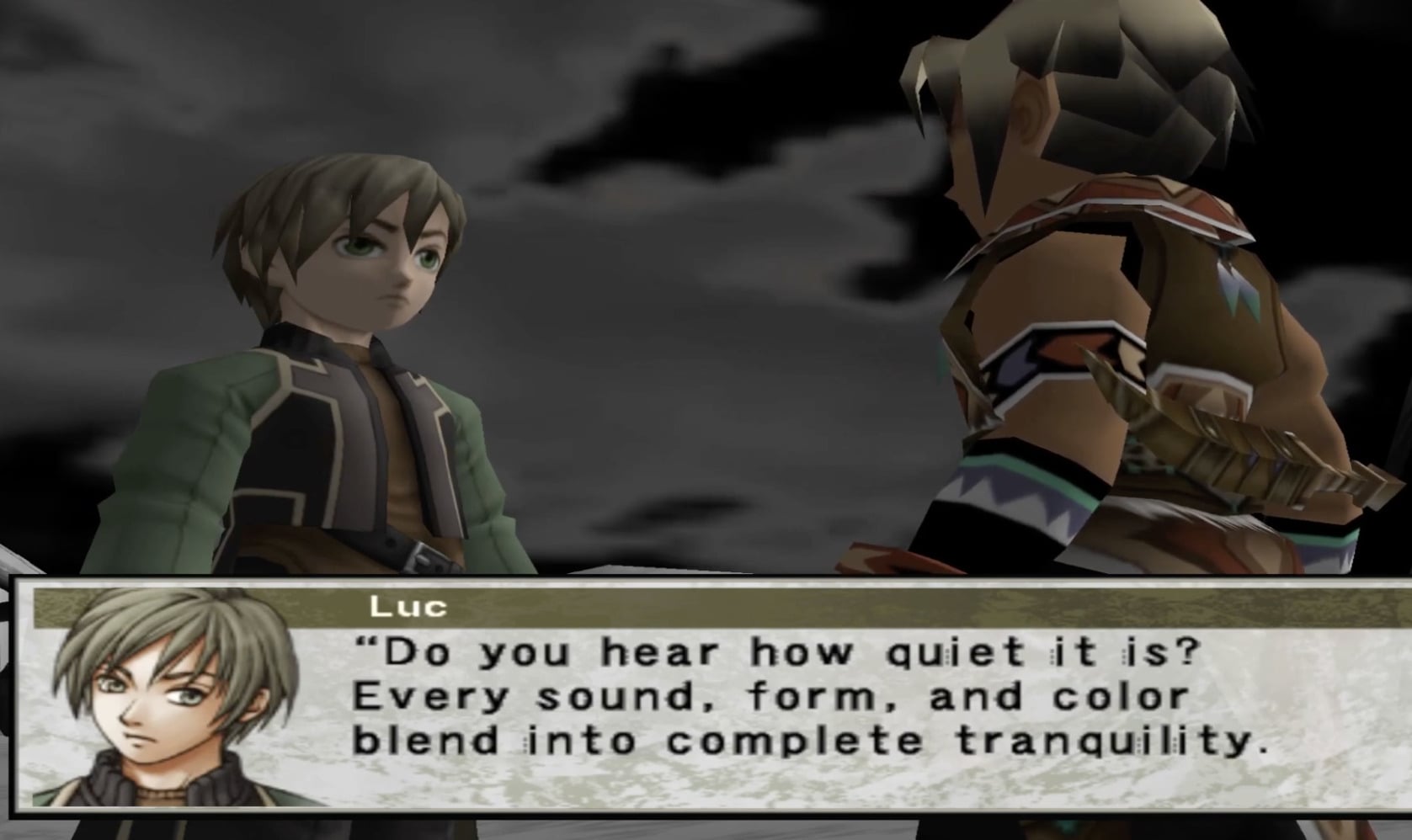
This time around, Luc isn’t watching over the tablet. But he’s not a villain in the traditional sense. He’s seen the future and discovered the world will become an awful dissipated shade of gray where dangerous eye-shaped beings called Guardians hunt people down with lasers.
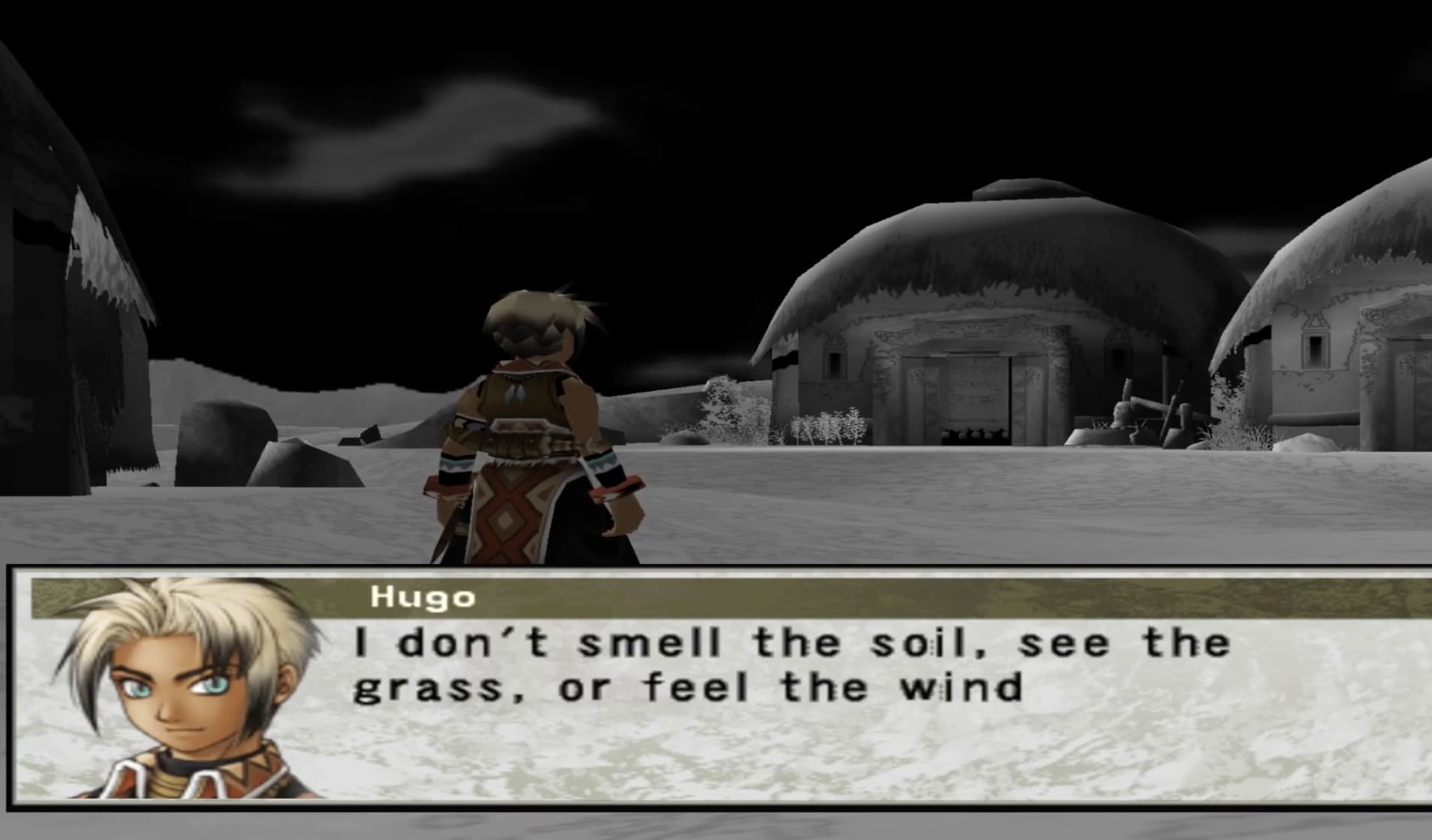
“Do you hear how quiet it is?” Luc asks the Flame Champion as he shares a glimpse of the vision he saw. “Every sound, form, and color blend into complete tranquility… In this parallel world, battles are fought between dharma and chaos… This is where the world will end up… This quiet, sad world is our fate,”
The scene actually took on a new meaning after I re-played Wind Waker (which I also wrote about today). The Hyrulians, afraid of Gannon’s encroachment, opted to flood the entire world. When you come across Hyrule Castle for the first time, it’s in a similar state of desaturation. Who knows how many people perished during the great flood.
Luc isn’t going to just accept this. He decides he’s going to change fate and do whatever it takes to stop it from happening. The best way, he figures, is to gather the true runes and then destroy his own True Wind Rune. To achieve that, he’s been inciting a war between the Grasslanders and the Zexen Confederacy. He was the one who attacked the Lizard Clan by having an impostor Chris attack, which in turn led to the Grasslander ambush on the knights and the later attack on the Karayan village. Luc knows it will cause much suffering among the people, acknowledging over a million people will die. But he thinks the sacrifice must be made as he rejects the forecasted end times and wants to compose a new history.

Are the visions true? Even Luc acknowledges it’s just one potential history. Is it also possible that his actions in the game are the ones that lead to the scenario he’s desperately trying to avoid in a sick loop? He gathers the true runes and seems on the verge of succeeding. It’s only through the three protagonists joining together, finding the truth, and working together against the odds that they prevail. In my real life, I’ve dealt with people who believed the “End Times” were coming soon. Their whole lives revolved around this fatalistic idea, even when such guaranteed final dates came and went. In hearing Luc’s fervorous rants, I was reminded of their eschatological obsessions.
Suikoden 3 eschews the happy ending of many JRPGs despite overcoming Luc in the final battle. The final battle is less about forces in opposition to one another and more about competing truths. The game is suggesting an uncomfortable reality; that the line between heroism and villainy is thinner than we’d like to think. At the end of the day, Chris was in charge of a massacre. Hugo killed enemies of the Grasslanders. Even Thomas, in his attempt to defend the castle, killed Zexen knights just doing their duty. What’s most disturbing is that after Luc is stopped, it’s not clear that the new Flame Champion has averted the muted hell of a future that awaits them. They might have saved the present, but at what cost?