







In a series full of incredible games, Ultima VII: The Black Gate is still considered one of the greatest RPGs of all time. Released in 1992 from Origin Systems, it often makes many “best of PC” gaming lists and is cited by many developers, including Todd Howard (Bethesda, Fallout 3) and Swen Vincke (Larian Studios, Baldur’s Gate 3), as a big influence. I played it a few years ago and was completely blown away. It had a powerful story with characters and themes that I still think about. It also was a technical achievement, featuring an open world without any loading screens separating the different areas. You can go from town to overworld to dungeon and then back to overworld without any transition screens.
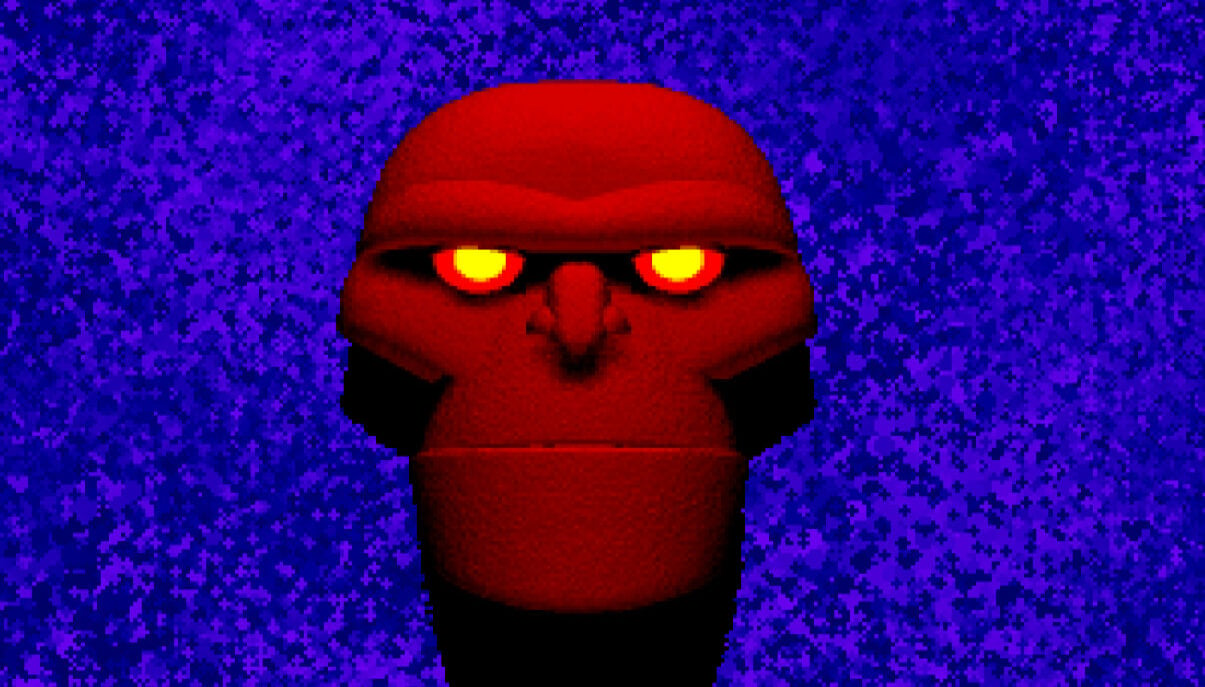
The Ultima games usually start with the avatar meeting Lord British who assigns them a task, whether it’s to rid the world of Exodus or to become the avatar. Black Gate’s journey starts with a red being called the Guardian taunting the Avatar. Then they’re teleported to the city of Trinsic, only to find out 200 years has passed since his last visit and someone has been murdered in a brutal quartering. Nearby, an innocent Gargoyle has also been killed for no apparent reason. There’s blood everywhere. The townspeople are in shock. What in the world had happened to Britannia?
I asked Ultima creator and director, Richard Garriott aka Lord British, about the themes behind the game. He told me via email, “In each Ultima game since Ultima IV, I have focused on real world social issues I see in the world at the time. Ultima IV was the inner battle to forge a self of virtue. Ultima V on centers on the danger of moral absolutism, religious fundamentalism, and the weaponization of virtue by a totalitarian state. Ultima VI centered on racism, xenophobia and the subjective nature of reality. With Ultima VII, I was ready to reintroduce actual malevolent Evil. But The Guardian needed to be unlike most game bad guys who wait for you in the final level. I wanted the guardian to earn your spite. He needed to be actively against you. His followers and principles needed to be seductively compelling. Thus I crafted a competitive belief system, which at its core had ulterior motives, but was designed to be as attractive as possible. (I think this about a variety of actual modern sects.) Don’t forget, every Ultima speaks to ‘current events’ in some way.”
The James Bond Influence
One of the most fascinating elements of the game is how it merges genres. At times, I forgot this was a fantasy game as it felt more like a murder mystery. Once you take control of the avatar, you can investigate the crime scene and question potential witnesses. Do you want to find out more about what happened to the victims in Trinsic? Go ahead. Or do you want to just explore the world and forget about the crimes? You can do that too.
I exchanged emails with Ultima VII’s lead writer, Raymond Benson, to find out more about the game’s story. In his early career, Benson had spent over a decade in New York doing theatre (directing, composing music for shows off-off and off-Broadway), writing (“The James Bond Bedside Companion” and other odds and ends), writing a pencil/paper role-playing game module for Victory Games’ James Bond 007 Role-Playing Game (“You Only Live Twice II—Back of Beyond”), and also some computer game designing/writing too (Mindscape’s Stephen King’s The Mist, A View to a Kill, and Goldfinger). He joined Origin after moving back to Austin, Texas. “My wife and I had lived in Austin in the 70s when we were both attending the University of Texas at Austin and loved the town. After a fall semester of taking a course in court reporting, which I did not take to (although I was good at it), I saw the ad in the Austin newspaper wanting ‘writers’ for a computer game company. It turned out to be Origin Systems. I applied and got the job. After a brief introductory assignment of editing the dialogue for their game Martian Dreams (a spinoff in the Worlds of Ultima series), Richard Garriott assigned me the role of Head Writer for Ultima VII: The Black Gate.”
When I asked him how the idea of adding a murder mystery to Ultima came about, he explained, “I was already a member of Mystery Writers of America (I was nominated for an Edgar Award for The James Bond Bedside Companion) and thrillers and mysteries were the kinds of books I read and wanted to eventually write. Richard (Garriott) already had the premise of the game in mind. An entity called the Guardian wants to rule Britannia, so he fashions a cult-like group called the Fellowship. The Fellowship is working to bring elements together that will allow the Guardian to enter Britannia. It’s up to the Avatar to stop this from happening. So I set about doing a Hitchcock/James Bond-style mystery-adventure that begins with an instigating event (the murder) and is ultimately the tip of the iceberg of a far greater plot. I was already well versed in the structure of such a story, so I just hunkered down and wrote the entire main plot. I was then made the head of a writing team. While I handled the main plot and characters, the team worked on all the various towns in Britannia—the subplots that existed in each town, all of which, when completed, contributed to solving the main plot.”
Despite everything the avatar had done centuries ago, they’d been an absent hero (I use “they” cause the Avatar can be either male or female depending on player choice). A lot of bad stuff has happened since our last visit to Britannia, like a big drought that transformed the city of Paws into an impoverished region that has struggled with basic necessities. This stands in contrast to the neighboring Britannia, home of Lord British, where general prosperity has driven local prices higher.
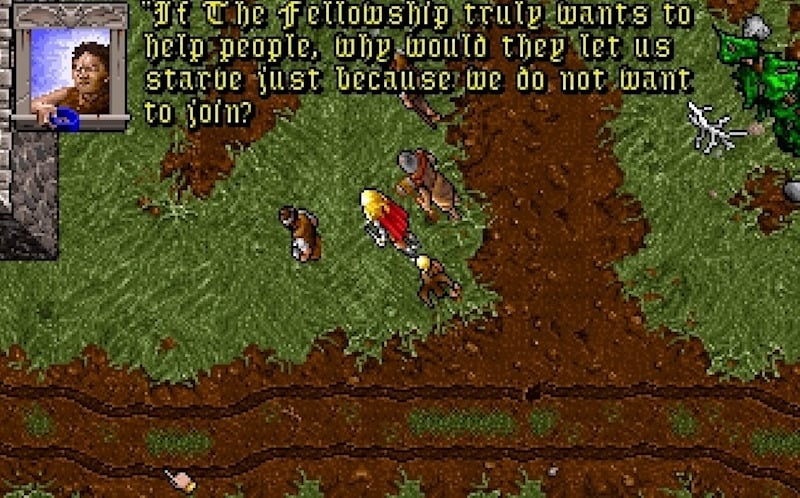
Everywhere I went, I felt a silent, but damning, condemnation, through the situations the villagers have had to deal with by themselves. Had the virtues of the avatar failed them? Unfortunately, the Fellowship had filled that void.

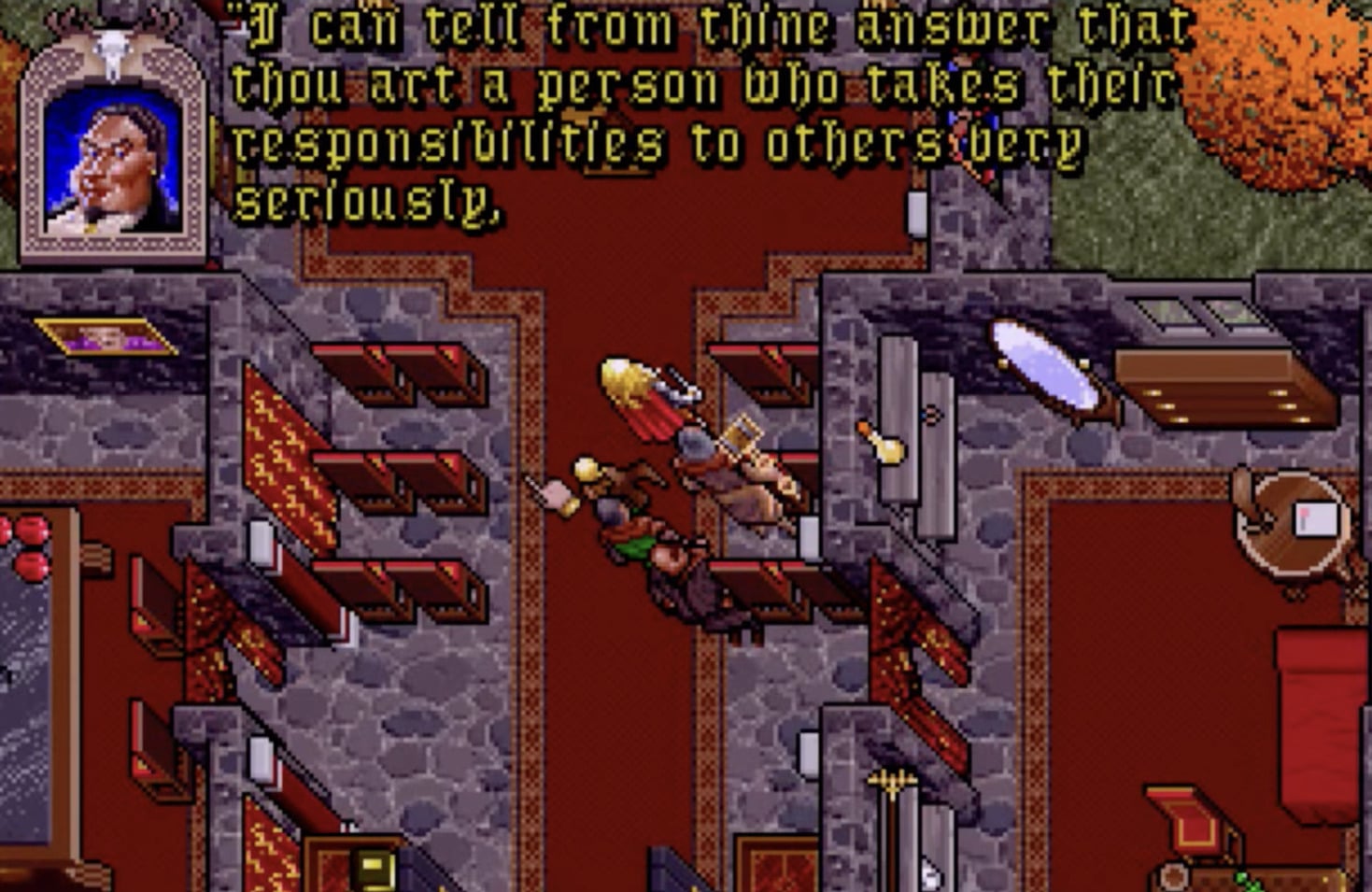
“Richard had his own ideas about what the Fellowship stood for and he came up with its tenets,” Benson explained. “I created the character of Batlin to basically be the Guardian’s human minion on Britannia. The Guardian is the main villain, but he is rarely seen in the game. Batlin is the villain the Avatar must defeat before getting close to tackling the Guardian. The Fellowship was likely inspired by the various cults in history that we know about, and one fairly new group that followed a set of beliefs that was in the news often at the time. Richard was shining a light on some real world concerns. It was what he was good at.”
As for Batlin, the memorable villain of Black Gate, the Bond influence also came through here as Benson said that “he was sort of a typical Bond baddie, except in a medieval fantasy world. Charming and charismatic on the outside, but a sicko underneath. He had to give the appearance of a pious man, although I’m sure most canny players of the game likely saw through that early on.”
Visually, the murder scenes were really shocking and Benson told me, “From what I can remember, the script described the action much like a screenplay does and the artists just went to town with it. They made the violence as bloody (or not) as they wished.”
A Very Interactive Britannia

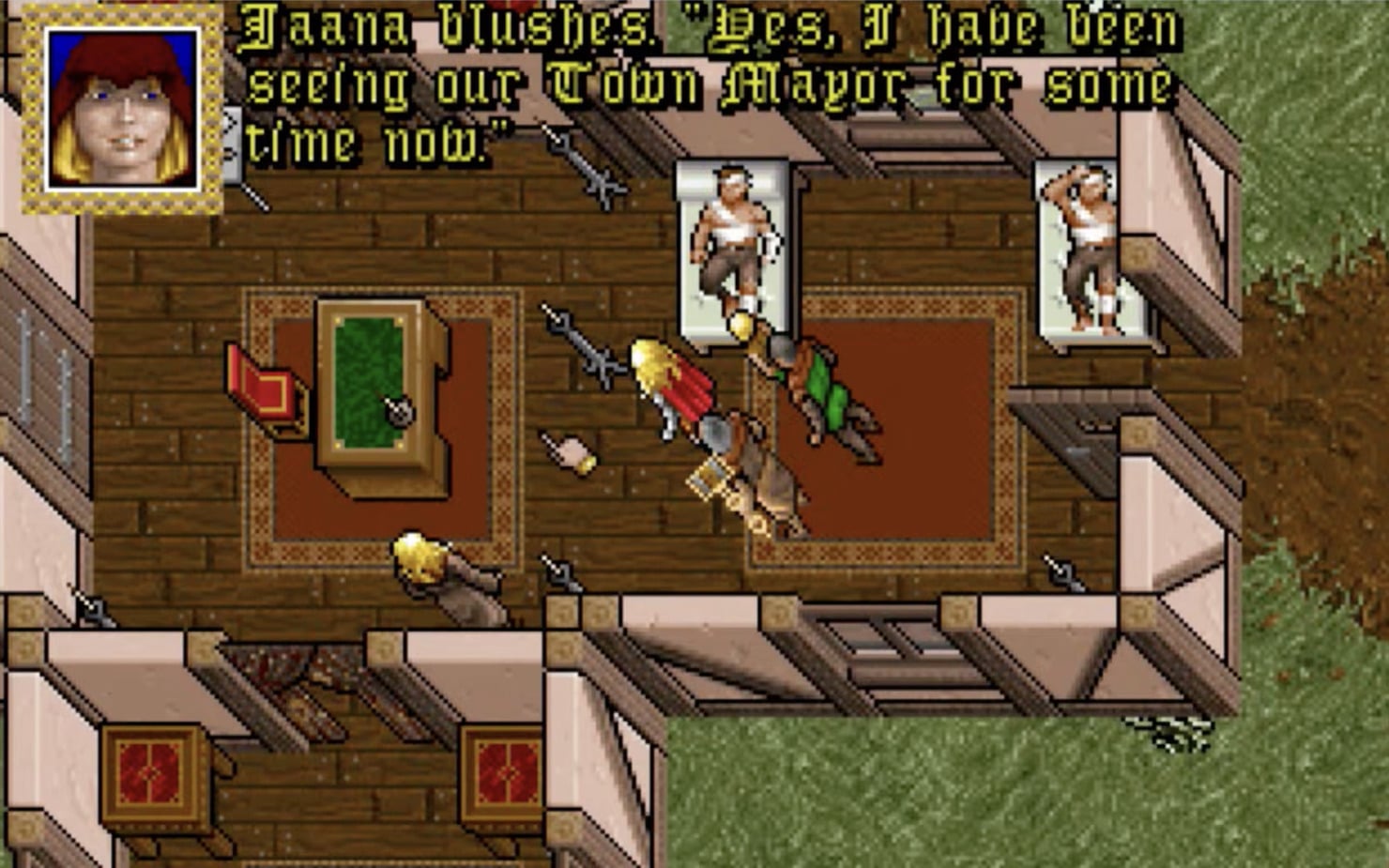
While I really enjoyed the murder mystery, Ultima games are known for their fascinating NPCs, and Black Gate had some of the best. It helps you can go anywhere at any point with the open world not having any real restrictions. Dropping by the different cities and talking to the various citizens, I noticed a lake near the village of Cove that was badly littered, garbage everywhere. Miranda, who’s a member of the great council of Britannia, wants to pass a law to clean things up at Lock Lake. She asks the avatar to deliver a bill to the mayor of Cove, Lord Heather. Lord Heather approves, but I also learned that he’d fallen in love with Jaana, who was one of my old party members from the previous games and joins us in U7 as well. From the two, I heard all about the drama going on within Cove. Teeming social networks like this make the world feel interconnected. The NPCs have tons of dialogue options as almost every single person has their own agenda and relationships. They gossip about people they don’t like or confess stronger feelings for someone who might not yet be aware of those feelings.
Benson explained, “It was Richard’s vision that Britannia be a very interactive place, a space in which the player could simply ‘live.’ Eat, sleep, talk to people, learn things, pick up objects, buy and sell… So it was up to the writers, programmers, and artists to make that happen! And we did. I may have been the Head Writer and credited for the ‘Screenplay,’ but the game was definitely a collaborative effort of about thirty talented Origin employees.”
One of them was Andrew Morris, a writer on Ultima VII. I spoke with him via email and asked him how he came to join Origin. “When asked that back in the day, I used to tell people it was because I knew someone who knew someone who knew someone who worked there. And there is truth in that to the extent that that is how I came to apply for a job at Origin as a writer. However, after I had been there a few years, Warren Spector asked me to share at a convention how I got the job. I started off with something long-winded, so he jumped in to sum it all up in a single word: Persistence. After applying for the position, I called weekly to ask about a potential interview. I believe I did that for close to three months, each time not getting the interview, but also not being rejected. Finally, I happened to be driving by the office, resume in hand because I had just come from an interview (that I knew I had blown) with another company. I walked into the office, asked the receptionist if Warren was available, and he agreed to talk with me. I must have made the right impression because he invited me back to meet with Richard and other senior Origin staff, and afterwards I was hired on as a ‘TDA’ (Technical Design Assistant).”
At the time, the game Martial Dreams was wrapping up, so he was directed to play Ultima VI to become familiar with the game engine. He then played through the “not-quite bug-free versions of Martian Dreams,” and then wrote the installation and reference documentation. After that, they moved him on to Ultima VII as a TDA and that eventually led to him joining the writing team together with Beth Loubet, Jack Herman, and Raymond Benson. NPCs were one of his main areas of focus.
“U7 had a more robust conversation system than its predecessors had, and I was determined to let that help me breathe as much depth – as much life – into the population of Britannia as possible,” Morris told me. “The writing team put together a character bible, which helped us reduce redundancy in traits and roles, but also to foster development of backstories and personalities.”

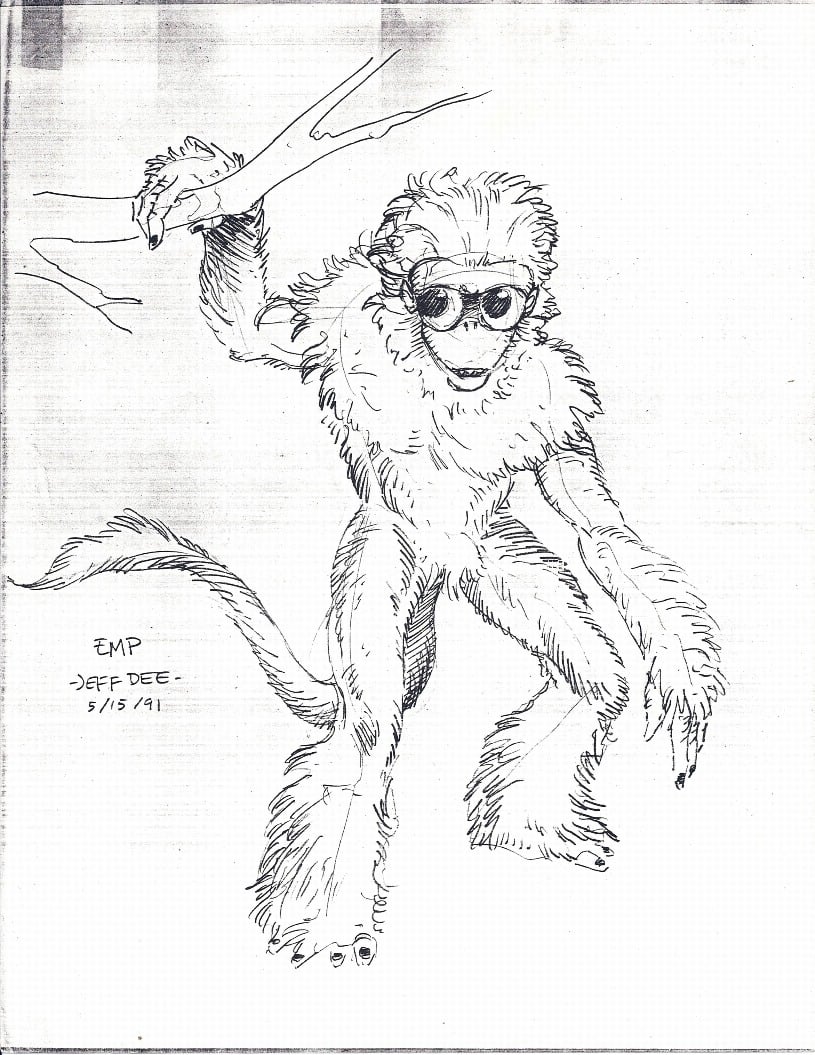
“I wanted to let the people with whom the Avatar interacted create as much of a sense of immersion as would reflect OSI’s ‘we create worlds’ motto,” Morris continued. “I pulled rough inspiration from a variety of stories, past TTRPG sessions, and even my friends and family. I was particularly pleased with several of the NPCs around Yew, as I was able to employ the state-change flags to allow the Avatar to interact in small, but meaningful ways beyond the main storyline. My S.O.’s mother had passed away not too long before I started at Origin, so I turned that into an opportunity for the Avatar to show sympathy for a grieving healer. Gratitude in response to that gesture resulted in reduced healing rates from that NPC for the remainder of the game. The emps also proved to be an exciting challenge to build on a new culture that fell outside the stereotypical tropes in fantasy. Plus, I got to set the syntax for their language, much as had been done for the gargoyles in U6.”
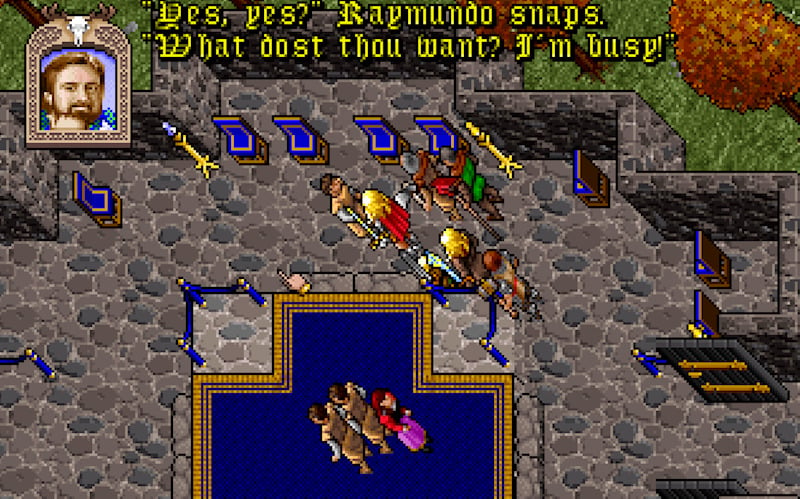
Benson focused on the main plot NPCs, but he also wrote “Nastassia, the love interest… and she was named after Nastassja Kinski, the actress, who in the 1980s and early 1990s was a cover model. Nearly everyone who worked on the game is IN the game, too. There’s an NPC named Raymundo who is the playwright and director in residence of the National Theatre in Britannia. It was a joke that Raymundo has the player—the Avatar—audition for the role of the Avatar in a play that he’s producing. My wife and son are characters, too. Stuff like that was fun to come up with.”

One of the most haunting quests was at Skara Brae, which was once the city devoted to Spirituality. But now, it’s a dead city. As part of your quest to deal with the Fellowship, there’s a certain item you need to gain from a mage named Alagner. But in order to gain the item, Alagner asks you to find out the answers about life and death from someone called the Tortured One in Skara Brae. Morris told me it was designer John Watson who had come up with the “clever and intricate Skara Brae subplot.” Ironically, it’s the dark revelation that the avatar uncovers here that led a younger Batlin (who also had sought out the answers about life and death), down a road of nihilism.
Some of the best parts of the game came through random exploration. There’s a Royal Museum with exhibits of items from all the previous Ultima games. There’s also numerous books that have original content in them and add so much to the feeling that the world is alive. Morris wrote many of these texts. “Perhaps due to my inherent inclination to capture elements of lore, I also became the bookkeeper, meaning I maintained the file that displayed the text for all the books that could be opened in the game. A perk of that was being the one to generate much of that text. For better or worse, I added puns, inside jokes, references to pop culture, and even a short homage to my favorite rock band.”
The Writer’s Block
The quest of the avatar had evolved a whole lot in 200 years. The Black Gate can get really dark at times, exploring crimes like human trafficking in New Magincia, or the racial tensions at Vesper between humans and gargoyles. Also, people are still getting murdered. Every one of those sequences is incredibly well written with the Avatar able to handle the problem in multiple ways. When it came to the writing process, Benson worked closely with Garriot on the main plot of the game as he bounced ideas off of him. “He was also supervising the artists and programmers and sound people! He really was the director. My team of writers were together in two rooms (we called it ‘The Writers Block’). We would meet and discuss the various town plots. I left it up to each writer to come up with the story behind each town subplot, and I supervised the writing of those.”

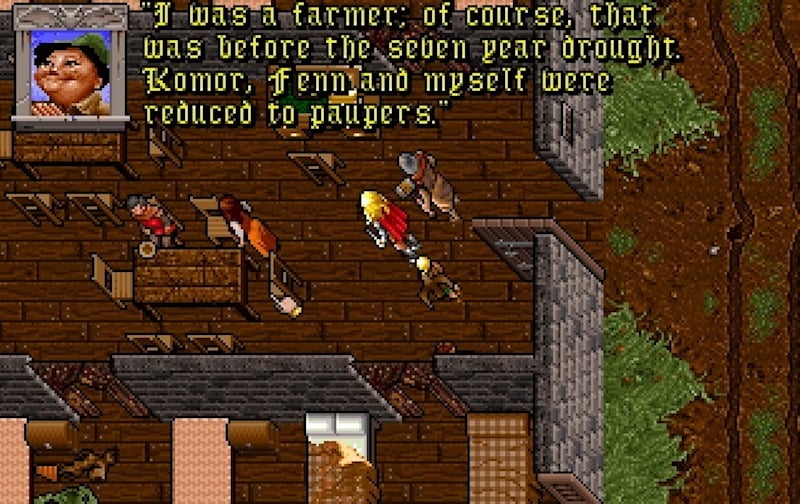
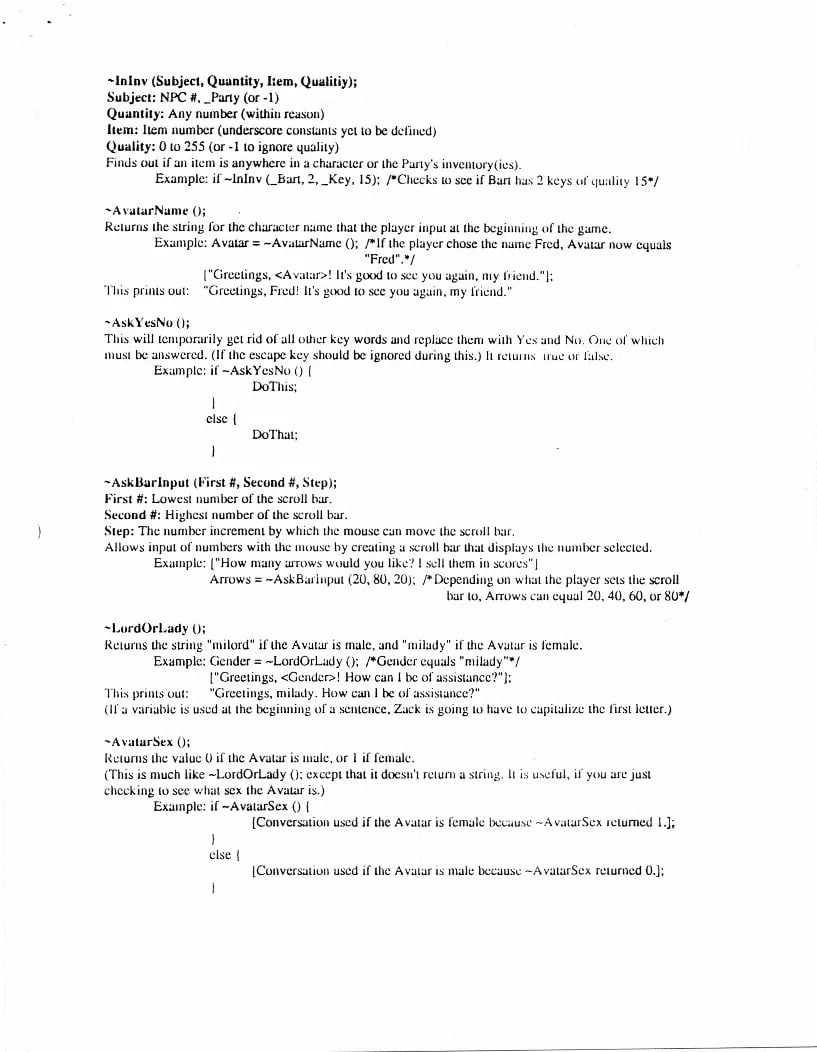
On a technical level, Benson explained that this came down to the writers learning how to write “in a ‘usecode’ that consisted of a lot of ‘if/else’ statements. ‘If does X, then Y happens, or else Z happens.’ and so forth. We wrote all the characters’ dialogue and the various branches of threads of conversation the player could have with them. These were typed on PC computers in DOS (there was no Windows yet!). The usecode scripts were then implemented by the programmers into the game engine.” They also did a lot of testing, checking “the conversations over and over and trying anything a player might say. There was also a Testing and Quality Control department that did a lot of that kind of testing. They would submit bug reports that we’d have to deal with.”

Morris added that, “On top of cross-functional meetings (with programmers, with artists, with the entire team, etc.), the writing team met regularly to discuss various narrative elements – geographical (i.e., town) story arcs, major personalities and other NPCs, plot progress checkpoints, direct and indirect rewards, and so on. Typically each element would start off with an assignment meeting. For example, we’d meet to review all the towns and, based on interest and workload, determine who would get to work on each locale. That meant developing at least one subplot, identifying the NPCs within that locale whether related to subplots or not, ensuring that any necessary story integration among the subplots and NPCs meshed with other story arcs, and ultimately writing the interactive conversations for those NPCs that moved events along. Note that the process was more iterative than I’ve just described, as new NPCs, additional quests, and innovative new story rewards were envisioned and discussed throughout much of the development period. While formal approval was held by Raymond and Richard, there was a tremendous amount of collaboration that resulted in what felt like a democratic approach to accepting – and in many cases building on – everyone’s contributions.”

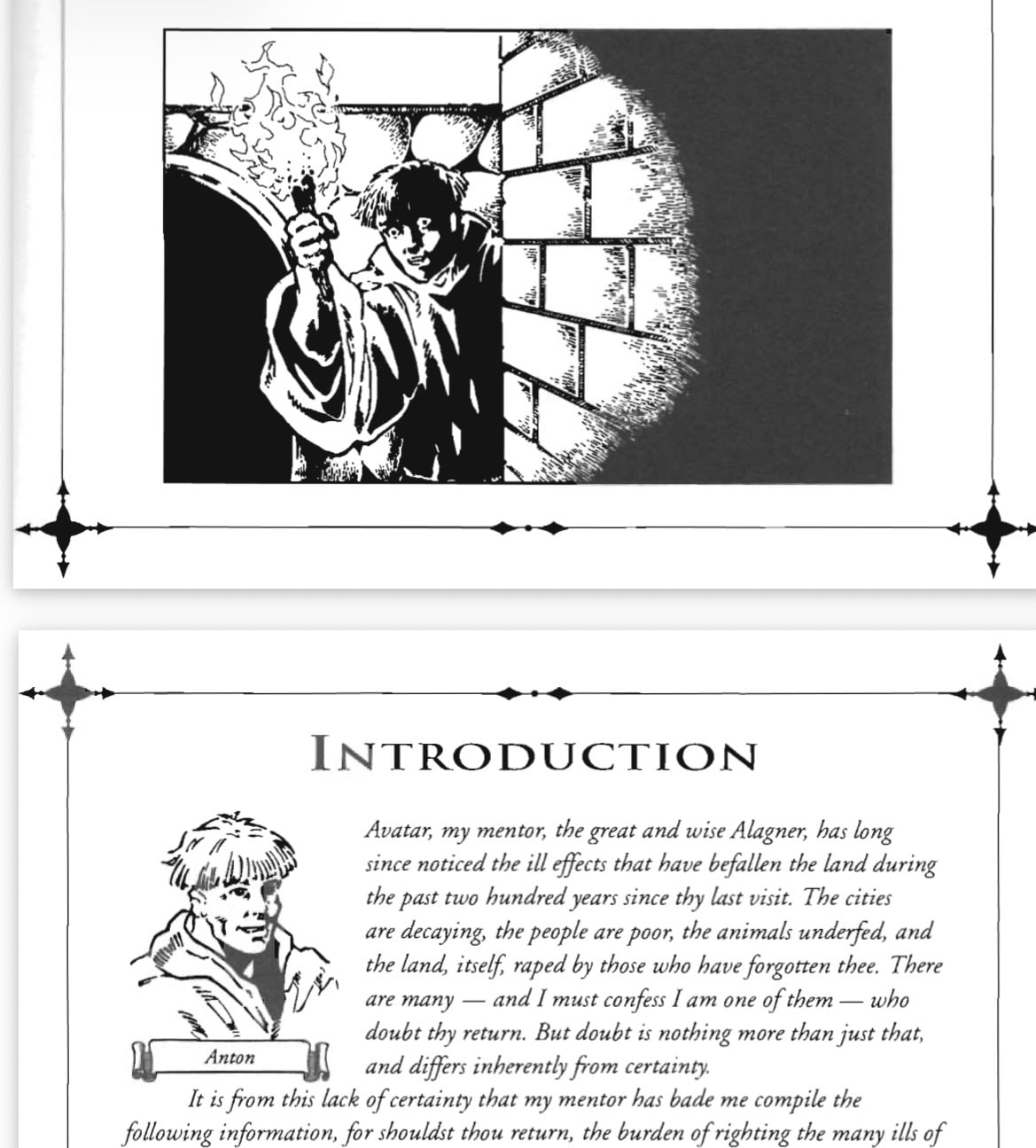
One of Morris’ other contributions was writing the official Ultima VII clue book, which is told from the perspective of Anton, an apprentice of the mage Alagner. It also included tips from the Time Lord. Morris described the process as “an incredible activity. Sure, it was a departure from game development, but it was also a project I was allowed to own almost entirely. I don’t mean to imply I created the entire book. Our publications director and editor provided solid guidance, the illustrations and maps were masterfully created by talented members of the art team, and data was readily provided by the programming team. However, I was given tremendous leeway to create Anton’s voice, construct his telling of the hints and setting lore, and let the guide perpetuate the same sense of immersion I had been aiming to evoke in the game itself.”
One downside he mentioned was that “taking on that project delayed my start on Ultima VIII, on which I had a lead role. Don’t get me wrong: For everyone who loathes U8, I deserve much of the blame. Nevertheless, there were still a few decisions made about that game that were determined before I was available to weigh in.”
As for Benson, he composed one of the most iconic tracks on the OST, the Love Theme. “I’d already written music for theatrical productions and some of my own personal music. The game already had a composer attached to it, but a handful of others contributed bits to the final score. I believe I asked Richard and the composer (Dana Glover) if I could do that Love Theme. I wrote it and it seems to have become a popular tune in Ultima lore. I remember that Richard and I did some charity event on a Valentine’s Day… Richard read a love poem while I played the Love Theme on the piano in front of an audience. I also contributed a few tunes to the Gameboy product Ultima: Runes of Virtue II. After I had left Origin, the company put out a CD of music from Origin games, including Ultima VII. While the Love Theme was on it, unfortunately someone forgot to credit me, which didn’t make me happy!”

Richard Garriott shared an interesting story from the end of the game’s development when Origin was acquired by EA. “We had made the EA logo into the Guardian’s evil constructs already in Britannia. That includes the sphere, the cube and the tetrahedron. We asked EA if they wanted us to change it, but they actually enjoyed the jab.”
The Game That Should Really Be Lost To Time
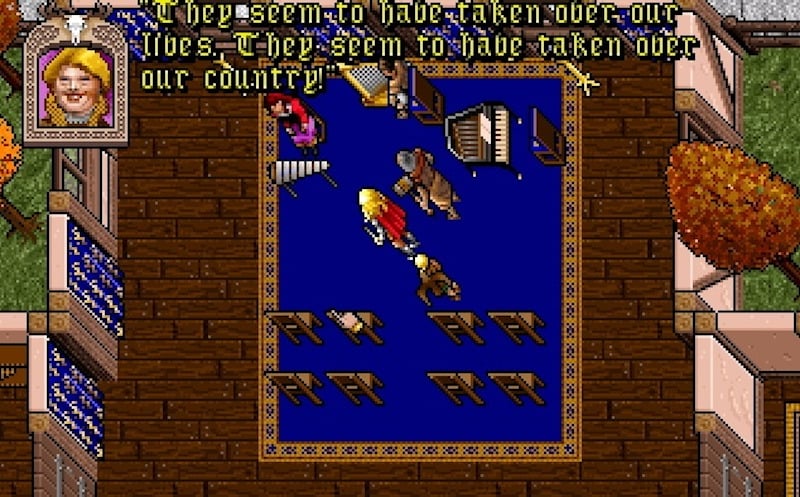
While Ultima VII came out over three decades ago, people are still discovering the classic RPG. For anyone who picks up U7 now, it’s essential to install the Exult mod. It’s, as the site describes it, “a project to recreate Ultima VII for modern operating systems, using the game’s original plot, data, and graphics files.”

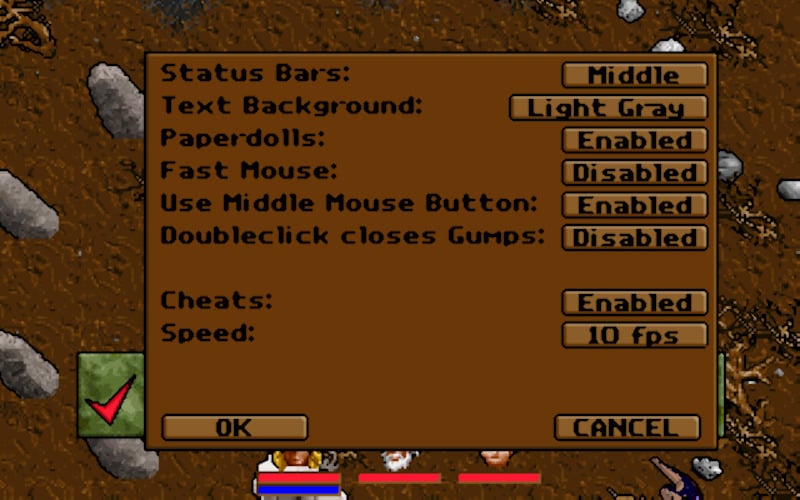
Kenneth Kully, the founder and editor of the Ultima Codex, explained more about Exult via Discord. “Exult is not an emulator. It is a full reimplementation of the Ultima 7 engine that reads the original data files. You still need a legal copy of The Black Gate or Serpent Isle to play it. Richard Garriott’s unofficial blessing is part of the project’s lore; the team’s rule about prior game ownership is the secret sauce that allows Exult to exist without fear of copyright strikes.”
“In some sense, Ultima 7 should really be lost to time,” Kully continued. “The game was a DOS title with a notoriously nonstandard memory manager that barely ran within the hard 640 KB memory limit of early PCs, and which could not run at all on PCs that could access higher memory addresses than that. On later Windows versions, it became a relic that refused to boot. Eventually, DOSBox came along, allowing older DOS applications to be run not just on modern Windows PCs, but also on Mac OS and Linux. But in the early days, DOSBox had a significant resource requirement all its own (as most emulation does), and Ultima 7 still strained both its and the host PC’s resources to their limits.”
Interestingly, Exult didn’t begin as a preservation effort. Kully explained that “in the summer of 1998, Jeff S. Freedman (who went by the handle DrCode), a Portland-based developer who wanted to learn how to put graphics on an X display, found Gary Thompson’s paper describing how Ultima 7 stored its maps and shapes. He wrote a small world map browser. You could wander Britannia with the arrow keys. You could not yet play. (The ‘X’ in Exult is a reference to that venerable window system.) Tristan Tarrant provided autoconf files. Willem Jan Palenstijn offered a Win32 port before the project adopted SDL as its interface engine.”
But the work stalled. “DrCode could see that the usecode file held the conversations; he could not read it. The revival came from Europe. Maxim Shatskih and Wouter Dijkslag determined that usecode was essentially just compiled bytecode for a virtual machine, closer to Java than to a dialogue dump, and they wrote an assembler and disassembler, while DrCode built an interpreter. Suddenly, NPCs in Britannia could talk again. The project moved to SourceForge as the team rewrote it around SDL, and collected the people who made it a game again: Dancer Vesperman worked on audio and configuration; Alexis Ryan (Colourless Dragon) worked on paperdolls and the first serious Serpent Isle work; Luke Dunstan handled weapon animations; Dominik Reichardt (Dominus Dragon) took care of documentation and the unglamorous labor of publishing builds.”
I also spoke with Dominik Reichardt through email, who’s part of the Exult team. He told me more about its history.
“Jeff Freedman, aka DrCode started Exult as a mapviewer for Ultima VII back in 1998 (according to our oldest file header) but it quickly grew and became a way to play Ultima VII on modern systems. As it was open sourced very early, its developers come from all over the world (USA, Europe, Australia). At first Exult only supported The Black Gate, but eventually supported Serpent Isle too. We have many enhancements compared to the original, a better savegame handling allowing for hundreds of savegames (opposed to just ten), bigger game area (though going beyond the original’s 320×200 can give you too much view, possibly spoiling areas, especially in Serpent Isle that has a much more crowded map). One of the most notable improvements is the SI style paperdoll in the BG games. We also implemented the original full length SI intro. At first by converting a video from Denis Loubet‘s website, and eventually by receiving the original frame files.”
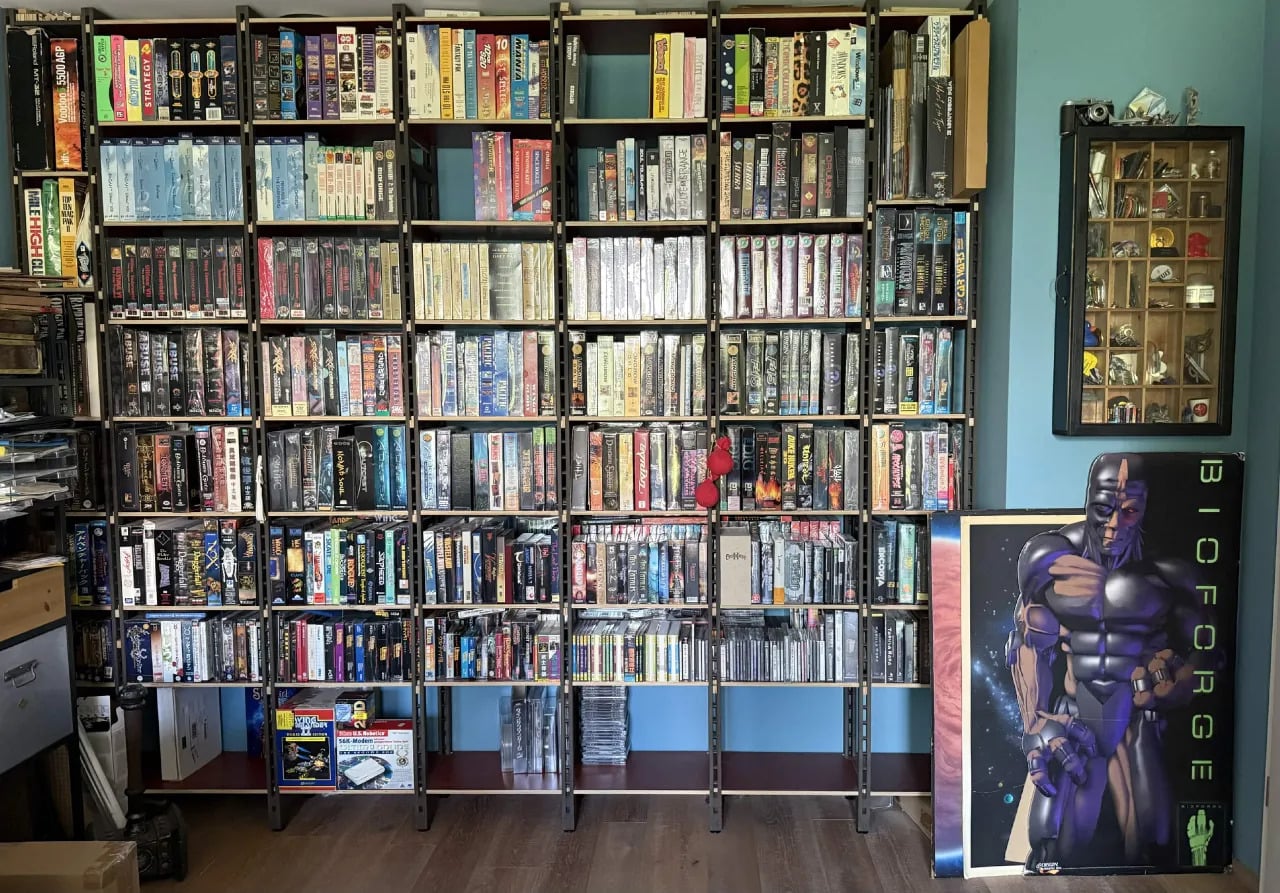
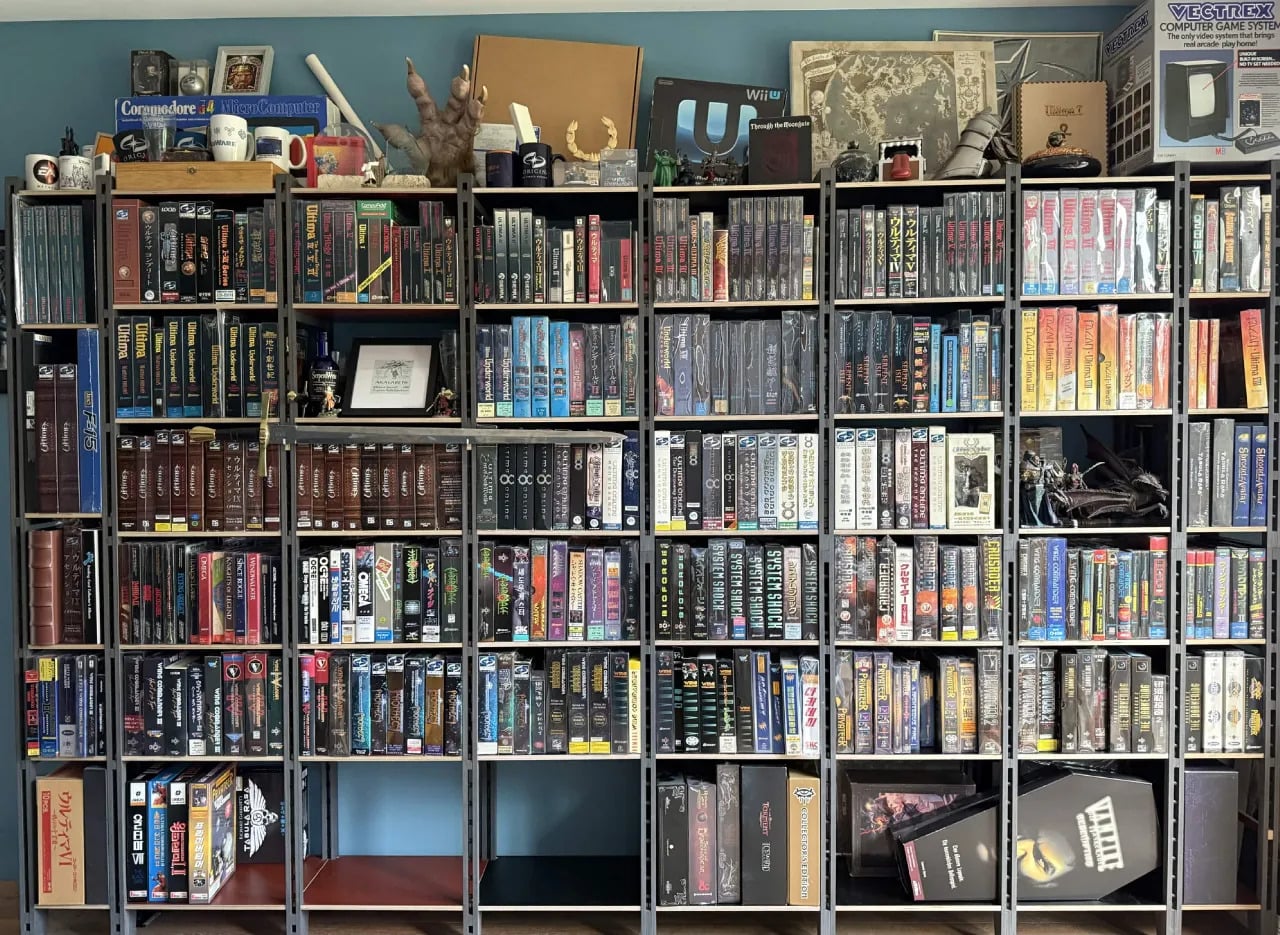
Reichardt’s love for Ultima began, like many, with the fourth game, Quest of the Avatar. “Back then I had a C64 and a friend joyfully described to me how great Ultima IV is and that he would copy me his floppies (sorry for that but since then I‘ve bought multiple copies of Ultima IV) and I‘d really need to play it. And so he did. However there were two problems: 1. I had never played an RPG before. And 2. He only gave me the floppies, no manual, nor the other documentation and neither the map (not to mention it was all English which I was just learning in school). I had no idea what to do, how to do it (no keyboard reference card) or where I was. Eventually I gave up and shortly after gave up my C64 as I got busy with teenage life. We also had no PC at home at all. But Ultima IV had intrigued me. Between 18 and 19, I bought my first PC (Pentium 100) and bought some budget versions of the Ultima games. So I kind of played them all in the same year and not like old fans one after the other). VII just pulled me in the most. The pseudo isometric view, the ease of keyboard shortcuts and mouse control, the inventory of the 1st part and the paperdoll of the 2nd. The music! And the weird puzzle to get the game running to begin with (thank you Voodoo memory manager). Now my love for Ultima VII, Ultima and fascination with Origin Systems made me into one of the biggest collectors of Origin games and memorabilia.”


His involvement with Exult started when it was barely able to run Black Gate, which was around the end of 1999 to early 2000. “There was an old forum and people were asking the same questions over and over. So I suggested they should have an FAQ and documentation. Their answer: ‘Brilliant idea, you do it!’ So I became the official writer, heavy tester of the games and eventually the maintainer of the macOS port when I switched from Windows. Since then my contribution to the code itself grew and I‘m responsible for some enhancements as well. In a way Exult is my longest relationship.”

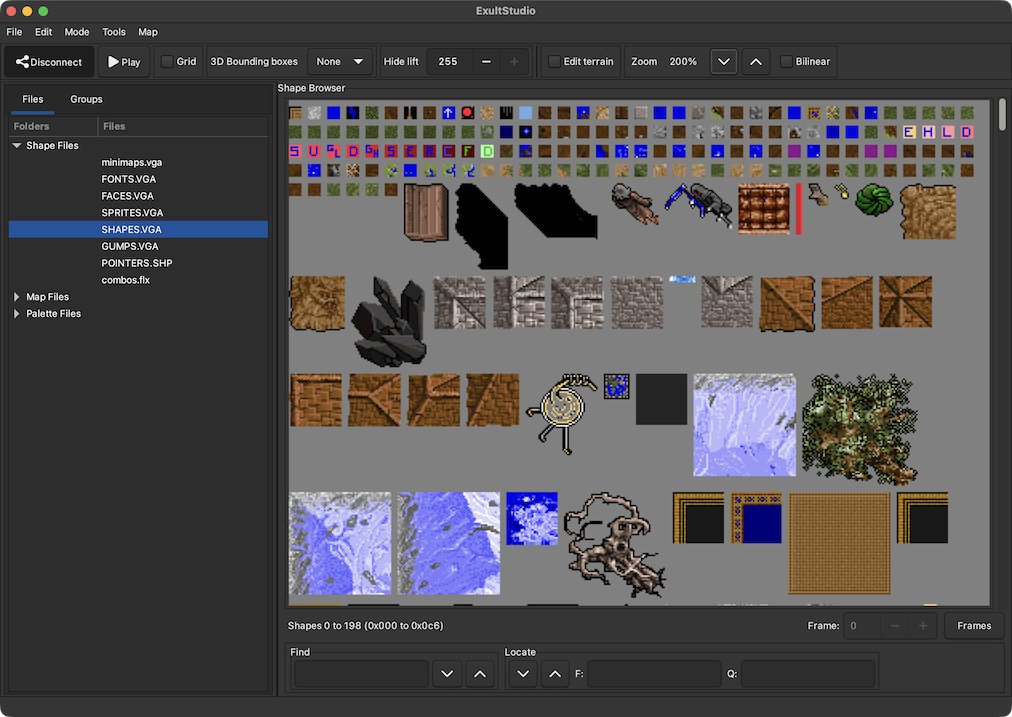
Reichardt told me development on Exult is still ongoing. “Eventually we added Exult Studio, a companion program that helps in map editing the game. In theory a complete new game could be created for the Exult engine, but so far no one has taken on this task. There are several mods for the original games and a few full conversions that created a new game based on the original games files, like the Ultima VI mod that changes Black Gate to play as Ultima VI, along with a beautifully hand crafted intro (meaning that it uses scripted scenes rather than a prerendered animation. This has already been released and is now in the minor bug fixing phase. Another team is “demaking” Ultima VIII as a mod. They are working closely with Sheri Graner, one of the main developers of the never released U8 add-on The Lost Vale, to bring the original vision of TLV out of limbo. Their mod is prompting us the most to add features, among them a way to have custom cutscenes as intro or played during the game when needed. A remake of Ultima II might also be in the starting phase by the same team that created the Ultima VI mod.”
It’s incredible to see how the community keeps building on the original engine from U7. I’ve played the U6 mod that uses the U7 engine and it’s wonderful. I hadn’t finished the original U6 until I played it on Exult, but I enjoyed it so much, I finally went back and completed it and ended up loving both. You can keep up to date on Exult here.
The Black Gate’s Legacy
The Ultima series has been one of the most important in gaming history. It navigates some complex ethical and moral dilemmas in ways that still get me thinking about it and is in my personal list of top 10 best RPGs of all time. Kully also shared his thoughts on Black Gate’s influence on the gaming landscape. “Strangely, there have been few genuine, direct Ultima 7-like games, though its influence resonates and can be felt in various ways. Later designers have chased the feeling more often than the mechanics. Swen Vincke of Larian Studios, for example, has said (more than once!) that Ultima 7 is the game that taught him a world could feel as if anything were possible, but even his own games have stepped back from achieving the same combination of interactivity and immersion. Ultima Online tried to scale the interactivity into ecology and economy, but ultimately had to be pared back; the servers of the mid-1990s could not stably support it, and the MMO-playing population found ways to exploit it for selfish and malicious ends. And yet, there is something of Ultima 7 in every RPG that followed it, if that RPG offered players a true full-screen interface, movable interface overlays, or the sense that the world was happening around the player and not just in response to them.”

The love for Ultima is still thriving among the fan community, including one of its biggest, the Ultima Dragons Internet Chapter (UDIC). Kully told me more about its origins. “The club that would keep so much of this community in motion started a few months before The Black Gate shipped. On February 27, 1992, Doug Ricket opened a Prodigy group called PUFF: Players of Ultima For Fun. He wanted a middle path between the era’s two loud factions, the Evil Avatars and the Protectors of Virtue. This being the Internet, the teasing arrived rapidly, and someone invoked ‘Puff the Magic Dragon.’ Ricket took the joke and renamed the club the Ultima Dragons. Members chose names that ended in “Dragon.” A first council gathered: Silver, Dark, Black, Green, Emerald, later Copper. And the group’s membership grew steadily.
Unfortunately, Prodigy’s fee changes in 1994 nearly ended it as the bullet boards emptied. But it ended up having a silver lining. “In September of that year Ricket and Stephen Brindle (Ethereal Dragon) rebuilt the club on the open Internet as the Ultima Dragons Internet Chapter (UDIC, for short). Ethereal stood up a Usenet group (alt.games.ultima.dragons, later rec.games.computer.ultima-dragons) and an FTP archive. William Herrin (Fallible Dragon) soon built the club a website and took charge of maintaining the official roster. IRC channels and the Weyrmount MOO gave the club chatrooms and storytelling settings. And while the Prodigy chapter waned and eventually closed, the Internet chapter took off like wildfire. More than 16,000 Dragons have joined the club since PUFF was breathed into existence on Prodigy. Origin Systems noticed: the Dragon Edition of Ultima 9 is a developer’s thankful nod in boxed form. And at the club’s twenty-fifth anniversary gathering in 2017, Lord British was officially initiated into the Dragon-named fold. Nowadays, the Usenet groups are quieter, and the remaining Dragons have flocked to other venues: a lively and active Facebook group, and a dynamic – and occasionally raucous – Discord server. But the website, and the roster, are still there as the official record of who is a Dragon, and you can still sign up for a Dragon name today.
“Put these three stories on one map and they stop looking like separate bits of trivia. Ultima 7 showed that a game world could feel alive, lived-in, like it kept going even when the player wasn’t looking. Exult proved that this world, which advancing hardware could no longer support, was still worth rewriting, line by line, so the original art and usecode could keep telling their story. And the Dragons showed that the people who loved this world could outlast not just the changing face of online, but also keep the flame – and name – of Ultima alive even when the gaming world wasn’t looking.”

I asked Raymond Benson about his thoughts looking back on the game. “I’m very proud of Ultima VII: The Black Gate—it was a milestone for me in my career. I learned a lot from Richard Garriott. But it really was a team effort.”
I also asked Andrew Morris about the game’s legacy. “That is a hard question to answer without considerable subjectivity. Not only that, but after my work on UO, the vast majority of my own video game playing has been with MMOs rather than single-player versions of any FRPG, which means I have fewer titles against which to compare. What I am willing to say is that even after roughly 35 years from U7’s release I remain proud of the title. I am proud of my contributions at all levels, proud of the exceptionally talented team with whom I got to work, proud of the fact that Origin at that time prioritized quality above market windows, and proud of the entire end product. For the most part, working on U7 was a blast! It involved waking up each morning to do something awfully close to what I would have done in my spare time, with many other individuals I would have called friends, learning skills I didn’t realize I could take on, going home at the end of a productive day, and then doing it all again the next day. Not bad for a first full-time job after graduation.”
Ultima’s influence extends even beyond gaming and I thought this was nowhere better exemplified than a personal experience Dominik Reichardt shared with me. “I took part in the Hearth of Britannia LARP in Texas on Richard Garriott’s property (medieval themed, strong ties to Ultima and Shroud of the Avatar). That was a 5 or 6 day event and one of the prerequisites was that each attendant had to contribute one small event. There were mini games, quests, fights or talks. My official contribution would have been a talk on Exult in Richard’s Shakespeare theatre. But the real plan was to invite my girlfriend for this talk and propose to her on stage in front of all the attendants of the LARP. She and our kids went with me to Austin but they didn’t attend the LARP, instead spending time in Austin. The plan almost fell apart when she messaged me the day before that our youngest ran a fever. I feared that I would need to hold a talk I never prepared for. Thankfully my son got better and since 2017, I’m married.”
