




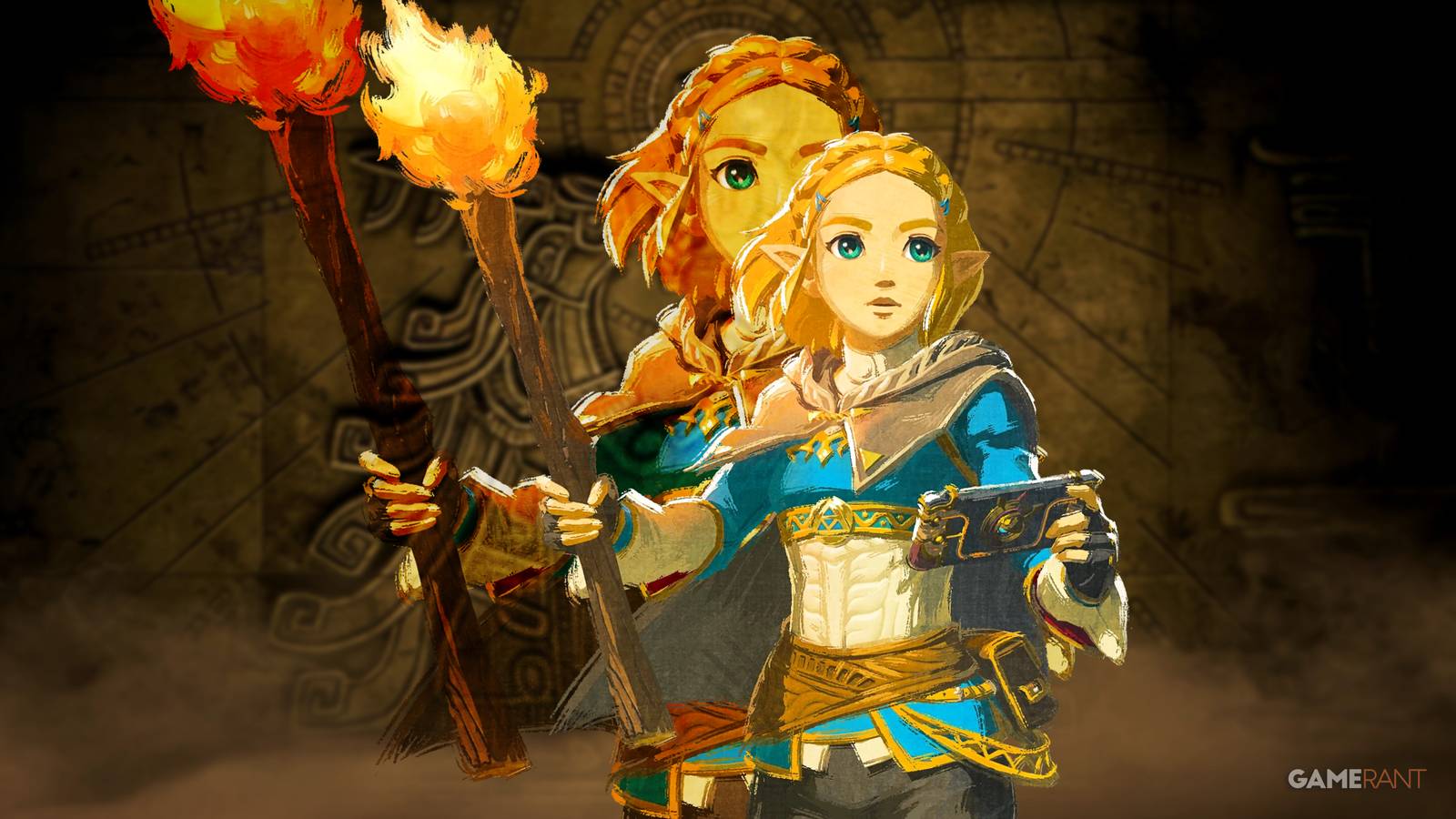
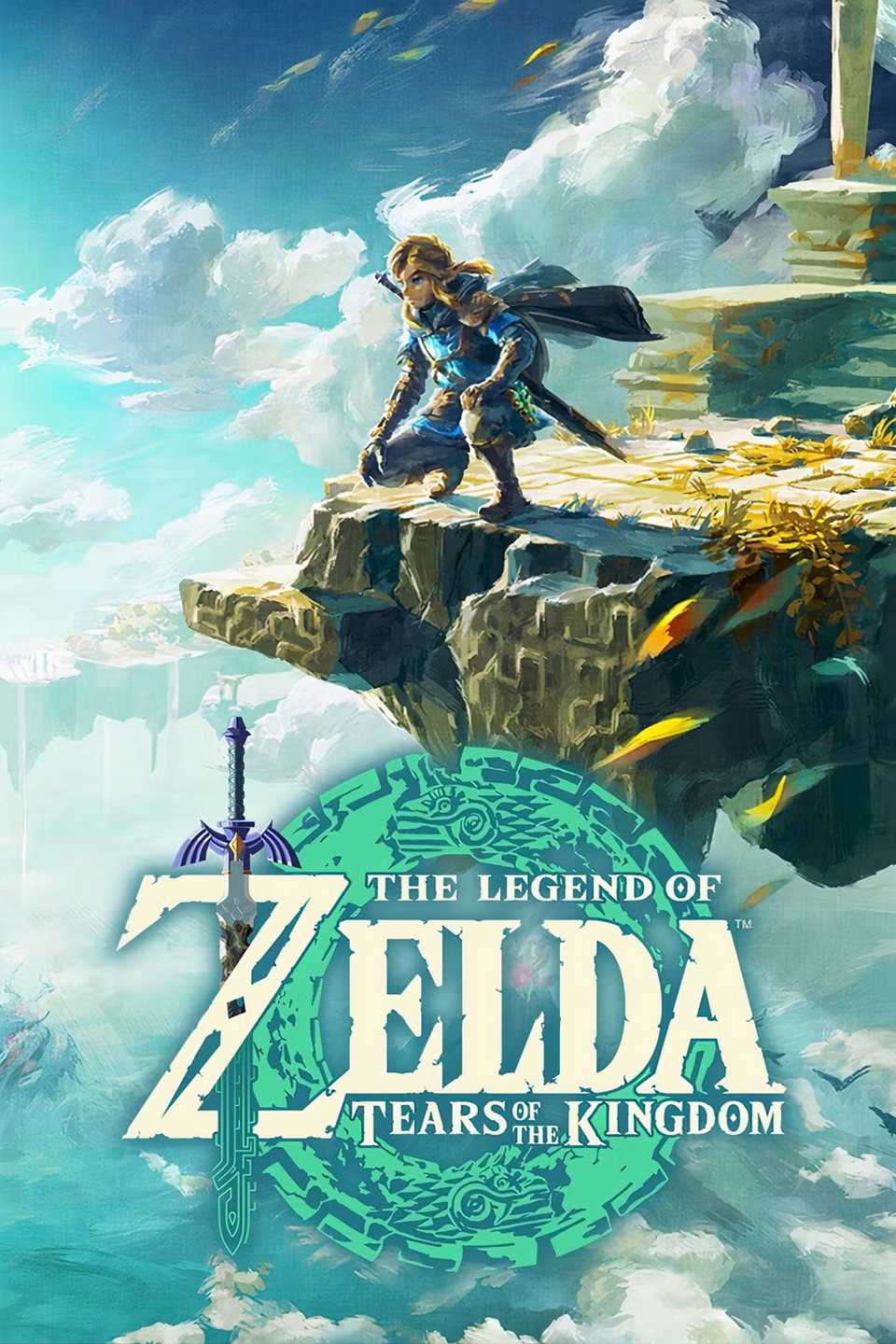
There’s still a lot we don’t know about the next mainline Legend of Zelda game after Echoes of Wisdom, as Nintendo has yet to officially confirm anything about it. However, the latest rumor surrounding the next open-world Zelda game is at least interesting enough to entertain, especially because it sounds so much like something the franchise would eventually do anyway. According to claims made by insider Nick Baker on Episode 294 of the XboxEra Podcast, the next major Zelda game will reportedly continue in the same open-world direction as Breath of the Wild and Tears of the Kingdom, while introducing dimensional puzzles tied to “tears in reality.”
Again, Nintendo hasn’t confirmed yet whether this is true, or even whether the next Zelda installment is an open-world game in the same vein as BotW and TotK. Even so, if The Legend of Zelda is building its next open-world game around dimensions, it makes perfect sense. After all, this is a franchise that has spent decades sending Link through alternate worlds and realms for one reason or another, so the idea of basing puzzles around dimensional travel wouldn’t be far-fetched in the slightest.
Every New Zelda Game Leaked: Ocarina of Time Remake, New Open-World Game, and New 2D Game
According to various sources, fans could receive up to three brand new Zelda games between now and the end of 2028 or so.
Zelda Has Been Playing With Dimensions for Decades
When it comes to The Legend of Zelda and dimensional design, it’s hard not to bring A Link to the Past to mind, as it’s the place where it all began. A Link to the Past‘s Light and Dark Worlds are still the best example of the series taking one world and making players think about it in two different ways. Whereas the Light World was the default, or normal, world state, the Dark World changed where players could go, what they could reach, and how certain areas connected to each other. Moving between the two versions of the world ultimately became part of how players solved problems, and that loop then inspired future installments to experiment with variations of it.
What’s That Weapon?

Identify the silhouettes before time runs out.
Identify the silhouettes before time runs out.
Easy (7.5s)Medium (5.0s)Hard (2.5s)Permadeath (2.5s)
One rather rare take on the dimensional formula was Majora’s Mask, which didn’t see Link traveling between dimensions but instead placed the entirety of the game’s story in the parallel world of Termina. There were familiar faces and races in Termina, but its atmosphere and tone made Majora’s Mask unique among Zelda games. In fact, it is widely considered a horror-adjacent game in the franchise, one of only a few, simply due to the parallel nature of the world and what that means for the people and places within it.
This is a franchise that has spent decades sending Link through alternate worlds and realms for one reason or another…
Twilight Princess is another great example of a Zelda game making use of dimensional features. It introduced players to the Twilight Realm, another parallel dimension to Hyrule. For much of the game’s early stretch, the Twilight Realm bled into Hyrule through Twilight-covered regions that transformed Link into Wolf Link once he entered them. Instead of moving between two active versions of the same map, players would enter these corrupted areas, hunt down Tears of Light, restore the local Light Spirit, and return that part of Hyrule to its normal state.
Then there was Skyward Sword, which split its world between the sky, where Link began his journey, and the surface, where most of the main quest took place. On top of that, it used the Spirit Realm as a spiritual trial space, sending Link into altered versions of the places he had already explored, only without his weapons and with Guardians ready to chase him if he made a mistake. It wasn’t dimensional in the same way as A Link to the Past and Twlight Princess, but it still used separate layers of the world to change how it was played.
A Link Between Worlds, however, is probably one of the clearest examples of Zelda turning dimensional travel into a core gameplay idea. It sent Link between Hyrule and Lorule, a ruined counterpart kingdom that shares parts of Hyrule’s structure. The game also gave Link the ability to merge into walls as a painting, which let him reach places that would otherwise be unreachable. Between the Hyrule-Lorule connection and Link’s wall-merging ability, A Link Between Worlds actually incorporated dimensional travel directly into exploration and puzzle-solving throughout the game.
A Dimensional Open World Would Be a Natural Next Step After Tears of the Kingdom
The real challenge for Nintendo now is figuring out where open-world Zelda goes after Tears of the Kingdom. Breath of the Wild already transformed Hyrule into something no player, regardless of age or experience with the franchise, had ever seen before. Then Tears of the Kingdom returned to that same foundation and expanded it vertically, giving players the sky above Hyrule and the Depths below it. For the most part, that worked because it gave players a new relationship with a world they already understood.
But that also leaves the next open-world game with a pretty difficult problem. If Nintendo stayed in the same general design language, simply making the map bigger probably wouldn’t be enough. At some point, adding more space can start to feel like the most obvious answer, but it wouldn’t necessarily be an interesting one. A dimensional mechanic, however, would be a smart way around that because it could make the world feel new without depending entirely on square mileage.


Essentially, this kind of design would allow players to experience two different open worlds in the same game, and assuming Nintendo wouldn’t threepeat Breath of the Wild and Tears of the Kingdom‘s Hyrule, the next open-world Zelda could use dimensions to make a brand-new Hyrule feel larger without wholly relying on map size. One version of the world could affect the other through puzzles, traversal routes, enemy placement, environmental changes, or dungeon access, which would give exploration the complexity it needs to continue to feel rewarding after dozens of hours. Players would be learning how the two versions of the world interact, and that could give the next open-world Zelda its own identity after two games that were already built around freedom and player-driven problem-solving.
Of course, the rumor could end up being completely wrong. Nintendo is unpredictable, and the company has never needed to follow the path everyone expects. Still, this is one rumor that makes sense because it lines up with the franchise’s past and the open-world era’s immediate future. Zelda has already taken Hyrule outward, upward, and downward, so at this point, another reality might be the most natural place left to go.


- Released
-
May 12, 2023
- ESRB
-
Rated E for Everyone 10+ for Fantasy Violence and Mild Suggestive Themes
- Developer(s)
-
Nintendo
- Publisher(s)
-
Nintendo