


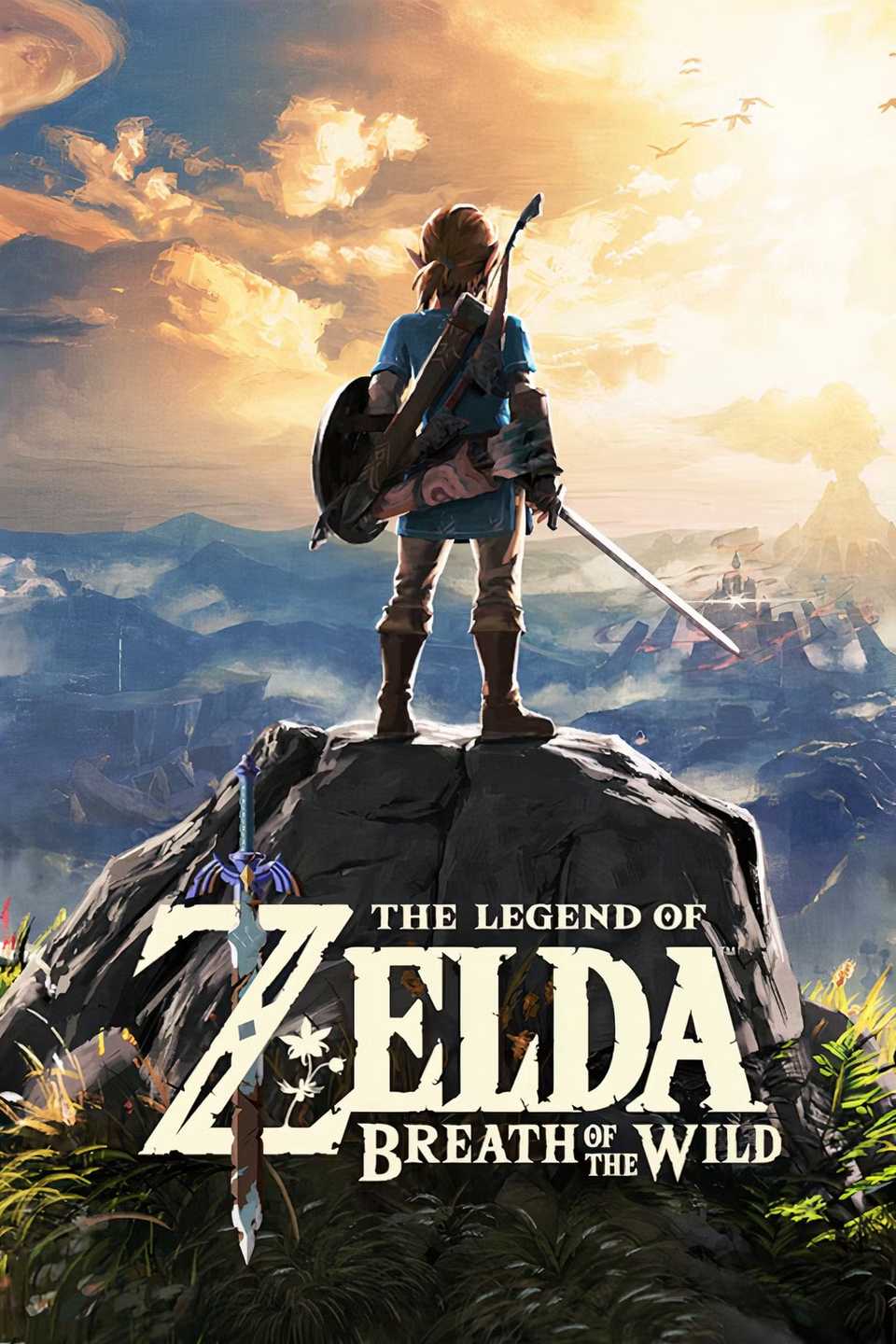
I don’t think I’m alone in thinking that The Legend of Zelda: Breath of the Wild is a once in a generation game, but I would actually go a bit further than that. I would posit that Breath of the Wild is more of a once in a lifetime sort of gaming experience, the likes of which we will never quite see again.
Zelda: Breath of the Wild was a sharp pivot for the franchise. Released in 2017, it was the first mainline Zelda game since Skyward Sword on the Nintendo Wii, a somewhat contentious release that adopted the same formula and format as previous titles, like Twilight Princess and Ocarina of Time. That is to say, Skyward Sword is a 3D Zelda game designed around dungeons and biomes, and which is mostly linear. It certainly has its strengths, but it doesn’t generally top many “best Zelda games of all time” lists, in part because it’s so similar to previous titles. Indeed, Skyward Sword, mechanically at least, represents the old Zelda, but Breath of the Wild marks a clear line in the sand, evolving the series like no game before or after it.
No One Can Top Zelda: Breath of the Wild—Not Even Zelda Itself
Why Zelda: Breath of the Wild Is So Special
If I were forced to choose a favorite Zelda game, I’m not sure that I would go with Breath of the Wild—I would probably cite Twilight Princess or Majora’s Mask for that honor. This is because of nostalgia, I’m sure, but also because I prefer the more linear, story-driven experiences offered by these sorts of games. But as far as mechanical ingenuity is concerned, there’s no question that Breath of the Wild is unmatched.
To put things into perspective, we have to recall what the open-world genre looked like before Breath of the Wild. Prior to 2017, if a gamer were asked to name the greatest open-world game of all time, they would probably offer up one of the following:
- Far Cry 3
- GTA 5, 4, or San Andreas
- Assassin’s Creed 2
- The Elder Scrolls 5: Skyrim
- The Witcher 3: Wild Hunt
I’m a fan of all of these games—a pretty massive fan of some—but I won’t pretend that any of them handle their open-world design as well as Breath of the Wild does. Take a now-infamous quote from Todd Howard during the marketing campaign for Skyrim. Narrating game footage in a 2011 showcase, Howard said, “That mountain is not just a backdrop. You can walk all the way to the top of that mountain.” This quote has become one of many Todd Howard-centric memes, mostly because it implies that Skyrim has a sort of open-ended freedom of exploration that it simply doesn’t. You can’t actually “climb” anything, and the only mountains that are scalable are ones with established roads and points of interest. They’re ultimately no different from the game’s various towns or villages, mechanically.
As far as mechanical ingenuity is concerned, there’s no question that Breath of the Wild is unmatched.
But in Breath of the Wild, you actually can climb any mountain you see—you can climb just about anything, in fact. This relatively simple ability, conveyed to the player within their first seconds of gameplay, dramatically expands the sense of freedom that the open-world template thrives on. No longer are you relegated to well-trodden pathways or guided by abundant map markers: you are free to carve your own path. Breath of the Wild‘s glider plays into this sense of freedom as well, granting players a modicum of control over the skies as well as the earth.
Note: Nintendo has referred to Breath of the Wild as an “open-air” game, a title affirmed by its seemingly boundless exploration sandbox.
There’s more to it, of course. Subtleties in environment design, a free-form approach to narrative construction, and a marked lack of hand-holding all contribute to Breath of the Wild being one of the best open-world games of all time. So many design choices that were once considered essential parts of the open-world genre were made to seem obsolete by Breath of the Wild, which did away with most of them while still doing a better job of achieving the sense of freedom the likes of Ubisoft and Bethesda claim to strive for.
Zelda: Tears of the Kingdom Is Great, but It Can’t Hit the Same Highs as Breath of the Wild
Part of why I feel confident that there won’t be another Zelda game like Breath of the Wild is that, in a way, Nintendo already tried to make one. Tears of the Kingdom carries over the essential mechanics of Breath of the Wild while adding its own, and is literally set on the same map (with notable additions) as its predecessor. But still, that sense of discovery, of being able to “go anywhere,” can’t be recreated, as it’s augmented and mutated by the existence of other mechanics and systems, as well as a relative lack of novelty.
Picking Up the Breath of the Wild Gauntlet Isn’t a Straightforward Task
-
-

-


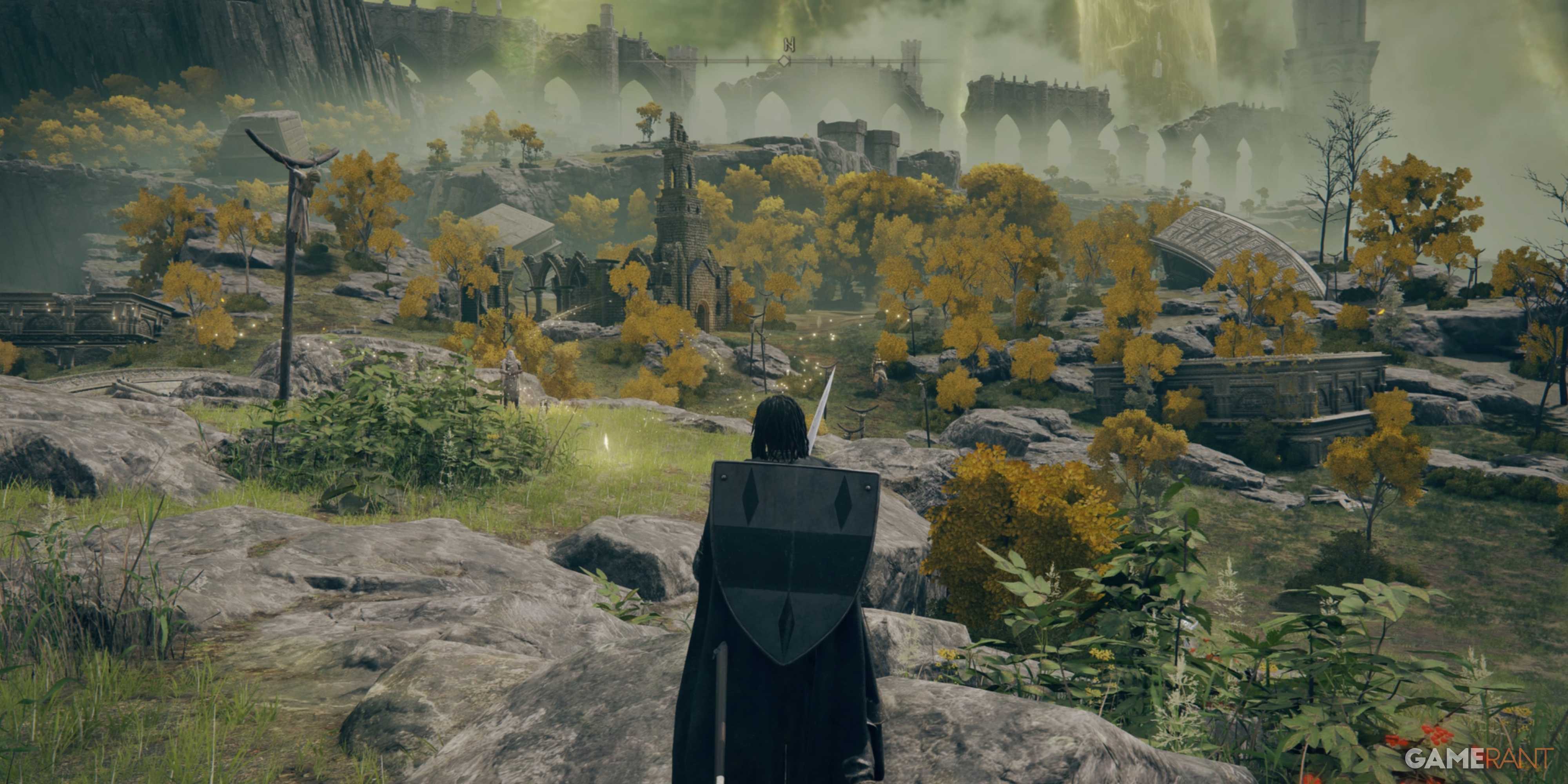
It’s not likely that the Zelda franchise will hit the same particular heights as Breath of the Wild, but other developers and franchises can—sort of. Elden Ring, for example, is often hailed as another of the greatest open-world games ever, and if you look at it under a microscope, you’ll find that it pulls a lot of the same moves as Breath of the Wild, fostering organic, intrinsically driven exploration characterized by player freedom. But Elden Ring is aiming for a very different target, and comes from a very different studio; Nintendo, even given all the time in the world, probably wouldn’t make Elden Ring.
I can only think that this is a good thing. After all, good video games, and good art in general, often strive to be inimitable. If it’s easy to recapture a game’s magic, then perhaps said game isn’t so magical after all. However, if a game can be somehow touched by this magic, as I believe Elden Ring was touched by Breath of the Wild‘s, then we will wind up with a richer and more interesting gaming landscape as a whole. Put another way, there may never be a proper successor to Breath of the Wild, but that might be a good thing.



- Released
-
March 3, 2017
- ESRB
-
E for Everyone: Fantasy Violence, Use of Alcohol, Mild Suggestive Themes
- Developer(s)
-
Nintendo EPD
- Publisher(s)
-
Nintendo