




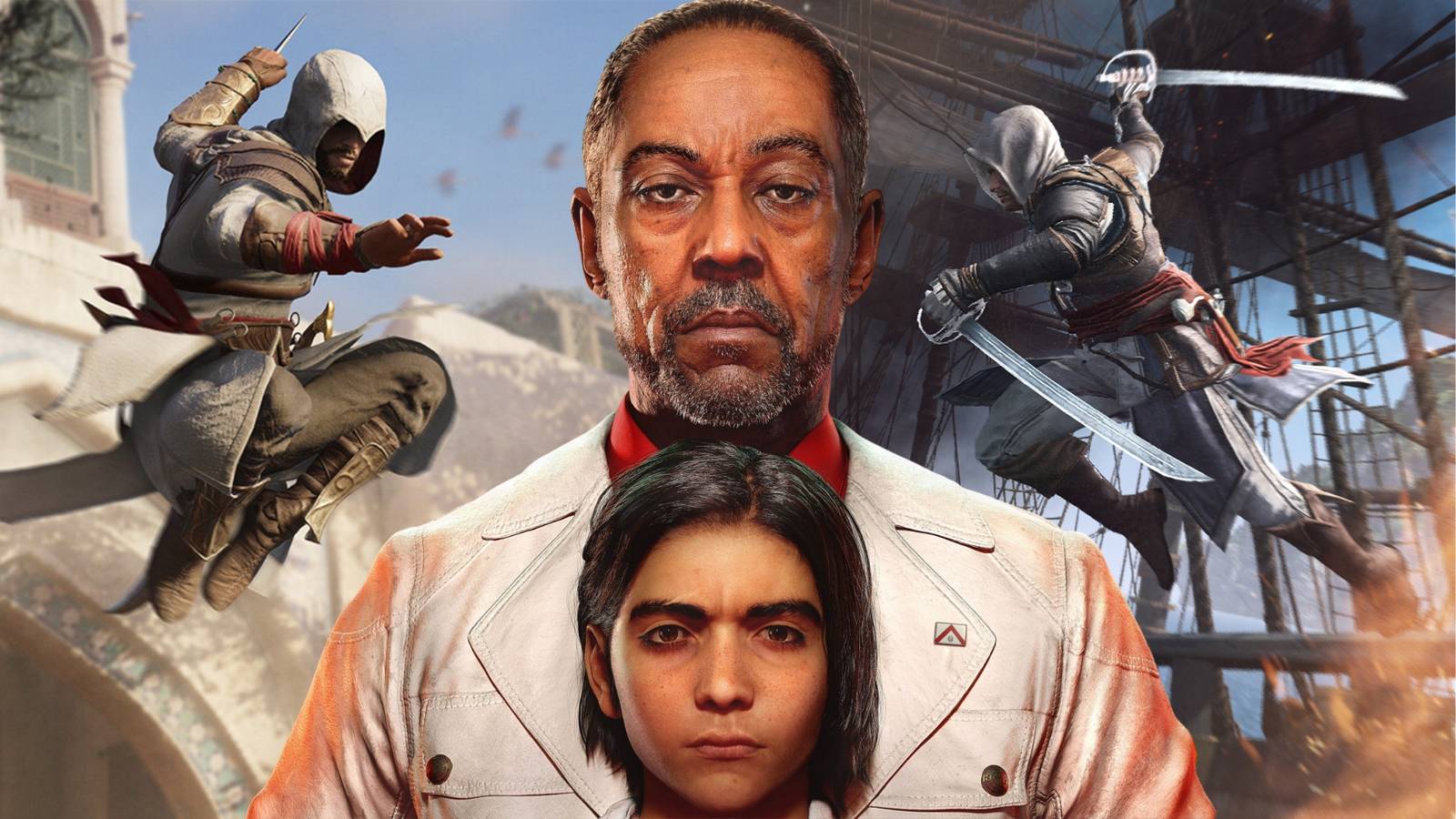
Ubisoft CEO Yves Guillemot has confirmed that the studio is currently developing two new Far Cry games and several Assassin’s Creed titles, the latter of which will span across both single-player and multiplayer experiences. The studio is currently undergoing a major restructuring that saw multiple projects cancelled earlier this year, but fans can rest easy knowing that two of Ubisoft’s biggest franchises, Far Cry and Assassin’s Creed, are seemingly still alive and well.
It’s been a tough few months for one of gaming’s biggest publishers, as Ubisoft has recently cancelled highly anticipated titles, laid off numerous roles across a variety of its studios, and made some major strategic shifts to the way in which the studio operates. Back in January, the gaming world was left shocked after news broke that Ubisoft had not only scrapped the highly anticipated Prince of Persia Remake but also pulled the plug on numerous other projects. Despite two of the six games cancelled by Ubisoft apparently being new Assassin’s Creed games, the studio is apparently doubling down on its biggest franchises, which include Rainbow Six, Far Cry, and Assassin’s Creed.
8 Ubisoft Games That Have Aged The Best
These Ubisoft titles have managed to stand the test of time thanks to their innovative mechanics, stories, and visuals.
Ubisoft Reveals Future Plans for Far Cry and Assassin’s Creed
As Ubisoft continues its restructuring process, many are cautiously awaiting to see how the studio plans to handle future releases, especially with some of its biggest franchises. Well, during a new interview with Variety, Ubisoft CEO Yves Guillemot shared the good news that both Far Cry and Assassin’s Creed are still very much alive and well, with multiple new titles in the works for both series. When asked if there would be announcements regarding new games in these franchises anytime soon, Guillemot said Ubisoft currently has “two very promising projects in development” regarding Far Cry. The CEO did not confirm when an official announcement for the next Far Cry game will be made, but did also state that there are “several” Assassin’s Creed titles in development, spanning both single-player and multiplayer experiences.
These titles are being worked on by Vantage Studios, a Ubisoft subsidiary that was launched last year solely to develop and expand the studio’s biggest franchises, which include Far Cry, Assassin’s Creed, and Tom Clancy’s Rainbow Six. According to Ubisoft, Vantage Studios is being led by Charlie Guillemot and Christophe Derennes and comprises teams developing the three aforementioned franchises based in Montréal, Quebec, Sherbrooke, Saguenay, Barcelona, and Sofia, bringing together thousands of experienced developers from across the world.
Ubisoft launched the latest Assassin’s Creed title back in March 2025, with the release of Assassin’s Creed Shadows. Although currently unconfirmed, it has become one of the worst-kept secrets in gaming, as numerous leaks and rumors suggest Ubisoft is currently working on a remake of Assassin’s Creed 4: Black Flag. The company’s recent restructuring has reportedly delayed the title past its planned release date, but it has recently been suggested by an industry insider that an official reveal may take place in April.
Back in 2022, the Assassin’s Creed team also revealed a full timeline of its future plans for the series. With Assassin’s Creed Shadows launching last year, the next new mainline entry in the series is expected to be Codename Hexe, which Ubisoft says will have a much darker and grittier tone with a witch-themed adventure.
As for the Far Cry series, outside of new updates to older titles, Ubisoft hasn’t revealed much regarding the future of the franchise. However, Guillemot’s recent comment aligns with a leak from back in 2024, which claimed the studio was working on a new mainline entry in the series, known as Far Cry 7, and a new multiplayer title. At the time, it was claimed that these titles would launch in 2026. But with recent restructuring and cancellations, it’s possible that they have been internally delayed.