





By now, even if you’ve never played Crimson Desert, you’ve probably at least heard about how bad its story is. To be fair, it’s bad, though I wouldn’t necessarily say it’s the worst narrative out there. I’ve seen plenty far worse, and I’ve learned to stop caring about those stories in the same way I’ve stopped caring about this one. The thing about Crimson Desert, though, is that if it were to remove its story from the picture entirely, it would still be worth playing. I’ve said it before, and I’ll say it again: this might be the best open-world game I’ve ever played, simply because it gets the “open-world game” thing right, even if it gets the whole narrative thing completely wrong.
If you’re like me, then you play open-world games for their worlds, and the story is more like a bonus feature that you get to experience on the side. But Crimson Desert‘s narrative is far from a bonus feature, and I don’t even know if I’d call it a feature. It’s so convoluted that it took me dozens of hours to even realize it was actually just a glorified revenge tale that feels like it was probably more or less an excuse to have a story in the game in the first place. It lacks cohesion, it struggles to unify all of its ideas, and it often seems to misunderstand even itself. But again, it’s one of those things that I—and I know many other fans of the game—are willing to let slide, and it’s all thanks to how excellent Crimson Desert is when it comes to world design.
“What is Happening?” Crimson Desert’s Kliff Actor Didn’t Understand the Story Either
Crimson Desert Kliff actor Alec Newman gives his thoughts on the game’s main narrative.
Crimson Desert Might Be the Most Sandboxy Sandbox Ever Made
I began my review of Crimson Desert by mentioning that I was riding a cow within my first hour with the game, if not just to demonstrate how incredibly interactive its world is. Ahead of the game’s launch, I wasn’t sure what Pearl Abyss meant by “interactive world,” and I had my doubts, as I felt like I’d heard that promise before, and then it turned out to be something different from what I was expecting. That was certainly the case with Crimson Desert, but rather than failing to meet my expectations, it soared far above them. Even after playing the game for only a few hours, I was convinced that there was nothing like it, and I wouldn’t be at all surprised now if future developers looked to it as an example of what is possible when you truly desire to innovate rather than imitate.
How Crimson Desert’s Sandbox Works
- FULL-WORLD ACCESS — Climb, glide, or reach nearly anything you can see.
- PHYSICS-BASED INTERACTIONS SYSTEM — Use the environment itself as tools or weapons.
- MULTIPLE COMBAT APPROACH OPTIONS — No single correct way to handle fights.
- DENSE SIDE ACTIVITY VARIETY — Fishing, crafting, hunting, and more fill the world.
- BASE-BUILDING CAMP SYSTEM — Upgrade and manage the Greymane camp over time.
- DYNAMIC CRIME CONSEQUENCES SYSTEM — Actions only matter if NPCs witness them.
- EMERGENT QUEST SOLUTION DESIGN — Objectives allow multiple player-driven solutions.
- EXPANSIVE TRAVERSAL TOOLSET OPTIONS — Mounts, climbing, and mobility shape exploration.
- PLAYER-DRIVEN EXPERIENCE STRUCTURE — The game avoids forcing a single path forward.
It’s hard to see just how “sandboxy” this particular open-world game is just by glancing at a list of features like this, as they all sound like things that have been done before—and they have. There are plenty of games that have been chock-full of activities for players to complete, many that have featured base-building systems, and quite a few that have even had crime and consequence mechanics. But Crimson Desert‘s standout feature is not what or how much there is to do in its world. Rather, it’s how all of it can be done.
In Crimson Desert, the How Matters More Than the Why
That’s ultimately where Crimson Desert starts to feel different from anything else out there. It’s not just that these gameplay features exist, but that the world constantly responds to what you’re doing with them. Rather than simply walking through the world or exploring it, you’re frequently invited to mess with it, interpreting its rules as guidelines that are just as flexible as the tether that comes out of Kliff when he’s using Crimson Desert‘s Ultrahand-like Axiom Force ability.
Crimson Desert‘s standout feature is not what or how much there is to do in its world. Rather, it’s how all of it can be done.
There are moments where it feels like the game is just letting you try something it probably shouldn’t, and then, somehow, it actually works. Not even a game like Zelda: Tears of the Kingdom that relies heavily on experimentation scratches the surface of what is possible in Crimson Desert‘s unscripted world.
And because of that, I have no problem booting up the game with absolutely no agenda whatsoever. I can’t explain how many times I’ve stared at the map, contemplating what I want to do next, and then realizing the best foot forward is actually just to close the map and, well, put my foot forward. Crimson Desert is less of an objective-driven game and more of an experience where the best moments aren’t planned at all.
It’s the kind of game where you set out to do one thing and end up doing five others instead, and you somehow don’t feel overwhelmed by it all. Other players have constantly been talking about how exploration pulls them away from the main path, to the point where the journey becomes more interesting than whatever objective you originally had in mind.
But that’s precisely why Crimson Desert‘s story being terrible doesn’t really matter. Sure, it would be 10 times better overall if it had at least a decent narrative, but it’s clearly not meant to be that kind of game anyway. If its world is designed to pull me off the main path as often as possible and, for lack of a better term, distract me, then it probably could still have found success without a story in the first place. I feel comfortable saying that because I almost forget there’s a narrative somewhere in there anytime I’m playing, and I’m sure I’m not alone.
Not even a game like Zelda: Tears of the Kingdom that relies heavily on experimentation scratches the surface of what is possible in Crimson Desert‘s unscripted world.
That’s ultimately what Crimson Desert comes down to. It may stumble when it tries to tell you why you’re doing something, but it almost never fails to make you care about what you’re doing in the moment. And in a genre that has spent years trying to have the biggest open-world maps and the longest checklists, that honestly feels like a worthwhile trade-off. Because when a world is this responsive, this unpredictable, and this easy to get lost in, it starts to matter less whether the story holds everything together. What matters is that you keep coming back, not because you feel like you have to finish it, but because you genuinely want to see what happens the next time you step into it.

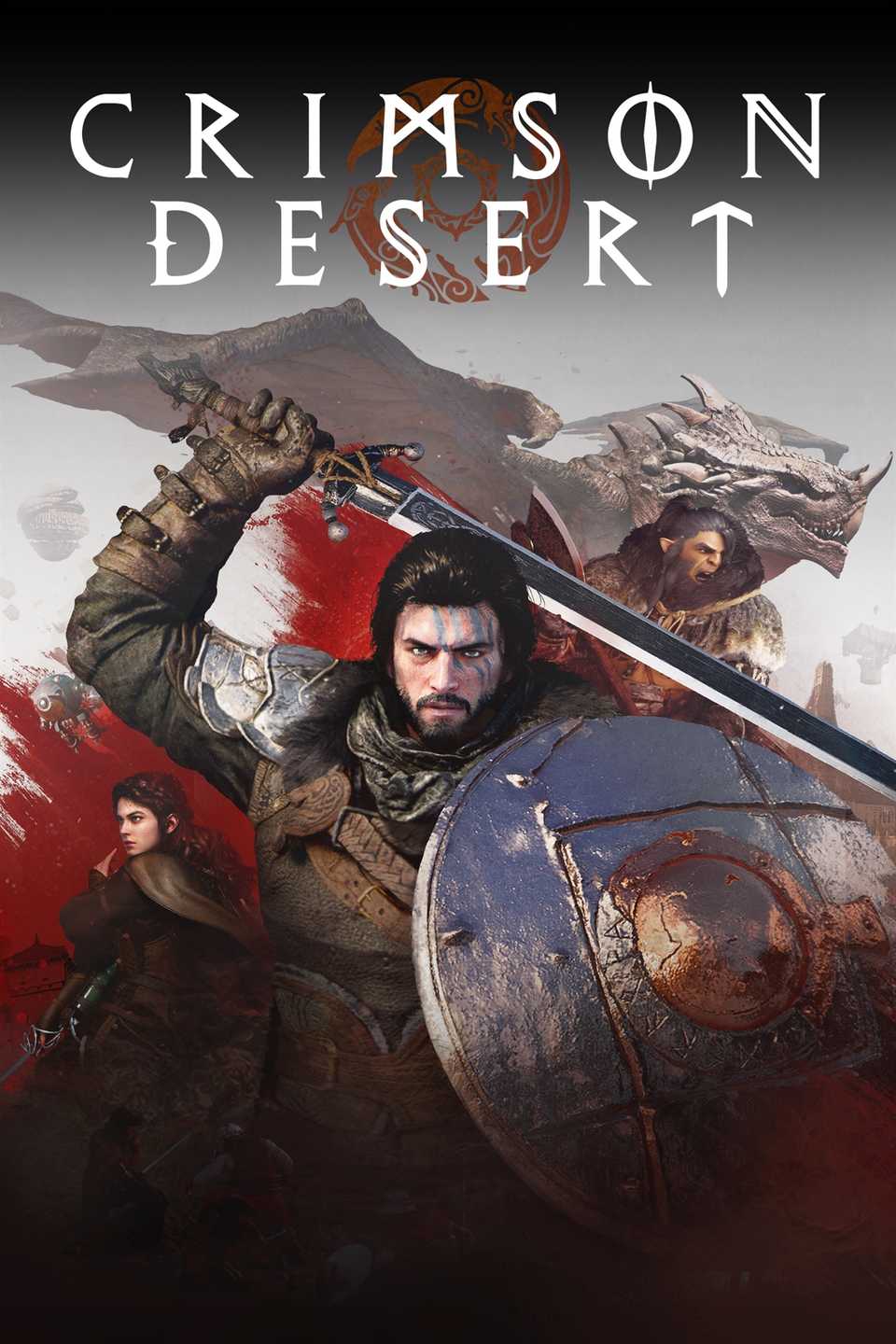
- Released
-
March 19, 2026
- ESRB
-
Mature 17+ / Blood, Drug Reference, Intense Violence, Strong Language
- Developer(s)
-
Pearl Abyss
- Publisher(s)
-
Pearl Abyss