







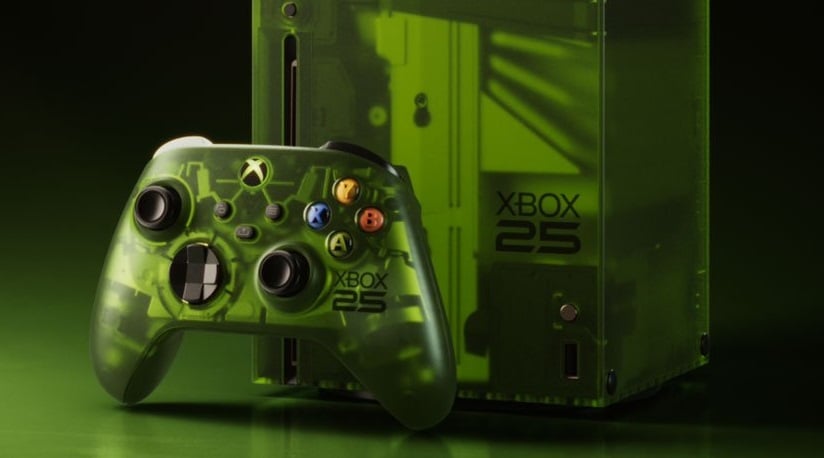
We didn’t get a glimpse of Project Helix at Xbox’s recent summer showcase. That might be in part because the current cost crunch around PC gaming components is driving tough conversations at Microsoft about what kind of console it can deliver in 2027 that doesn’t immediately price itself out of relevancy. Xbox CEO Asha Sharma recently hinted that the company will have to get creative in order to make the next console generation something fans can still buy into.
“We must think about other ways to think about the cost construction of the console, we must think about how we create different plans, so more people can participate in the console,” she recently told Fortune during one of its live events. “We must think about partnerships that will allow us to have better distribution and reach, and we must think about the experiences that we’re creating outside of that as well to reach new audiences.”
She continued. “I think we’ve reached a point where it will be hard to imagine that mass audiences can afford thousands of dollars to spend on a console generation, and so I think we will start to see radically different business models that we never expected, start to come into orbit later this year.”
What might those new business models be? An Xbox that costs less if you sign up for ads? Subscription subsidized next-gen hardware upgrades like Microsoft previously did with its all-access program? Less powerful hardware that leverages cloud streaming and AI to deliver cutting-edge performance without needing expensive components inside the box to do it locally? Here were some clues offered by Sharma.

“I think that we have to think very differently about storage and memory going forward,” she said. “We will have to apply new techniques, so that we can compress that. We will have to empower customers to have very flexible storage offerings. We will have to empower new types of games, so they can fit on devices, and so there’s going to be a lot of innovation.”
Sharma previously pointed to the gaming affordability crisis as one of the biggest challenges heading into the new hardware cycle. She said one of her main jobs right now is to figure out what trade-offs to make so that Project Helix can succeed in a world where components are going up in price exponentially rather than down.
Exclusives are back, but only if Xbox is “healthy”
The new Xbox CEO also provided a fresh insight into how she is thinking about exclusivity, the hot topic coming out of the summer showcase, where Microsoft revealed its decision from a month ago to not put Gears of War: E-Day on PlayStation 5. Asked about the future of Xbox exclusives, Sharma suggested they were a priority, but also something that costs the platform on the publishing side, forcing her team to be somewhat stingy about holding games back to prop up the Xbox console ecosystem.
“I think that we are the number two publisher in the world, and when you do that, you want your games to be everywhere,” Sharma said. “You’re stronger when the world plays with you. At the same time, we’re increasingly becoming more of a platform, and it’s hard to find examples of platforms out there that don’t have exclusive services and content.”
She continued, “And so this is a journey for us. Our business isn’t particularly healthy as you noted, and so we’re starting by introducing one to two signature exclusives and, as the business is healthy, we will look to try and do more.”
That certainly makes it sound like the return of some level of exclusivity is an experiment and not a promise. If it yields benefits with downsides that can be offset by the rest of the business, the experiment will continue. But if Game Pass, hardware revenue, and game sales are still struggling in a couple of years from now, the strategy could shift back away from exclusives. That doesn’t sound confusing or chaotic at all.
