



In the last decade, the triple-A gaming scene turned its back on the first-person shooter genre, leaving all the innovation and most of the creation to independent developers. However, things weren’t always this way, and there was a time when FPS games rained down from the heavens on a weekly basis. I miss those days, so let’s talk about a few true classic shooters that were wiped from our cultural memory.
Just because a game launches to immaculate reviews and player appreciation doesn’t guarantee an eternity of adoration, and all these upcoming titles went through the same journey (albeit with different steps). At most, they might pop up in these types of articles that reminisce on the glory days of DOOM, Medal of Honor, and Unreal, but nostalgia can only take you so far. If you have the means, play these classic FPS games.
“Classic” is the crucial word – I want to focus on FPS games that made a splash upon release and garnered almost universal praise. They might not have been massive hits, but they weren’t underappreciated either.
The Operative: No One Lives Forever Was The Best FPS Game Of The Year 2000
Better Than Counter-Strike, Deus Ex, and Perfect Dark
- Delisted and impossible to buy.
Despite 2000 giving us Deus Ex, Perfect Dark, Counter-Strike, Project I.G.I, Quake 3: Team Arena, Soldier of Fortune, TimeSplitters, and Turok 3, The Operative: No One Lives Forever stands as the year’s best FPS game. Firstly, let’s take a second to gasp at the absurdity of that lineup; secondly, except for Project I.G.I, The Operative is the only game from that list that was nuked from existence due to licensing issues.
NOLF represents the pinnacle of the post-GoldenEye scene, and it holds up as Monolith Productions’ magnum opus. The game isn’t just a competent shooter that still plays well, but it also serves as a stylish send-up of 1960s spy cinema, all centered on the effortlessly charming Cate Archer. The cat-burglar-turned-super-spy had the wit, cynicism, and aesthetic to sit alongside Lara Croft as one of gaming’s coolest female protagonists, but she retired after only two (awesome) adventures.
Unlike a few other old-school shooters that might one day be brought back from the dead, NOLF is stuck in a weird purgatory because no single company seems to know who actually owns the publishing rights. Is it Fox Interactive, Warner Bros, or Sierra-Online? Who the heck knows! Even Monolith is dead now.
Outlaws Is Stylish, Unique, And Forgotten
Who Doesn’t Want To Play Through A Spaghetti Western?
- Remaster available on Steam.
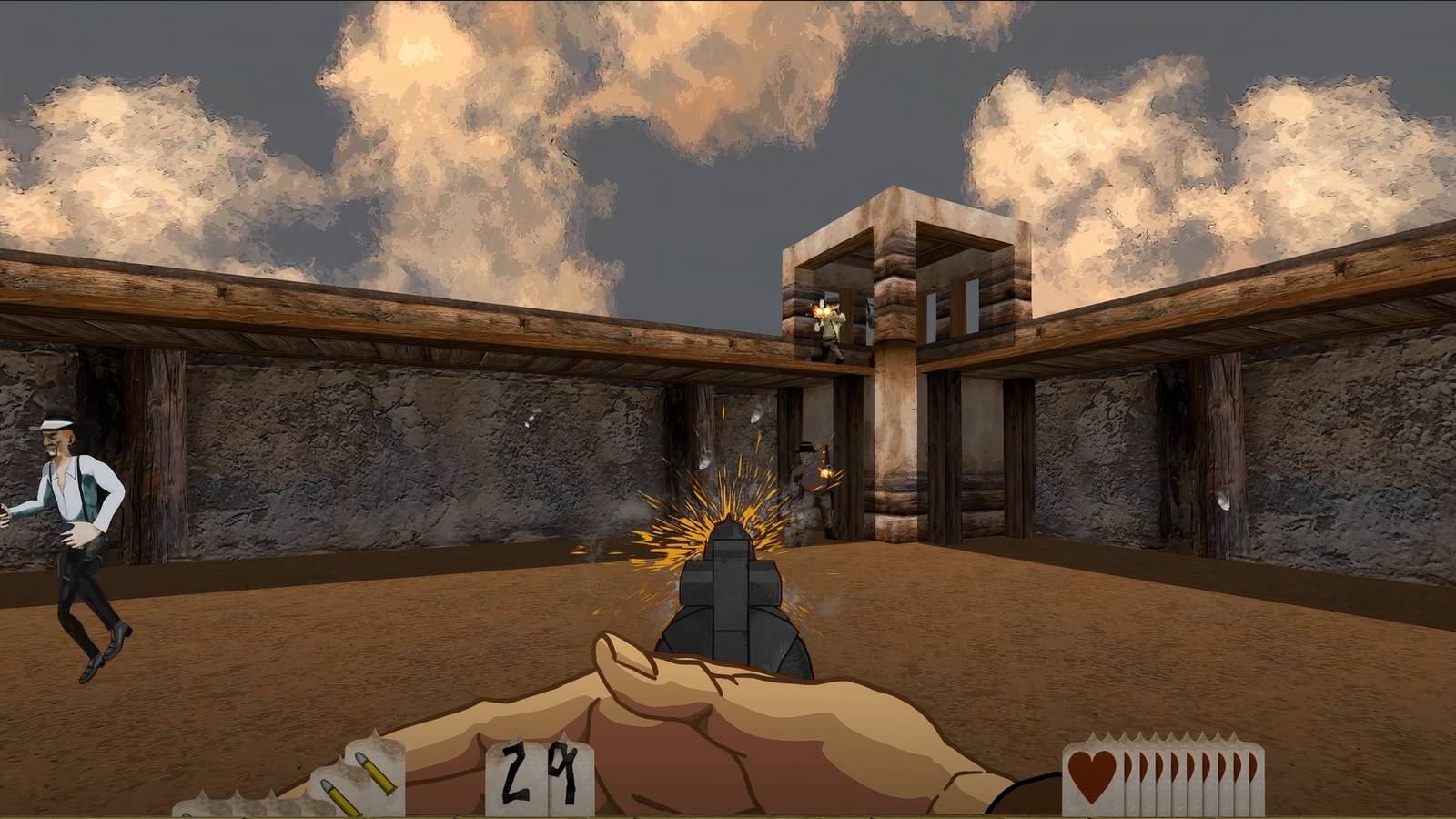
Want proof that LucasArts’ Outlaws gets exactly no love nowadays? Nightdive’s 2025 remaster peaked at 181 players and currently has less than 250 reviews on Steam. It has been out for almost a year and, crucially, is fantastic.
In 1997, the FPS genre was booming like never before, yet games seemed stuck in two modes: sci-fi corridors or demonic labyrinths. Nothing wrong with that, of course, but LucasArts stepped up to demonstrate the value of a change of scenery by going full Wild West, smartly tapping into America’s growing fascination with cowboys and saloons spurred on by movies like Unforgiven and Tombstone.
Following a U.S. Marshal who embarks on a revenge-and-retrieval mission, Outlaws pushed its story to the forefront through fully voiced, hand-drawn cutscenes that made brilliantuse of LucasArts’ animation engine and aped the look of classic Sergio Leone westerns. Narratively, this was as good as the FPS genre got in the -90s; mechanically, Outlaws introduced the first real sniper scope, manual reloading, and complex mission objectives.
Outlaws came out just a few months before GoldenEye 007, which became THE FPS game of 1997. The PC scene was also packed with competition, thanks to Quake 2 and even LucasArts’ own Star Wars Jedi Knight: Dark Forces 2, both of which appeal to a wider audience far more than a western love letter.
Shogo: Mobile Armor Division Is A Near-Perfect Mecha FPS Game
Titanfall Before Titanfall

- Readily available on Steam.
Yeah, I’m going back to Monolith. What can I say? The company made some of the best shooters of all time, as well as some of the most underappreciated.
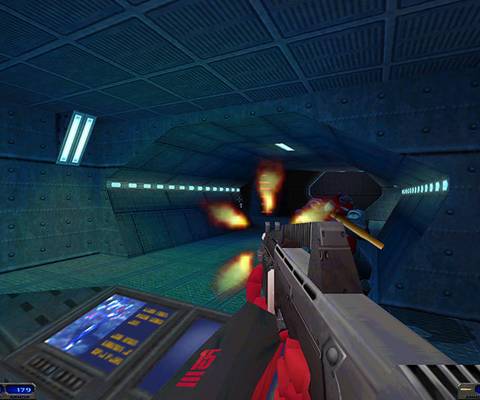
Inspired by mecha anime, Shogo: Mobile Armor Division brought an energy and vibe that were entirely absent from shooters in the ’90s, especially since Japanese FPS games weren’t and still aren’t really a thing. You are Sanjuro Makabe, a Mobile Combat Corps commander who is just as deadly outside a mech as inside it. Bright cityscapes serve as the backdrop for an over-the-top narrative filled with mecha conventions, romantic silliness, and betrayal, and none of that is meant as a negative.
Long before Titanfall, Shogo pulled off the dual-scale shooter loop, where missions switch between on-foot and mech sections, both of which offer unique weapons, pacing, capabilities, and scale. On foot, gunplay feels twitchy but lethal; in a mech, you become a walking powerhouse who can level city sections.
Why isn’t Shogo remembered today? Well, Monolith never returned to this universe, instead refining its ideas and engine in other IPs. Also, Half-Life came out roughly a month after Shogo. That didn’t help.
Tribes: Vengeance Led An Irrational Life
A Classic FPS That Was Left To Rot
-

-

-


- Never sold on digital storefronts. It was available as freeware for a while, but that’s no longer the case.
The Tribes games are relatively well-remembered as early cornerstones of the FPS multiplayer scene, but one entry in the series broke the mold by emphasizing a single-player campaign. Critically, Tribes: Vengeance was developed by Irrational Games, the dev team behind System Shock 2, SWAT 4, and BioShock. Not bad, right?
Tasked with turning a strictly multiplayer franchise into a story-driven sci-fi epic, Irrational put together a campaign that blended nonlinear storytelling, a blood feud, Tribes‘ trademark skiing, and vertical level design to create one of 2004’s most ambitious FPS games. Considering that year gave us Halo 2, Escape from Butcher Bay, Doom 3, Half-Life 2, and Halo 2, I don’t make that statement lightly.
To be honest, it’s not hard to understand why Tribes: Vengeance never became a genre staple like its peers. The Tribes fanbase was entirely built around multiplayer, which definitely took a backseat in this entry. Meanwhile, single-player FPS fans might have skipped the game since it was associated with a PvP franchise. Vivendi Universal also abandoned Vengeance almost immediately.
SiN Was A Groundbreaking FPS That Came Out Just Before An Even More Groundbreaking FPS
A Game That Pushed The Envelope With Mechanics That Would Become Staples
- Readily available on Steam.
Oh, you thought Shogo: Mobile Armor Division had it rough coming out a month before Half-Life? Well, SiN dropped just two weeks before Valve’s genre-shaking masterpiece, dooming itself to a lifetime in the shadows despite garnering an overall positive reception. Nowadays, the game’s Gold edition has fewer than 400 reviews on Steam, compared to Half-Life‘s 60K.
Just to be clear, I’m making this comparison for a reason, as both games tried to do similar things. In fact, you could argue that SiN was more mechanically complex and ambitious than Half-Life, as Ritual Entertainment put in the work to create an interactive sandbox, sort of like an action-focused proto-Deus Ex. The game pioneered computer terminal hacking, location-based hitboxes, and branching paths with legitimate consequences years before they became a staple of immersive sims and stealth-shooter projects.
Reportedly, Activision rushed SiN out the door to avoid competing with Half-Life, which naturally led to a rushed project riddled with technical issues. Instead of beating Valve to the punch, delaying the game until 1999 would have been the better choice.