




Even as the genre continues to shift towards real-time combat, turn-based RPGs retain their presence, thanks to decades of goodwill born from infinite masterpieces. Everybody knows Final Fantasy 7, Dragon Quest 8, and Chrono Trigger, but the same cannot be said for dozens upon dozens of fantastic RPGs that are only remembered by die-hard enthusiasts who grew up during the late 90s and early 2000s.
The indie scene does an admirable job of keeping the flame burning, but the golden era of turn-based RPGs ended a long time ago, and the sheer volume of titles released during that period meant that many were simply overshadowed by the giants. Fortunately, unlike their action counterparts, turn-based combat stands the test of time well, making these forgotten gems far easier to revisit nowadays.
Naturally, some folks remember these RPGs, as they are classics (or cult classics) for a reason. However, they are barely a footnote in the genre’s history, so let’s try to change that.
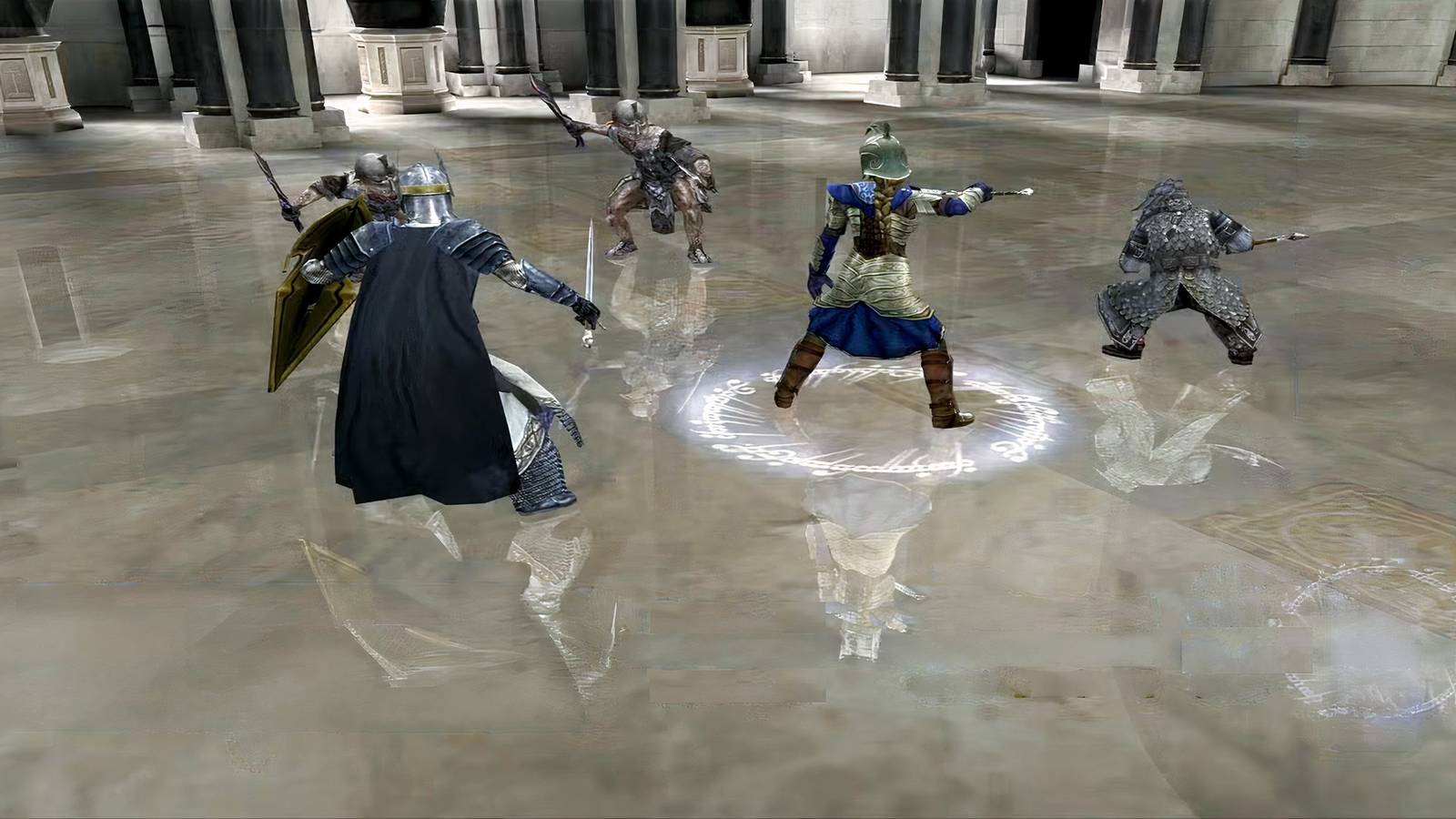
The Lord of the Rings: The Third Age Is EA’s Final Fantasy
A Turn-Based RPG That Pays Respect To Two All-Time Masterpieces
- Only ever released on the PS2, Xbox, and GameCube, with no digital version.
- A blatant copy of Final Fantasy 10, but LOTR Final Fantasy sounds fantastic!
Similar to something like War in the North or Shadow of Mordor, The Lord of the Rings: The Third Age opts to move away from Tolkien’s well-known story and tell an original tale featuring a new set of characters… who happen to be chasing after the Fellowship. Although you essentially act as the main heroes’ clean-up crew, the premise provides an excuse to visit some of the most iconic locations in fantasy while still injecting an element of novelty.
Honestly, none of that matters, as The Third Age‘s selling point is its combat, which is just Final Fantasy 10. Genuinely, I’m not trying to be dismissive, but EA Redwood Shores (aka Visceral Games) pretty much copied that game’s CTB combat system completely. However, as FF10‘s gameplay rocks, The Third Age also plays exceptionally well, and this combat loop feels far fresher in 2026 than it did in 2004. It’s just fun.
Also, you get to replay each chapter from the perspective of Sauron’s forces. Neat stuff.
Shadow Madness Tells A Dark Story With FF7 Gameplay
A Western Turn-Based RPG That Lost Itself In The PS1’s Crowded Scene

- Only ever released on the PS1.
- Takes pretty obvious inspiration from Final Fantasy 7‘s combat, albeit with a few interesting tweaks.
- I promise, this list doesn’t consist solely of Final Fantasy-inspired games!
In the wake of Final Fantasy 7‘s eruption, many RPGs sought to follow in its footsteps, with mixed results and fragile legacies. Shadow Madness kind of fits both outcomes, as Craveyard’s game wasn’t particularly well-received at the time, nor does it regularly come up in discussions nowadays. Despite its combat system taking obvious inspiration from Square’s magnum opus, Shadow Madness brings more than enough creativity to find its own voice.
For one, the battle system blends FF7‘s ATB with real-time prompts akin to Super Mario RPG, focusing specifically on defensive moves. Shadow Madness also took a stab at giving players more control over random encounters by introducing a stealth option that lets you hide with a click of two buttons. Even the playable characters move slightly away from the typical classes found in JRPGs, introducing a bit of a Western twist.
Do you need to go out of your way to play Shadow Madness? I mean, if you love PS1 turn-based RPGs, I would honestly say yes. The story is pretty dark and quite good, arguably among the genre’s better efforts on the console.

Click on the game with the higher OpenCritic rating.
Koudelka Blends Turn-Based Combat With Survival Horror
Before Shadow Hearts, There Was Koudelka
- A precursor to the Shadow Hearts games.
- A rare blend of horror and turn-based combat.
- Not quite Parasite Eve, but very good nonetheless.
Considering the three Shadow Hearts games barely linger in the public consciousness, Koudelka might as well not even exist. While considerably rougher around the edges than its better successors, this PS1 gem still captures that same gothic nightmare atmosphere, which instantly sets it apart from 99.9% of turn-based RPGs in existence.
JRPGs love a good-old “save the world from the big evil” storyline, but Koudelka goes down a different, more intimate route, set entirely in a sprawling monastery filled with secrets, horrors, and occult rituals. You only have three playable characters, but they are all well-written and well-defined, setting the stage for unique dynamics that echo the story’s mature tone. Koudelka is worth playing solely for its writing and atmosphere, but the strange mix of survival horror exploration with tactical turn-based combat is singular enough to justify a playthrough.
Septerra Core Brought PS1 JRPGs To PC
Classic Turn-Based RPGs Weren’t Just On Consoles
- Available on Steam.
- Brought the console JRPG experience to PC.
When we think of “classic turn-based RPGs,” our minds naturally picture a PS1 or SNES, as the genre was very much synonymous with consoles. PC players got a lot of great games during this era, but they rarely got any major releases in this particular category; consequently, Septerra Core tried to fix that in 1999.
An isometric RPG with fairly traditional turn-based combat, this forgotten classic RPG shines in a few areas, starting with its distinctive sci-fi fantasy world. The combination of those opposing genres wasn’t that unusual by 1999, but Septerra Core‘s world was unusual, as it consisted of seven shells/levels orbiting a core. The higher the shell, the more luxury afforded to its citizens, creating an easy-to-understand class system.
The story leans into “end of the world” seriousness, and the unique setting and grimy characters help carry the overly long campaign that threatens to overstay its welcome by the end. Septerra Core backs its writing with ambitious combat that evolves the basic ATB formula through spatial positioning and a multisection action bar that lets players decide whether to strike early for a weak attack or wait for a stronger one.
Anachronox Smashes Turn-Based JRPGs With Sci-Fi Noir Goodness
By The Devs That Gave You Deus Ex… And Daikatana
- Available on Steam.
- A one-of-a-kind turn-based RPG drenched in humor.
Ion Storm had such a weird existence. In 2000, the developer released an all-time masterpiece in Deus Ex and an all-time flop in Daikatana, two projects that overshadowed everything else it accomplished. A year later, Ion Storm dropped Anachronox, a game that kind of feels like a combination of its more well-known predecessors.
On the one hand, the RPG felt outdated thanks to using the Quake 2 engine; conversely, it was incredibly ambitious and, for the most part, succeeded in realizing that potential. Don’t get me wrong, not everything works, but Anachronox delivered an impressive space station setting, a noir-themed narrative that leaned into satire, and a true party of charming rogues. Even more than 25 years later, the environments still look pretty great.
Unlike the isometric angles that dominated most early turn-based RPGs, Anachronox opted for a cinematic 3D presentation, serving as a precursor to the genre’s direction during the PS2 and PS3 eras. The combat system gives a sci-fi spin to traditional concepts like magic, all the while giving each character unique skills that can also be used outside of battles.
Anachronox can be a bit difficult to fully appreciate nowadays, as the mechanics haven’t aged that well. However, the story and presentation are still top-notch.