

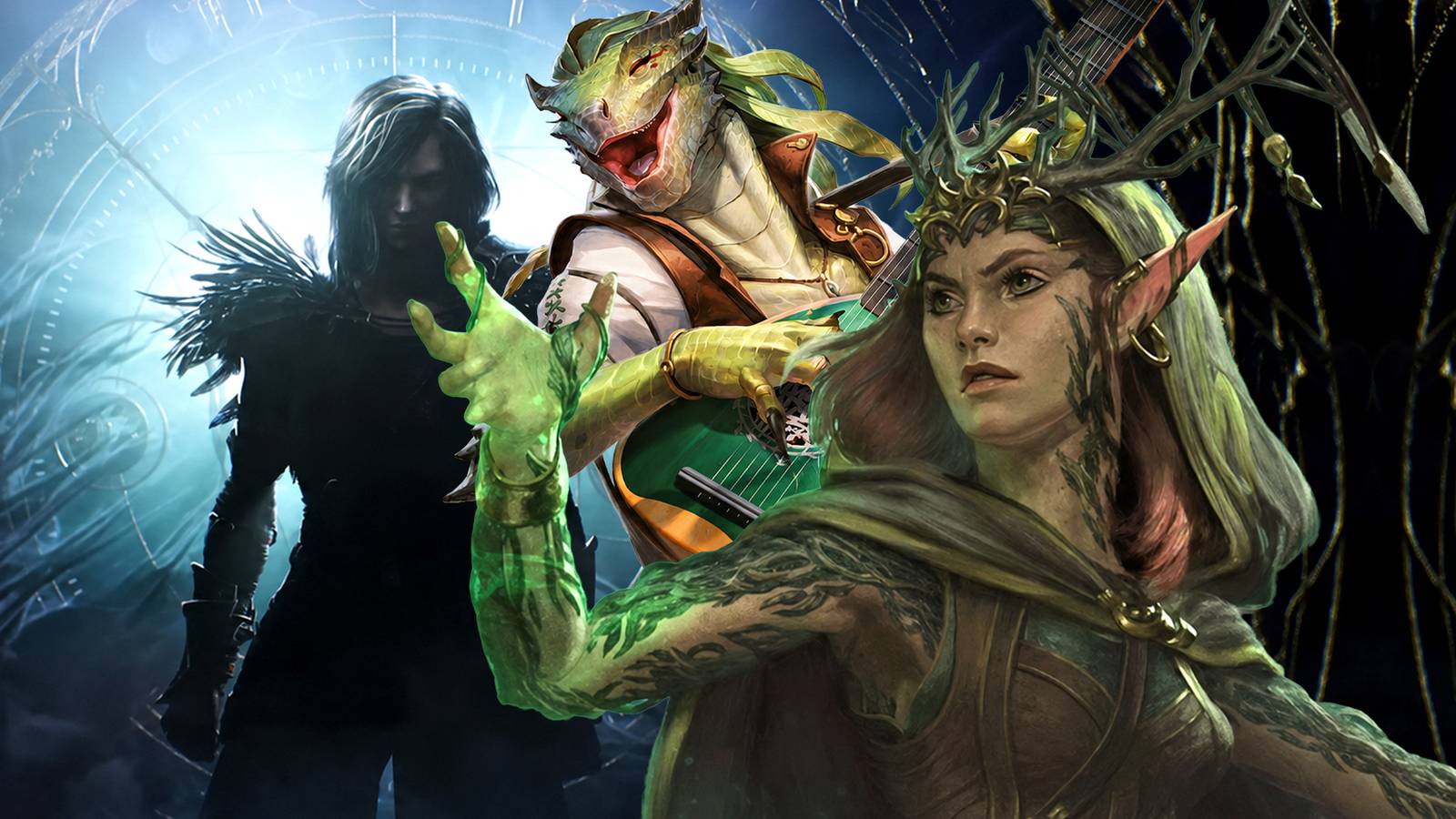
There is a lot about Warlock: Dungeons & Dragons that has me interested, but one of the biggest things is how Invoke Studios seems to be building the game entirely around what its protagonist actually is in the Dungeons & Dragons universe. Kaatri’s magic isn’t simply there for combat purposes, but, from what has been shown so far, her abilities also affect how she moves through the world and how she deals with obstacles that would otherwise stop her from progressing. That alone makes Warlock feel very different from the usual Dungeons & Dragons game where your class mostly determines how you fight.
But the more I think about it, the more I want to see D&D keep going in this direction. There are already plenty of games where I can pick a class at the beginning and then spend the next several dozen hours playing some variation of a traditional RPG, and even games like Baldur’s Gate 3 have classes that are directly inspired by D&D. What Warlock appears to be doing instead is asking what an entire game would look like if one class was allowed to influence nearly everything about it. Not every D&D class needs that treatment, but there is certainly a handful that could probably have their own dedicated game just as easily.
The 2024 Dungeons & Dragons Player’s Handbook includes 12 core classes, with Warlock being one of them. That leaves 11 others that could theoretically get the same treatment, but these five stand out to me as the ones with enough unique mechanics to support an entire game of their own.
Bard
A Bard Game Could Make Talking Just as Important as Fighting
- A choice-heavy RPG where conversation and performance matter as much as combat.
- Social skills and Bardic Inspiration could open solutions that other classes would never have.
Bard is probably the least obvious choice here, mostly because I think video games have diminished the class to playing a music-based support role. In D&D, though, Bards are built around considerably more than playing songs during combat. Their magic comes through performance, Bardic Inspiration allows them to improve another character’s chances of success, and Expertise lets them become especially good at certain skills. By level 10, Magical Secrets even gives them access to spells from other class lists, which only makes them a more flexible class as they progress.

Put the consoles in the correct order.
But that flexibility is why I think a Bard game could work really well, so long as said game’s developer resisted the temptation to make combat the answer to nearly every problem. If the whole point is that the protagonist is a Bard, then conversation could be just as much a solution to problems as combat does, and that’s something plenty of modern RPGs have already done. Mechanics like persuasion already exist in other games, of course, but most of the time it amounts to picking a special dialogue option and hoping the skill check passes. A game explicitly designed for a Bard, however, could make those situations much more involved by forcing the player to figure out how to get people on their side in the first place.
That could also make Bard one of the more difficult classes here to adapt properly, because a game like this would need characters worth talking to and situations where avoiding a fight feels just as satisfying as winning one. Still, I think that’s exactly why it belongs on the list. I have played plenty of RPGs where a Bard is useful, but I can’t think of many where being a Bard feels like the entire reason the game works the way it does.
Paladin
A Paladin’s Oath Could Influence More Than Just the Story

- A third-person action RPG built around heavy melee combat and Divine Smite.
- The protagonist’s sacred oath could shape major choices and create consequences when those ideals are tested.
Paladin seems considerably easier to picture because so much of the class already fits into the kind of fantasy action RPG we’ve seen countless times before. Paladins can wear heavy armor and use martial weapons, while Divine Smite gives them a way to turn an ordinary hit into something much more powerful. They can also heal through Lay on Hands, so there’s already enough here to make the combat side of a Paladin game feel fairly straightforward—so much so that most D&D fans probably expected Paladin to make this list.
What interests me more, though, is the sacred oath, because that’s where a Paladin game could be more than just another action RPG where the protagonist can do holy magic. A Paladin’s subclass is tied directly to an oath, and those oaths come with actual principles the character is expected to follow. The Oath of Devotion, for example, is built around ideals like protecting others and keeping one’s word. D&D even accounts for what can happen when a Paladin violates those promises, which makes the oath feel like more than flavor text attached to the class.
So, needless to say, a game built around that idea could make choices much more interesting than the usual good-versus-evil split. If the protagonist has sworn to live by a particular code, the most difficult decisions should be the ones where following one part of that code makes another situation worse. Keeping a promise might come at someone else’s expense. Doing what is honorable might be considerably harder than taking the easy way out. The combat would still be a big focal point of the whole experience, obviously, but I think the oath is what would ultimately justify giving Paladin an entire game instead of simply making it another class option in an RPG.
Monk
Monk Already Has the Foundation for a Great Action Game

- A fast, skill-based action game centered on martial arts and mobility.
- Focus Points and Deflect Attacks could support a combat system built around timing and technique rather than loot.
Monk is probably the easiest class on this list to imagine as an action game similar to something like Black Myth: Wukong because most of its abilities already sound like classic video game mechanics. Monks use Focus Points for abilities like Flurry of Blows, while Step of the Wind improves their mobility and Deflect Attacks lets them reduce incoming damage. Their movement also continues improving as they level, eventually allowing them to run across vertical surfaces and liquids during their turn.

Guess the games from the emojis.
Guess the games from the emojis.
Easy (120s)Medium (90s)Hard (60s)
Even without changing much, there’s already a pretty clear combat system sitting underneath all of that. Focus Points would naturally stop the player from using the strongest techniques constantly, while Deflect Attacks could reward precise timing instead of simply encouraging the player to absorb damage. The movement side of the class might be even more important, because a Monk shouldn’t feel like another melee character who just happens to have a unique weapon set.
Progression could also feel quite a bit different from what we usually get from RPGs. A Monk doesn’t really need a ton of new weapons to make it feel like you’re actually getting somewhere, so the character themselves could become the focus of that progression. New techniques could change how fights play out, while improved movement could make areas that once felt awkward much easier to navigate later on. The class already has enough going on that a developer wouldn’t need to invent much to make the basic idea work. It would mostly just come down to whether the combat could actually make all of that movement and timing feel as good as it sounds.
Rogue
Rogue Deserves More Than Another Stealth Skill Tree

- A D&D immersive sim where stealth and infiltration are the foundation of the game.
- Missions could reward finding your own way through locations instead of funneling you toward combat.
Rogue obviously lends itself to stealth, but I think simply making another stealth-heavy RPG would be selling the class short. Rogues are built around being good at getting into situations where they probably shouldn’t be, and that could translate especially well into something closer to an immersive sim than a traditional open-world RPG.
Cunning Action is a big part of why I think that could work. It lets Rogues Hide, Dash, or Disengage more easily, which means the class is already designed around moving in and out of danger instead of standing in one place trading attacks. Cunning Strike later gives them more control over what happens when they land a Sneak Attack, so even combat doesn’t necessarily have to become a matter of dealing as much damage as possible before the enemy does the same.
But I think the real appeal would be everything that happens ahead of combat. A Rogue game should make me think about how I’m getting into a place and whether I even need to confront anyone once I’m there. If I get caught, that shouldn’t automatically mean the game turns into a normal action RPG until everyone around me is dead. Getting spotted could simply create another problem to solve, which is where the class would start feeling genuinely different from the way Rogues are usually handled in larger RPGs.
Thieves’ Cant could even matter here in a way it rarely gets the chance to in video games. If the protagonist can understand coded messages and criminal slang that other characters cannot, that gives a developer another way to hide information in plain sight. The more I think about it, the less interested I am in a Rogue RPG where stealth is simply one system among many. I want the entire game to feel like it was designed for someone who is always looking for a way around whatever is standing directly in front of them.
Druid
Wild Shape Could Change How an Entire D&D Game Works

- An exploration-heavy action RPG where Wild Shape affects much more than fighting.
- New Beast forms could open up previously inaccessible parts of the world as you progress.
Dungeons & Dragons‘ Druid is probably the easiest addition to this list for me because Wild Shape already feels like something an entire game could revolve around. Druids gain the ability to transform into Beast forms fairly early, and those options become more useful as they progress. Eventually, they can even gain access to flying forms, which is where I think the idea starts becoming especially interesting outside combat.
Wild Shape would obviously be useful in a fight, but limiting it to that would probably be the least interesting way to handle it. A Druid game could use those forms to change how the player moves through the world instead. Something that looks inaccessible early on might become reachable later once the right form is available, and that would give progression an effect the player can actually see rather than simply increasing a number somewhere in a menu.
The class has even more potential because Wild Shape isn’t all Druids can do. They are also full spellcasters whose magic is closely tied to nature, which gives a developer another way to make the world respond to what the protagonist is capable of. Warlock already appears to be doing something similar by making Kaatri’s magic useful for more than combat, and I think Druid could take that same idea considerably further because the class has such a natural connection to the environment around it.
Of all the classes here, Druid is the one where I can most easily imagine the game being designed around the class from the beginning rather than having its abilities added afterward. Wild Shape could affect where you can go and how you get there, while Druid magic could make the environment itself more important than it usually is in an RPG. If Warlock ends up proving that D&D games can work when one class gets the entire spotlight, Druid feels like the class with the most to gain from being next.

- Released
-
2027
- Developer(s)
-
Invoke Studios
- Publisher(s)
-
Wizards of the Coast
- Franchise
-
Dungeons & Dragons