



Fun open-world games aren’t hard to come by, but most tend to fall within the respectable B+ tier. Perfectly fine releases that keep you entertained for a good while but might not linger in the mind indefinitely. Well, let’s change that, at least for a couple of forgotten open-world games that deserve to sit at the absolute peak of the genre. We ain’t talking about GTA or The Witcher 3 here.
What makes an S-Tier game? I’d say the main requirement is to deliver a well-defined, realized identity, along with a few staples like stellar exploration and sensible world design. A game doesn’t need to be superb at everything, but rather at what it is trying to be. Unfortunately, many factors conspire to determine whether a project hits or flops, and these open-world games just didn’t have the right marketing or launch timing to firmly write their names into history.
Prototype Is The Best Open-World Power Fantasy Of All Time
An S-Tier Rampage
- You become an OP monster who turns Manhattan into his personal stomping ground.
- Does Prototype hold up? Yes. Don’t get me wrong, it very much looks like a 2009 PS3 title, but the gameplay will be eternally satisfying.
Starting with a favorite of mine, Prototype is the perfect game to throw on when you want to cut loose. During the 2000s, developers fell in love with the idea of wanton destruction in a sandbox, producing cult classics like Mercenaries: Playground of Destruction, Red Faction: Guerrilla, and The Incredible Hulk: Ultimate Destruction. Prototype represents the pinnacle of its era of open-world games because it lets you fully embrace your inner hurricane.
Manhattan is not remotely prepared for Alex Mercer, a normal dude forced into becoming a biological weapon who eventually evolves into a natural disaster-level threat. Whether leaping a mile into the air, smashing up buildings like a mix of Spider-Man and the Hulk, or shape-shifting his arms into weapons like Venom, Mercer feels unstoppable while still requiring enough skill to actually be unstoppable.
Prototype had the misfortune of coming out just 2 weeks after Infamous, another power-fantasy open-world game by a more well-known developer. Consequently, it immediately entered an uphill battle for attention, despite arguably surpassing Sucker Punch’s game in many ways.
Fuel’s Scale Is Still Mind-Blowing
S-Tier Ambition
- A record-breaking post-apocalyptic world
- Does Fuel hold up? Yes, although its ambition and size are double-edged swords at this point. The barren world is impressive but also a bit too empty.
In 2026, Fuel still technically holds the record for the largest map in an open-world racer, an incredibly impressive feat considering we are talking about a 17-year-old game. Now, I use the word “technically” because Asobo Studio used a few tricks to make the 5,560+ square miles tangible, including procedural generation to render things like vistas and sandstorms. Most of the world is quite empty, which is explained in-universe by a post-apocalyptic setting caused by global warming.
While surpassed by more modern racing games, Fuel is still a technical marvel and one of the most atmospheric releases in its genre, along with being the closest thing we will ever get to a Mad Max racer. Asobo would go on to support Ubisoft in the creation of the first two The Crew games, and you can definitely see Fuel‘s influence on both of them.
Fuel was delisted from Steam in 2013, just 4 years after its debut, and the Xbox 360 version followed a few years later. Physical copies aren’t impossible to find, but the game’s limited availability really hurts its legacy.
The Getaway Embraced Immersion Before Any Other Open-World Game
An S-Tier London Crime Story

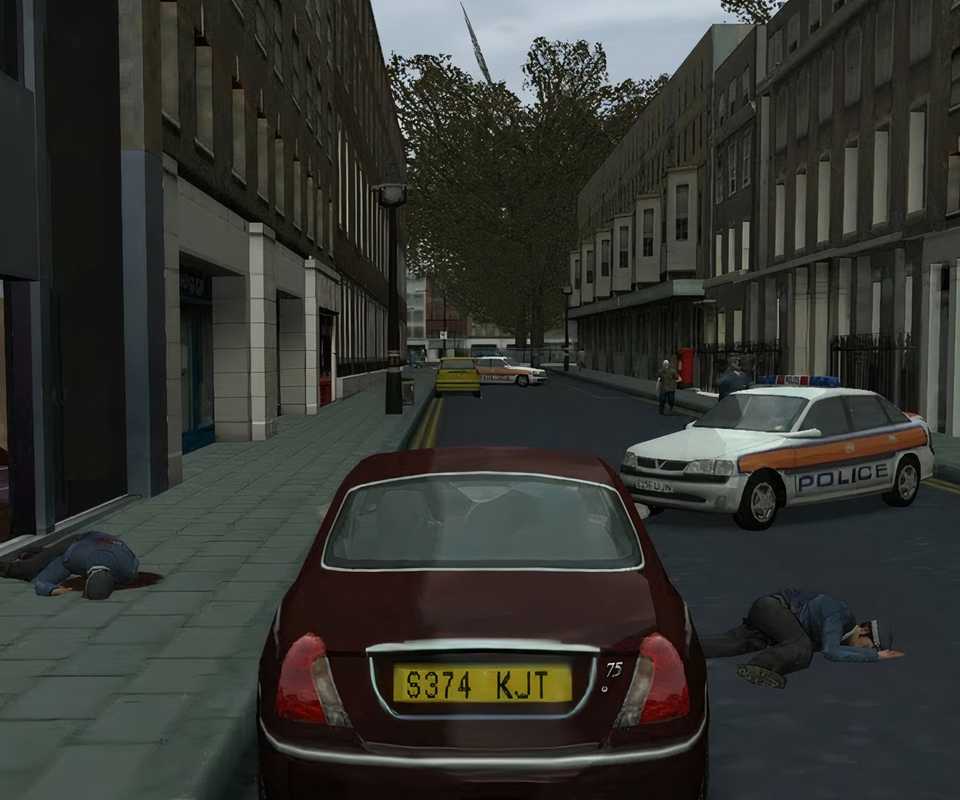
- London in all of its Guy Ritchie glory.
- Does The Getaway hold up? Even now, The Getaway still feels surprisingly unique, and its story and presentation have aged like fine wine. The gameplay is more of an acquired taste, but it is still playable.
Grand Theft Auto 3 wrote the blueprint for arcade-style open-world games, which was quickly refined by Vice City and San Andreas. While Rockstar would eventually lean into realism, The Getaway was the first game to prioritize it, giving rise to a style of open-world design that would be perfected by the likes of Kingdom Come: Deliverance and Ghost of Tsushima.
Creating an authentic recreation of London that is still jaw-dropping, Team Soho dropped the HUD in favor of a cinematic presentation that used visual cues to give players all the information they might need. Although you can explore London freely after completing the main story, The Getaway is a linear open-world game that cuts away most of the genre’s fluff, allowing for a tight and well-paced journey.
The Getaway was labeled as a GTA clone at the time, which made absolutely no sense. It was the antithesis of Rockstar’s franchise.
The Getaway came out just a few months after Vice City, which should have been a death sentence. However, the game was so good and unique that it was still a success; only to then waste this momentum with one of the most disappointing sequels from this era.
Gun Was Red Dead Redemption Before Red Dead Redemption
An S-Tier Open-World Western
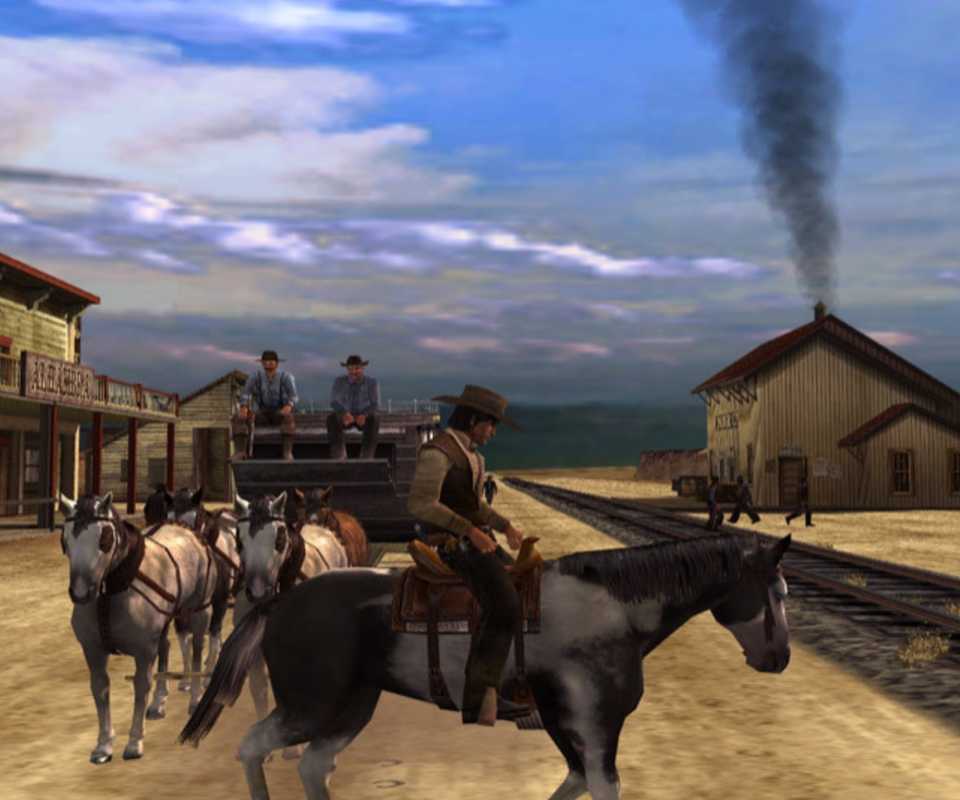
- The first open-world western masterpiece.
- Does Gun hold up? Yes!
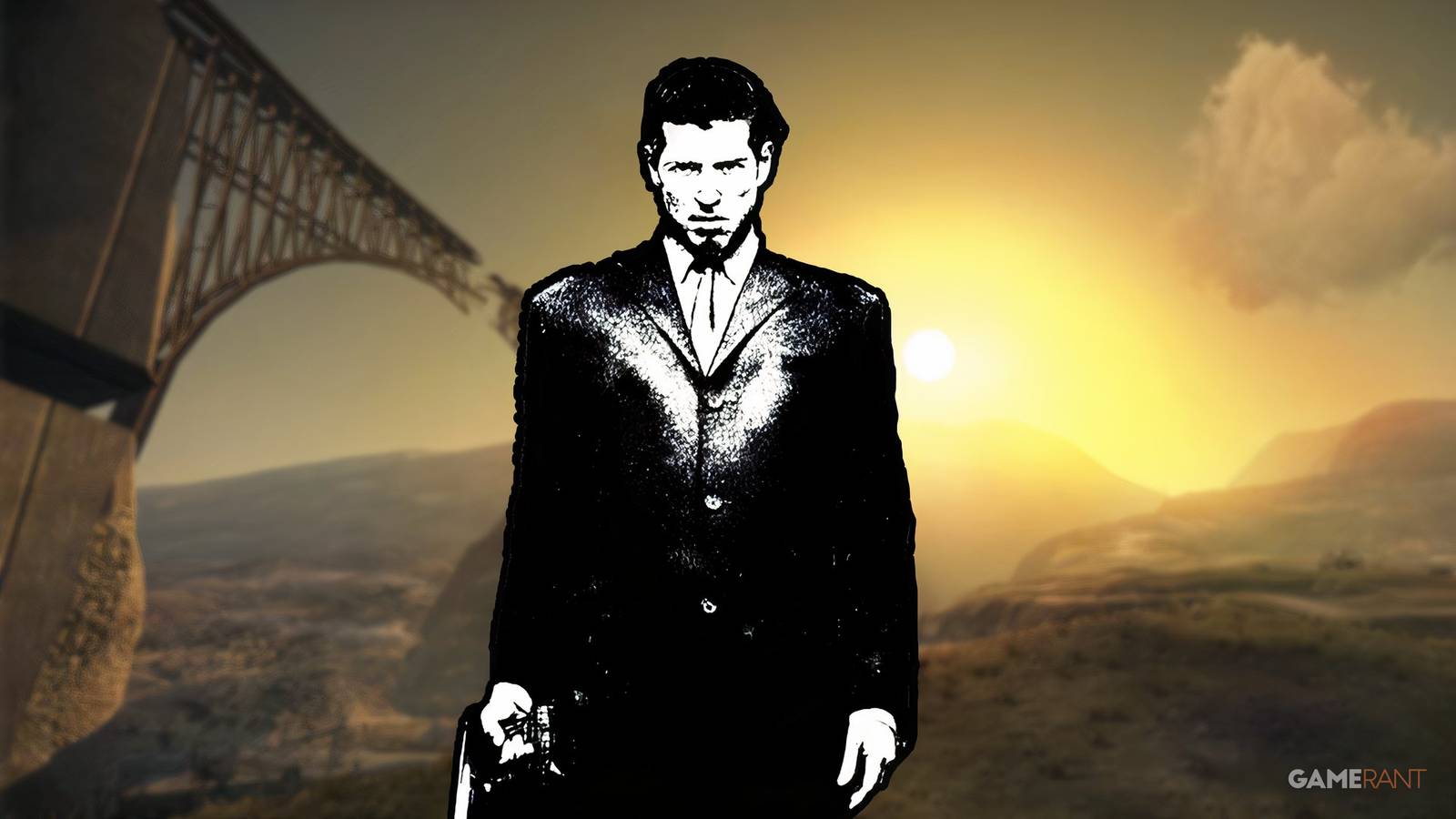
Forget Red Dead Revolver, Gun was the true precursor to Red Dead Redemption, and it has stood the test of time far better than Rockstar’s PS2 western. Neversoft released a hyper-violent tribute to Spaghetti Westerns that told a fantastic, gritty story elevated by Hollywood-level writing and an A-List cast. The gunplay continues to be a blast more than two decades later, and it even features a quick-draw slowdown mechanic closer in execution to RDR‘s Dead Eye than the version found in Red Dead Revolver.
Although the map is fairly small by modern standards, Gun features three well-defined areas that connect seamlessly, ensuring very little empty space or wasted time between missions. The campaign isn’t long by any stretch of the imagination, but it is average length for its era, and you can extend it through a few side activities and mini-games. Also, a great 10 hours is always superior to a decent 20 hours.
Naruto: The Broken Bond Is The GOAT Anime Open-World Game
An S-Tier Adaptation
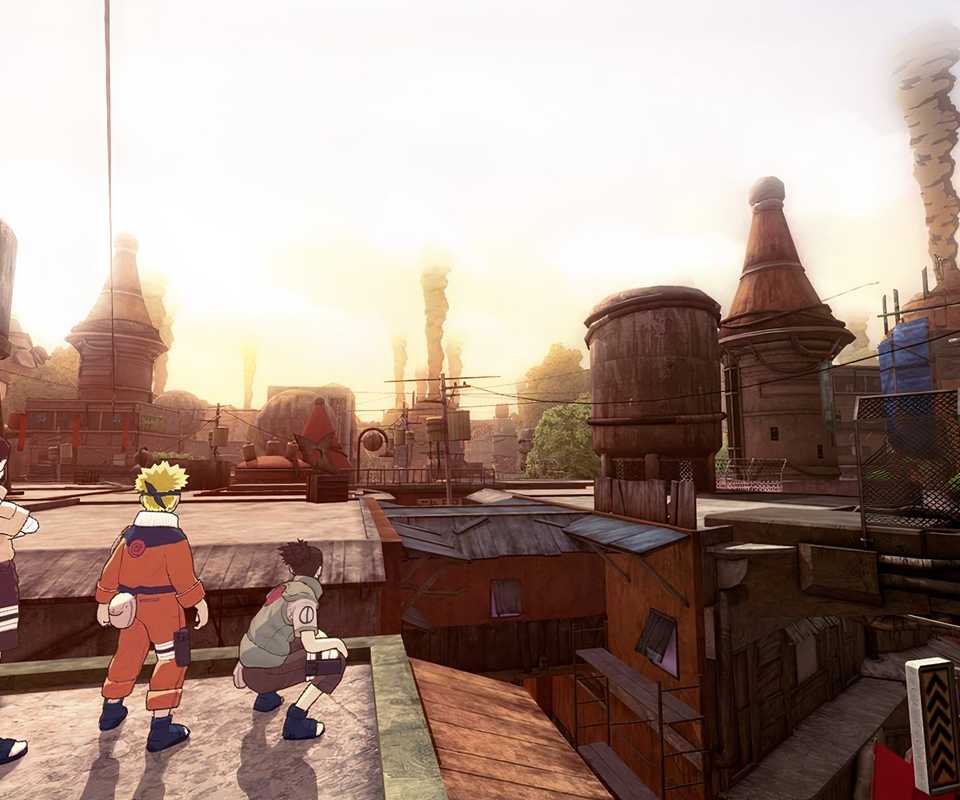
- The most complete Hidden Leaf Village in gaming.
- Does Naruto: The Broken Bond hold up? Absolutely!
Once upon a time, Bandai Namco didn’t own every single shonen anime license, and we occasionally got games by the likes of Ubisoft. Yes, history’s most polarizing publisher released two Naruto titles on the Xbox 360, both of which predictably introduced an open-world concept. They are also incredible, comfortably ranking among Naruto‘s crowning achievements.
While Konohagakure serves as the spectacular main hub, Naruto: The Broken Bond‘s cel-shaded world extends beyond the Hidden Leaf Village, featuring locations like Tanzaku Town and even the Land of Tea. The game recreates these settings with incredible accuracy and designs them around taking advantage of traversal mechanics that highlight different tools and character-specific jutsu. They feel like expansive puzzle-platforming stages rather than just backdrops.
The combat system switches to a 2.5D perspective and plays like a basic fighting game, which isn’t a bad thing by any stretch of the imagination.