




Before the genre’s fundamentals were codified in the early 2000s, FPS games went through their Wild West phase, as developers searched high and low for that elusive control scheme that would unlock shooters. This period produced plenty of fantastic and experimental releases, quite a few of which have aged like milk in the hot summer sun. Don’t get me wrong, these classics should still be hailed as masterpieces, but revisiting them nowadays tends to be an exercise in frustration.
Time is a cruel mistress, and it’s not fair to hold a 1998 or 2002 game by the standards of the mid-2020s. We just live in a different time, with different technology and knowledge. However, that doesn’t mean all that much when you’re trying to walk and aim with the D-pad and fire with the circle button. Also, I’m not going to pick solely on console shooters, as a few legendary PC FPS games have suffered the same fate.
In the name of variety, I’m going to try to cover different types of “unplayable,” as it wouldn’t be interesting if this whole article just consisted of classics like GoldenEye 007, Turok, and Perfect Dark. These games have a specific reason they might feel unplayable to some players; however, these are still masterpieces, so they have enough positives to warrant pushing through regardless
I’m also talking about playing these games in their original form, so not with a bunch of mods or emulator workarounds.
5
Special Mention: Killzone 2 Is Brilliant, If You Can Get Past The Input Lag
We Really Need A Remaster Of The Killzone Trilogy
- Input lag, as a feature. You can adjust to it, but it really depends on your tolerance.
- The PS3 is getting old, and its exclusives are becoming just a bit harder to play each year.
- This one is a special mention, because Killzone 2 is otherwise perfectly playable (and still great).
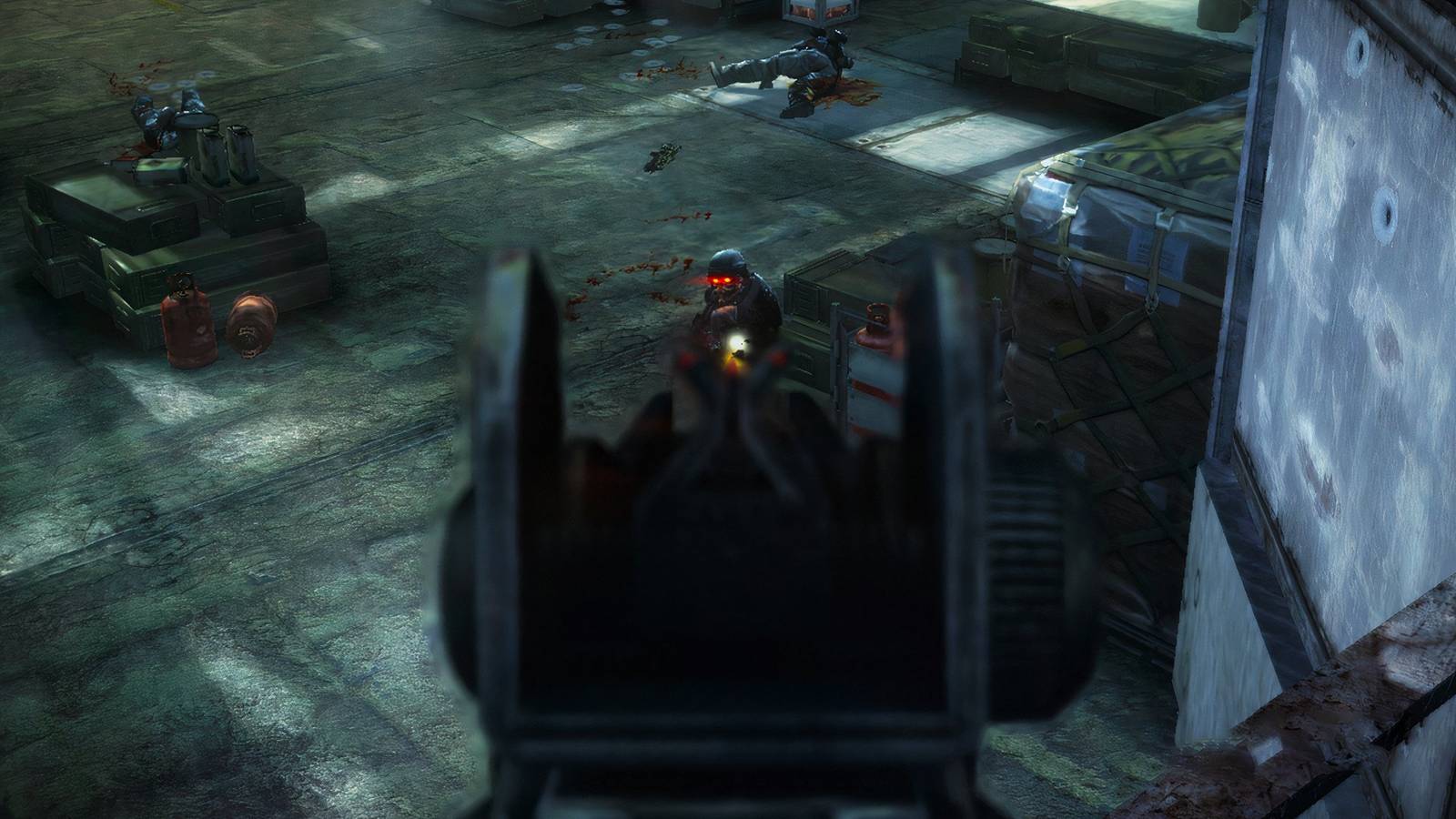
Let’s start with the most recent and, honestly, unusual pick. Killzone 2 dropped a long time after Halo had let everybody know how to make a modern shooter work on consoles (even if it wasn’t the first one to implement dual-analog controls). Killzone 2 controls mostly the way you would expect from an FPS game from 2009, except for the fact that you have to click the R3 button to look down iron sights, while simultaneously aiming using the same stick. Also, Killzone 2 has another polarizing feature: Input lag.
The game takes way too long (by FPS standards) to read your inputs, making the whole experience feel a bit too sluggish. Guerrilla Games added input lag as a desired feature to inject an element of military realism by making weapon handling feel heavy. I mean, it kind of works, but it mostly feels like you are streaming the game rather than playing it directly. Combined with the PS3’s own bottlenecks, Killzone 2 could easily need about 150 milliseconds to read inputs, which can make micro-adjustments much harder.
I know 150 milliseconds doesn’t sound like a lot, but you notice it pretty much immediately.
I will say, you get used to this input delay after a couple of hours, and the campaign is still a wildly impressive technical achievement in nearly every other area. It’s just that input lag is a high wall to scale in 2026. With the game not being available on modern systems and incorporating gimmicks like Sixaxis motion controls, Killzone 2 gets more unplayable with each passing year.
4
Medal of Honor Was Almost Ahead Of The Curve, But It Picked Wrong
An Industry-Defining Military FPS Game That Should Stay In 1999
- Groundbreaking game that almost had groundbreaking controls.
- Unfortunately, it picked a scheme that is very PS1-era.
Look, 1999 was just a different time, and console shooters were mostly shooting in the dark. Yes, Rare’s GoldenEye 007 had proven that FPS games could work with a gamepad, but the industry still had a way to go before recognizing the magic of dual-analogs and shoulder buttons. Medal of Honor is, ultimately, a product of its time, and it’s rightfully regarded as a landmark release for the genre.
Moving away from the arena shooter styling of Doom, DreamWorks Interactive put together a cinematic war epic that strove for historical authenticity, almost like a video game version of Saving Private Ryan. The franchise’s early 2000s releases like Frontline have aged OK, but the original masterpiece very much plays and feels like a 1999 PS1 shooter that dropped during the pre-standardized controls era.
The default controls use the D-pad or left analog stick to go forward and backward, but the right and left inputs only turn you in that direction. L1/R1 are used to strafe, and aiming requires clicking the R2 button, which grounds you to your current spot. Yeah, it just doesn’t feel good and forces you to waste time in the middle of gunfights against aggressive enemies who rarely miss.
To DreamWorks’ credit, the developer included a controller Profile option that predicted the genre’s future controls, with the left analog stick being for movement and the right for aiming. However, the campaign was designed around the default controls, so switching to this profile still doesn’t help that much.
3
Descent Is A Disorienting Masterpiece
The FPS Game That Went Full 3D
-

-

-


- You might be able to find some workarounds on modern ports, but the original controls are unintuitive as heck.
- This is a surprisingly fast-paced shooter, as well.
OK, let’s get to a really unplayable FPS masterpiece now. With enough perseverance, you can push through a couple of Killzone 2 and Medal of Honor missions, even if you eventually decide to move on. I just cannot say the same for Parallax’s Descent, an ambitious-as-heck MS-DOS game that moved the genre into 3D, stepping away from Doom‘s 2.5D flat surfaces. The technology was amazing for 1995, and it was successful enough to spawn a couple of sequels (that also aged poorly).
There is such a thing as too much freedom, and Descent‘s decision to give you near-unrestricted movement makes it very difficult to maintain a sense of direction. You can fly, rise up or lower down, barrel roll, remain upside down, and strafe, all the while trying to survive in a fast-paced environment with punishing enemies. You have three axes of rotation, all of which are independent but also operate simultaneously; it’s a lot and, honestly, kind of exhausting.
With a flight stick, you might enjoy this one.
2
Deus Ex Is Basically Unplayable Without Mods (As An FPS Game)
Still An Awesome Immersive Sim, Though

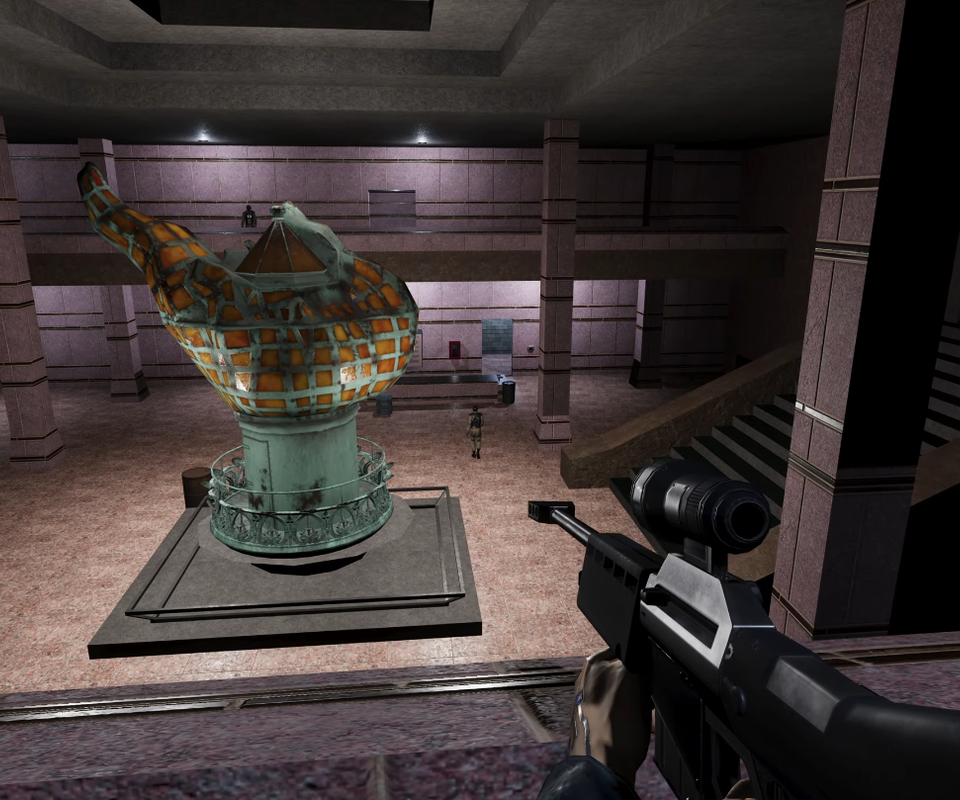
- It looks like an FPS, plays like an FPS, but doesn’t work like an FPS.
Deus Ex is one of the greatest PC games of all time, and I don’t mean just in the shooter genre. Ion Storm perfected the immersive sim concept, and the game’s player agency, environmental storytelling, and reactive world have stood the test of time. If you approach Deus Ex solely as an immersive sim, you will likely have a good time. However, as an FPS game, this 2000 masterpiece is more or less unplayable in its original form.
Despite looking like a traditional FPS game, Deus Ex is really a first-person RPG, and your success with a gun depends on whether you invest heavily in your character’s firearm skills. If you don’t, you could aim perfectly at an enemy’s head and still miss by a mile, creating a real disconnect between your performance and the outcome. Whether you land a hit largely comes down to an RNG dice roll, and you need to wait multiple seconds just to pinpoint the gun’s crosshair in a way that is remotely useful.
If somebody makes it to the endgame, they become powerful enough to steamroll most encounters, but that requires significant hours and, crucially, pre-existing knowledge of what you should and should not do. (Basically, don’t invest in the Swimming skill). Also, Deus Ex‘s graphics aren’t great, and the voice acting isn’t particularly good, either.
Don’t get me wrong, you should still play Deus Ex, but consider downloading some mods like GMDX.
1
Tom Clancy’s Rainbow Six Created Tactical FPS Game
And You Don’t Need To Ever Play It
-

-

-

- The single-player campaign is slow, repetitive, and difficult in an archaic way.
Since nearly the genre’s dawn, a visible gun has been a requirement of FPS games, so Tom Clancy’s Rainbow Six‘s decision to go against the grain and not include weapon models was strange, even in 1998. Red Storm seemed to recognize this might have been a mistake since Rebellion Developments’ PS1 port features models, but that version is far worse than the PC original or N64 release.
Red Storm basically created the tactical shooter genre with this masterpiece, but this achievement came with steep growing pains, most of which were ironed out by the franchise’s subsequent releases. While some fun can still be had in multiplayer, Rainbow Six‘s single-player campaign is largely unplayable nowadays, on PC and especially on consoles. On PC, you spend more time looking at 2D blueprints and planning out operations than actually taking part in them, making you feel like an administrator rather than an operative.