






JRPGs come in many, many shapes, sizes, and systems, and that is what makes the genre so great. With major turn-based releases becoming a bit less common, action JRPGs have become the standard over the last decade, a growth built on old and new games that expanded the scope of combat or exploration to give players more freedom to do their own thing.
Still, for the most part, JRPGs tend to be linear experiences, and there is absolutely nothing wrong with that. However, a few games attempt to go in the opposite direction by letting you do what you want in an expansive world; alternatively, some titles deliver freedom in their character customization and battle systems. Let’s highlight a few examples of both types of action JRPGs.
6
Dragon’s Dogma 2
An Action RPG With Incredible Combat Built Around A Versatile Class System
If there was ever an ARPG from Japan that could be likened to Bethesda’s Skyrim, Dragon’s Dogma and its sequel would be the games. In the name of hunting an elusive dragon, the christened “Arisen” will trek through deep and dark organic locales, slaying monsters, managing quests, and gathering goodies amidst strife and warfare between rival kingdoms.
7 Of The Most Difficult Open-World RPGs By Japanese Developers
While not impossible to beat, these RPGs are some of the hardest games in their genre. The fact that they’re open-world just amplifies the difficulty
Utilizing branching classes called Vocations, players will gain more power and versatility as they progress, with the help of two unique “Pawns” that aid in chaotic battles. Even if you had to stick to just one class, you would still be able to craft a pretty wide range of builds, particularly once you gain access to Advanced Vocations. However, Dragon’s Dogma 2 lets players swap classes at either an Inn or the Vocation Guild, which is incredibly freeing. Also, this applies to your Main Pawn as well.
Dragon’s Dogma 2 is not a conventional JRPG, but it shares enough elements to warrant at least a mention. We also don’t want to include too many borderline JRPGs, so just think of DD2 as a representative for action RPGs like Elden Ring and Monster Hunter.
5
Star Ocean: Till The End Of Time (Director’s Cut)
Much To Manage And Overcome In This Sci-Fi Epic
Tri-Ace’s Star Ocean series was truly ahead of its time, quietly building a cult following in the 90s thanks to its nuanced system of branching storylines through in-game actions and character choices. While this fantasy thriller has seen several entries to its name in the decades to follow, many point to Till the End of Time as the culmination of this shining star.
Featuring a multi-layered combat system that fuses tactics with chaotic action, which forces synchronicity and requires managing many aspects, the game keeps things interesting within its battle arenas and across the vibrant Star Wars-esque sci-fi worlds beyond. While not too newbie-friendly even after the more refined Director’s Cut, this Star Ocean rendition greatly rewards players willing to navigate its many moving parts. The combat would be enough to qualify Star Ocean: Till The End Of Time for this topic, but the item Synthesis system is also incredibly deep and flexible, as is everything surrounding it.
4
Stranger of Paradise: Final Fantasy Origin
The Most Flexible Job System In Any Final Fantasy Game
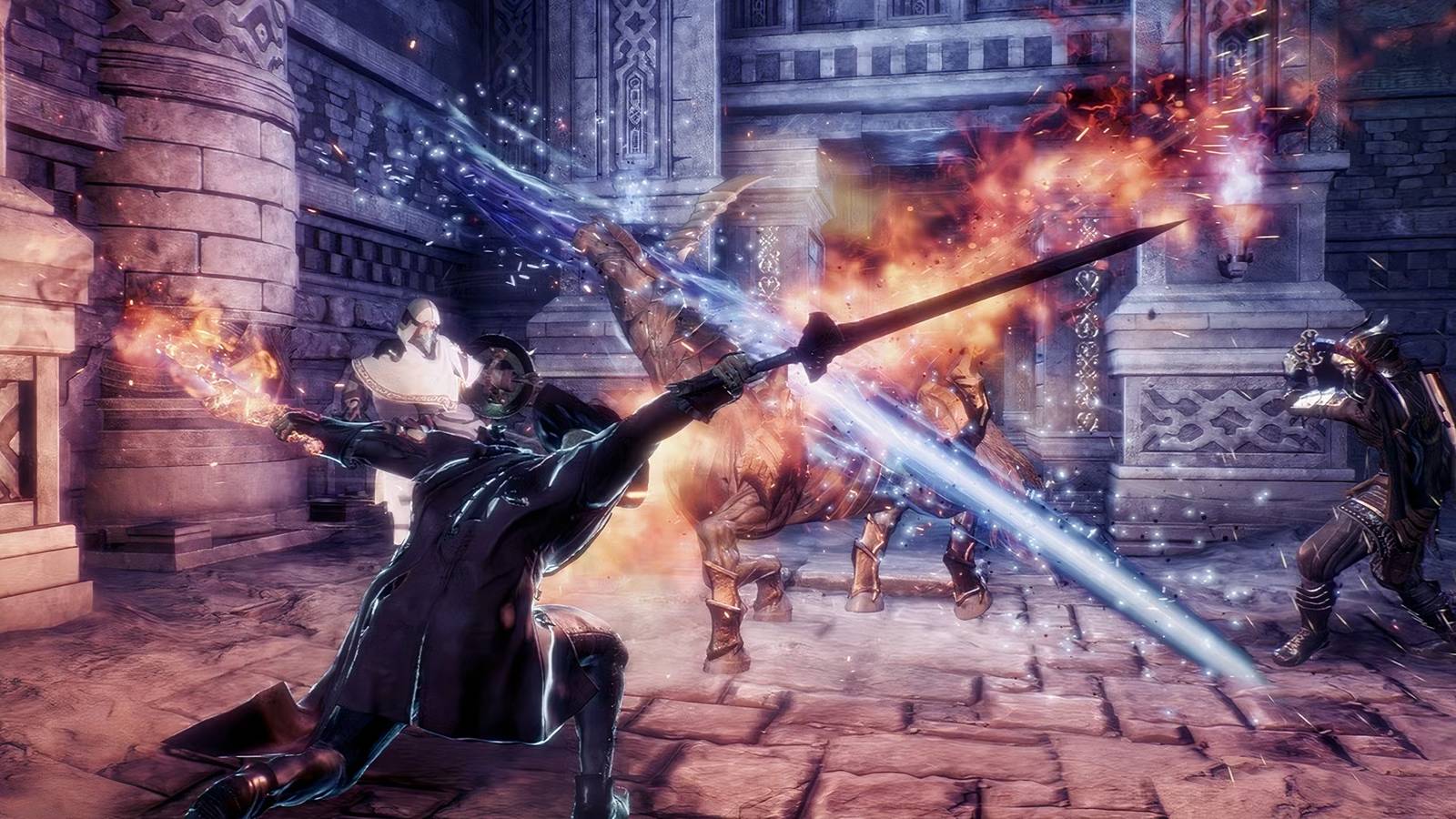
Memes aside, Stranger of Paradise: Final Fantasy Origin is a fantastic action JRPG, one of the best of the current decade. Considering it was developed by Nioh‘s Team Ninja, that should really come as a surprise; however, when it comes to freedom in build synergy, Stranger of Paradise even surpasses the Soulslike series. Although Final Fantasy‘s Jobs are somewhat adaptable in most entries, this spinoff offers the most flexibility and customization since FFV, and it puts to shame the franchise’s recent mainline action games (in this area).
Jack and his companions will ultimately have access to 28 Jobs (Basic, Advanced, and Expert), and they can equip two at the same time that can be swapped in the middle of a combo. As Jobs are leveled up individually, you unlock new combo skills and abilities that can be assigned and used with any other class that supports that weapon. By the end, players will have so many options that they can create dozens of incarnations of Jack at any given moment. And, we have even gone into the fact that Stranger of Paradise is a Diablo-style loot game, which brings plenty of customization options.
Who’s That Character?

Identify the silhouettes before time runs out.
Identify the silhouettes before time runs out.
Easy (7.5s)Medium (5.0s)Hard (2.5s)Permadeath (2.5s)
3
Rune Factory 4 Special
Live Your Own Way
Rune Factory, on the whole, tends to be rather hands-off, and I don’t mean that in the sense that it doesn’t provide any direction or hand-holding. Once they teach the basics to players, the games usually take a step back and just let them craft their own fun. Rune Factory 4 does this the best, as you can pretty much ignore the main storyline and just focus on farming, dungeon crawling, and living.

Great JRPGs That Are Also Exhausting To Finish
These JRPGs are great games, but you may feel exhausted after investing enough time into them to roll credits.
Nearly everything you do has a dedicated leveling system that uses an action-based progression system, so you will naturally become stronger and more specialized by just going through your daily routine. Rune Factory 4 also has a pretty great and in-depth crafting system that rewards experimentation, and players can create some wildly broken items if they know what they are doing. Also, you can tame monsters and take them into battle… that includes bosses.
2
Legend Of Mana
A Non-Linear Legend That’s Been Forgotten By Many
This follow-up to Secret of Mana harnesses the series’ fun action leanings, while putting a colorful twist on the formula. Not only can players largely control the pace, placements, and strategies of the fast-paced fighting, but they’ll now cobble together their own campaign structure through the novel “Land Make” system.
This has players place biomes and points of interest at locations of their choosing on an empty grid map, giving a vibe somewhere between a choose-your-own adventure tale, non-linear stage selections, and digital tabletop assembly. Collectible artifacts generate unique lands, which are then explored in isolation and vary in difficulty depending on different factors, creating a uniquely malleable, unpredictable journey.
1
Xenoblade Chronicles X (Definitive Edition)
These Chronicles Are Sprawling And Feel Endless
Following its lead from the distinctly epic Xenoblade, this spinoff manages to eclipse at least the Xeno debut for Wii despite its more divisive, but fun, inclusion of customizable mechas called Skells. While it was initially stuck on the Wii U, Xenoblade Chronicles X was eventually brought over to the Switch, and it even received an improved Switch 2 version.
With 5 sprawling continents that showcase impressive verticality, ample distinct sidequests, impactful character interactions, and a huge campaign, this spinoff doesn’t hold back on anything, distilling the Xeno experience down to its basic and addictive combat loop. By far the most “open” open-world in the series, XCX lets players explore Mira however they want, and the map is vast. The real freedom comes from the multi-class weapon system that lets you basically master multiple branches, allowing you to eventually mix-and-match weapons and skills. Also, you get mecha. Who doesn’t like mecha?
8 JRPGs That Have Complicated But Great Combat Systems
These JRPG titles feature complex combat systems; however, once players figure out how to fully utilize them they add to the gameplay experience.


