


As GTA 6 currently proves, a game can be a masterpiece but still attract a fair amount of criticism, at least from a vocal subset of a fanbase. Except for maybe JRPGs, the FPS genre has the longest history of creating projects equally likely to be called “fantastic” or an “embarrassment,” and these types of releases are frankly way more fun to discuss than those that fall neatly into one or the other.
Over the last year, I have become kind of obsessed with first-person shooters, and I’ve spent way too many hours revisiting classics and disasters from yesteryear that I initially missed. Today, we’re going to look at a few games that could, honestly, qualify as both, depending on somebody’s perspective.
Obviously, “nobody likes” is an exaggeration, but the discourse is or was negative around these FPS games.
6
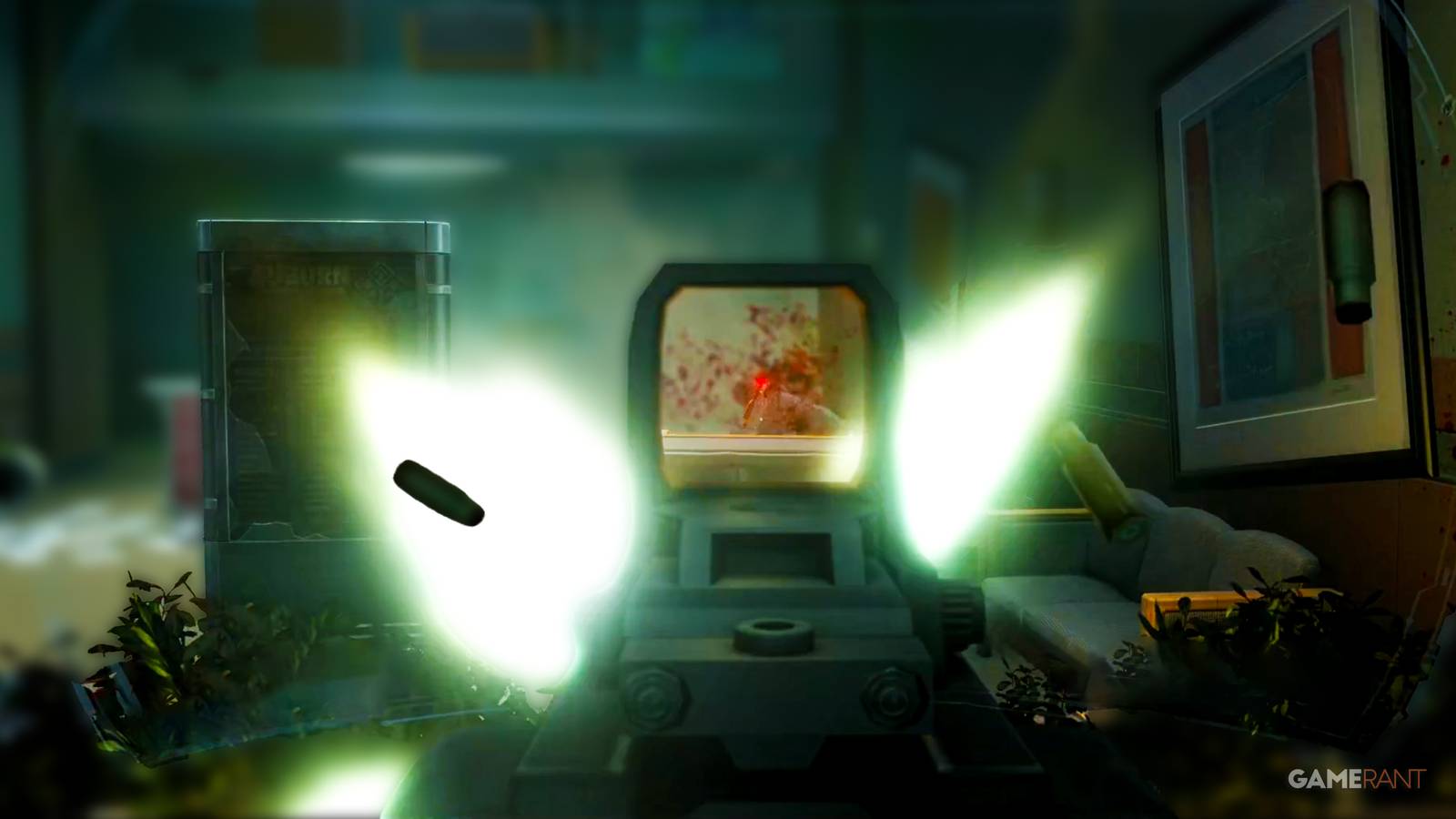
F.E.A.R. 2: Project Origin Deserves Way More Love
The first F.E.A.R. is one of the greatest FPS games of all time, and one of my personal favorites. Meanwhile, the sequels just kind of exist.
Seriously, any discourse surrounding this series tends to start and end with the 2005 masterpiece, with F.E.A.R. 2 barely receiving a mention. To an extent, I get it, as both sequels lean a lot more into action and set pieces than the original game, causing them to feel far more, well, ordinary. However, that doesn’t mean they have nothing to offer.
While I think F.E.A.R. 3 falls flat as a single-player FPS game, the second entry is a top-notch shooter that does a solid job of expanding on the same ideas as the original game. While the enemy squad A.I. isn’t as impressive, F.E.A.R. 2 introduces far more environmental variety than its predecessor, moving beyond gray office buildings. The supernatural gunplay is tight, reactive, and satisfying, retaining some elements of horror while also acting as a bit of a power fantasy. Give it a go.
5
Doom 3 Isn’t Old Or New Doom, But It’s A Darn Fine Doom Game

Over the last couple of years, I think the tide has mostly turned for Doom 3, with more people seeming willing to speak its praise without throwing in a customary “as long as you don’t want a Doom game.” Spin-offs and ports aside, the gap between Doom 2 and Doom 3 was extensive, leading to extremely high expectations that id Software didn’t try to meet.
Look, I know what people want from Doom. They want high-speed action, run-and-gun movement, demon-crushing mayhem, and an arsenal of guns to help you rain blood throughout hell. Doom 3 doesn’t deliver any of that, instead opting for slow-paced, claustrophobic survival horror. It’s one of the rare examples of id Software chasing trends rather than leading them.
As long as you know what you are getting into, Doom 3 sits right up there with the best entries in the franchise, at least when analyzed in a vacuum. The Mars base is drenched in atmosphere and dark corners filled with legitimate threats; in fact, I’d argue Doom 3 is the most intense game of its series.
4
Battlefield Hardline Is A Brilliant Urban Shooter

I understand why EA went with Battlefield Hardline as the title, but I imagine its reception would have been far more positive without that link. Battlefield was no stranger to contemporary warfare by 2015, but Hardline shifted away from a military sandbox to a cops-and-robbers thriller that kind of plays out like a crime drama. Some fans saw it as a glorified mod for Battlefield 4, while others had absolutely no interest in playing a police spin-off.
Remember that part about Doom 3 being a Doom game? Well, you might be better served considering Hardline as something entirely different from the mainline entries. If you do that, you’ll find one of the best police tactical shooters of all time, one that incorporates a pretty ingenious arrest system that lets you approach some scenarios with other options beyond “shoot everything.”
3
Far Cry 2 Is The Black Sheep With Malaria

Is Far Cry 2 heavily disliked? Maybe that’s a slight overstatement, but it certainly doesn’t get anywhere near the same love as nearly all of its successors, including spin-offs like Primal. Before Ubisoft streamlined its open-world formula to near perfection (and then started to rely way too much on it), Far Cry 2 landed on the scene with seemingly one goal: to make life as hard as possible for players.
Although you clear plenty of guard posts, you never quite feel like an unstoppable FPS god in Far Cry 2, and that’s exactly what makes it special. You must survive a ruthless sandbox that doesn’t regard you as some sort of hero, and you generally aren’t one in the story either. You need to use a physical map, keep an eye on your weapon’s condition, and occasionally deal with bouts of malaria.
Those are all things that break the game for many players, but they are also the reason why Far Cry 2 continues to stand out from the crowd. It isn’t just an uglier Far Cry 3.
2
Infinite Warfare’s Disliked Campaign Is Among COD’s Best

Remember when Infinite Warfare first exposed itself to the world, instantly becoming the internet’s punching bag months into development? Good times.
After Advanced Warfare, people were frankly tired of sci-fi shooters in general, and nobody seemed to want or like the idea behind Infinite Warfare. Even nowadays, it still tends to be overlooked among the 2010s Call of Duty games, despite arguably having one of the best (if not downright the best) campaigns of that decade.
That’s not hyperbole either; Infinite Warfare’s campaign is absolutely incredible, and also quite ambitious for the franchise. Ditching traditional linear corridors, the game drops you into a non-linear map while giving you command of a warship. You engage in space dogfights, battle in zero-gravity, and banter with a fun robot, just like all the great sci-fi masterpieces.
If the initial negative reaction convinced you to skip Infinite Warfare, I recommend changing that sooner rather than later.
1
Tribes: Vengeance Is An Irrational Masterpiece Hated By Its Fanbase

Going from a franchise that won’t die to one that can barely keep itself alive, Tribes was primarily known for its PvP multiplayer, with most of the games launching with no story mode. The one exception is Tribes: Vengeance, a 2004 release developed by Irrational Games, a little-known studio that apparently went on to create a pretty decent game in 2007.
A predominantly single-player experience, Vengeance was rejected by die-hard Tribes fans, the only type of fan the franchise ever had. They didn’t want a space opera written by Ken Levine, nor were they interested in the character-driven narrative and the slightly simplified versions of classic Tribes mechanics. Despite garnering great reviews, nobody seemingly played it at launch, as alienating your own fanbase doesn’t typically aid a game’s chances.
To be fair, the fact it launched during the same period as Halo 2 and Half-Life 2 probably didn’t help matters. Tribes: Vengeance is freeware nowadays, and it has been like that for a very long time.