




Many people love the Super Nintendo, and obviously, there is a reason for that, since it has one of the most impressive game libraries of all time. In fact, many of its releases continue to influence modern titles to this day. However, nostalgia is a liar, and it often makes us forget just how frustrating certain classics can be, especially when we think about how much the gaming industry has changed in the last couple of decades.
Of course, calling some of these SNES games absolutely unplayable might be just a little bit of an exaggeration, but I think they come pretty close. Although some of them introduced great ideas, they were significantly limited by the hardware or suffered from questionable design decisions that cannot be overlooked.
Final Fantasy 2
A Fantastic RPG With a Compromised Original Release
I absolutely agree that Final Fantasy 2 deserves its legendary reputation, but it is arguably better experienced through a different version. First, we need to remember that the SNES release we’ve come to know as Final Fantasy 2 in North America is actually Final Fantasy 4, which introduced the Active Time Battle system and placed greater importance on character-driven storytelling. In other words, the North American version was substantially simplified compared to the original Japanese release, which is certainly disappointing considering how much strategic depth the original game had to offer.
Find the odd one out before the timer hits zero.
Of course, players in both versions got to see Cecil’s transformation from a dark knight into a paladin, which created a very emotionally engaging narrative. However, plenty of character abilities were removed from the North American release, and enemies were made significantly easier. The idea was probably to make the game more accessible, but all of these changes took away a lot of its strategic depth.
Sure, this version is not the worst game in the history of gaming, but I find it difficult to recommend this particular release when later versions simply offer a more complete experience that is way more satisfying to most people. To be fair, Final Fantasy 2 has a lot of potential, but players want actual engaging mechanics and challenges rather than dreams about what it could have been.
Pit-Fighter
An Ambitious Fighting Game With a Terrible SNES Port
-
-

-


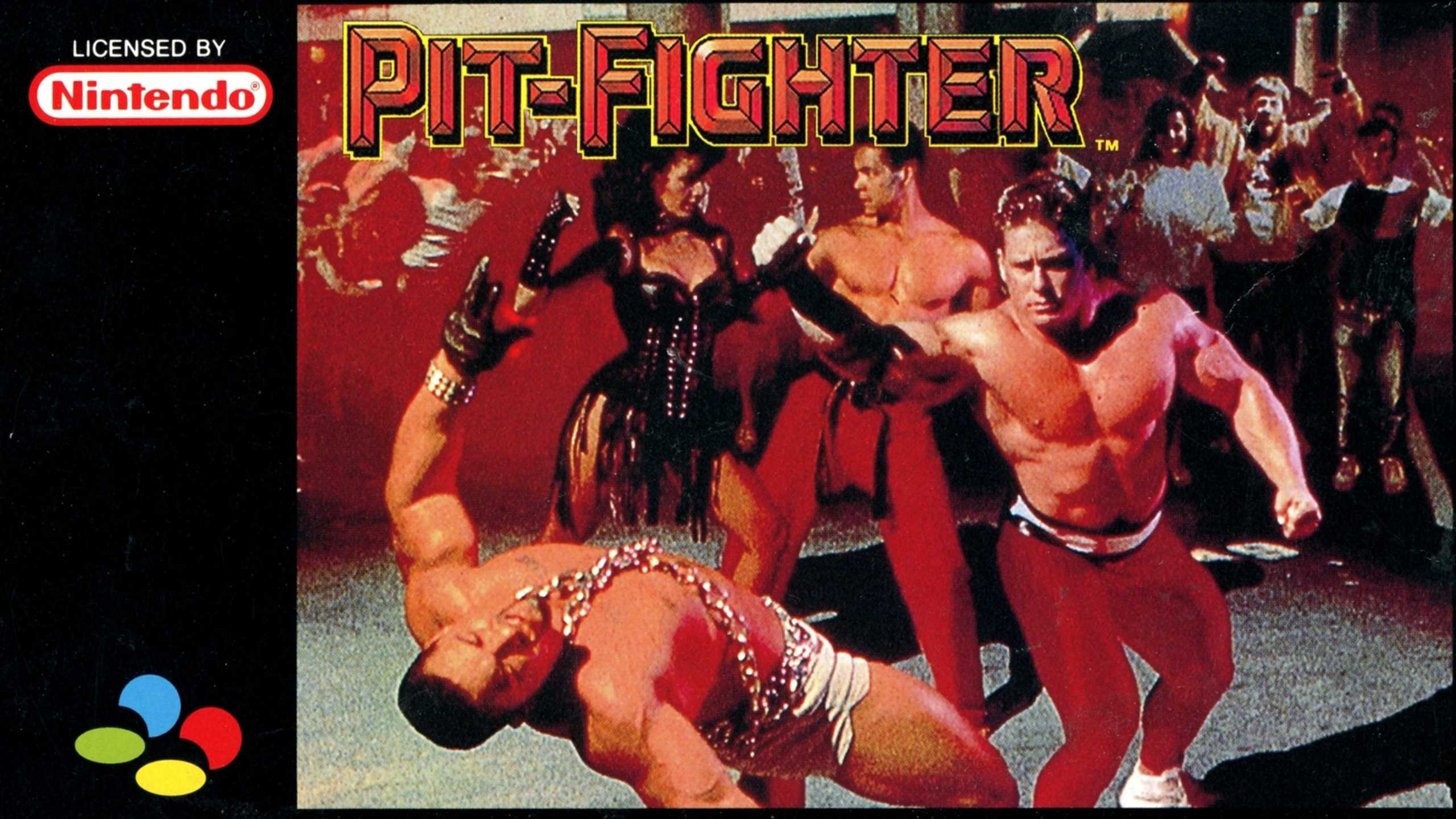
Pit-Fighter is fascinating, mostly because of its unusual presentation compared to other fighting games released during the same time period. More specifically, the fact that it doesn’t rely on traditional hand-drawn characters distinguishes it quite a lot from its competitors. It used digitized footage of real actors, which was genuinely an impressive idea for 1990, and it served as a great example of all the possibilities that gaming had yet to explore.
Unfortunately, the SNES version suffered from major technical compromises, like limited animation and controls that were extremely difficult to manage. For example, there are so few animation frames for the fighters that their movements often look stiff, and it’s difficult to even tell whether an attack is starting or ending. This is usually considered unacceptable for a fighting game where you’re expected to react quickly to incoming attacks.
Moreover, the SNES version removed several elements, like the interfering crowds and environmental weapons. Not to mention the fact that it left out some interesting opponents, so generally, the experience felt incomplete, much like what happened with Final Fantasy 2. Last but not least, the three-player simultaneous combat was also cut, which is a significant loss. The biggest strength of the game was arguably its innovative visual presentation, which quickly became its biggest weakness on the SNES.


Pit-Fighter



- Released
-
August, 1990
- ESRB
-
nr
- Developer(s)
-
Atari Games
Yoshi’s Safari
A Creative Mario Adventure That Needs Obsolete Hardware
I personally love it when Nintendo experiments with established franchises, and Yoshi’s Safari is a great example of this because it didn’t just aim to give players another traditional platformer but instead put Mario on Yoshi’s back. Unsurprisingly, many people find that extremely entertaining because the adventure quickly turns into an on-rails shooter, which, combined with all the familiar enemies and environments, sounds just amazing.
There are also branching paths and even a cooperative mode where one player can handle the shooting while another controls Yoshi’s movements. Generally, I think Yoshi’s Safari is one of the best video game spin-offs from the SNES era because it switches things up in a way that plenty of other games could never think of. However, if you decide to revisit the original game today, you will quickly realize that it requires a Super Scope accessory, which simply does not work with modern LCD televisions.
In other words, if you only own the original SNES and a copy of the game, you will not be able to play it in the first place because you need compatible hardware. Maybe the fact that the problem is not about game design but about technology makes the situation far more frustrating because there is actually something we’re missing out on.
WeaponLord
A Brilliant Combat System That Demands Too Much
-

-

-

There’s hardly any doubt that WeaponLord is one of the most ambitious fighting games released for the Super Nintendo, and it makes sense why it was so impressive. The developers introduced an extremely sophisticated combat system that involved parries, counters, weapon clashes, and even the possibility of completely breaking an opponent’s weapon. You could attack enemies on the ground as well, and there was actually a lot more precision involved than you might think.
However, maybe the developers took it a bit too far because even the most basic encounters suddenly become very demanding. The game generally expects players to execute combinations with timing that is too precise, on top of learning all of the unusual inputs. The computer-controlled opponents are also quite difficult to deal with, and even if you decide to switch to a lower difficulty setting, you will still have a hard time dealing with them.
Now imagine what it must feel like for newcomers. To make matters worse, the SNES version also suffers from choppy animations, which creates a lot of issues when you have to react quickly to what your opponent does. Much like what happened with Pit-Fighter, the mechanical depth of the game was its biggest strength and its biggest weakness at the same time.
Final Fight
An Arcade Classic That Lost Too Much in Translation
-

-

-

Capcom has plenty of recognizable titles, and Final Fight remains one of the most memorable beat ’em ups of all time, and maybe its straightforward approach to combat is exactly what appeals to most people. However, the SNES version was forced to make some questionable compromises, like removing the cooperative mode, which is a massive disappointment for a game that was basically designed around fighting together with a friend.
Of course, this is not the only issue, as the SNES port also removed Guy as a playable character, so players only got Cody and Haggar. To make matters worse, the entire Industrial Area stage was also cut out, and the console could only display around two or three enemies simultaneously. For perspective, the arcade version allowed up to nine or ten.
Of course, this means that the developers had to change enemy placement and introduce some additional stopping points, which obviously affected the pacing of the encounters and reduced the overall quality of the game significantly. You can technically still play the game, but I would much rather play the arcade original than settle for something as incomplete as the SNES version of Final Fight.
Secret of Mana
An Incredible Action RPG With Frustrating Combat Problems
-

-

-

Let’s be honest, Secret of Mana did not age gracefully, at least not in every aspect, but it is true that it remains incredibly influential. It combines real-time combat with traditional RPG progression, which was very ambitious at the time it was released. It allows players to switch between three characters, use magic, and even cooperate with two friends.
Moreover, the combat encourages patience more than aggressive, mindless attacking. For example, swinging your weapon repeatedly without allowing it to recover results in much weaker damage because physical attacks consume a rechargeable gauge. It is certainly a clever way to introduce strategy into real-time encounters, and many other games have since experimented with similar ideas. Of course, the combat has its downsides as well, such as the fact that even the simplest battles can feel terribly slow.
Attacks can also appear to connect with enemies without actually dealing damage, while defeated opponents sometimes remain on screen for a while before the game registers their defeat. There are also the ring-based menus, which often interrupt the flow of combat, especially when you have to access spells and items repeatedly. So, even though the game deserves its reputation as one of the best SNES action RPGs because of its beautiful world and ambition, it is just difficult to overlook all these frustrations that we have forgotten about as modern players.