





Medieval RPGs have been a staple of gaming for decades, from sprawling worlds of the 1990s to the fantasy blockbusters that dominated the 2000s and 2010s. For every The Elder Scrolls, Dragon Age, or The Witcher, though, plenty of medieval adventures never quite got their moment in the spotlight.
The genre has gone through plenty of peaks and revivals, with Game of Thrones helping fuel a renewed fascination with medieval fantasy around the early 2010s. Games like The Elder Scrolls V: Skyrim benefited from that wider appetite, but plenty of RPGs from before and after its release were left behind. Researching this list turned into a surprisingly fun rabbit hole of forgotten games, strange ideas, and titles I couldn’t believe had slipped completely off the radar. Some were ambitious, some were wonderfully weird, and others simply got buried beneath bigger releases.
Either way, digging them back up was half the fun, and these six medieval RPGs deserve another look.
Dink Smallwood (1997)
From Pig Farmer to Hero
Dink Smallwood made me wonder how a medieval RPG this ridiculous ever slipped off my radar. This 1997 action RPG follows Dink, a pig farmer who becomes an unlikely hero after a tragedy sends him out into the world. Developed by Robinson Technologies, the game mixes a traditional fantasy setting with deliberately silly humor, bizarre characters, and plenty of moments that clearly don’t take the genre too seriously. While researching it, I was surprised by just how much personality was packed into such an old and relatively obscure RPG.
But underneath all the jokes, Dink Smallwood has plenty of classic RPG mechanics, including exploration, quests, equipment, magic, weapons, and character progression. Combat is real-time, with Dink able to swing different weapons, cast spells, and deal with enemies while traveling between towns and dungeons.
There’s also a surprising amount of freedom in how players approach certain situations, with the game’s humor often spilling into its quests and world design. It may not have the scale of something like Skyrim, but that scrappy combination of medieval fantasy and comedy is exactly what makes Dink Smallwood so memorable once you’ve finally dug it back up.
Siege of Avalon (2000)
A Kingdom Trapped Under Siege

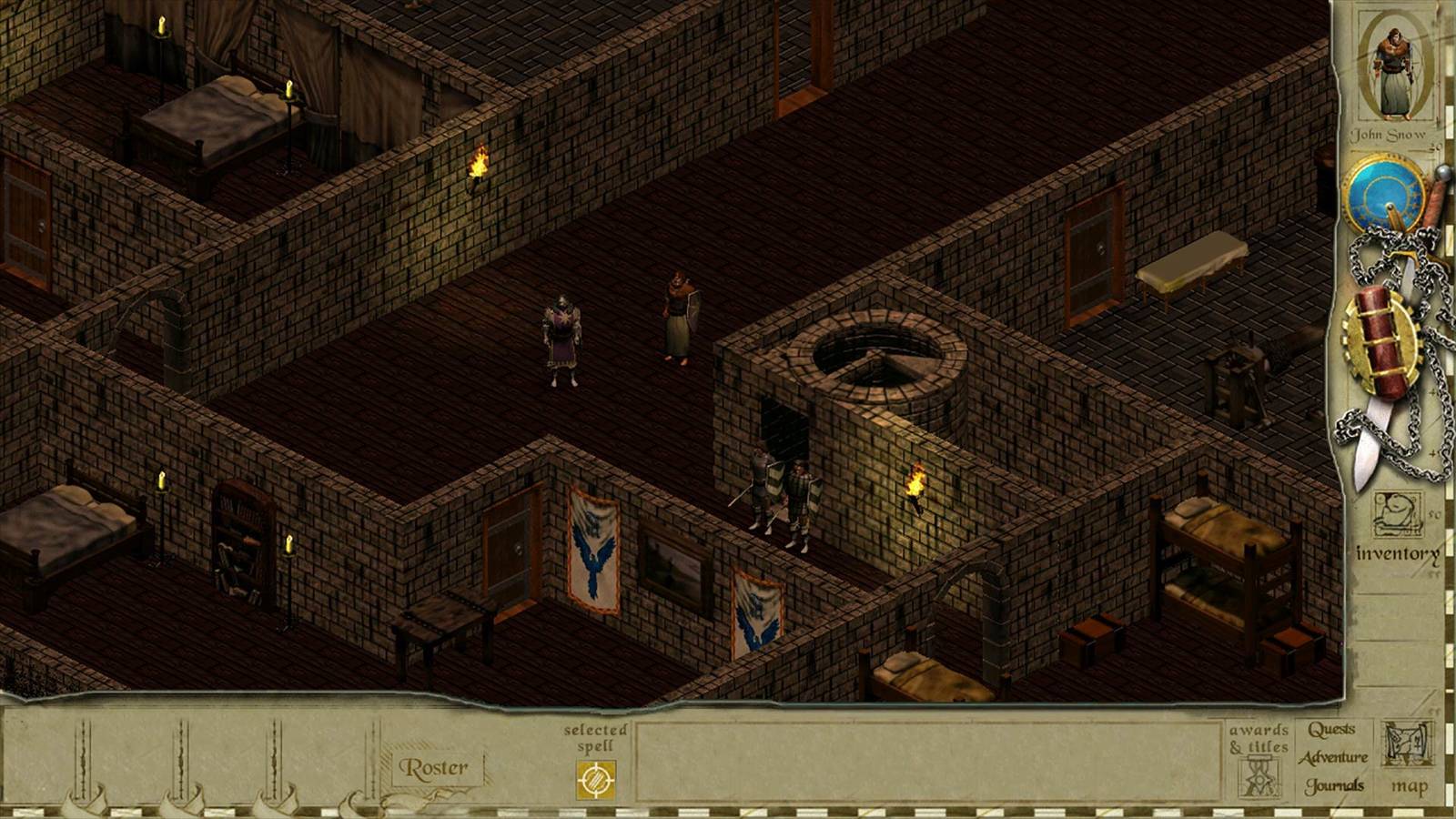
Siege of Avalon feels like the kind of RPG that could disappear from gaming history simply because it arrived at the wrong time. Released in 2000, it put players inside a besieged fortress where the war outside its walls slowly becomes impossible to ignore. Developed by Digital Tome, the game uses an isometric perspective and chapter-based structure, letting the story unfold across six chapters rather than throwing everything at the player at once.
I really enjoyed discovering how much atmosphere it squeezes out of that setup, because Avalon feels less like a fantasy playground and more like a place genuinely struggling to survive. Underneath its story is a classic RPG built around character development, and what makes it particularly fascinating is how the siege shapes the experience. The player’s actions and progression are tied closely to the fortress and the wider conflict.
Unfortunately, Siege of Avalon launched during an incredibly crowded period for PC RPGs, surrounded by much bigger names that got far more attention. It never became a household name, but looking back at it now, I can see why it became such a compelling, forgotten gem to dig up.
Eschalon Book 1 (2007)
An RPG built for Exploration
Eschalon: Book 1 feels like stepping into an old fantasy novel that someone left open on a dusty shelf. Developed by Basilisk Games, this 2007 RPG deliberately embraces the slower, more methodical style of classic computer RPGs. No enormous cinematic world constantly tells me where to go. Instead, I was left to wander through forests, villages, ruins, caves, and forgotten corners of the map, gradually piecing together what kind of world I have stumbled into.
That sense of discovery is probably what stood out to me most while researching it. A particularly memorable detail is its hunger, thirst, and fatigue systems, which make traveling through Eschalon feel like an actual journey rather than moving between quest markers.
The game centers on turn-based combat, exploration, quests, character skills, equipment, and a huge amount of freedom in how the player approaches its world. Even seemingly small decisions can matter, with skills such as lockpicking, alchemy, and spellcasting opening up different ways to deal with obstacles.
Eschalon was never going to compete with the enormous RPGs dominating the 2000s, and its deliberately old-school presentation probably made it easier to overlook. But something wonderfully quiet about it now: it feels like the sort of RPG where getting lost isn’t a problem to solve, but the entire point.
What’s That Weapon?


Identify the silhouettes before time runs out.
Identify the silhouettes before time runs out.
Easy (7.5s)Medium (5.0s)Hard (2.5s)Permadeath (2.5s)
Darklands (1992)
Beyond The Mainstream Medieval RPGs
Darklands is one of those games that made me stop and wonder how something this ambitious could have become so forgotten. Developed by MicroProse, it takes the RPG formula in an unusual direction by setting its adventure in a historically inspired version of 15th-century Germany rather than a traditional fantasy kingdom.
Instead of elves and dragons being the main attraction, Darklands draws from real medieval folklore, religion, alchemy, and superstition, while still giving players plenty of supernatural threats to deal with. The result feels like stepping into a fantasy story and more like wandering through a medieval legend that has somehow become playable.
Unfortunately, that ambition also helped Darklands fade from mainstream attention. Its complex systems and steep learning curve made it far less immediately accessible than many of the RPGs that followed, while its 1992 release meant it was eventually overshadowed by the wave of more accessible PC RPGs that helped define the genre later in the decade. Even so, researching Darklands has made me appreciate just how far ahead of its time some of its ideas were.
Betrayal at Krondor (1993)
A Storybook Fantasy
I actually wonder why more modern games don’t borrow more ideas from Betrayal at Krondor. Set in Raymond E. Feist’s Midkemia, Betrayal at Kondor behaves like an interactive fantasy novel, standing out against traditional dungeon crawlers.
Released in 1993 and developed by Dynamix, the story is divided into chapters with the player traveling across a detailed world. They can meet characters, uncover conspiracies and get caught up in much larger conflicts. But what really grabbed me while researching was how much the game trusts its story to carry the adventure rather than relying on spectacle.
Plenty of traditional RPG depth still lies beneath that narrative, though. Players manage a party, explore in first-person, fight enemies in turn-based battles, complete quests, manage equipment, and make choices that can affect how certain situations play out.
Even the journey between locations can feel like an adventure, with random encounters and discoveries making the world feel less predictable. Despite strong attention at release, Betrayal at Krondor gradually faded as a huge wave of RPGs followed. Digging it back up reminded me that some of the genre’s most interesting ideas were already hiding in games from decades ago.
Revenant (1999)
Death Is Only The Beginning
One simple gameplay mechanic sits at the crux of Revenant’s entire world: death. Developed by Cinematix and released in 1999, the game follows Locke, a warrior resurrected after being killed centuries earlier and brought back to life to investigate his mysterious past. That premise gives the adventure a darker atmosphere from the start, with forgotten memories, demons, revenge and resurrection woven directly into the story.
Rather than giving me another hero destined to save the kingdom, Revenant makes the idea of coming back from the dead central to who its protagonist is, in good, old-fashioned Hamlet fashion. It even gives the classic “to be, or not to be” question a fitting new meaning: for Locke, being alive again is less a gift than a curse he has to understand.
That theme also feeds into the gameplay. Revenant is an action RPG built around real-time combat, with players able to develop Locke’s abilities, collect equipment, learn spells, and take on increasingly dangerous enemies. Its combat was particularly ambitious for the time, allowing attacks to be chained together rather than relying entirely on standard button-mashing.
Yet the game never received the same lasting attention as bigger RPGs of its era, and its relatively obscure release eventually pushed it further into the shadows. Researching it was a reminder that even the most familiar RPG premise — resurrected hero versus supernatural evil — can become much more beguiling when the game builds its entire identity around it.