



Survival games, especially those in the so-called survival-craft genre, are all the rage these days, raking in players with the promise of extensive, ever-evolving cooperative gameplay. But in my opinion, single-player survival games are often a lot better than their viral multiplayer counterparts.
Without the influence of multiplayer, and all the mechanical and philosophical considerations it introduces, survival games are able to more freely experiment. Genre staples like resource management can take on an entirely new weight when tied to, say, a dramatic narrative or linear campaign structure. Multiplayer survival games can certainly have such qualities, but it’s much more complicated and less likely to work smoothly.
When it comes to offering powerful single-player survival experiences, these games do it better than any others.
Frostpunk
Make the Hard Choices
This will not be the last time you see a game from Polish dev 11 Bit Studios on this list: 11 Bit has basically perfected the concept of the single-player survival management sim. 2018’s Frostpunk is merely one example of how the company is able to create raw, heart-wrenching narratives and intense gameplay through basic survival systems like resource management and upgrade trees.
More than mechanics, Frostpunk‘s storytelling and tone really solidify its place as a city-survival masterpiece. This is not a game where you thrive, at least in the campaign mode. Survival in Frostpunk is about making tough choices, whether that’s refusing to sign a child labor law despite potentially deadly consequences down the line, or inviting refugees despite already being low on food and shelter. Through these, and the Hope and Discontent resources, Frostpunk urges you to manage the integrity of your own soul.


Click on the game with the higher OpenCritic rating.
Subnautica
Brave the Depths
I don’t get scared easily by horror games, so it’s weird that Subnautica freaks me out so much. Something about delving into its deep, alien waters, and being totally out of my element—literally and figuratively—will always be more unnerving than walking down dark alleys or cramped corridors with a gun.
Of course, both Subnautica and Subnautica 2 have deep, rewarding survival-craft mechanics, but it’s the vibe of the first game that sticks with me more than anything else. In a genre populated by mechanically interesting but artistically conservative projects, Subnautica was one of the first survival-craft titles to offer an elevated aesthetic, narrative, and tonal experience.
Pacific Drive
Don’t Expect a Roadside Picnic
A sim-influenced, car-centric survival game wasn’t something I knew I needed until I played Pacific Drive, the 2024 debut from indie outfit Ironwood Studios. Set in a Strugatsky-inspired sci-fi hellscape à la Metro 2033 and S.T.A.L.K.E.R., Pacific Drive tasks players with maintaining and upgrading a junk-punk station wagon while collecting strange artifacts known as “anomalies.”
The game presents a number of diverse survival challenges, from environmental hazards to otherworldly, inexplicable phenomena linked to the aforementioned anomalies. As its name suggests, Pacific Drive is set in the Pacific Northwest of the United States, where striking natural beauty enhances the game’s pleasant eeriness.
The Alters
Really Get to Know Yourself
11 Bit Studios’ most recent game, The Alters, is also its most cinematic and ambitious. Rather than giving players a bird’s-eye view of a struggling civilization, The Alters centers on a single protagonist, Jan Dolski, who crash-lands on a mysterious planet and must create clones of himself, each with a different backstory, in order to survive.
The Alters has satisfying resource management and progression systems, but its mechanical heft doesn’t overshadow its true strength: its narrative. Nestled within this addictive and thoroughly replayable survival game is a nuanced story about responsibility, fate, and identity, which pushes it over the edge from good to great.
The Long Dark
The Title Is Definitely Appropriate
-

-
-


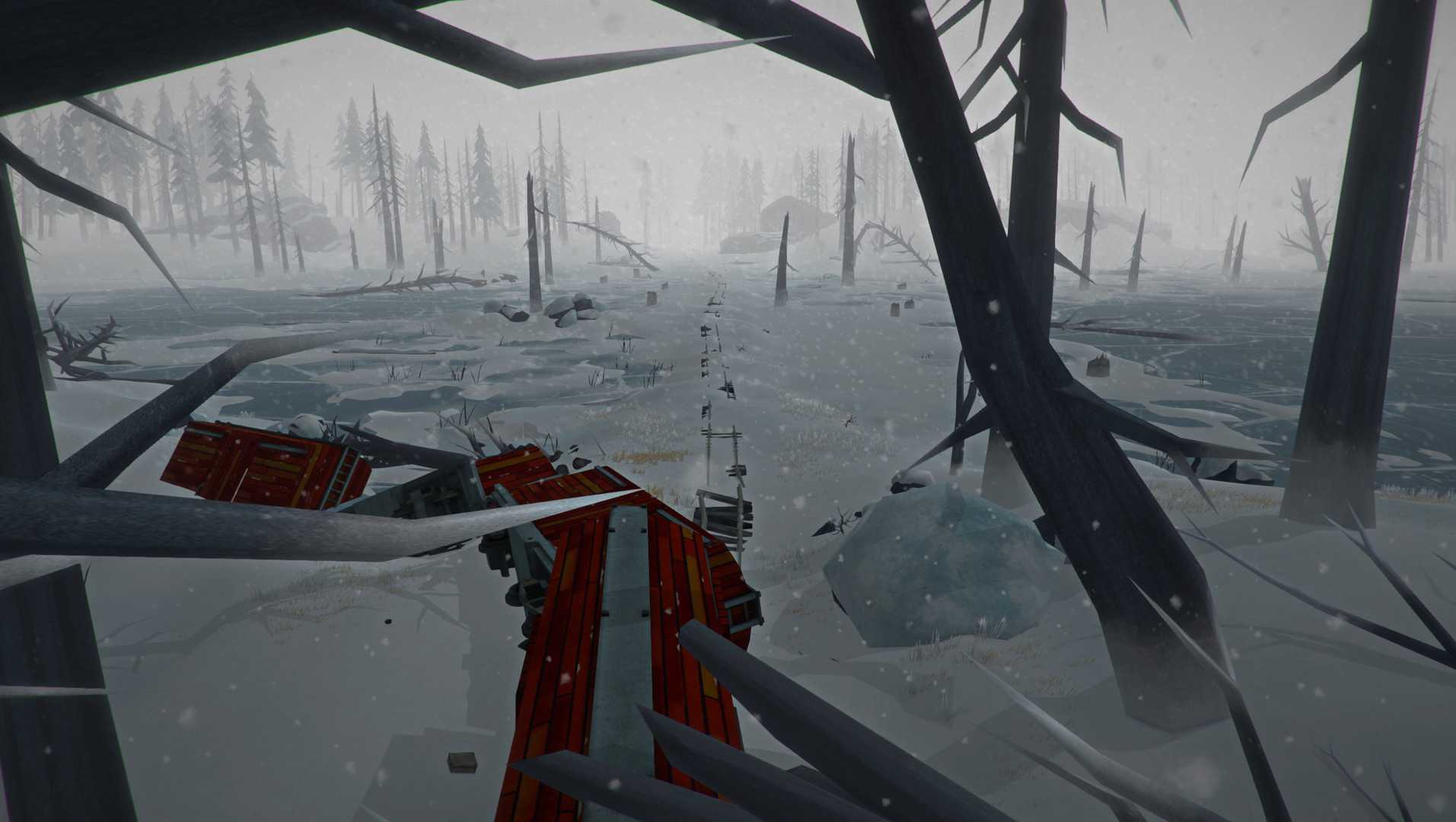
The Long Dark is an exceptionally tense and punishing survival game whose single-player framing makes it even lonelier and more isolating. The game takes place in an abandoned, vast tundra, so these traits are no doubt fitting.
If you can embrace The Long Dark‘s unforgiving systems, you may find that it’s actually quite meditative. It eventually becomes easy to enter a sort of flow state, in which you’re acutely aware of variables like exhaustion, hunger, and carry capacity. The game really doesn’t hold your hand, so figuring out the best strategies, locations, and so forth, is an exploratory process that becomes more rewarding the more you play.
Don’t Starve
Easier Said Than Done
An absolute classic in the indie survival-crafting space, 2013’s Don’t Starve found a cult audience with its visually striking, deceptively complex sandbox. The expected genre staples are all here—you have to manage key resources like food while developing upgrades and dodging threats—but developer Klei Entertainment presents them with such panache and creativity that you forget how essentially formulaic they are.
Indeed, Don’t Starve is full of meaningful and delightful surprises, and is unlike just about every other survival-craft game, even more than a decade later. It helps that it’s received plenty of updates and expansions over the years, including one that adds multiplayer, but the original, launch version of Don’t Starve is still utterly terrific.
This War of Mine
One of the Best War Games of Its Generation
After a series of relatively inconsequential mobile games, 11 Bit Studios broke into core gaming with 2014’s This War of Mine, a pointed, bleak, and thoughtful survival-management sim set in a fictional warzone. Players have to manage resources like food, water, and medicine, which are obviously scarce, while also dealing with the diverse needs and personalities of each character in their shelter.
Much like Frostpunk, This War of Mine lets you have lapses in your morals: you can send your characters out to steal from other shelters, and even kill those who get in their way, leading to psychological debuffs. But unlike other games, This War of Mine doesn’t simply present a calculated choice with its moral quandaries. Rather, it pushes you towards making these hard choices through necessity, which is both more realistic and more affecting.