




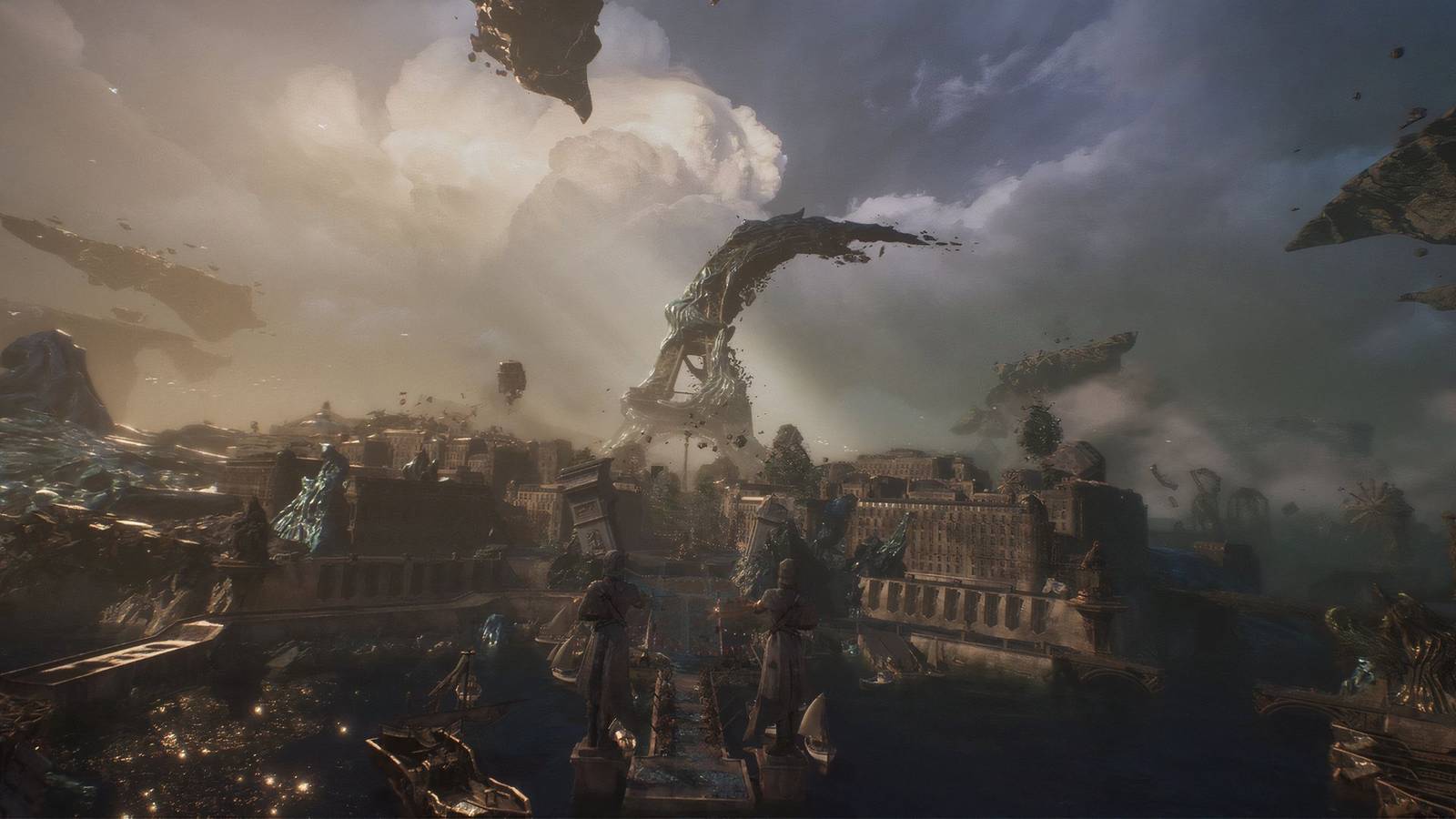
There’s something special about a game city that feels lived-in—like it exists beyond the player’s immediate quest line.Clair Obscur: Expedition 33’s Lumiere taps into that feeling beautifully, drawing from real-world influences to create a setting that feels both fantastical and deeply familiar. The reason it feels familiar is its clear French inspirations. The art direction draws from Belle Epoque and transports us to a world where life imitates art. It’s a reminder that some of the most memorable RPG cities don’t come out of nowhere: they’re shaped by history, culture, and very real places.
What makes these cities stick is intention. Developers aren’t just borrowing aesthetics; they’re translating entire cultural identities into interactive spaces. That means architecture, politics, language, and even class structures often mirror real-world counterparts in subtle ways. When it’s done well, the result is a city that feels coherent from every angle, rewarding players who take the time to look a little closer. Here are some iconic RPG cities that, like Clair Obscur: Expedition 33’s Lumiere, have taken us to faraway destinations with subtlety.
7 Most Iconic Cities In Open-World Games, Ranked
Thanks to their iconic designs, the cities of Grand Theft Auto, Cyberpunk 2077, and The Witcher are de facto capitals for gamers everywhere.
Saint Denis | Red Dead Redemption 2
There’s a reason why many players call Saint Denis the best town in RDR2. It stands as one of the most memorable cities in modern gaming, largely because it draws so clearly from New Orleans. The influence throughout the city is cultural, social, and deeply rooted in history. Creole culture, which developed in Louisiana through a blend of French, Spanish, African, and Caribbean influences, gives Saint Denis a layered identity that feels distinct even within the broader American South. It’s a place where wealth and industry collide with tradition, creating a tension that feels authentic rather than staged.

Guess the games from the emojis.
Guess the games from the emojis.
Easy (120s)Medium (90s)Hard (60s)
That depth shows up in how the city functions, not just how it looks. From its rigid class divides to the way different neighborhoods carry their own identities, Saint Denis feels like a snapshot of a real historical moment. Apart from being one of the best towns in Red Dead Redemption 2, it’s also one of the clearest examples of how real-world inspiration can elevate a game’s world-building.
Val Royeaux | Dragon Age: Inquisition
Val Royeaux is fantasy France at its most theatrical. As the capital of Orlais, one of the most powerful countries in Thedas, it leans heavily into French-inspired opulence, from its grand plazas to its obsession with politics and presentation. It’s a city where everything is a performance, and where power is often expressed through spectacle as much as strategy. Every corner feels curated, as though the city itself is aware of the image it wants to project.
That sense of intentionality adds another layer to its design. Beneath the gold and marble is a society built on appearances, where influence is negotiated through conversation just as much as conflict. It may not be the largest city players visit, but its identity is so sharply defined that it leaves a lasting impression. And its attention to detail easily helps Thedas become one of the best fantasy worlds in RPGs.
Novigrad | The Witcher 3: Wild Hunt
Novigrad feels like stepping into a dense, medieval European port city. The Witcher book series, rooted in Polish storytelling traditions, builds Novigrad into a gritty, complex hub inspired by cities like Gdansk. Novigrad comes beautifully alive in the third installment of The Witcher game series. It’s crowded, chaotic, and full of contradictions, where wealth and poverty coexist without resolution.
What makes Novigrad stand out is how unpolished it feels. This isn’t a romanticized version of a medieval city: it’s messy, tense, and constantly in motion. Between religious extremism, criminal undercurrents, and political maneuvering, the city becomes more than a backdrop; it becomes an active force in the narrative. And it’s so dense that it’s entirely possible that even the most seasoned Witcher 3 players have missed details in Novigrad.

The 12 Greatest Open-World Adventure Games Of All Time, Ranked
There are so many ways to approach adventure in the open-world genre, and these titles do it differently, but equally great.
Antiva | Dragon Age: The Veilguard
Antiva expands the Dragon Age world in a way that feels both familiar and richer. While it’s long been associated with Spanish accents, the home base of the Antivan Crows, and Mediterranean flair, The Veilguard leans further into a blend of Spanish, Italian, and even Andalusian influences, giving it a layered identity shaped by trade, conquest, and culture. It’s a place that feels shaped by history, even when that history isn’t fully shown on screen.
That layered identity makes Antiva stand out among other fantasy regions. Rather than relying on a single cultural reference point, it draws on multiple traditions that have historically been in conversation with each other, creating a setting that feels dynamic and lived-in.
Vice City | Grand Theft Auto: Vice City
Neon lights, beachfront excess, and a vibrant Latin American influence define the city’s identity. When players first explored it decades ago, it felt massive, colorful, and alive in a way few open worlds had achieved at the time.
That sense of scale and personality is exactly why it’s remained so iconic. Vice City captures a very specific cultural moment, blending style, music, and atmosphere into something instantly recognizable. With its return as a confirmed location for GTA 6, players can finally prove that strong cultural inspiration can likely stand the test of time.
Athkatla | Baldur’s Gate II: Shadows of Amn
The elusive Athkatla is one of the best cities in Faerun to start a D&D campaign. But it is also an amazing place for an RPG. Athkatla as portrayed in BG2 isn’t a direct replica of any one real-world city, but its role as a powerful trade hub that has often invited comparisons to Constantinople. Even if the visual parallels are subtle, the cultural and economic structure—wealth, commerce, and influence—echoes one of history’s most important crossroads.
That influence is felt in how the city operates. Power flows through trade networks, guilds, and political alliances rather than brute force alone. It creates a setting where influence is negotiated and earned, reinforcing the idea that cities shaped by commerce often carry a complexity that purely military strongholds don’t.

Clair Obscur: Expedition 33
- Released
-
April 24, 2025
- ESRB
-
Mature 17+ / Blood and Gore, Strong Language, Suggestive Themes, Violence
- Developer(s)
-
Sandfall Interactive
- Publisher(s)
-
Kepler Interactive