






There was a moment early in Directive 8020 when I knew I should turn around. I had already seen enough horror movies to understand how the scene would play out, and every instinct told me nothing good was waiting around the next corner. But that’s exactly where Directive 8020 works best. Rather than letting me sit back and judge the crew of the Cassiopeia for making terrible decisions, it put me directly in their shoes as an alien organism capable of perfectly duplicating anything it touches began tearing through the ship, threatening the crew, the mission, and humanity’s last hope of survival.
Directive 8020 is easily one of the boldest swings The Dark Pictures Anthology has taken so far, and for the most part, that swing pays off. Its live stealth sections give the series a new kind of urgency, its crew becomes more compelling the deeper the story goes, and its best ideas show Supermassive pushing beyond the usual boundaries of its cinematic horror formula. Not every piece lands as cleanly as it should, especially when the game’s stiff presentation and sometimes obvious choices get in the way. However, Directive 8020 still feels like a confident step forward for the anthology, and it certainly lays the groundwork for the series’ future.
Directive 8020 Is at Its Best When It Turns Horror Movie Logic Against the Player
I went into Directive 8020 with some concerns about how long it would take to get into the action, primarily because my hands-on preview of the game covered Chapter 4 of 8 and things seemed like they were only just beginning to escalate. However, that turned out to be far from the truth, as the very first chapter introduces the core conflict of the narrative and each subsequent chapter never shies away from returning to it. It accomplishes this with regular time jumps that rock between buildup and chaos in order to ensure players are given plenty of context for the characters involved in its most intense moments.
My biggest takeaway from Directive 8020‘s story, though, was how quickly it managed to make the whole experience feel less like a traditional cinematic adventure and more like a horror movie that I was actually trapped inside. In the past, Dark Pictures games have foregone excessive manual gameplay to ensure each entry plays out more like an interactive choose-your-own-adventure story than a game, but Directive 8020 implements plenty of live stealth segments to keep players engaged in a much more active way.

While the fear factor of these sections does begin to wane with more practice, for the majority of the game, they can feel almost more terror-inducing than a sudden jumpscare. To be clear, there are plenty of good jumpscares in Directive 8020, but the segments of the game that saw me taking manual control of a character and then attempting to move through an area while avoiding an enemy patrol were terrifying, simply because I knew getting caught would mean that character either getting killed or severely wounded. This particular entry essentially dials its iconic choice and consequence gameplay up to 11 by making it more active than contemplative, and that, in turn, increases the horror element.
My biggest takeaway from Directive 8020‘s story was how quickly it managed to make the whole experience feel less like a traditional cinematic adventure and more like a horror movie that I was actually trapped inside.
In a way, these sequences make Directive 8020 feel like an actual horror movie playing out, except, rather than being the viewer who’s screaming at the characters to go the other way, you’re in their shoes, and it’s suddenly more complicated than that. Being in direct control of them in dangerous situations changes the tone and flow of gameplay because curiosity compels you to see how it all plays out. So, where you might be yelling at the movie screen for someone to run away instead of moving forward to investigate, you feel compelled to know what happens or what’s around the corner in Directive 8020, so you take the risk.

The reason for including these live stealth segments in Directive 8020, as I understand it, is actually two-fold. For one thing, they’re designed to increase the tension of the game’s atmospheric horror by making danger something players can actively stumble into rather than something they have time to consider and turn away from. It’s safe to say that part of it works as intended, as they are, in fact, some of the most tense moments in the game. But secondly, they were incorporated to attract gamers who generally steer clear of cinematic games for their lack of direct engagement. I’m confident that Supermassive will achieve that goal with Directive 8020, as the game excellently balances its cinematic moments with its “on the sticks” sequences, so players can get the best of both worlds.
Directive 8020‘s live gameplay isn’t limited to its stealth segments, though, and there are still plenty of moments throughout the game where players can explore the Cassiopeia to find Secrets—including video logs, tablets containing backstory, and plenty of other lore tidbits that help flesh out the overarching story. And exploration is always worth it, as finding said Secrets can even trigger conversations between characters that affect a character’s Traits and, ultimately, their Destiny in the game, which can play a big role during pivotal moments in the story.
Directive 8020’s Mimic Premise Could Have Benefited From More Doubt

Of course, the star of the show in Directive 8020 is its premise, which sees an alien organic matter infiltrating the Cassiopeia and then threatening the life of the crew, the ship itself, and the mission to save Earth. The matter has the ability to duplicate itself and anything it touches perfectly, and that includes human beings. As such, once the life form is on-board the ship and begins to spread, chaos ensues and the crew is forced into a fight for survival.
From a cinematic perspective, Directive 8020‘s mimic premise works. Seeing the crew slowly unravel with paranoia because they are increasingly uncertain about who is human and who is not is something that is brilliantly executed on screen when it’s viewed as a sci-fi horror story meant to be passively consumed. The way it plays into the crew dynamics later on in the story is also very well done, as they find it more difficult to trust one another with each new revelation. There were plenty of moments like this where I was tempted to grab a bucket of popcorn, simply because those moments were so entertaining to watch.

However, the mimic premise doesn’t hit quite as hard from a gameplay perspective because it leaves little room for doubt and therefore makes many of the game’s life or death choices much easier to navigate. In fact, I ended my first playthrough of Directive 8020 with the entire crew still alive after only using Turning Points, the game’s “rewind” feature, once. There was only one moment where I actually wasn’t sure who the real crew member was and who the duplicate was, and I can’t help but feel that the premise overall would have benefited from more of that kind of doubt.
Seeing the crew slowly unravel with paranoia because they are increasingly uncertain about who is human and who is not is something that is brilliantly executed on screen when it’s viewed as a sci-fi horror story meant to be passively consumed.
Had Directive 8020 done more to hide the truth from me as a player, most of the biggest choices it forced me to make might have felt like legitimate choices. Because I generally knew the difference between a real human and an alien duplicate, I also knew what the “right” choice was about 99% of the time. The one moment I didn’t, which I referred to above, saw the human and the duplicate acting very similarly to one another, and it managed to confuse me enough that I made the “wrong” decision and killed off that crew member. Every other time a duplicate appeared on the screen, though, it was obvious they were the alien because they weren’t acting human at all.

There were still choices to be made in these instances, but they were less about what I believed was happening and more about what kind of person I wanted each crew member to be in that moment—or simply which characters I wanted to die. That’s not inherently a bad thing, as Directive 8020 still gives players plenty of room to shape relationships, responses, and character arcs through those decisions. But for a game built around the terror of not knowing who can be trusted, I rarely felt like I was making choices in the dark. Instead, I often felt like I was watching the characters wrestle with a mystery I had already solved, and that ultimately softened the impact of what should have been some of the game’s most agonizing decisions.
Turning Points Is a Smart Idea That Needs More Support
This naturally leads to some questions surrounding Directive 8020‘s Turning Points system, which, for the first time in the Dark Pictures Anthology, allows players to undo decisions they’ve made at any point during the story. By using Turning Points to rewind the story, players effectively revise their previously chosen path to the point of their choice, giving them an opportunity to make different decisions that lead to different outcomes.

The system as a whole is a genius idea for a cinematic game like this, especially considering Supermassive is wanting to open up the Dark Pictures Anthology to a broader audience. With Turning Points, players have more control over how the story unfolds, which inadvertently respects their time and preference. Unlike previous Dark Pictures games, players can view every single branch of Directive 8020‘s story, and the requirements to reach each one are even listed when selecting an undiscovered plot point.
But in its current state, it functions more as a completionist feature than a choice feature. I’ll admit that I used it to change a few decisions I wasn’t happy with during my first playthrough, but I used it even more to go back and find Secrets I might have missed. Even with its design centering around choice, however, because the majority of the game’s choices and consequences are as obvious as they are, Turning Points is made irrelevant in said scenarios, unless you simply want to see a different outcome. Yes, if I use Turning Points, I am choosing a different outcome, but because if I already know what the outcome is, I’m not really wrestling with a decision so much as I’m merely selecting an alternate scene.
That distinction matters in a game like Directive 8020, where choice has more impact when it emotionally affects the player. Turning Points gives players unprecedented access to the story’s branching paths, and as a completionist tool, it is genuinely useful. As a system meant to intensify choice, though, it can only be as strong as the uncertainty surrounding those choices. When the game makes the consequences too easy to predict, rewinding isn’t about regret as much as it is about curiosity.
Yes, if I use Turning Points, I am choosing a different outcome, but because if I already know what the outcome is, I’m not really wrestling with a decision so much as I’m merely selecting an alternate scene.
Another issue with Turning Points in its current state is that Directive 8020 doesn’t allow players to skip its lengthy cinematic sequences, even if they’ve already watched them. This becomes especially frustrating when the consequence of a decision doesn’t come into effect until a later chapter, as rewinding to make a different choice can mean replaying a large stretch of the story just to see what changes. On the one hand, I appreciate that, because it encourages players to sit with the consequences of their actions rather than immediately correcting every mistake.

On the other hand, there were occasions when I rewound to an earlier Turning Point and then had to sit through scenes that played out almost exactly the same as they had before, which slowed the story’s momentum and partially defeated the purpose of a feature designed to streamline choice exploration. At the very least, Directive 8020 would benefit from a cutscene skip option, or perhaps a system that informs players when they are about to skip a scene where the impact of their choices is actually visible. As it stands, Turning Points is a smart and welcome addition, but it sometimes feels more like a gamble than a precision tool, because players may not know whether a choice matters until much later, and by then, rewinding might not feel worth the cost.
Directive 8020’s Destinies Give Choices a Longer Shadow
All of that said, one of Directive 8020‘s best qualities is its characters and the choices players are given to shape who they are. The end result is a character’s Destiny, which can lead to outcomes for major plot points that players aren’t directly involved in when they come. By making dialogue choices in the game, players are developing that character’s Traits and slowly building toward an outcome for them and the story. It’s a fantastic way for players to see how even the smallest choices can still have a big impact, and it was honestly one of my favorite aspects of the whole experience.

During its first act, Directive 8020‘s characters aren’t anything to write home about, and a lot of that comes down to their voice acting and animation. There are several things that make the game’s characters feel off, from the way their voice and tone don’t match the expression on their face to the stiff, often robotic movement of their bodies. It definitely does a number on the game’s immersion, but it improves as the game goes on, and I chalk that up to the depth of each character’s arc and the way the crew as a whole interacts with one another.
One of Directive 8020‘s best qualities is its characters and the choices players are given to shape who they are.
Throughout the story, players are given opportunities to have their current character text another via a personal communicator on their wrist, and despite all the suspense, the rewarding exploration, and the compelling story, the moments I spent texting the crew managed to be some of my favorites—and I think I know why. Directive 8020‘s cinematic sequences let players make dialogue choices that affect a character’s Traits, but there are plenty more to be made when texting the crew as well.

But the reason I think these moments work so well is because they are primarily where conversations get more personal. Things that can’t be said in public with the rest of the crew around are instead said in private texts, and by taking advantage of those optional opportunities, I got to shape each character’s Destiny while simultaneously getting to know them on a much deeper level. I can’t help but feel it also helped that the awkward voice acting and animation were absent from the picture, so I was more immersed overall.
I will add that even with the awkward voice acting and animation, Directive 8020‘s visuals and character models are excellent and incredibly detailed. To top it off, the game’s performance on PC, despite such attention to detail, was near perfect.
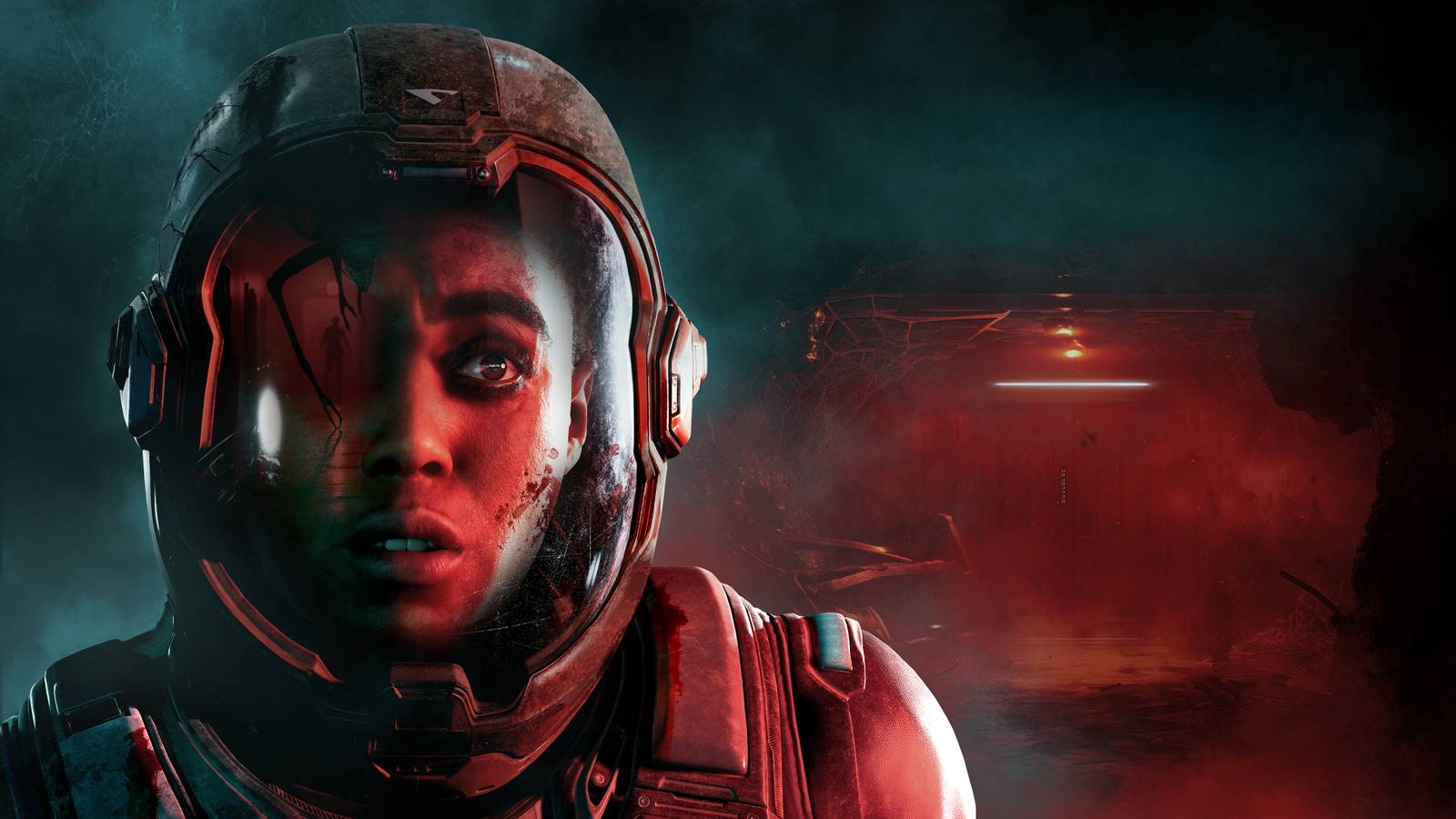
By the end of my first playthrough, I had fallen in love with every character in the game, hence my compulsion to ensure the survival of each one. In fact, my favorite character turned out to be Eisele, which is interesting considering she was the one character I initially couldn’t stand. It’s worth mentioning that Lashana Lynch’s performance as Brianna Young was the best of the entire Directive 8020 cast, although her facial expressions and animations occasionally didn’t do her acting justice. Her arc, like everyone else’s, was also enjoyable to watch unfold.
Directive 8020 Pushes The Dark Pictures Anthology Forward

Directive 8020 is a major step forward for The Dark Pictures Anthology, even if some of its weaknesses are hard to ignore. Its live stealth segments make the horror feel more tangible, its mimic premise works very well as cinematic sci-fi horror, and its crew dynamics only get stronger as the story unfolds. However, the game’s tendency to make the truth too obvious weakens some of its biggest choices, while stiff animation, uneven performances, and occasionally robotic dialogue can undercut the emotion of key scenes.
Even with those issues, Directive 8020 left me far more invested in its crew than I expected to be. Turning Points is a smart addition that could use more support, and the Destiny system gives even smaller choices a bigger sense of consequence. It may not land every idea as strongly as it should, but Directive 8020 still delivers a tense, entertaining, and surprisingly character-driven sci-fi horror story that pushes The Dark Pictures Anthology in the right direction.
Directive 8020 launches on PC, Xbox Series X|S, and PS5 on May 12, 2026. GameRant was provided with a PC code for the purposes of this review.


