




There are so many metroidvanias out there now that sometimes it feels like if you’ve played one of them, you’ve played them all. Don’t get me wrong, the formula we get from the genre nowadays is solid, from the overall structure to the atmosphere and tone. Give me a dark, dank, weird metroidvania, and I’ll have a hard time putting it down once I get rolling. However, that doesn’t change the fact that I am constantly on the lookout for one that offers something different that I can clearly point to and say, “I’ve never experienced anything like that before, and I want more of it.” Well, my latest trek through Steam has graciously allowed me to stumble upon a metroidvania that I think fits that bill perfectly, and I’m here to recommend it after playing through its demo.
Silver Pines is, quite honestly, something far from what I expected. Going into its demo on Steam, I knew I was getting a survival horror metroidvania, but I wasn’t expecting it to lean quite so heavily into the former or to be as creative as it is with the latter. There are shades of Alan Wake here, especially in the strange small-town mystery at the center of it all, and plenty of Resident Evil in how carefully I had to manage what little the game was willing to give me. But Silver Pines doesn’t just feel like those games squeezed into a metroidvania. Rather, it takes some of the things I’ve done hundreds of times in the genre before and finds surprisingly immersive ways to make them feel different, all while being far more punishing than its gorgeous presentation initially led me to believe.
Silver Pines Makes Standard Metroidvania Exploration Feel Anything But Standard
Check Out Silver Pines on Steam
One of the first things that really impressed me about Silver Pines was its camera, which I initially assumed would just be there for the occasional puzzle or story beat. Instead, I could use it to take pictures of locations and then pin those photos directly to the map, and I’m not exaggerating when I say I wish more metroidvanias did something like this. I’m used to putting markers on maps to remind myself there was a locked door somewhere or an item I couldn’t reach yet, but taking an actual photograph of what stopped me and attaching it to that location made the whole process feel much more natural. It also fits Red Walker being a private investigator, rather than feeling like a video game system that exists purely because the genre says there needs to be one.
I enjoyed the puzzles for a similar reason. A lot of my time with the demo involved finding something I couldn’t do anything with yet, moving on, and eventually stumbling across whatever I needed to make progress there. That’s obviously nothing new for a metroidvania, but Silver Pines does a great job of making those moments feel like I’m actually connecting the dots rather than just waiting until I get the double jump or some other traversal ability. At one point, I even found myself taking part in a BB-gun shooting gallery to get what I needed, which is exactly the sort of weird little detour that reminds me of something I might stumble into in Alan Wake or an older Resident Evil game.

There were plenty of other moments when I found myself poking around somewhere just because I had a feeling there had to be something there, and more often than not, Silver Pines rewarded me for it. However, the funny thing about exploring in this game is that I was rarely comfortable doing it, because the survival horror side of the experience is constantly breathing down your neck. Ammo isn’t something I ever felt like I had enough of, healing items were even worse during my playthrough, and I spent a surprisingly large chunk of the early demo walking around with so little health that one hit would kill me.
I’m used to putting markers on maps to remind myself there was a locked door somewhere or an item I couldn’t reach yet, but taking an actual photograph of what stopped me and attaching it to that location made the whole process feel much more natural.
I literally mean one hit, too. For a while, every enemy I encountered had the potential to send me back to my last save, simply because I couldn’t find anything to heal myself with. Weirdly enough, I ended up appreciating that more than I expected. I had no choice but to stop being careless and actually get better at fighting, because taking damage wasn’t something I could simply shrug off afterward. Once I realized how much trouble I was in, I started paying far more attention to enemy attacks and figuring out when I could safely get in a hit without immediately regretting it.
Silver Pines’ Survival Horror Side Doesn’t Mess Around

I tend to enjoy survival horror most when it actually makes me survive, and Silver Pines absolutely does that. I’m the kind of player who will happily burn through ammunition if a game keeps handing me more of it, but scarcity forces me to behave differently. Suddenly, every shot matters a little more, and an enemy standing in my way becomes something I have to think about rather than an automatic invitation to start shooting. Silver Pines kept me in that mindset for almost the entire demo, and considering how much exploring I wanted to do, there was always this little bit of tension in the back of my head about whether wandering off somewhere was going to cost me more than I got out of it.
Saving is part of that as well, although I’m a little more divided on how the demo handles it. Saves require money at payphones, and I actually like the idea of turning another resource into something I need to manage carefully. Unfortunately, I didn’t realize the demo was about to throw a boss at me near the end, and when I died during that fight, my last save was around 11 minutes earlier. I had accomplished quite a bit during those 11 minutes too, including some things that were necessary to keep the story moving, so having to repeat all of it wasn’t exactly my favorite moment of the demo. I don’t necessarily want Silver Pines to start announcing every boss fight before it happens, but some indication that I might want to save wouldn’t hurt when saving itself costs something.
On the other hand, I was pleasantly surprised there was a boss fight at all. For whatever reason, Silver Pines hadn’t given me the impression that bosses were going to be a major part of the experience, so reaching one near the end of the demo immediately made me more curious about what the full game has planned. It also pushed the resource management even harder, because going into a boss poorly prepared is obviously a very different situation from dealing with one or two enemies while exploring.
Silver Pines’ Combat Might Be Rough by Design
Combat itself is probably the one part of Silver Pines I’m still trying to make my mind up about. It can feel rough, especially early on, and I do think there could be a little more responsiveness to it. At the same time, I’m not entirely convinced it’s supposed to feel especially smooth either. This is survival horror, after all, and I eventually reached a point where I had settled into a rhythm that worked for me. Considering I spent so much time one hit away from death and still managed to get around without constantly dying, I clearly got better at it as I went. Whether that means the combat needs some polishing or I simply needed to learn what Silver Pines wanted from me is something I’d have to spend more time with the full game to decide.
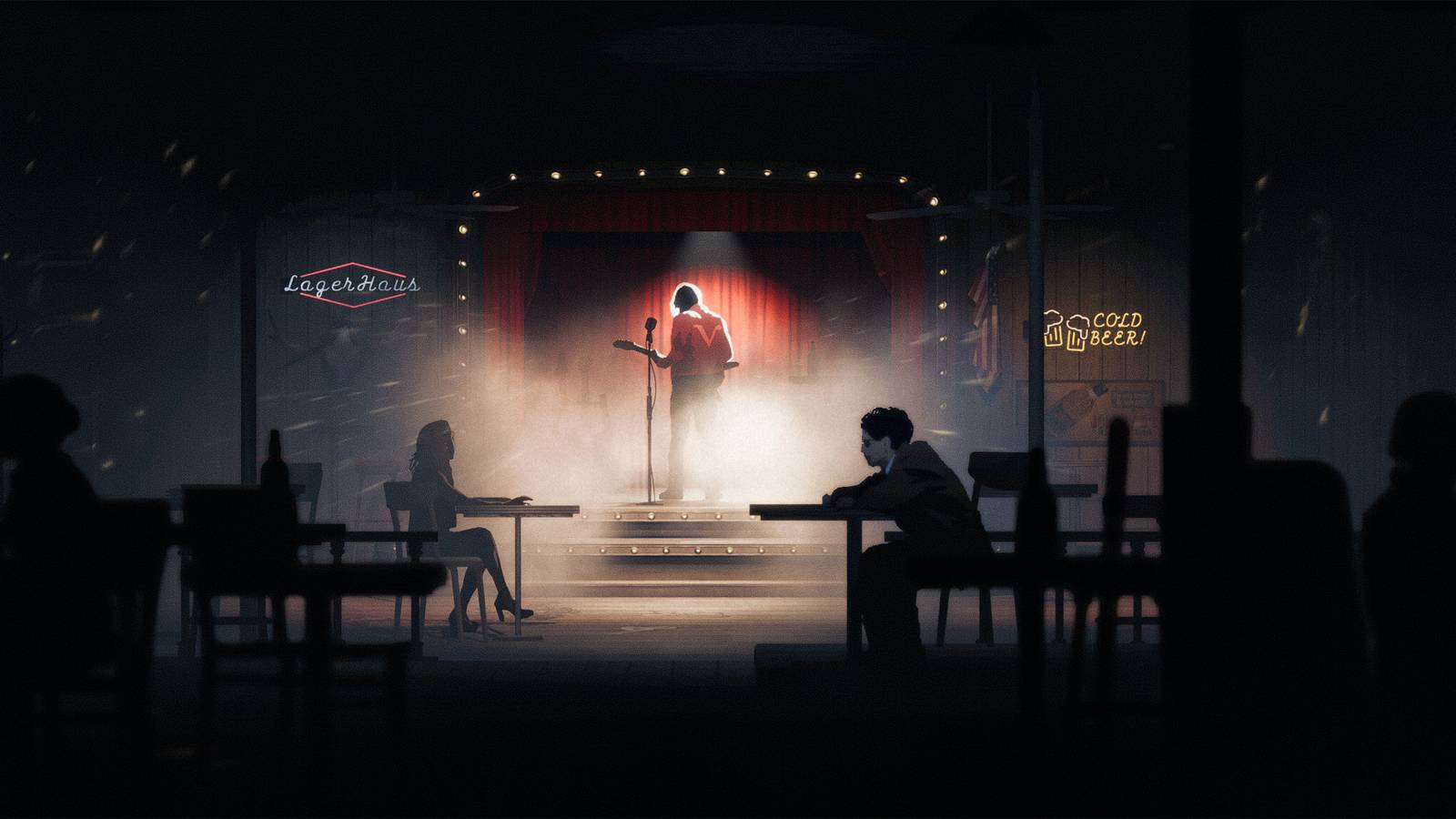
More than anything, though, I walked away impressed by how well all of this comes together around the atmosphere. Silver Pines has this thick noir detective feel to it that almost immediately pulled me in, and once the survival horror elements started digging their claws into me, I didn’t really want to leave. The visuals are fantastic, the mood rarely lets up, and the mystery gave me enough reason to keep pushing forward even when I was running around terrified that the next enemy I saw was going to send me back to a payphone.
I went into the demo expecting another metroidvania with a horror coat of paint on it, and I don’t think that’s what Silver Pines is at all. It feels much closer to a full-on survival horror game that just happens to use the exploration and progression structure of a metroidvania, and I mean that as a compliment. Between taking photographs to build out my own map notes, slowly working through its puzzles, scraping by on whatever resources I could find, and eventually getting caught completely off guard by a boss fight, there was enough here that felt different from what I normally get out of the genre. If the full game can keep finding ways to make those familiar metroidvania ideas feel this immersive, I absolutely want more of it.

- Released
-
October 8, 2026
- ESRB
-
Mature 17+
- Developer(s)
-
Wych Elm
- Number of Players
-
Single-player