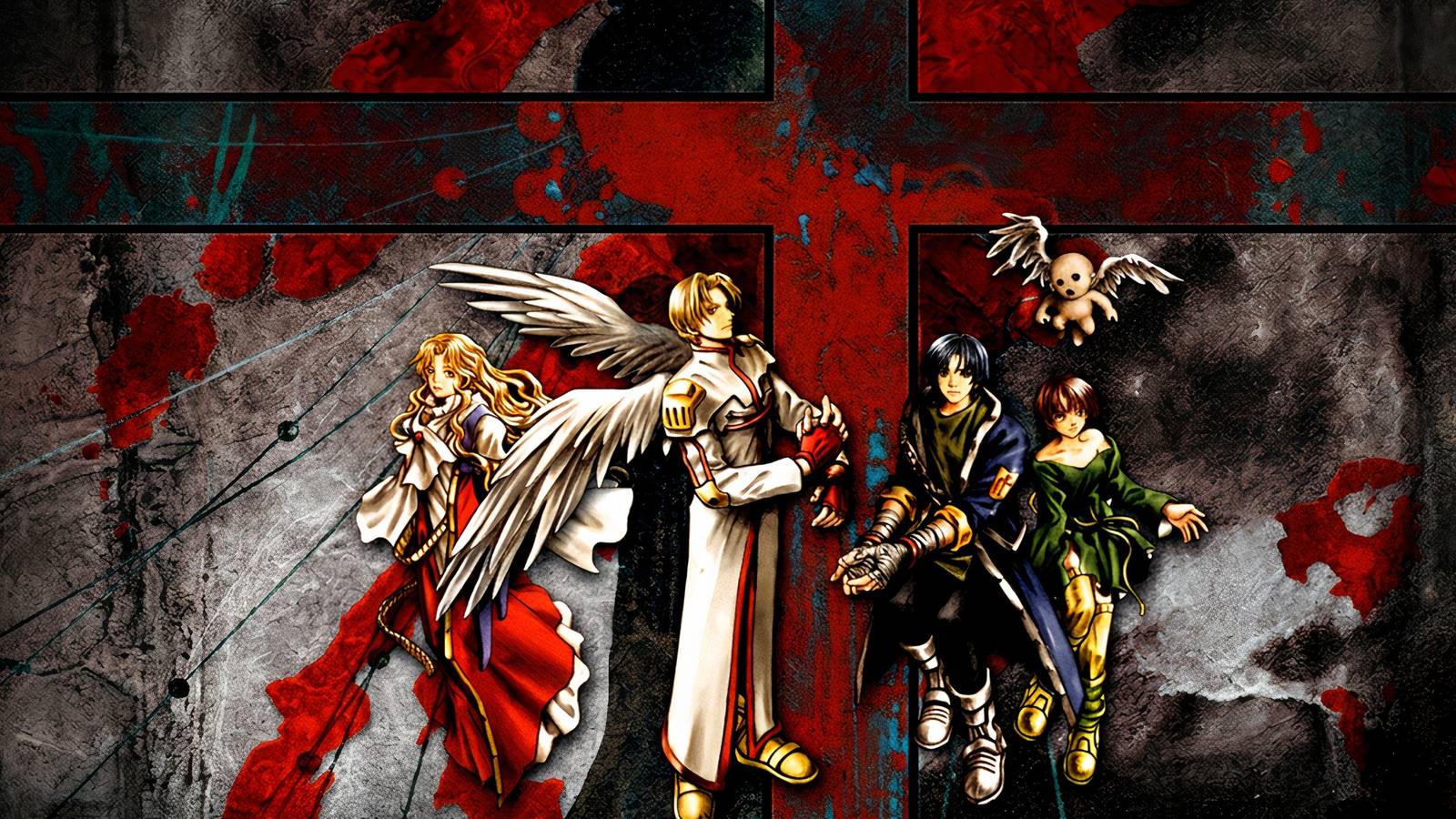


Roguelikes have become increasingly popular, with many modern entries giving players elaborate upgrade systems and new ways to build increasingly powerful characters. However, one of the strangest dungeon crawlers of the PlayStation 2 era took a very different approach to repetition. Originally released in 1998 to a mixed reception, Baroque is a deeply unsettling JRPG roguelike that treats death as an essential part of its world, using repeated failures to gradually reveal its mysteries. Its oppressive atmosphere and deliberately disorienting storytelling make it an experience unlike almost anything else in the genre.
Although Baroque eventually received a remake, its original design philosophy still feels surprisingly relevant to modern roguelikes. I have always loved how its grotesque aesthetics complement its themes, with even seemingly mundane gameplay mechanics contributing to the feeling that the player is exploring a fundamentally broken reality. Having spent time with Baroque and its wider collection of supplementary material, I believe its greatest lessons for modern roguelikes are that repetition can serve a narrative purpose, and that games should not be afraid to take bold, potentially outlandish symbolic stands. A run does not always need to end with a stronger character or a more impressive build. Sometimes, the most meaningful reward is understanding a little more about the nightmare you have entered.
Baroque Makes Death Feel Like Part of Its World
Many roguelikes use death as a learning opportunity. Players discover enemy attack patterns, experiment with different equipment, and gradually become better equipped to survive future runs. Baroque incorporates some of these familiar ideas, but its approach to progression feels considerably more unsettling. The protagonist repeatedly descends into the Nerve Tower, a hostile structure filled with grotesque creatures and cryptic encounters, while the circumstances surrounding the world gradually become clearer. Death becomes part of the experience rather than a simple punishment for making a mistake.
What makes this approach so effective is how naturally it fits the game’s themes. The world of Baroque is one in which identity, memory, and reality itself are difficult to understand. Repeatedly returning to the Tower reinforces that instability, making each attempt feel like another fragment of a much larger puzzle. I find this considerably more compelling than progression systems that exist primarily to make subsequent runs easier. Permanent upgrades can be satisfying, but Baroque demonstrates how repetition can also reinforce a game’s atmosphere and central ideas.
Progression Should Make Players See the World Differently
Modern roguelikes frequently reward persistence through permanent upgrades, unlockable characters, and increasingly varied builds. These systems give players tangible reasons to return after a failed attempt, and there is nothing inherently wrong with that approach. However, Baroque suggests that progression can be more interesting when it changes the player’s understanding of the experience rather than simply improving their chances of survival. Its fragmented storytelling encourages players to reconsider previous encounters as they uncover new information.
This design philosophy is particularly interesting because Baroque does not always make its narrative easy to follow. Characters offer conflicting perspectives, terminology can be confusing, and individual revelations may raise more questions than they answer. Players must assemble their own understanding from scattered pieces of information. This reflects the game’s development, too: director and writer Kazunari Yonemitsu has discussed using Tarot cards to generate ideas and discover connections between otherwise disconnected concepts. The resulting story feels like a collection of fragments gradually forming a larger picture, an approach that makes discovery feel personal rather than purely transactional.
Even Baroque’s Grotesque Mechanics Reinforce Its Themes

One of the reasons I love Baroque is that its disturbing visual design extends into its gameplay systems. The world is filled with unsettling creatures and objects, and the game’s mechanics often make ordinary actions feel strangely uncomfortable. Equipment can become stuck to the protagonist, while items such as Gliros and Feather Worms can help remove unwanted attachments. These mechanics are easy to interpret as practical dungeon-crawling complications, but they also fit a world where bodies and objects seem disturbingly susceptible to alteration.
Throughout Baroque, characters and objects appear to merge in unnatural ways, from conjoined individuals to the bizarre fusion of a Mind Reading Thing and a Sense Sphere. Imagining equipment becoming fused directly to the protagonist’s flesh makes the process of removing it considerably more horrifying. Even consuming Flesh items or Hearts can be interpreted through a similar lens, as though the material is being absorbed into an injured body rather than eaten normally.
Modern Roguelikes Could Learn From Baroque’s Uncomfortable World

There is a tendency for roguelikes to make failure increasingly comfortable through generous checkpoints, persistent bonuses, and systems that smooth out the rough edges of repeated attempts. These features can improve accessibility and make experimentation more appealing. However, Baroque demonstrates the creative potential of resisting that impulse. Its hostile environment is part of what makes its narrative effective, and its refusal to explain everything immediately encourages players to sit with uncertainty instead of expecting every encounter to provide a clear reward.
That does not mean modern roguelikes should imitate Baroque by making themselves deliberately obscure or frustrating. Some of its rough edges have aged poorly, and its unusual mechanics will not appeal to everyone. Instead, developers could take inspiration from how thoroughly its systems support its themes. A roguelike about desperation could make survival feel increasingly precarious, while a story about fractured identity could let repeated runs challenge the player’s assumptions about familiar characters. The important idea is that a game’s progression, mechanics, and narrative can reinforce one another, giving repetition a purpose beyond extending the experience.
I still find Baroque fascinating because its grotesque world feels inseparable from the ideas it explores. Its emphasis on distortion, alienation, and the difficulty of understanding reality gives its dungeon crawling a distinctive identity, while its fragmented storytelling rewards players willing to engage with its mysteries. Modern roguelikes have developed countless ways to make repeated runs satisfying, but Baroque offers a reminder that progression does not always have to mean becoming stronger. Sometimes, returning to a hostile world and gradually learning how it works can be rewarding in its own right. That is a lesson worth remembering, especially for developers who want their roguelikes to leave a lasting impression long after the final run.

- Released
-
June 28, 2007
- ESRB
-
T For Teen // Animated Blood, Fantasy Violence, Mild Language, Mild Suggestive Themes, Tobacco Reference
- Developer(s)
-
Sting, Inc.
- Publisher(s)
-
Sting, Inc., Rising Star Games Ltd.
- Number of Players
-
1