



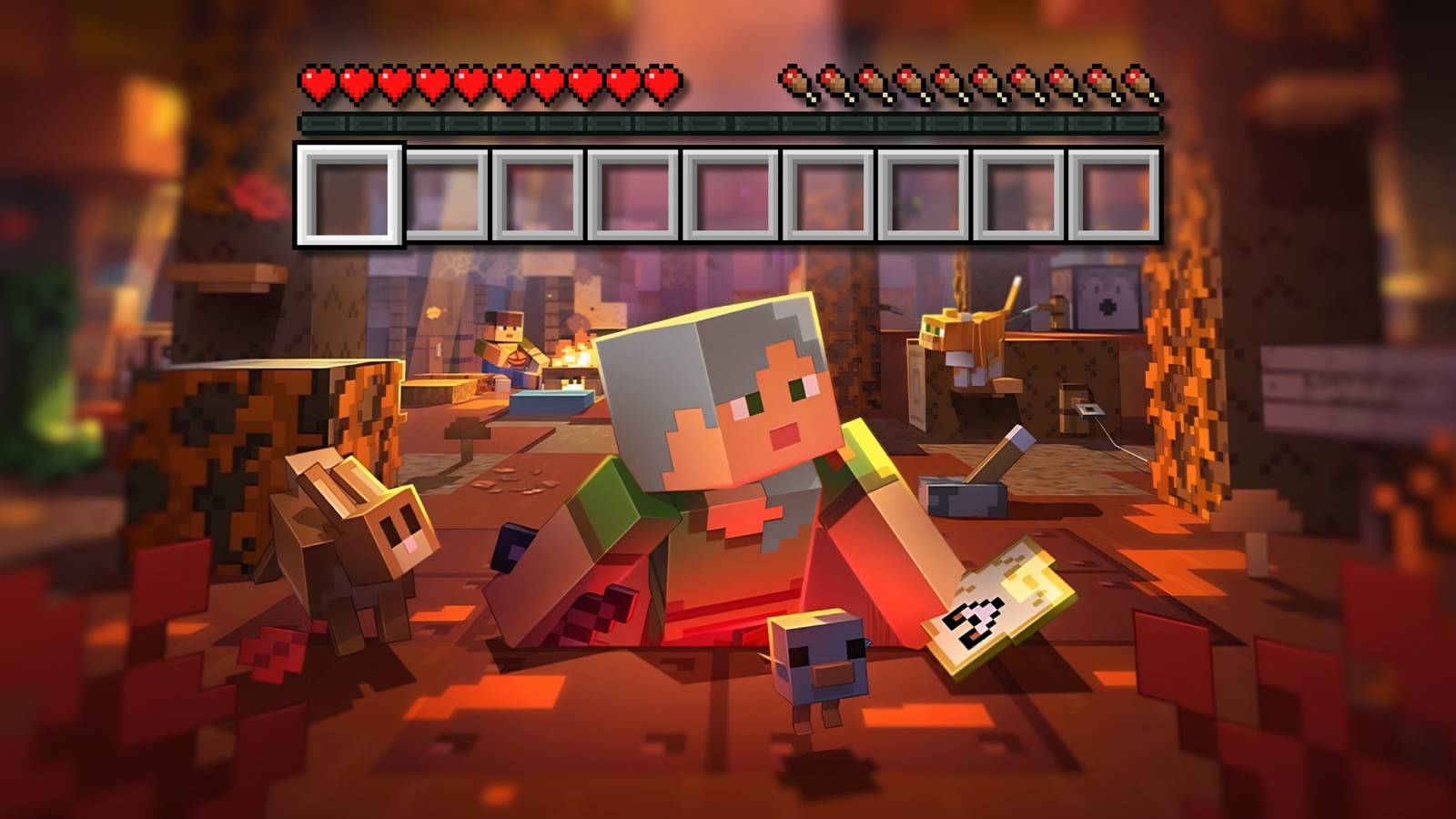
If you’re anything like me, the version of Minecraft you remember most put a great deal of importance on surviving the first night. You spawned with nothing and knew nothing, but every system in the game pointed you toward the second sunrise: punch a tree, make some tools, and dig into a hillside before you learn what a creeper sounds like up close. And though very little about this loop has truly changed in today’s Minecraft, it just feels like a radically different game—especially now that there’s a storefront, spinoffs, and a menu full of other ways to play in this game’s world.
Of course, Minecraft‘s hunger bar, mobs, and long climb from wooden tools to the Ender Dragon work about the way they always have. Yet, as Minecraft has become a far better sandbox and a platform in its own right, that expansion has come at a subtle (if necessary) cost. It’s good news to some, bad to others, but the facts remain the same: Minecraft‘s survival mode is now one tenant in a much bigger building, and, yeah, that has changed the feeling of the thing outright.
Minecraft’s Greater Ambitions Are Crystal Clear
See, ten years ago was just about the last time Minecraft existed purely as a game. Nowadays, Minecraft is a multi-generational platform and greater IP, and it’s been that way for a while: Mojang announced the Marketplace in April 2017, and the Better Together update folded console, mobile, VR, and Windows 10 players into one Bedrock version with access to the same storefront. The pace of that “platform-ization” has only picked up more and more sharply, especially over the past year.

Guess the games from the emojis.
In July of 2026, Xbox CEO Asha Sharma moved Mojang under her direct oversight, writing in a letter to staff that Minecraft and Candy Crush had “increasingly become platforms and are our largest by monthly active players.” Weeks later, an internal memo obtained by The Verge laid out four strategic priorities for Xbox, one of which was to make Minecraft “the world’s creator platform.” The same memo committed to investing in the game more than ever before, which is a striking promise considering that — as a parent company — it was (and still is) in the middle of sweeping layoffs.
Yet, as Minecraft has become a far better sandbox and a platform in its own right, that expansion has come at a subtle (if necessary) cost.
These ambitions very clearly stem from a competitive target. Game File reported in July that Sharma believes Microsoft has badly underinvested in Minecraft, citing a source who said the game was roughly as big as Roblox six years ago before Roblox outspent it on growth by about five to one. And in the time since, there’s been a wave of Mojang hiring across creator monetization and partner developer relations, with some listings naming Roblox, Fortnite‘s creator tools, Unity, and Fab as competing platforms to defend against.
Sharma’s October pick for Mojang CEO, former Reddit chief product officer Maria Angelidou-Smith, was brought on in part for her experience with creator ecosystems and monetization.

To be clear, none of that is inherently bad for players, but it does change what Mojang’s update calendar is built to serve. Since 2024, the studio has replaced its big annual summer update with smaller game drops spread throughout the year, and those drops have leaned heavily toward new building blocks, mob redesigns, and visual upgrades that builders and creators can put to work immediately. Larger-scale survival-focused content — the kind that once reshaped how a world progressed from start to finish — now tends to arrive in pieces or wait its turn behind everything else.
Some Minecraft players find that disagreeable, and on its face, it’s hard to fault them for that. That said, the survival audience is hardly united on what it wants: Mojang’s most direct attempt in years to toughen survival progression, a villager trade rebalance that first appeared in snapshots in 2023, saw distinct pushback from a vocal share of players who feared losing their trading halls. Most of it is still in limbo, and only the cartographer and wandering trader changes moved out into the live game across Bedrock and Java.
Survival Is Still There, Waiting for Its Turn
-
 Image via Mojang
-
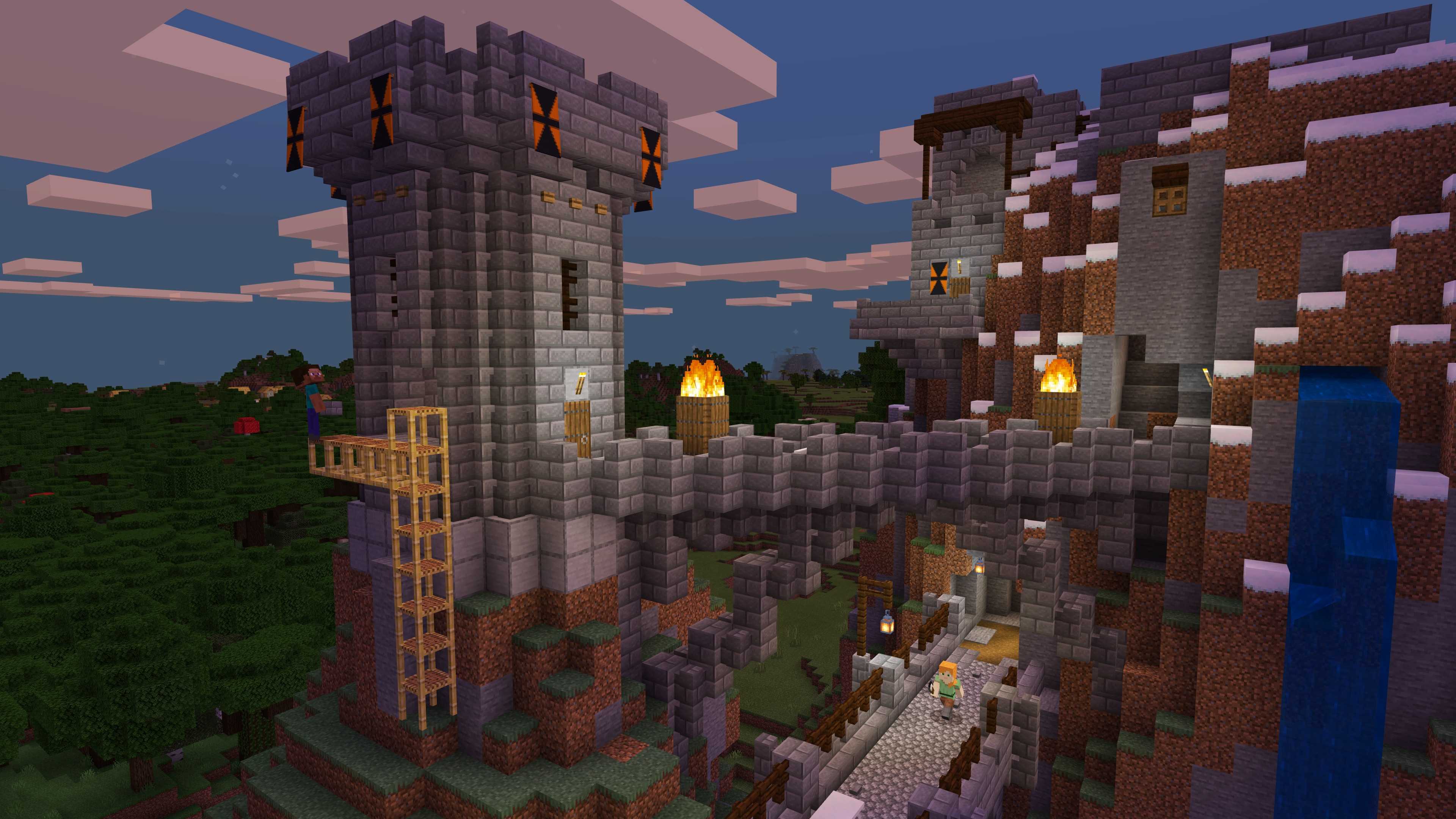 Image via Mojang
-
 image via Mojang
It’s not like Mojang has flatly walked away from the mode, either; the last two game drops added some mechanical depth with mapping changes and Sulfur Cubes, and the latest update is built around ice caves and a frozen zombie variant that chills players on hit. A fourth dimension, called the Sift, is also slated to arrive in 2027 as the first new Minecraft dimension in a decade. These are meaningful additions that can change how players interact with the mode, and if the Sift turns out to be as substantial as a new dimension should be, it could do more for the survival loop than anything since the Nether overhaul.
Still, I’d argue the act of surviving in Minecraft has not moved all that much in a long time. The core gameplay loop — especially early on — isn’t any different, and most of what’s been added sits beside that path rather than on it. Part of that may simply be age and iconicity; the game has been so ubiquitous in the culture and so mapped out by wikis that there’s not much left to actually generate surprise on those first few nights.
Yet I’d like to think Mojang can push beyond that, and that is why I’m so quick to say Minecraft is a “worse” survival game here. It may not be the experience Microsoft is most eager to grow, sure, but Minecraft‘s survival mode will always have its place. It’s never even been less-than-great. I just hope that statement might remind Mojang that it could go even deeper to make the survival experience even better.

- Released
-
November 18, 2011
- ESRB
-
E10+ For Everyone 10+ Due To Fantasy Violence