




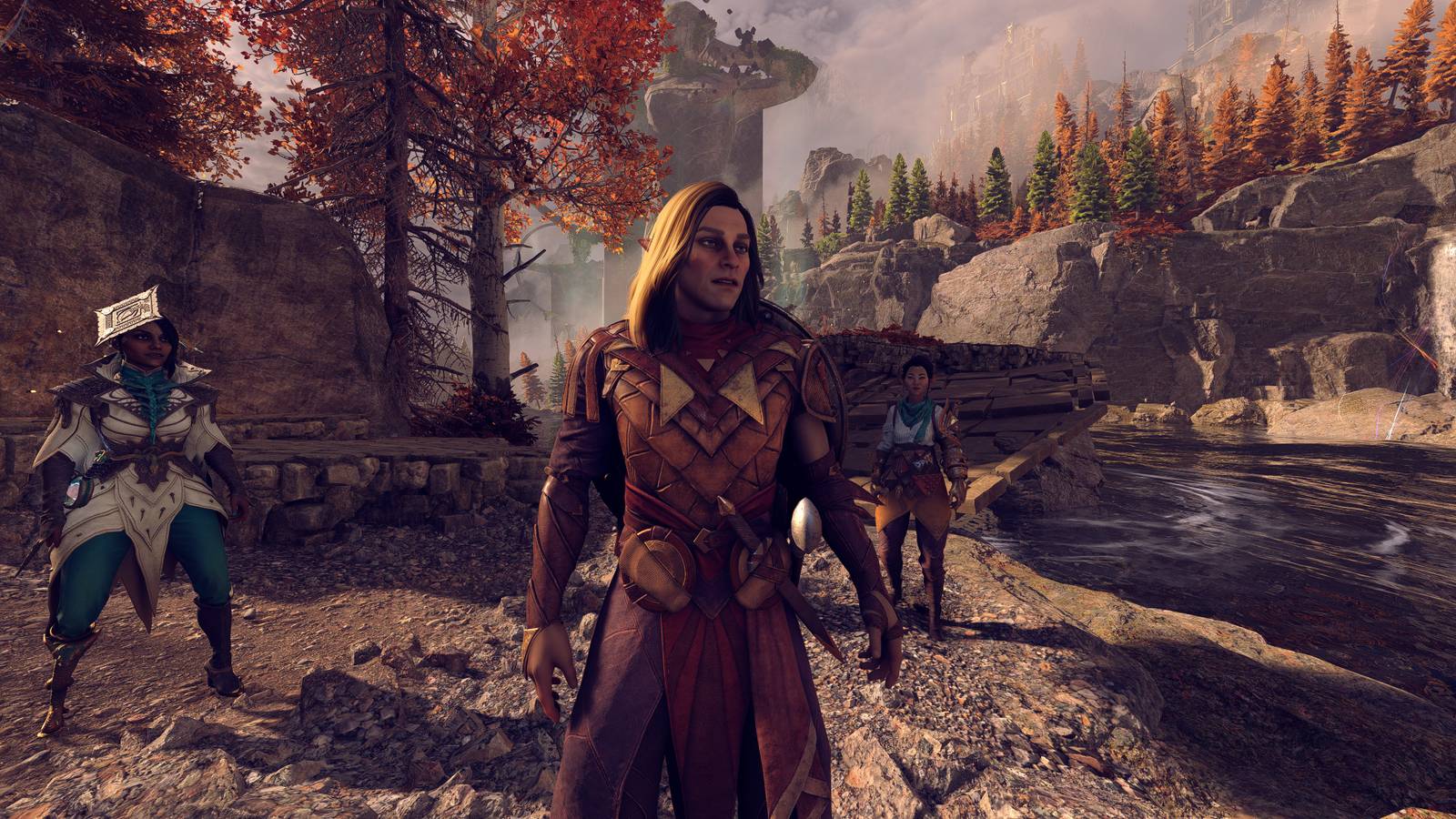
A high-level pitch for a scrapped Dragon Age project has been revealed by a former BioWare graybeard, outlining some ambitious, promising ideas. Unfortunately, this vision for Dragon Age never saw the light of day, with Dragon Age: The Veilguard releasing in its place.
With BioWare’s tragic closure by EA this year, it’s highly unlikely that we’ll see any Dragon Age game ever again, or at least for the foreseeable future. With Dragon Age‘s latest entry launching in October 2024 to a decidedly mixed reception, BioWare’s next major release was ostensibly going to be a new Mass Effect, but that ship has sailed. Interestingly enough, a concept trailer for Mass Effect 5 (AKA Mass Effect: Universe) was revealed following the news of BioWare’s closure. This trailer doesn’t feature any in-engine footage, and was clearly made with the sole intention of capturing the “vibe” of the upcoming Mass Effect, but it did a bang-up job: many fans agree that the trailer paints an enticing picture of what could have been. A similar thing has happened with this newly unveiled Dragon Age pitch.
BioWare’s Initial Pitch for Dragon Age 4 Sounds Pretty Great
Longtime BioWare producer Mark Darrah recently drew back the curtain on what the current state of the Dragon Age franchise could have looked like. In a pitch book detailed by Darrah in the wake of BioWare’s closing, a very different vision for Dragon Age 4 can be glimpsed. Among the more tantalizing aspects of this pitch document is a description of the game’s “reactive world,” which sounds philosophically distinct from what came before, and most certainly what would come later.

Rearrange the movies into the correct US release order.
Sign in to claim your place on
the leaderboard!
This canceled Dragon Age concept, which was referred to under the codename Joplin at the time the pitch book was created, aimed for increased reactivity in the game environment. Aspirations along these lines included a dynamic weather system, destructible environments, and varying types of terrain (“sinking into mud” is an example Darrah cites). Beyond the literal, physical environments of the game, the Joplin pitch book mentions social interactions outside the realm of traditional conversations, and heists that could change the state of the game world, alluding to a highly reactive sandbox.
At the time of writing, the entirety of Joplin pitch book has not been revealed to the public. The above information comes from Mark Darrah’s YouTube channel, where he elucidates certain aspects of the book.
Granted, most of these high-level aspirations were just that—aspirations. Darrah himself admits that, even if everything had gone according to plan, the final realization of this original Dragon Age project would have almost certainly turned out differently. He notes specific variables that would have caused some degree of reshaping, including the art team’s reluctance to implement a dynamic day-night system and the fact that heists were already beginning to be phased out. In the end, BioWare didn’t need to manage any of these challenges, as Dragon Age 4, bafflingly, moved ahead as a live-service game. Eventually, BioWare changed tack and returned to its single-player roots, and Dragon Age: The Veilguard is what we got.
This canceled Dragon Age concept, which was referred to under the codename Joplin at the time the pitch book was created, aimed for increased reactivity in the game environment.
But even if we accept that the Joplin book was essentially “propaganda” for EA executives, as Darrah describes it, it still sends an interesting message about the project’s ambitions. Love it or hate it, Dragon Age: The Veilguard has basically nothing in common with the immersive, reactive RPG experience hinted at in the pitch. In essence, Veilguard tries to be a cinematic action-fantasy story: it’s more concerned with entertaining and empowering players than challenging them through complex systems, and it certainly isn’t breaking new ground in terms of environment design or interactivity. The Joplin pitch’s guiding light of reactivity could have given us a much more interesting Dragon Age project.
If Dragon Age Ever Returns, the Joplin Pitch Book Could Be a Good Launchpad
I know it may seem a bit soon to speculate about the revival of any BioWare game, but if the past twenty-odd years have taught us anything, it’s that media conglomerates love their reboots. As maligned as Veilguard was, Dragon Age is still a household name for a lot of gamers, and there’s a pretty high chance that EA will want to capitalize on that sooner or later.
If and when that happens, perhaps the big dreams laid out in the Joplin book will come to fruition. Motivated by the seemingly cursed fate of BioWare, future developers may want to take a big swing at bringing back such a beloved franchise, and a reactive, nuanced world with creative social mechanics could be just the ticket. Dragon Age: The Veilguard is a game that, in my opinion, suffers greatly from a lack of ambition, among other things, so perhaps a bolder approach will be more successful in the future.