






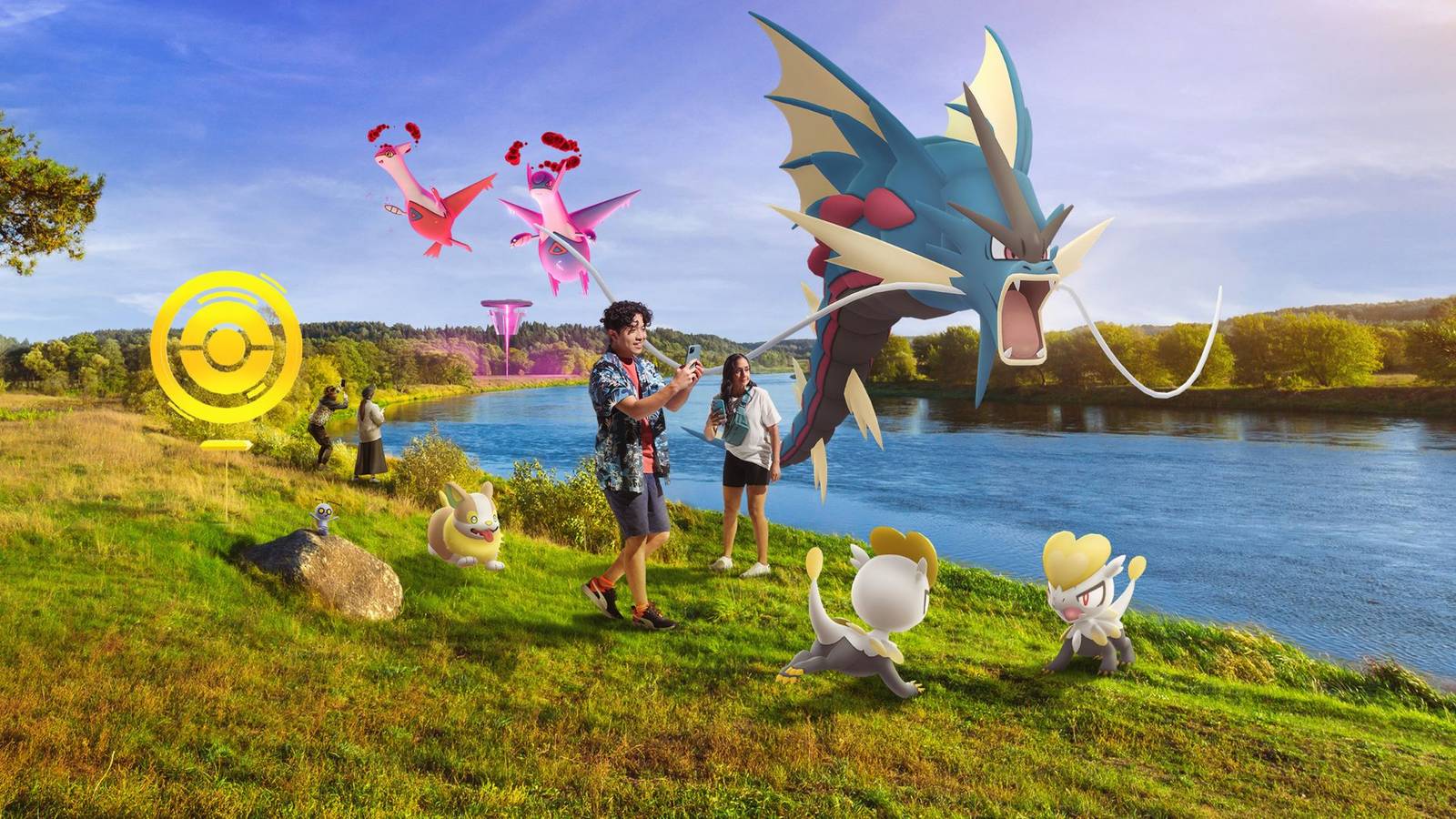
Upcoming changes to Pokemon GO‘s Mega Raids could be beneficial for in-person players but bad for those trying to raid remotely, as leaks regarding a new currency tied to the raiding system present it as a double-edged sword. Mega Raids in Pokemon GO provide players with the opportunity to add some really powerful Pokemon to their teams, but those who don’t physically show up for the fight may be paying more to participate in the near future.
Mega Raids in Pokemon GO were first revealed in late summer 2020, and they were added to the regular raid schedule shortly thereafter. Featuring Mega Evolved Pokemon as bosses, these battles aren’t for beginners, as they’re typically listed under at least a Tier-4 difficulty. While similar in function to other raids, they also tend to produce much more valuable rewards, including the ability to add monsters capable of Mega Evolution to players’ Pokemon rosters.
Pokemon GO Reveals Big Changes Coming to GO Battle League
Pokemon GO is making considerable changes to the way that battles work, which should result in significant improvements for the GO Battle League.
Pokemon GO’s New Currency Could Make Life Harder for Remote Raid Players
But a new datamining leak reveals that performing Remote Raids on Mega Battles could become a lot more costly, while showing up to them in person could grant players with more options for participation. In late January, a controversial Pokemon GO currency called Link Charge was revealed by leaker The Pokemod Group, with reports stating that it would somehow be tied to joining Mega Raids. Now, an additional leak shared on Reddit by user axnknight613 reveals that Scopely may require players to spend 200 Link Charge in addition to a Remote Raid Pass in order to participate in level 4 or 5 Mega Raids, while previously, only the Remote Raid Pass was required.
However, the leak states that the same standards will not be implemented for those players showing up in person to participate in Mega Raids, and in fact, the new system might make things a bit easier for them. According to the leaked information, the 200 Link Charge fee could still apply, but in-person players will have the choice of either spending the new currency or expending a Raid Pass, not both. Getting Raid Passes in Pokemon GO can be performed in a number of different ways, from spinning Gym Discs and completing Research Tasks to purchasing them with real-world cash from the in-game shop, but the supposed changes coming to the game would give in-person players an additional option for participating in Mega Raids if they happen to run out of Raid Passes.
Drag weapons to fill the grid
Drag weapons to fill the grid
EasyMediumHard
None of this information has been confirmed by Scopely, but generally, fans seem to be disappointed with the possible changes coming to the Mega Raid system, with many players feeling the new currency adds an unnecessary level of complexity. A seemingly large majority seems to see the change as a potential cash grab by Scopely, with one player noting that a three-pack of Remote Raid Passes already costs 600 coins in the shop, and they’re not looking forward to spending more coins to make sure they have enough Link Charge to cover the entry fee. Several players also see the addition of Link Charge fees to Remote Raids as part of a continuing trend that makes Pokemon GO unfair to rural players, who already have fewer options to participate in Raids and Gym Battles or to spin PokeStops, due to their concentrated nature in more populated areas.

Still, there are at least a few fans of the game who think Scopely’s plan goes even deeper. When the game was first launched under original developer Niantic in 2016, part of the company’s goal was to use Pokemon GO to encourage physical fitness and a sense of community, getting gamers to use the augmented reality technology to go out into the real world and meet other players. Remote play has diminished that sense of community in the eyes of some, but if Scopely could reinvigorate it, the company could capitalize by using fellow player engagement to get its fan base more actively invested in the game, both in terms of time and money.


- Released
-
July 6, 2016
- Engine
-
Unity
- Multiplayer
-
Online Multiplayer, Online Co-Op