



Ubisoft is celebrating its 40-year anniversary today, March 28, 2025. Below, we look at how Ubisoft helped to establish the modern game industry, and where it may go from here.
In 1986, Zombi was released for the Amstrad CPC computer. The first-person adventure game heavily borrowed from George A. Romero’s Dawn of the Dead, to the point that knowledge of the film’s plot was necessary to complete the game. While it received decent reviews, Zombi’s only remarkable quality is being the debut game of a French developer called, at the time, Ubi Soft.
Four decades later, and Ubisoft has shed both the space in its name and its somewhat humble beginnings to be one of the biggest names in the entire video game industry. Ubisoft franchises are some of the best-selling in history, from Assassin’s Creed to Just Dance; the company has dealt with some of the biggest IPs around, from Star Wars to Avatar; its list of subsidiaries spans the globe, from Abu Dhabi to Toronto. Anyone who has played a video game in the past 20 years or so has likely touched an Ubisoft game.
Yet even though a 40th anniversary should be a celebration of the company’s extreme longevity–and we all know how impressive that is in today’s market–the mood around Ubisoft is far from celebratory. Failed takeovers, a massive sexual misconduct scandal, huge layoffs, and consistent profit charts with the arrows pointing the wrong way have left many doubting that there will be a 50th anniversary. The unfortunate truth is that Ubisoft shaped a games industry that has now outgrown one of its biggest masters.
Prince of Persia: The Sands of Time
Ubisoft was born from a family company run by the five Guillemot brothers. Following Zombi, the company steadily built out its team and kept up its output in distributing, publishing, and developing games. It soon became the biggest distributor of games in France, but the studio truly made a name for itself with the release of Rayman in 1995. The platformer was a hit, and by 1998, the studio had expanded with new locations in France, China, Italy, and Canada. In a sign of shrewd business insight, Ubi Soft focused on free-to-play studios to cash in on the rise of the internet and corner the American market that had thus far eluded it. The move was a huge success, and the ballooning profits allowed Ubi Soft to acquire an IP that is still productive to this day: the works of legendary military-fiction author Tom Clancy.
Rainbow Six, Ghost Recon, and Splinter Cell were hits, and the road was paved for a defining era of Ubi Soft, which became Ubisoft in 2003 in a branding change alongside the now-iconic swirl logo. Ubisoft’s collection of popular franchises kept growing, both original and acquired. Far Cry. Prince of Persia. Myst. Then, in 2007, arguably the company’s most famous series began: Assassin’s Creed. It’s hard to point to a better candidate for what a AAA game of the PS3/360 era looked like. The graphics were top of the line, the parkour gameplay was fluid, and the world was filled with things to do and places to explore. I can remember the first time climbing some historical landmark in Assassin’s Creed: Brotherhood and seeing that swirling shot of Rome to reveal more of the map. These weren’t just revolutionary stories; they were central to the games industry as a whole. Until they weren’t.
AC games became yearly releases; 2014 even had two. Review scores slowly dropped as the repercussions of the annual output became apparent: mainly, the games became buggier, peaking with the very-broken Unity, and fatigue grew and grew. Not just for the surprisingly complicated lore, but the worlds themselves. They were still beautiful and wide, but shallow. Checking off tasks on a map became tedious. Find this chest. Parkour to this collectible. Kill this prominent soldier. Climb this tower so you can fill out more of the map and do it all over again. The series was reimagined to focus more on RPG elements starting with Origins, but this grew stale too, and eventually it went back to paying homage to the early games with Mirage.
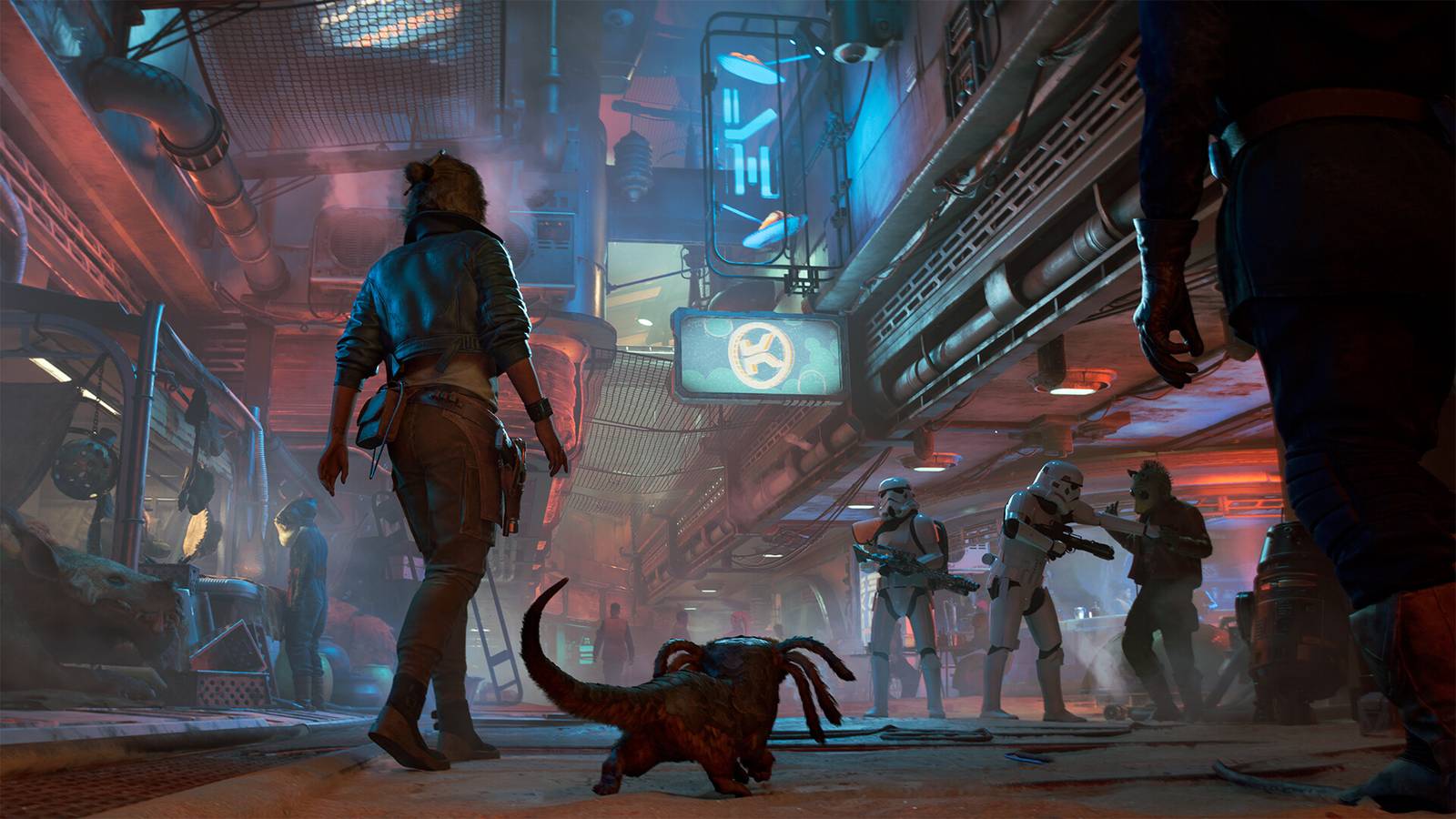
It wasn’t just these games suffering from growing fatigue and indifference to “map games”. Far Cry and Watch Dogs tried the formula to increasingly mixed success. Meanwhile, Ubisoft’s rivals found ways to improve on the open-world formula. Red Dead Redemption II had a world bigger than any Ubisoft game and four times as deep; From Software’s enemy design and combat dwarfed the button-mashy nature of fighting in Assassin’s Creed; even modern “map games” like Horizon Zero Dawn felt more fresh. It meant that recent Ubisoft open-world games like Star Wars: Outlaws were met with a shrug.
One once-innovative game that feels anything but today is The Division. Another title in the Clancyverse, Ubisoft CEO Yves Guillemot thought it such a landmark release that he thinks of the company as “before The Division” and “after The Division”. This ended up being true, but not in the way Guillemot planned. Though The Division sold well, the switch to always-online, multiplayer live-service titles has been the beginning of the end for the French giant.
The Division 2
For one, there could hardly be a more crowded genre these days. Fortnite, Apex, Roblox, Overwatch, Destiny, all of them, for better or worse, have had more of a cultural impact than either Division title. An attempted takeover by French media company Vivendi was eventually aborted, and Ubisoft’s sales numbers dropped. What had once felt so new now felt so tired. People were no longer interested in spending 60 hours crossing off tasks that feel like chores. “Ubisoft dialogue” became a pejorative to describe the contrived, expository, quip-heavy “cool” writing so common in AAA games.
Ubisoft then began the 2020s with a sprawling company-wide sexual misconduct scandal. An investigation revealed that years of complaints against several high-ranking executives had been swept aside because the accused were behind the company’s success. The toxicity was not limited to the top floor, as several employees compared Ubisoft to a frat house, with a belief that female protagonists did not sell video games. More and more details and lawsuits have trickled out over the years, as the company’s profits more than trickle down. Layoffs and cancelled games are making more headlines than their games this decade.
Whether Ubisoft’s impact on the AAA landscape was positive or negative, it was inarguably innovative and influential. It seems that the beast they shaped has now outgrown them after four decades of steady success; in a world where no studio is too big to fail, Ubisoft might be the beast’s next prey.