




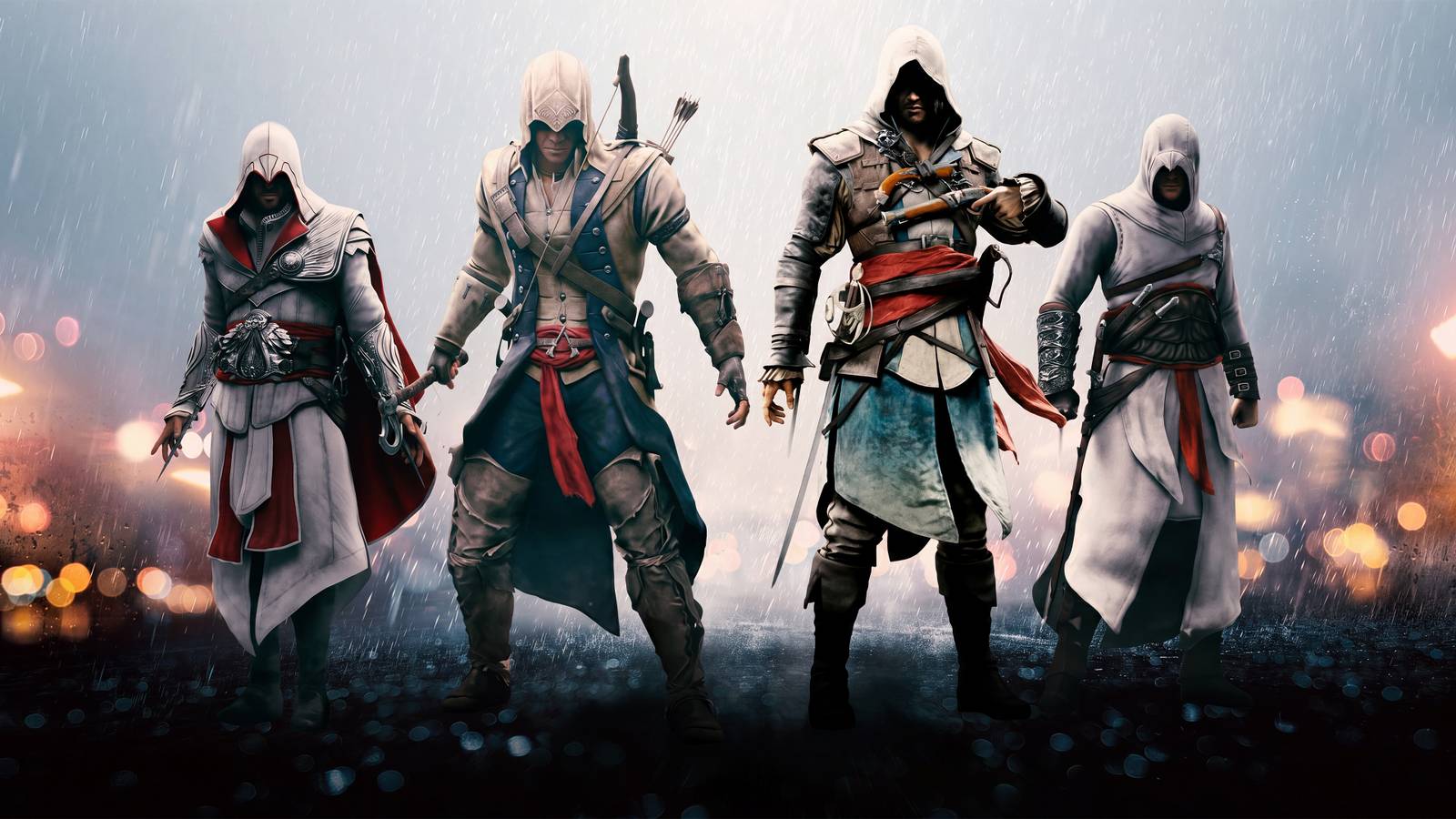
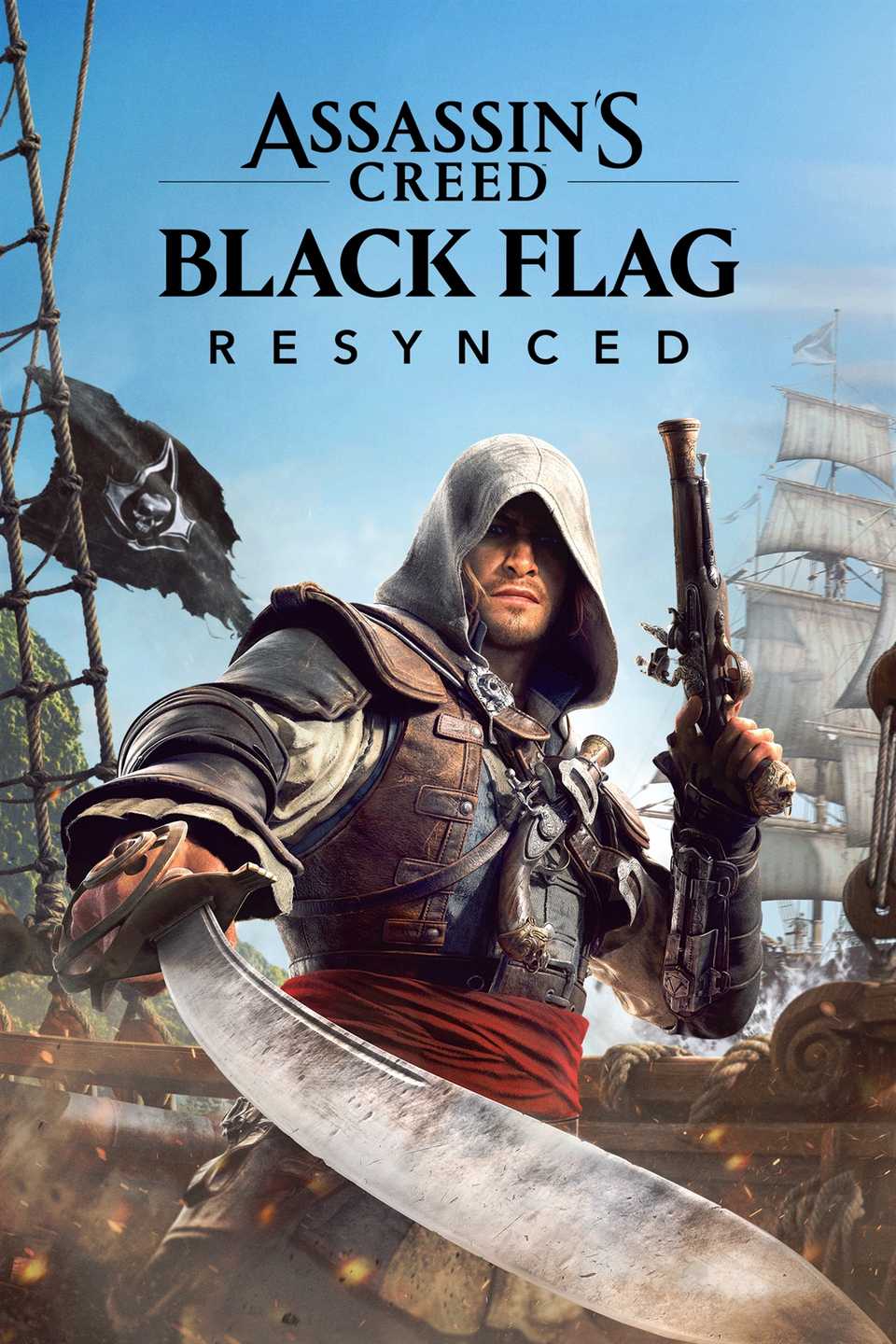
I’ve been playing a lot of Assassin’s Creed Black Flag Resynced over the last several days, and while I’ve been enjoying every minute reliving this fresh take on one of my favorite experiences in the franchise, I’ve also been looking forward to the possibilities of what Ubisoft can do next. At this point, the studio has proven they know how to make a faithful remake that still feels like it belongs in the current era, so as far as I’m concerned, they shouldn’t stop there. In fact, although Assassin’s Creed Black Flag Resynced justifiably resurrected an installment that arguably deserved it, there are Assassin’s Creed classics pre-dating Black Flag that I actually think deserve it even more.
The thing is, I know it’s going to be up for debate which classic Assassin’s Creed game deserves to be completely rebuilt, and that part is unavoidable. Some are naturally going to say Assassin’s Creed 2, and I get why, while others might say AC3 deserves a remake, which I also understand. However, as much as I wouldn’t mind seeing either of those remade with a modern touch, there is still one other entry that feels like the more obvious candidate, to the point that I legitimately believe it deserved a remake more than Black Flag. Maybe that sounds heretical to you, but Black Flag was already great as it was—the original Assassin’s Creed, on the other hand, has never even achieved “it’s fine” status.
Assassin’s Creed Should Be Next in Line for a Remake
I will admit up front that my very first Assassin’s Creed game was, in fact, Assassin’s Creed 2, not the first game. Actually, I hardly knew the series existed before my cousin called me up on the phone in 2009 and told me how amazing the new Assassin’s Creed game was, suggesting that I give it a try. Trusting his opinion, I immediately made a break for the Vintage Stock nearby, snagged a copy, and the rest is history. That was the day I became a lifelong Assassin’s Creed fan, and nothing has changed since.


Put the consoles in the correct order.
Of course, having played the second entry in the franchise, once I finished it, I needed to go back and try the first. At the time, there were no other Assassin’s Creed games left for me to play, and I was craving more, so the thought of getting at least a dozen more hours in a brand-new entry was enough to get me to buy it. Don’t get me wrong, I finished the game, but I can’t emphasize enough how painful it was to get through.
Black Flag was already great as it was—the original Assassin’s Creed, on the other hand, has never even achieved “it’s fine” status.
The biggest problem was how quickly the entire experience revealed its hand. Almost every assassination in Assassin’s Creed followed the same exhausting routine of entering a new district, climbing viewpoints, and completing a collection of repetitive investigations before the game finally allowed Altair to pursue his target. Eavesdropping meant sitting on a bench and listening, pickpocketing barely changed from one attempt to the next, and interrogations usually amounted to following someone into an alley and beating information out of them.
Those activities might have been tolerable in smaller doses, but Assassin’s Creed leaned on them so heavily that each city’s open world began to feel like the same old checklist wearing a different coat of paint. Even the assassinations themselves, which should have been the reward for all that preparation, were often followed by clumsy escape sequences where the controls were more of a force to be reckoned with than the guards.
Unfortunately, the repetition was only one piece of the problem. Altair moved like he was constantly one button press away from ignoring my intentions, whether that meant jumping toward the wrong ledge, refusing to climb something directly in front of him, or launching himself to his death for reasons known only to him. Assassin’s Creed‘s combat looked impressive at first, but once counterattacks became the answer to nearly every encounter, fighting groups of guards turned into a waiting game rather than a test of skill.
Assassin’s Creed‘s open world did little to ease the frustration, either, since most optional content consisted of rescuing citizens, collecting flags, or climbing another tower with little meaningful reward waiting at the end. Add in the abrupt trips back to the modern day, long stretches of exposition, and a story that takes far too long to let Altair become interesting, and the original Assassin’s Creed ends up feeling more like an ambitious prototype for the much better game Ubisoft made just two years later.
Assassin’s Creed 2 Was Like a Highlighter for the Original Game’s Mistakes
Now, had I started with Assassin’s Creed and then moved on to the second installment, maybe my opinion would have been different about it. After all, Assassin’s Creed 2 made considerable improvements to just about every issue I ended up having with the original game once I played it, and if I had moved in the opposite direction, I would have felt like things were only getting better rather than feeling like my experience with the series was getting worse. At the same time, the scores don’t lie, and even back then, Assassin’s Creed ended up with a Metascore of 81, compared to its little brother’s Metascore of 91 a couple of years later.
All of this is exactly why remaking the original Assassin’s Creed makes so much sense now. The foundation was always there, Ubisoft just didn’t have the formula figured out yet, so most of those ideas were trapped inside a game that repeated itself until even its strongest concepts became tedious. A remake could keep everything that worked (which essentially boiled down to the story and setting), while completely rebuilding the investigations surrounding each assassination, giving players multiple ways to learn about their targets and decide how to approach them. It could also make Jerusalem, Damascus, and Acre feel more distinct, expand the role of the Assassin Brotherhood, and give Altair the character development his story deserved from the beginning.
Even back then, Assassin’s Creed ended up with a Metascore of 81, compared to its little brother’s Metascore of 91 a couple of years later.
In that sense, an Assassin’s Creed remake might actually be easier to justify than Black Flag Resynced was. Black Flag was already a massive hit in its day, so Ubisoft was largely improving an experience players already loved. The first game, however, would give the studio a chance to rescue one that never fully lived up to its own potential. Modern parkour controls could make movement in general far less frustrating, while a deeper stealth system could finally let players feel like an assassin instead of someone repeatedly being forced into open combat. More varied investigations, better side content, and assassination missions with the freedom seen in later entries could turn the original game into the experience its premise always promised.


More importantly, remaking Assassin’s Creed would give Ubisoft the opportunity to revisit the beginning of the franchise without replacing what made it important. Altair, Al Mualim, Masyaf, and the Third Crusade still deserve to be part of the series’ legacy, but the game surrounding them has become increasingly difficult to recommend when almost every sequel improved on it. Black Flag Resynced proved Ubisoft can respect an older Assassin’s Creed game while making the changes necessary for it to feel modern. Now, the studio should apply that same care to the installment that needs it most, because the original Assassin’s Creed shouldn’t have to remain a rough first draft forever.

- Released
-
July 9, 2026
- ESRB
-
Mature 17+ / Blood, Sexual Themes, Strong Language, Use of Alcohol, Violence / In-Game Purchases, Users Interact