








AMD just had the biggest quarter in its history. Revenue climbed 38% year-over-year to $10.25 billion in Q1 2026, according to Bitget News, and the stock popped 16% in early trading on May 6, according to TheStreet.
The engine behind those numbers is artificial intelligence. AMD’s data center segment alone generated $5.8 billion in revenue, up 57% year-over-year, driven by demand for EPYC server processors and Instinct AI accelerators. CEO Lisa Su called it an “outstanding first quarter, driven by accelerating demand for AI infrastructure,” according to Yahoo Finance, and announced a deal with Meta to deploy up to six gigawatts of Instinct GPUs across Meta’s data centers, starting with a custom MI450-based deployment.
For Q2, AMD is guiding to roughly $11.2 billion in revenue, which would represent 46% year-over-year growth, according to Bitget News. That’s the kind of guidance that makes NVIDIA look over its shoulder.
So what does any of this have to do with the next console you’ll buy?
The PS6 Is Built on AMD
Sony’s PlayStation 6, code named “Orion” in current leaks, according to SolidAITech, is reportedly relying on AMD across the board. The most credible specs floating around suggest a custom AMD Zen 6 CPU paired with an RDNA 5 GPU, delivering roughly three times the rasterization performance of the PS5 and somewhere between six and twelve times the ray-tracing throughput, per IBTimes. Memory is rumored at 30GB or more of next-generation DDR7 RAM, paired with an upgraded PlayStation Spectral Super Resolution.
Sony’s also reportedly developing a companion handheld, code named “Project Canis,” that could launch alongside the main console, according to IBTimes.
The point is, every one of those leaks puts AMD silicon at the center of the PS6. The same Zen architecture and RDNA graphics pipeline that just delivered AMD’s record-breaking quarter is what’s expected to power Sony’s flagship for the second half of the decade. AMD’s success on the AI side directly funds the R&D that ends up in a console SoC three years later.
That part is good news for gamers: if AMD is making more money, it has more to invest in custom silicon for partners like Sony. The PS6’s leap over the PS5 is on track to be larger than the PS5’s leap over the PS4, in part because AMD’s architecture roadmap has accelerated since 2020.
The Next Xbox Is Probably AMD Too

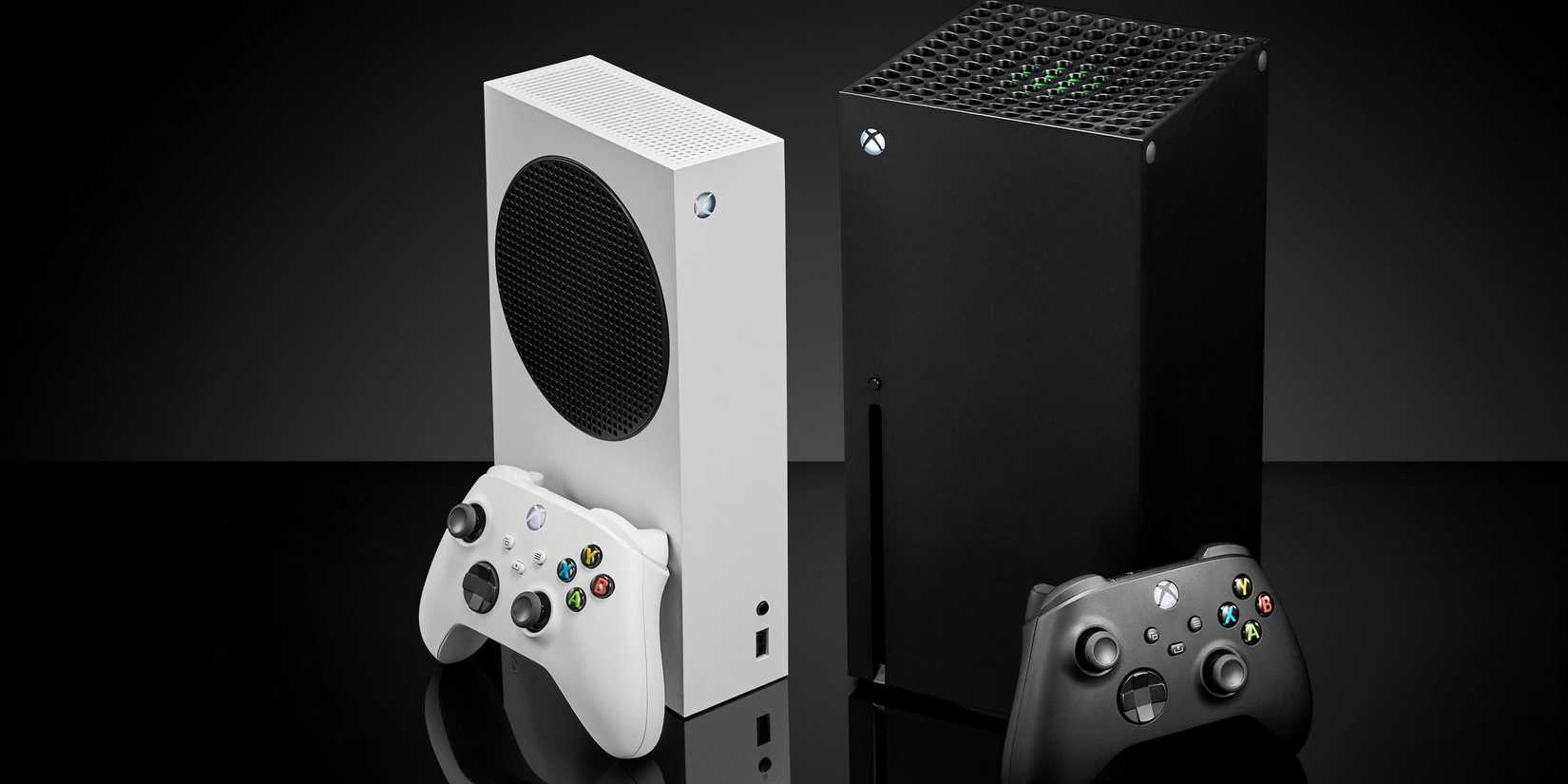
Microsoft has been quieter about its next-generation hardware plans, but the working assumption across the industry is that Xbox stays with AMD. The Xbox Series X runs on a custom 8-core Zen 2 CPU at 3.8 GHz paired with a 12 TFLOP RDNA 2 GPU, according to TechPowerUp, and the Xbox Series S uses the same Zen 2 architecture at a slightly slower clock with a 4 TFLOP GPU, according to Tom’s Hardware. Microsoft itself has detailed how the Series X|S integrates AMD’s RDNA 2 architecture on Xbox Wire, and the partnership has continued into handheld form factors with the Asus-built ROG Xbox Ally, which leans on AMD’s APUs.
If anything, AMD’s Q1 earnings strengthen the case that Microsoft sticks with Team Red. Switching to a competitor mid-generation, like Intel or NVIDIA, would mean breaking compatibility with the entire Xbox One and Xbox Series library, something Microsoft has worked aggressively to preserve on Xbox Wire.
So when Microsoft eventually shows off the next Xbox, expect another AMD logo on the box.
The Catch: AI Is Eating the Console RAM Supply


Here’s where the celebration gets complicated. The same AI infrastructure boom that’s making AMD’s quarterly numbers look like science fiction is also chewing through the world’s supply of high-bandwidth memory. Multiple reports over the past few months have flagged a global RAM shortage tied directly to AI data center buildouts, according to IBTimes Australia. Meta’s six-gigawatt Instinct deployment alone, announced on AMD’s earnings call, represents a staggering volume of memory.
That shortage is now showing up in next-gen console rumors. Earlier 2027 launch targets for the PS6 have been softening over the last few weeks, with insider reports pointing to a possible slip to 2028 or even 2029 if memory manufacturing can’t keep up with both AI hyperscaler demand and consumer hardware needs, according to IBTimes Australia.
Put plainly: AMD’s earnings are great because hyperscalers can’t get enough chips. The same hyperscalers can’t get enough RAM either. Sony’s PS6 needs that RAM to ship at scale and at a price point gamers will pay. The math doesn’t favor an early launch.
The Switch 2 Is the Outlier

One footnote worth flagging: the Nintendo Switch 2 doesn’t use AMD silicon. Nintendo announced the console launched on June 5, 2025, in its April 2 press release, and went with a custom NVIDIA Tegra T239 chip — an octa-core ARM Cortex-A78C CPU paired with a 12-SM Ampere GPU sporting 1,536 CUDA cores, according to Tom’s Hardware. The Switch 2 supports DLSS and hardware ray tracing through NVIDIA’s tensor and RT cores, according to TechSpot, putting graphics performance roughly in the neighborhood of an RTX 2050 mobile.
That means Nintendo is largely insulated from the AMD-driven supply story. The console is shipping in massive volume. Nintendo sold 5.82 million Switch 2 units by June 30, 2025, less than a month after launch, according to CNBC and Fortune, making it the company’s fastest-selling system ever. Its supply constraints are tied to NVIDIA’s roadmap and Samsung’s 8N process node, not AMD’s data center fortunes.
If anything, the Switch 2’s chip choice is starting to look like a fortunate hedge.
What This Means for Gamers

Strip out the financial-press jargon and the picture is straightforward. AMD is in the strongest position it has ever been in — financially, technologically, and competitively, with Q2 guidance of $11.2 billion implying another 46% YoY jump. That’s a long-term win for PlayStation and Xbox, both of whom will benefit from continued investment in custom chip design.
In the short term, though, the same forces lifting AMD’s stock are squeezing the supply chain that next-gen consoles need to launch. The PS6 is unlikely to disappear from roadmaps, with Sony reportedly still targeting Holiday 2027 if conditions allow, according to IBTimes Australia, but the runway looks bumpier than it did six months ago.
For now, the message to gamers is simple. The next generation is coming. It will be built on AMD. And it’s going to be more powerful than anything that came before. You just may have to wait an extra year for it.