

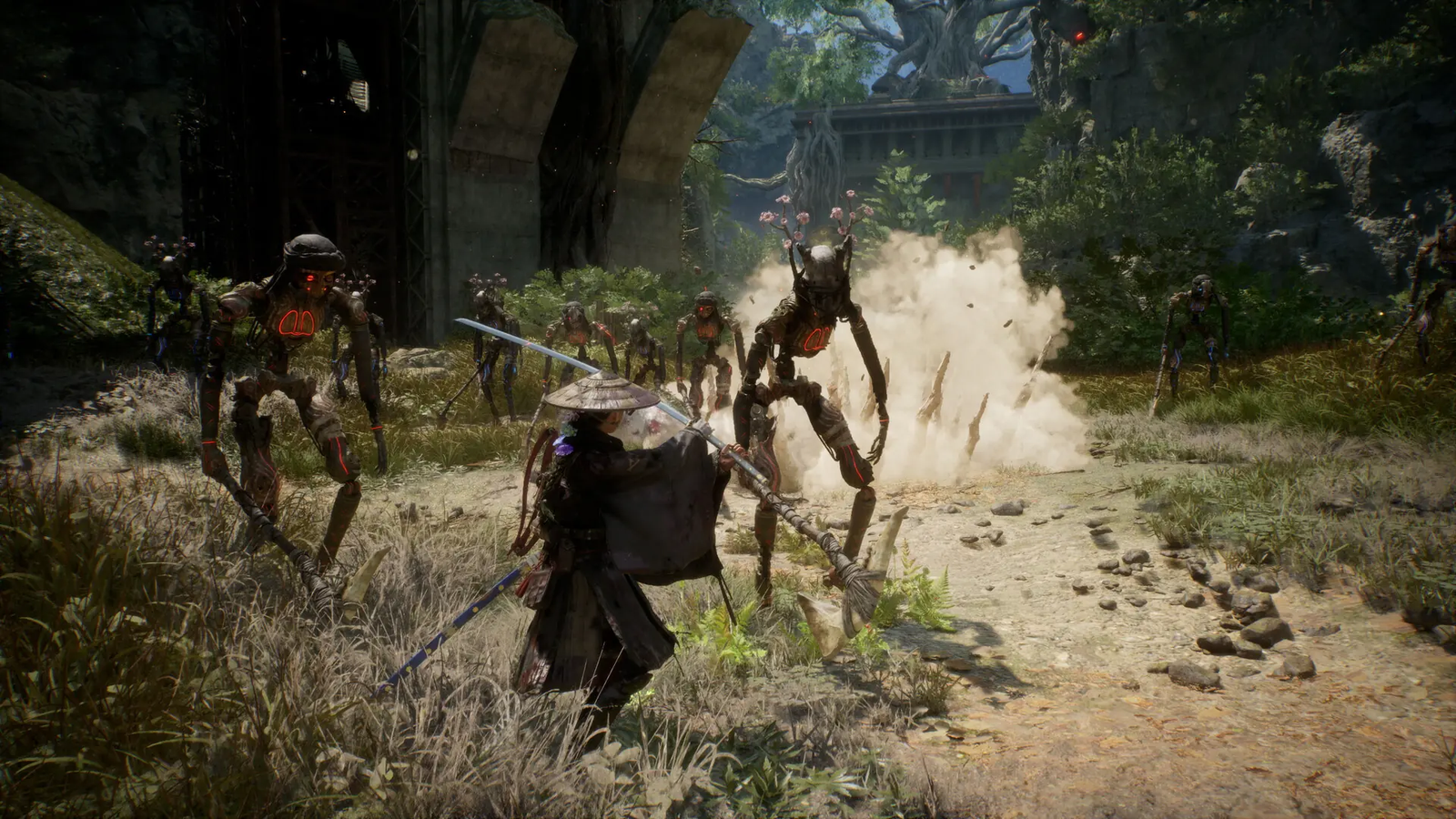
Among 2026’s most hotly anticipated action games, Beast of Reincarnation might be the most unexpected. Coming from longtime Pokemon developer Game Freak, Beast of Reincarnation feels like a clear line in the sand, an emblem of the company’s ambitions beyond turn-based creature-collecting.
After going hands-on with Beast of Reincarnation, GameRant sat down with Game Director Kota Furushima to talk about its goals, influences, gameplay-story connection, and more. The following transcript has been edited for brevity and clarity. This interview was conducted via a Japanese-English interpreter.
Kota Furushima Talks Koo, Beast of Reincarnation’s Cute Canine Companion
GameRant: Beast of Reincarnation has a very strong balance of real-time combat and tactics-oriented combat via Koo. Was this particular balance something you had in mind from the start of development, or was it something that evolved over time?
Kota Furushima: In order to convey the process of how this system came to be, I feel that I need to explain the concept behind the game itself. The concept of the game was really about a pair bonding in a very harsh landscape. How are these characters going to work together in this environment? Real-time action was going to be the centerpiece of the battle system, but when you think about your partner or comrade, how do they come into the gameplay?
I didn’t want to have a different character simply replicating various actions. Rather, I wanted to see how they work together in this world. While Emma would execute things in real-time action, Koo, the partner, could go in and introduce a different dynamic by being more slowed down and offering a menu of different abilities. This creates a dynamic of dependency between the two characters, while also showing how one is different from the other.
GR: I actually have a specific question about Koo. He’s adorable, which is something I was very surprised by, because he looks like a big, scary wolf-like creature at first, but he is actually quite sweet and dog-like. Is there anything you can tell me about the process of developing Koo’s appearance and personality?
Furushima: We decided early on that the dynamic we wanted wouldn’t work with another human character. I went back to the idea of a battle system that requires commands, and what animal would be most fit for accepting commands? Man’s best friend, the canine, came up immediately. The idea of a dog being a comrade for Emma really made natural sense.
From a story perspective, the pair needs to survive in this harsh landscape. Given the disease that affects the Malefacts [corrupted animals serving as enemy NPCs], it really makes sense for an animal like Koo to become a much larger size.
GR: Furushima-san, you said in a January Beast of Reincarnation gameplay overview that the game stemmed from three core concepts: warmth, trust, and loneliness. How does Emma’s relationship with Koo factor into these themes?
Furushima: It’s hard to go too deep in answering this question without spoiling the story, so I’ll tread on thin ice.
Emma has memory loss and is generally very emotionless, but the essence of the journey is Emma and Koo being together. Immediately, the player understands this through the combat system: Emma and Koo are a great duo. You get the sense that they work well together in a combat situation. That’s the introduction to their camaraderie in the short-term.
But as you spend more time with the game, you start to understand the reasons behind why they work together and how they need to progress. Once you can look at their relationship from a more long-term perspective, new emotional elements start to come into play: they start to understand each other, going through feelings of empathy, solidarity, and all the other emotions one would experience in any kind of relationship.
On Beast of Reincarnation’s and Thematic and Mechanical Cores
GR: As is often the case with a new IP, Beast of Reincarnation has been getting compared to a lot of different games. Sekiro: Shadows Die Twice and NieR: Automata are two that I see a lot. In your opinion, are these accurate comparisons? Are there any other games that have had a big impact on Beast of Reincarnation’s development?
Furushima: I won’t argue with what the community has said, but I don’t feel that there’s any particular title that comes to mind in this regard. I am a gamer myself, so I do get a lot of inspiration from other titles that I’ve seen. But if there’s one thing that I would say the game does have a strong connection with, it’s the movie Blade Runner. That movie has a sense of world-building that really hits home for me, so I looked toward it when developing Beast of Reincarnation, especially in the context of mixing reality in fiction. However, I would say that I used it more as a reference point than inspiration.
GR: I wasn’t really expecting you to reference Blade Runner, but after playing the game, I’m not exactly surprised. In particular, the Golems of Beast of Reincarnation kind of remind me of Replicants from Blade Runner, this strange blend between humanity and machines. Can you say anything about these Golems and how they factor into the game’s sort of cyberpunk, Blade Runner style?
Furushima: The world has been faced with the Blight, and in order for humanity to survive, their only option was to transfer their souls into machinery. These machines are Golems. They were a way for humanity to survive, and allowed them to survive through 2,000 years, which is how they exist at the start of the game.
GR: So the Golems have been forced to live in these forms for a very long time. Are they still human?
Furushima: That’s not only difficult for me to answer, but I would also like it to be more of a question posed and answered by the players themselves. With that said, the Golems are the only existing beings that can carry the history, knowledge, and experiences that humanity has had over the centuries. Being a Golem is the only way for a human to continue existing. But again, I’d like players to make that determination themselves.
GR: One more question. I played Beast of Reincarnation alongside two other previewers, and when we chatted at the end, we discovered that we had each played the game in different ways. One of them was super into the exploration, the other gunned it through the story, and I went all in on the combat. Did you expect that there would be so many different approaches to the game, or was that more of a pleasant surprise once you started playtesting?
Furushima: This question really aligns more with the philosophy that Game Freak has: our games are built upon surprising players and creating a sense of discovery for them. This is the framework they use when making games. Those three elements you mentioned are some of the ways players can enjoy themselves, so we’re very conscious about it. We thought about the different pathways individuals can take in a game, whether they be related mostly to story, exploration, battling, and we became aware of how we could enhance and present those experiences to different players.
GR: Is there anything else that you would like to say to our readers before we wrap up?
Furushima: I don’t have any fixed ideas behind designing the game, so I’d like to have players really discover their own experience through Beast of Reincarnation. However, I will say that there is a secret theme behind the story—I won’t delve into it, but players can figure it out themselves. It will probably be a challenge, though.
And also, don’t look up in the game’s sky [laughs].
[END]
- Released
-
August 4, 2026
- Publisher(s)
-
Fictions
- Number of Players
-
Single-player
Beast of Reincarnation will release on August 4, 2026 for PS5, Xbox Series X|S, and PC.