


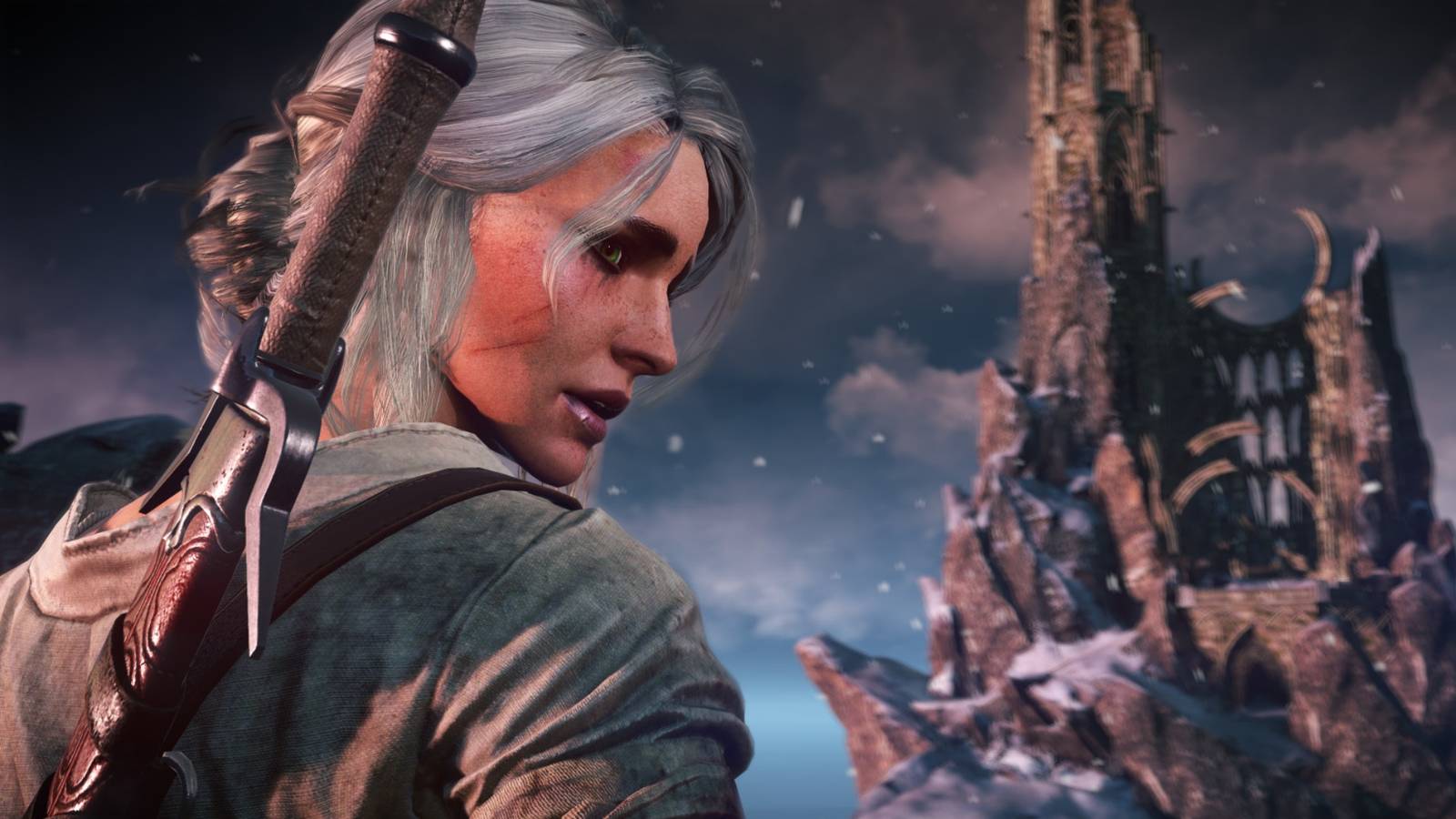



With Cyberpunk 2077 making a massive comeback over the past several years, The Witcher 3 potentially getting a DLC, and an enigmatic new IP in the works, it seems like CD Projekt Red is on fire once again. The famous Polish studio is an undeniable giant in the games industry, and one of the most exciting entities to watch despite its past blunders. And with 20-plus years in the field, CDPR has nurtured a number of talented developers, some of whom are hard at work on The Blood of Dawnwalker, which is one of the coolest-looking fantasy RPGs I’ve seen in some time.
The Blood of Dawnwalker is the debut from Rebel Wolves, a studio formed by former CD Projekt Red developers in 2022. Perhaps the most significant aspect of this game’s development is that it is being directed by Konrad Tomaszkiewicz, who previously directed The Witcher 3 alongside Mateusz Kanik and Sebastian Stępień. Rebel Wolves’ Witcher pedigree is evident in The Blood of Dawnwalker from the outset: the game is clearly influenced by Eastern European folklore as much as Tolkien-esque high fantasy, and its mature, merciless world has the edge you’d expect from one of Geralt’s adventures. But The Blood of Dawnwalker is far more than a Witcher 3 clone or offshoot, and it deserves your attention.
How Blood of Dawnwalker Places a Premium on Player Agency in its Quest Design
Blood of Dawnwalker’s writer and lead quest designer share how the game aims to place player agency at the forefront of its branching questlines.
The Blood of Dawnwalker Has You Playing as Both Monster and a Hero
Rather than being set in a stand-in country or continent like most fantasy stories, The Blood of Dawnwalker takes place in the European Carpathian Mountains, albeit in a fictional region called Vale Sangora. Vale Sangora is presided over by a pack of vampires who impose a blood tax, requiring the area’s citizens to participate in regular rituals to donate mass quantities of blood. This is the price the population pays to avoid more absolute, brutal subjugation.

Rearrange the covers into the correct US release order.
Rearrange the covers into the correct US release order.
Easy (5)Medium (7)Hard (10)
The game puts you in the shoes of Coen, a silver-poisoned peasant who is transformed into a vampire by the aforementioned vampiric clan at the start of the game. Perhaps due to his condition, the transformation doesn’t go as planned, and Coen becomes a Dawnwalker: human during the day, vampire at night. The Blood of Dawnwalker’s main quest follows Coen as he attempts to rescue his family from the vampires who changed him.
Time Plays a Unique Role in The Blood of Dawnwalker
As a Dawnwalker, Coen has distinct abilities at night and during the day. While the sun is shining, he primarily fights with melee weapons, although he also has access to certain magic abilities. Naturally, his interactions with NPCs are different as well. When night falls, Coen instead fights with massive claws and other vampire-specific abilities, and also gains traversal abilities, such as the power to walk up walls and teleport across short distances. To use these abilities, Coen will need to feed on human blood, adding another wrinkle to the gameplay loop.
This bifurcation of Coen’s identity can have a considerable impact on how certain quests play out. In one The Blood of Dawnwalker gameplay showcase, Rebel Wolves offered a concrete example of this, showing off a quest that begins in a cathedral. During the day, Coen can enter the cathedral without any problem, chat with the deacon to obtain information, and eventually find what he’s looking for with the help of some blood magic, which is only usable in human form.
But as a vampire, Coen cannot simply waltz into the cathedral, as it’s closed at night for vampiric rituals. There are other options available, though, as Coen’s vampire movement powers allow him to surreptitiously enter the building and observe the ritual from afar, gaining exclusive narrative insights in the process. There’s even an especially tough enemy encounter that can occur under these circumstances, which would be absent in the daytime quest route.
This time-segmented gameplay loop is an interesting wrench that could very well take The Blood of Dawnwalker from good to great. If the game’s narrative sandbox is really as nuanced and detailed as Rebel Wolves has made it out to be, then Dawnwalker’s replay value could be off the charts. Worth noting is that the studio has characterized time as more of a resource to be spent, like in the Persona games, than a ticking clock, which will likely serve to alleviate any sense of undue pressure on the player.
Time is fundamental in The Blood of Dawnwalker’s main story too, since Coen is only given 30 days to save his family.
If The The Blood of Dawnwalker Can Nail the Action-RPG Basics, It Could Be Something Really Special
The split between Human Coen and Vampire Coen, facilitated by unique time mechanics, helps The Blood of Dawnwalker stand out, but it’s still a combat-heavy, action-adventure RPG at the end of the day. Good combat, exploration, and progression will be crucial for the game’s success, especially since it will probably be relentlessly compared to The Witcher 3, for better or worse. One can only hope that Rebel Wolves’ depth of experience with fantastic RPGs shines bright in The Blood of Dawnwalker.

- Released
-
2026
- Developer(s)
-
Rebel Wolves
- Engine
-
Unreal Engine 5
- Number of Players
-
Single-player