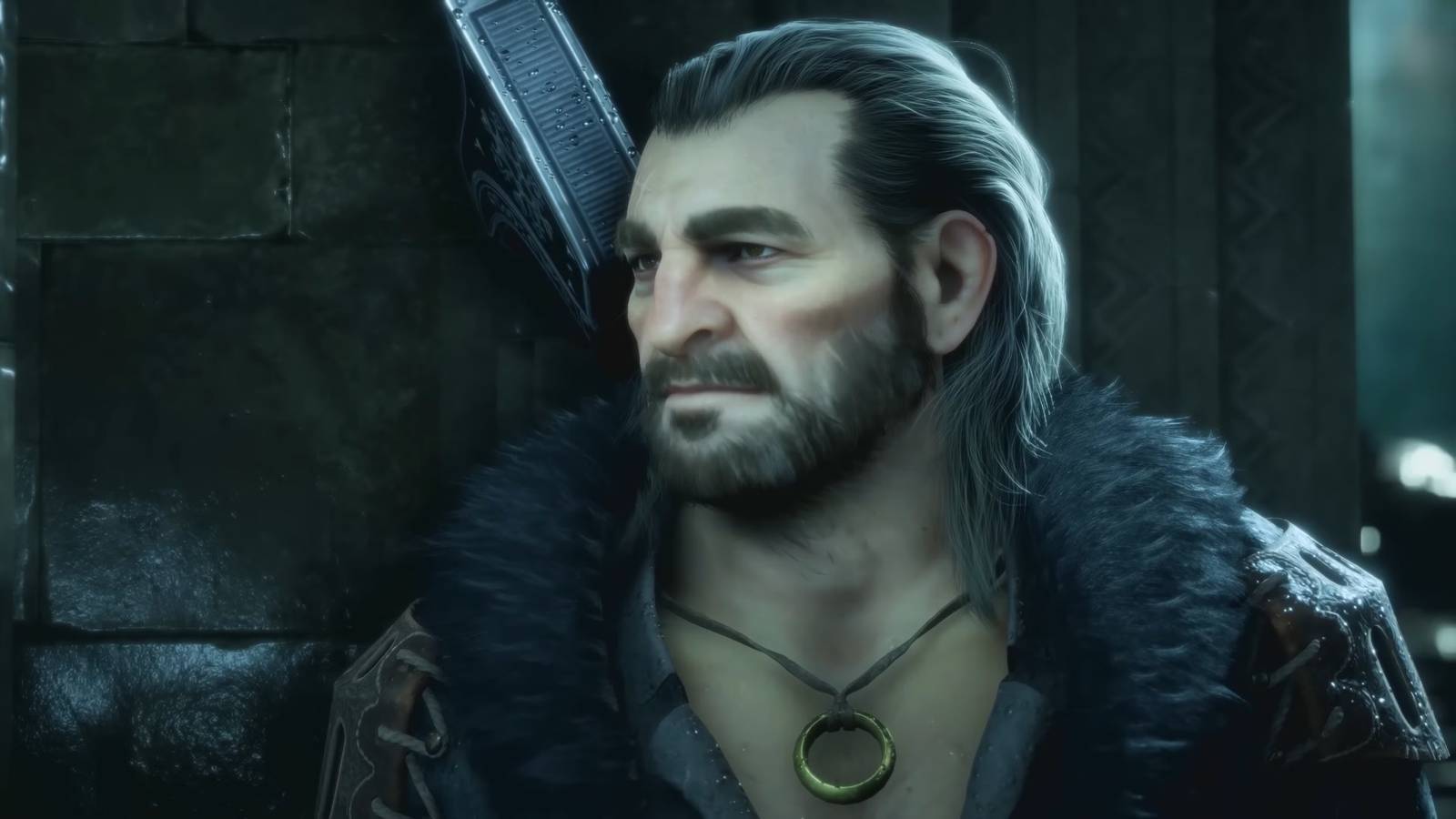


Spoilers for Dragon Age: The Veilguard Ahead.
“At their heart, stories are about change” is not a quote from Varric, although the scoundrel would almost certainly claim it as his own. No, it’s spoken by Dragon Age: The Veilguard protagonist Rook during the final slides of the game, where they discuss the end of their journey, the end of their companion’s journey, and everything won—and lost—along the way. One of the most basic rules of storytelling is this: a journey cannot “end” where it began. Change has to happen, but all stories (however big or small) also change themselves.
Stories Are About Change
Here’s some inside baseball, evidenced by the screenshot below: In mid-September, I added a task to ASANA to write about Dragon Age: The Veilguard‘s second anniversary. I knew I wanted to write about it, intending to do so every year, but the question was what. Last year, I discussed my 10/10 Dragon Age: The Veilguard review, and you should know, two years later, I still stand by it. This year, I was inspired to write about Dragon Age 2 and Dragon Age: The Veilguard, specifically how both games are unique in the franchise with the way they approach the idea of storytelling. I felt clever when I came up with the initial headline: “Dragon Age: The Veilguard & The Stories That Live with Us Forever.”
The idea was inspired by a book I read earlier this year: Boss Fight Books and Charlotte Reber’s Dragon Age 2, which included interviews with the dev team about DA2‘s rugged, Wild West-like development hell. I felt it was clever because I would have adjusted the final line of the game to talk about Dragon Age‘s history with changing stories, changing lore, and twisting and changing everything through a specific lens. That’s the beauty of my initial idea at its core. It was about interpretations: how we interpret Varric’s tall tales in Dragon Age 2, how we interpret the evolution of Evanuris lore from gods to evil mages, how we interpret what the Blight and Darkspawn were/are/is and could, how the Grey Wardens were a “pure,” “moral” “”organization” with dark secrets in DAO and how that changes when we become the victims of those dark secrets, how Ferelden/Southern Thedas propaganda painted a different depiction of Northern Thedas than what players encountered, and how ultimately interpretation is at the core of Dragon Age: The Veilguard—Was Rook a Hero? Was Rook a Miscreant? Was Rook The One? Was Rook Not? Was Rook A Planner? Or Was Rook Not? Was Rook Just Rook, and could Rook just be rook? Did Rook smell good? In so many ways, Solas was a mirror to the Inquisitor in Dragon Age: Inquisition, good or bad; Dragon Age: The Veilguard held a mirror up, too.
I would have had so much to say, I could keep going even on this super-abridged summary, but at least for this year, that story changed. How could it not?
Change Hurts…

BioWare closed. If that didn’t change what this story would become, it would change nothing. BioWare was a developer’s developer. The endless pouring out of support on social media, the signatures dotted across the #SaveMassEffect Petition, and the number of developers who have talked about how BioWare inspired them felt a unique kind of pain. Grief. BioWare was not perfect, but BioWare was BioWare, and BioWare told stories.
And of course, it should be noted that BioWare is not the first domino to fall. As of this writing, the games industry has lost over 12,000 jobs this year alone: that’s the last 50 developers at BioWare, 240 times over. From layoffs to shutdowns, so many dominoes have changed. Xbox. PlayStation. Sucker Punch. Auroch Digital. System Era Softworks. Skybox Labs. Liquid Swords. Ubisoft. Fishlabs GmbH. Gamepires. RedLynx. 2K. Whitehorn Games. Original Fire Games. Drop Fake. Yellow Brick Games. Gravity Well. Electric Square. NErial. Straight4 Studios. Cold Iron Studios. Undead Labs. Build a Rocket Boy. Heart Machine. Visionary Realms. Polyarc. KO_OP. FuturLab. Star Stable Entertainment AB. Plug In Digital. East Side Games. Next Games. Crytek. Digixart Studio. Schell Games. Night School Studio. Stoic. Moonloot Games. CD Projekt Red. Supermassive Games. Halo Studios. Riot Games. That’s No Moon. MEtric Empire. Refact Games. Tilting Point. Fortis Games. Double Fine Productions. Lightspeed LA. Vermila Studios. Skybound Entertainment. NACON. Midgar Studio. ZA/UM. Scopely. Spectarium Games. Klang Games. 1047 Games. Originator Inc. Azra Games. id Software. High Moon Studios. Zenimax Studios. Zenimax Media. Xbox. Voodoo io. Midgar Studio. Bethesda Game Studios. Red Rover Interactive. OtherSide Entertainment. Naintic Spatial NZ.
I’m sorry, dear readers, who think the line break means I am done: that’s just through July 1 of this year. Chief Rebel. IO Interactive Istanbul. Keywords. Bungie. Combat Waffle Studios. Maximum Entertainment. Strikez. Douze Dixièmes. Kabam LA. CCP Games. 11 Bit Studios. Queen Digital Entertainment. OtherSide Entertainment. Kwalee Labs. Big Bad Wolf. Ubisoft Barcelona. Ubisoft San Francisco. Ubisoft Winnipeg. Ubisoft Belgrade. Modern Games. Vertigo Games. Amsterdam. Metacore. PlayerUnknown Productions. Team17. Rec Room Inc. PlaySide Studios. Manticore Games. Quantic Dream. Night Street Games. Mercury Steam. 31st Union. Build a Rocket Boy. Seeker Entertainment. Second Dinner. Grip Digital. Snapshot Games. Spiders Games. Behaviour Interactive. Iron Galaxy Studios. Take-Two Interactive. Piranha Games. Tarsie Studios. Playrix. Repeat. Polyarc Games. Pixelberry Studios. Eidos Montreal. Ivy Road. Reality Labs. Dark Outlaw Games. Epic Games. PlayStation. Imangi Studios. Might Build and Test. Red Storm Entertainment. Crystal Dynamics. Warner Bros. Montreal. Battlefield Studios. nDreams. Build a Rocket Boy. Halfbrick Studios. Tripwire Interactive. Wildlight Entertainment. iWOT Games Montreal. Full Circle. TiMi Montreal. MidSummer Studios. Odyssey Interactive. Ubisoft Toronto. Bluepoint Games. Atomic Arcade. Playable Words. 10 Chambers. Hinterland Entertainment. Wildlight Entertainment. Riot Games. Ustwo Games. Sumo Sheffeld. ProbablyMonsters. Manticore Games. Interpid Studios. Secret Dimension. Super Evil MEgacorp. NetEase Montreal. Moonshot Games. Starbreeze Entertainment. Leikir Studio. Raccoon Logic. Illogika Studios. Playtika. Sanzaru Games. Armature. Twisted Pixel Games. Ubisoft Global. Supernatural. Camouflaj. Ubisoft Halifax. Cloudhead Games. The Game Band.
How much more red blood must be given to feed the love of green money and invisible machines?
We Will Always Be Grateful…

Stories change. The story of the industry has changed and finds itself battling its own Blight, but nowhere is the idea of changing stories captured more than at the very end of Dragon Age: The Veilguard: “And we will always be grateful to those whose stories brought us where we are today…and those whose stories will live on with us forever.”
A story gets passed on. In Dragon Age 2, Varric spun a tale to amuse the Seeker and keep her attention away from Hawke; in Dragon Age: Inquisition, that story Varric tried to avoid came to life, a true epic of heroes and villains; and in Dragon Age: The Veilguard, his own personal tale comes to an end. While fans can debate how well-executed Varric’s death was in Dragon Age: The Veilguard all day, the fact remains: Rook held onto Varric’s stories, Varric’s lessons, and carried them in ways both hidden and painful. Rook carried Varric’s stories.
In ways both hidden and painful is that interpretation applied to BioWare. When BioWare was founded, it was a new, fledgling studio that developed real talent, and that talent would go on to do great things in the worlds of Baldur’s Gate, Star Wars, Dragon Age, Mass Effect, and so much more. For a time, everyone who entered BioWare’s halls was all the better for it, but slowly but surely, that talent moved on for myriad reasons. Some talent still filled those halls when, at times, they had no reason to, and there’s no doubt talent filled its halls when Dragon Age: The Veilguard released and when the ragtag group of would-be heroes battled the archdemon of game development on the new Mass Effect. Fans carry Dragon Age’s stories.
Mass Effect fans are organizing and fighting to save the IP, and while there’s some debate about what that means, it also applies to the former studio members and the name of BioWare.
But the older BioWare games are emblematic of “those whose stories brought us where we are today.” We, here, means me. My friends. My fellow fans. Game media peers. Game developers. The Industry. EA. Storytelling in video games. Everyone who has ever loved a BioWare game, regardless of what IP it belonged to, has been shaped by its stories—brought here to 2026, to reading this article today, and to whatever may come next.
So famously, one dev stated that “Dragon Age isn’t dead because it’s yours now.” As much as I love the sentiment, as it was intended to comfort fans who feared for the future of Dragon Age, I would give it back. There’s still so much unexplored in Thedas. So many questions I have, not least of which is the fate of the Grey Wardens, what a Blightless Thedas looks like, if that even remains true, THE EXECUTORS IN DRAGON AGE. I know many fans like myself who would restore BioWare and Dragon Age, if they could, if they won the lottery, but I want to experience those stories, not make them (again, this is a hypothetical scenario). In a perfect world, BioWare was never pushed to its wit’s end, never lost talent due to inane decision-making, and delivered its best in every game it ever released. In a perfect world, I would never even consider the hypothetical “what would I do if I could buy Dragon Age from EA?” In this world, I want my stories back, but this isn’t a perfect world and there’s no going back.
Those Whose Stories Will Live On With Us Forever

BioWare’s stories will live on with us forever; in so many ways, Dragon Age: The Veilguard is about the changing of the guard, however painful it may be, and understanding the importance of “those whose stories will live on with us forever.” BioWare is gone. Even if EA changed course now, it would not undo years of abusive work practices, misguided decision-making, or general harm done to its storytellers. But that’s where the importance of names and storytelling comes into play. BioWare is gone, but its storytellers are still out there, hopefully taking their craft further and contributing to what could be the next BioWare.
BioWare’s stories can live on forever, not just in the metaphysical-in-our-hearts sense, but a literal one. EA’s loss can be someone else’s gain. The industry is bleeding, but many of those who worked at BioWare, who worked on Dragon Age, are doing as Varric did: passing on their stories. Every writers’ room with former BioWare talent in it is made all the better for it, and eventually, in turn, that talent will share its stories. BioWare, the people and not the name, made the industry better.

In a perfect world, the Archdemon of industry woes is defeated, EA brings back BioWare, and offers everyone to come back who defined the studio, pays them handsomely, gives them everything they need, and BioWare the Entity makes everything it ever wanted with no mistakes and to great success. To some degree, a world without mistakes is so incredibly boring; there would be no stories to tell. In a fair world, I would not fantasize about a perfect world; and in this world, BioWare is gone. Not its talent, but BioWare.
But BioWare’s stories can still live in a literal sense too. I want to be clear: I wish and hope more for the developers impacted two years ago and today than I do hope for the IP. I can accept BioWare’s closure and choose to be naive enough that my Dragon Age stories are not necessarily over. So much of the industry has inherited BioWare’s talent and stories that I am not…as cynical about that as others may understandably be. I want their stories to live on, and hopefully, someday, that includes Dragon Age. All I ask, from whomever hopefully someday inherits Dragon Age as an IP, is that you love it as much as I do and pay respect to all the talent who walked BioWare’s halls. The post-BioWare world is not the one I’d wish for, but it is the one I live in.

EA owns the rights to Mass Effect and Dragon Age, and it’s uncertain what (if anything) EA will do with it. EA wants to focus on shooters and sports—that’s fine; EA can be whatever it wants to be. But EA changing and honing in on its identity shouldn’t mean the end of Mass Effect and Dragon Age‘s identities. It has been stated, in the past, that EA would not be inclined to sell IPs because of a certain hypothetical: that if the sold IP went on to be successful, it would reflect on the company poorly. If it sold Dragon Age and Dragon Age 5 was super successful, that would be a bad look for EA. A worse look would be letting these stories end forever. BioWare was a developer’s developer, and its stories deserve to live on in a literal sense, too. It is uncertain if EA will consider this, as it is also uncertain if those who buy Mass Effect, Dragon Age, or so forth can deliver on the games. But some hope is better than none.

But the only way BioWare, Dragon Age, Mass Effect, and so on die forever is if its future is completely buried. These stories deserve to live on.
And so this story changed from what could have been a fun little analysis about storytelling techniques in two Dragon Age games to…whatever this is: a hidden, painful interpretation of what was lost and a naively hopeful question of what can be reclaimed. I guess my next playthrough has to be Dalish.
Last year, I ended my Dragon Age: The Veilguard anniversary article with a “thank you” directed toward any and all devs. It wasn’t enough when Dragon Age: The Veilguard released, during all the hard news that followed in the aftermath, last year’s anniversary, or this year’s anniversary. That sentiment will always remain true, however inadequate it feels. But this year I want to end this article with two promises: first (and this is already true), “former BioWare” is all it takes to convince me to buy a game. I will buy and play as many of them as I can.
I also promise that October 31 shall never pass without me writing about Dragon Age: The Veilguard. I already intended for it to be a tradition; BioWare’s closure made it a foregone conclusion. If it can be on some kind of games media outlet, it will be—and I’ll push editors for it if that’s what the future holds. Even if it can’t be, I’ll find some way to share it with an audience of millions, thousands, hundreds, tens, ones, or one.
Your stories will live on forever.

- Released
-
October 31, 2024
- ESRB
-
M For Mature 17+ // Blood, Nudity, Sexual Themes, Strong Language, Violence
- Publisher(s)
-
Electronic Arts